PERSIAN OF IRAN TODAY AN INTRODUCTORY COURSE VOLUME 1 (2015) - page 4
Grammar Note
يروتسد تشادداي
Possession
In Persian, possessive adjectives (his, her, my, etc.) are expressed in two different ways, both of which you’ve
heard before.
1. The first way is to use the personal pronouns that you already know. For example, think of how you learned
to ask someone his or her name.
؟هیچ امش مسا
Which part of that sentence is “your name”?
………………………………………………………………………
……………
You will notice that when we form possessive structures in this way, we put the thing being possessed (مسا) first
and the pronoun (امش) second. We don’t write anything in between these two words, but what do we say in
between them?
…………………………………………………………………………………………………………….
So to review, when you want to create possession using the personal pronouns, you put the main noun first
connect it to the pronoun with an /e/ sound.
Try filling out the chart below to learn how to ask other people’s names as well.
ام
نم
امش مسا
امش
وت
اهنآ
وا
2. The second form uses suffixes that are attached directly to the thing being possessed. Consider the following
example from your most recent vocabulary list. What changes do you see?
…………………………………………………………………………………………………………….
رهاوخ
sister
مرهاوخ
my sister
Every pronoun in Persian has a suffix equivalent. Don’t confuse these possessive endings with the verbal endings
that you’ve learned (even though the first-person singular is the same). Fill in the chart below, using the
information you know to extract new information.
SHAHSAVARI | ATWOOD
74
مـ
my sister
مرهاوخ
نم
your sister
(ترهاوخ( ترهاوخ
وت
his / her sister
(شرهاوخ( شرهاوخ
(نوا( وا
your sister
(نوترهاوخ( ناترهاوخ
امش
our sister
(نومرهاوخ( نامرهاوخ
ام
his/their sister
(نوشرهاوخ( ناشرهاوخ
(نوشیا( ناشیا /)انوا( اهنآ
Combine the following nouns and pronouns to create a possessive structure.
)نومرهاوخ( نامرهاوخ
ام رهاوخ
=
ام
+
رهاوخ
۱
=
وت
+
ردارب
۲
=
اهنآ
+
ردپ
۳
=
وا
+
تسود
۴
=
نم
+
رينپ
۵
=
امش
+
ردام
۶
A Point of Clarification
Look over the exercise that you just completed. As you can see, we have two ways of expressing possession
in Persian. But what’s the difference between these two ways? Can you guess?
The difference is very slight, but when you use the full pronoun, you are adding a little more emphasis to that
person. Of course, we encourage you to incorporate both ways into your speaking and writing.
ایآ
You remember from the previous unit that a question has the same word order as its statement counterpart.
In the written style, however, sometimes the sentence is so long that it is hard to know if it is a question or a
statement. You have to go all the way to the end of the sentence to see if there is a question mark at the end, and
then go back and read the sentence in raising tone. There is a solution for this problem. Many writers use a particle
in the beginning of a yes/no question (a yes/no question is a question which has a potential yes or no as its answer,
like the sentences which start with do, does, and did in English). This particle is “ايآ”.
Read the following examples:
؟دينکیم یگدنز نابايخ نيا رد امش ایآ
؟دنراد تسود ینيريش و ینتسب ناتردپ ناتسود ایآ
؟دنتسه ینپاژ ناتناتسود ايآ
75
PERSIAN OF IRAN TODAY
Write 3 questions starting with ايآ.
. . . . . . . . . . . . . . . . . . . . . . . . . . . . . . . . . . . . . . . . . . . . . . . . . . . . . . . . . . . . . . . . . . . . . . . . . . . . . . . . . . . . . . . . . . . . . . . . . . . . . . . . . . . . . . . . . . . . . . . . . . . . . . . . . . . . . . .١
. . . . . . . . . . . . . . . . . . . . . . . . . . . . . . . . . . . . . . . . . . . . . . . . . . . . . . . . . . . . . . . . . . . . . . . . . . . . . . . . . . . . . . . . . . . . . . . . . . . . . . . . . . . . . . . . . . . . . . . . . . . . . . . . . . . . . . .2
. . . . . . . . . . . . . . . . . . . . . . . . . . . . . . . . . . . . . . . . . . . . . . . . . . . . . . . . . . . . . . . . . . . . . . . . . . . . . . . . . . . . . . . . . . . . . . . . . . . . . . . . . . . . . . . . . . . . . . . . . . . . . . . . . . . . . . .3
Grammar Exercises
1. Complete the chart below for the verb “to eat” in the present tense.
ميروخیم
ام
مروخيم
نم
(
)
امش
(
)
وت/امش
دنروخیم
(انوا( ناشيا /اهنآ
دنروخیم
(نوا/نوشيا( وا/ناشيا
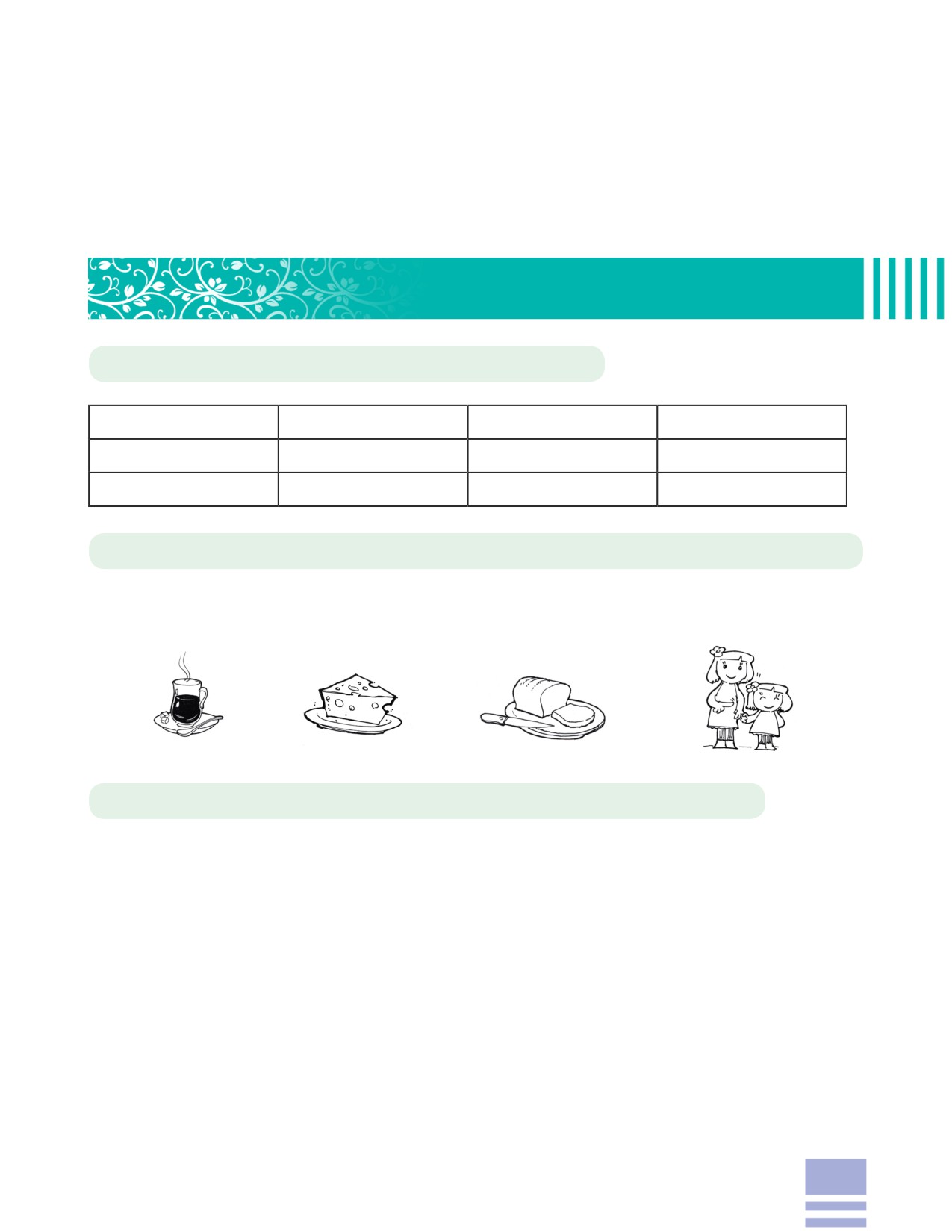
2. Match the following vocabulary words to their corresponding picture and write a sentence for each word.
رينپ
ياچ
مرهاوخ
نان
3. Fill in the blanks and then answer the questions. Use written form to answer the questions.
)نيروخیم یاچ( ؟ديروخيم ياچ .۱
)؟هروخیم
نوتردارب( ؟دروخيم نان ناتردارب .۲
) ؟
نوترهاوخ( ؟دروخيم رينپ ناترهاوخ .۳
) ؟ميروخیمن
( ؟ميروخيمن نان .۴
) ؟
نيا( ؟تسا تخس نيا .۵
)؟یبوخ( ؟يبوخ .۶
SHAHSAVARI | ATWOOD
76

Writing Exercise نتشون
Use the words from the vocabulary you have learned to write a conversation with 10 sentences. Your topic is
؟ديراد ليم یچ
Speaking Activities ندز فرح
Homework:
Review the vocabulary and the grammar (possessive pronouns) of this unit and think about how you would ask
your classmates the following questions in spoken Persian. Practice them aloud several times so you will be ready
to use these questions in class.
~ Do you eat cheese?
~ Does your mother drink tea? (for “drink,” use the same verb you would use for “to eat”)
~ Is your professor Japanese?
~ Does your father like cheese?
~ Does your brother eat bread?
~ Is that a window?!
~ Does your room have a window?
~ What do you eat for lunch and dinner?
In Class:
Ask your classmates the questions that you translated for homework. Be sure to say “Thank you!” to everyone
you speak with and “You’re Welcome!” /khâhesh mikonam/ to anyone who thanks you. Pay attention to what
your classmates say, because your instrutor may ask you to report what you’ve learned!
77
PERSIAN OF IRAN TODAY
Classroom Activities سلک یارب یداهنشيپ یاهتيلاعف
1. Odd Man Out: Work with one partner and have a short conversation in Persian. Find out as much information
about your partner as you can using the vocabulary that you know (focus especially on the vocabulary from
Unit 4. Then, with your partner write three questions that use the new vocabulary and contain the possessive
pronouns that you learned in this lesson.
Now, work with another group and use the questions you wrote to ask one person in the other group about his/
her partner.
2. Your New Best Friend: Your instructor will give you a card with information about your new best friend.
Work with your partner who will try to get as much information about your new friend as possible. After 10
minutes you will introduce your partner’s friend to the class.
SHAHSAVARI | ATWOOD
78
UNIT 5
ص
آ
ض
ب
ط
پ
ظ
ت
ع
ث
غ
ج
ف
چ
ق
ح
ک
خ
گ
د
ل
ذ
م
ر
ن
ز
و
ژ
ه
س
ي
ش
Where are you from? ؟ديياجک لها / ؟ديتسه يياجک امش
7
Cultural Note
یگنهرف تشاددای
Diverse Iran
While Persian is the national language of Iran, only about 51% of Iranians speak Persian as their native language.
Historically, Persian has always been a major literary language in Iran and the greater Persianate world, but
it emerged as the unifying language in Iran with the rise of nationalism during the late nineteenth and early
twentieth centuries. Since then, almost all official means of communication has been and is conducted in Persian,
which is true for major media outlets, schools, and government correspondences. Despite this, Iran is home to
several ethno-linguistic minorities, including Turks, Kurds, Armenians, and Arabs, all whom have their own cultural
practices and languages. Iran’s diversity was even acknowledged in its first national anthem, which concluded with
a line about the many languages and colors found among Iranians. Even so, the anthem was written in Persian,
signaling the importance of the language in Iranian nationalism.
The diversity of Iran is not limited to ethno-linguistic groups. Because Iran did not have a strong central government
until fairly recently in the early twentieth century, strong regional identities developed, and major cities and
provinces are identifiable by their accents, handcrafts, and foods. Although some minorities are concentrated in
specific regions, such as the Baluch in southeastern Iran, most tend to be scattered across the Iranian plateau.
Many Iranians continue to be proud of both their ethnic and regional affiliations.
While the answer to the question ؟نیتسه اجک لها is usually one’s hometown, some people may continue by
introducing their ethnicity. For example, one may answer:
.ميتسه یرايتخب ام ،متسه دابآ مرخ لها
SHAHSAVARI | ATWOOD
80
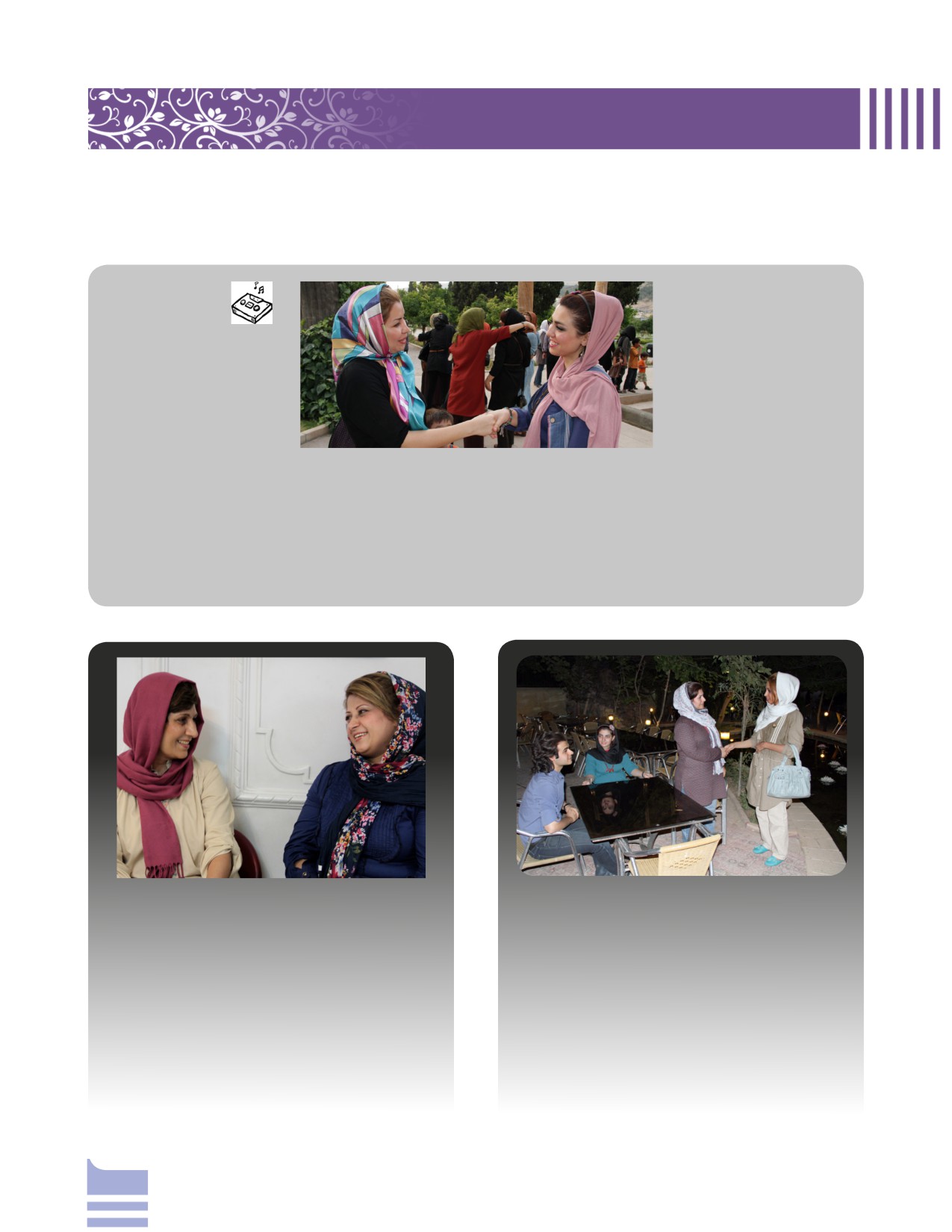
Short Conversations هاتوک یاهوگتفگ
In class listen to the audio files, repeat what you hear and try to fill in the blanks. At home repeat what you hear
several times and try to follow the rhythm. Write at least two sentences in Persian about each conversation you
hear. During the next class time, you will work with a classmate to create a scenario that uses these expressions.
. .................................. نم .ملس .
1
1
.متقوشوخ یليخ .متسه
نم ،ملس .
؟ديياجک
امش .
2
2
؟ديتسه
امش .متسه ینامرک نم .
.متسه
لها نم .
؟
تساميش نم مسا .
؟ديتسه
لها امش .
.تسارهز نم مسا .
؟ديتسه
امش
،هن .
؟نيتسه
لها .
.متسه
نم .
،هن .
1
1
1
1
2
2
2
2
81
PERSIAN OF IRAN TODAY
...گ...ﮔ
ک...ﻛ
ق
ﻗ
...ف..ف...
Part
1: fe
/f/
__ف__ﻓ__
فرب
ديفم
ادرف
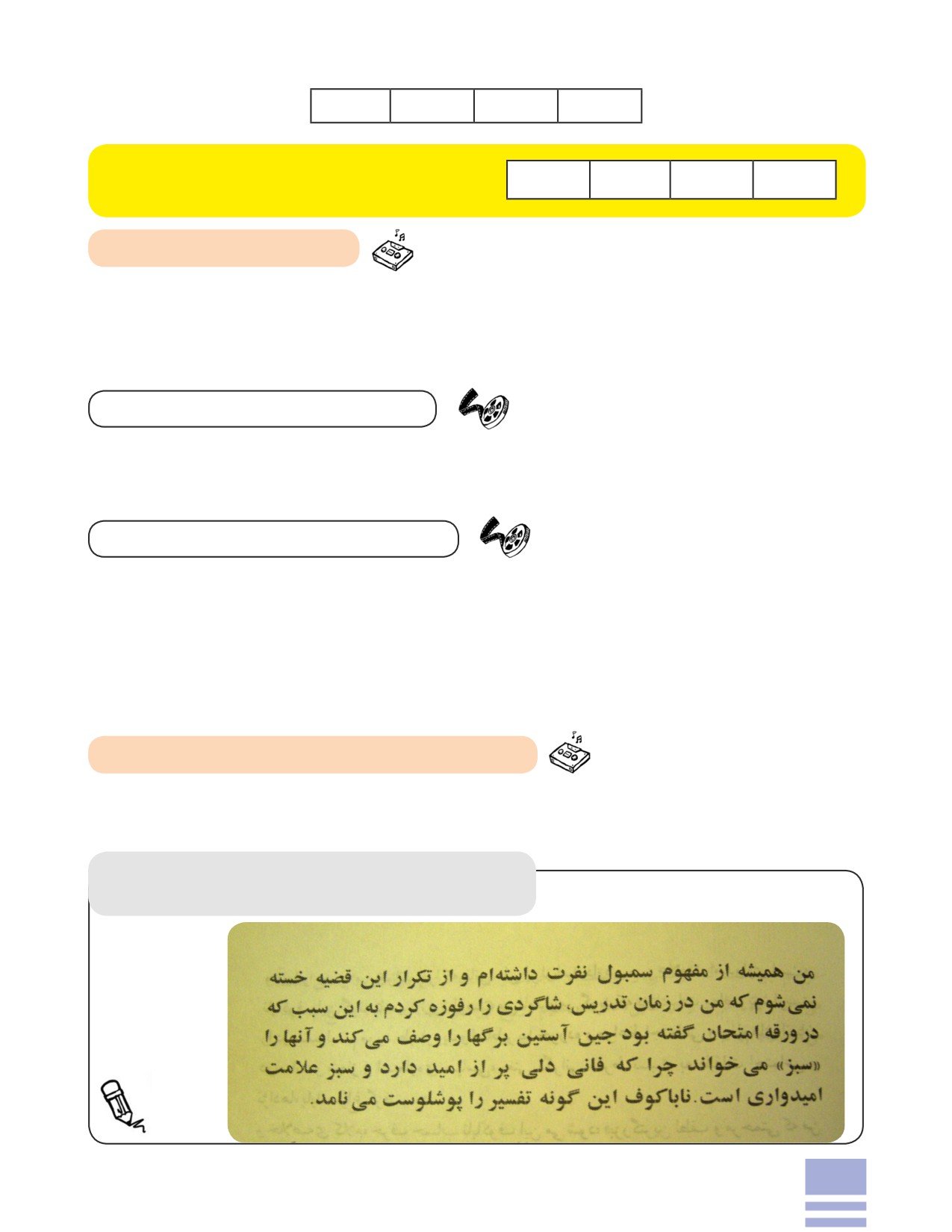
1. Listen to the audio file for ف fe.
This letter is pronounced like the English “f” as in “feather.” ف is a connecting letter with a relatively stable
shape. Its independent and final forms have a tail that remains on the line.
2. Watch the video and follow the instructions.
................................................................................................ف
ﻓ
3. Watch the video and write the following words.
..................................باتفآ
رفس
شرف
....................................متفر
فيل
ديفس
4. Listen and check when you hear the /f/ sound in the word.
□ .۵
□ .۴
□ .٣
□ .٢
□ .١
5. Circle the letter ف in the following text. Report to your
instructor how many ف you identified in the text.
SHAHSAVARI | ATWOOD
82
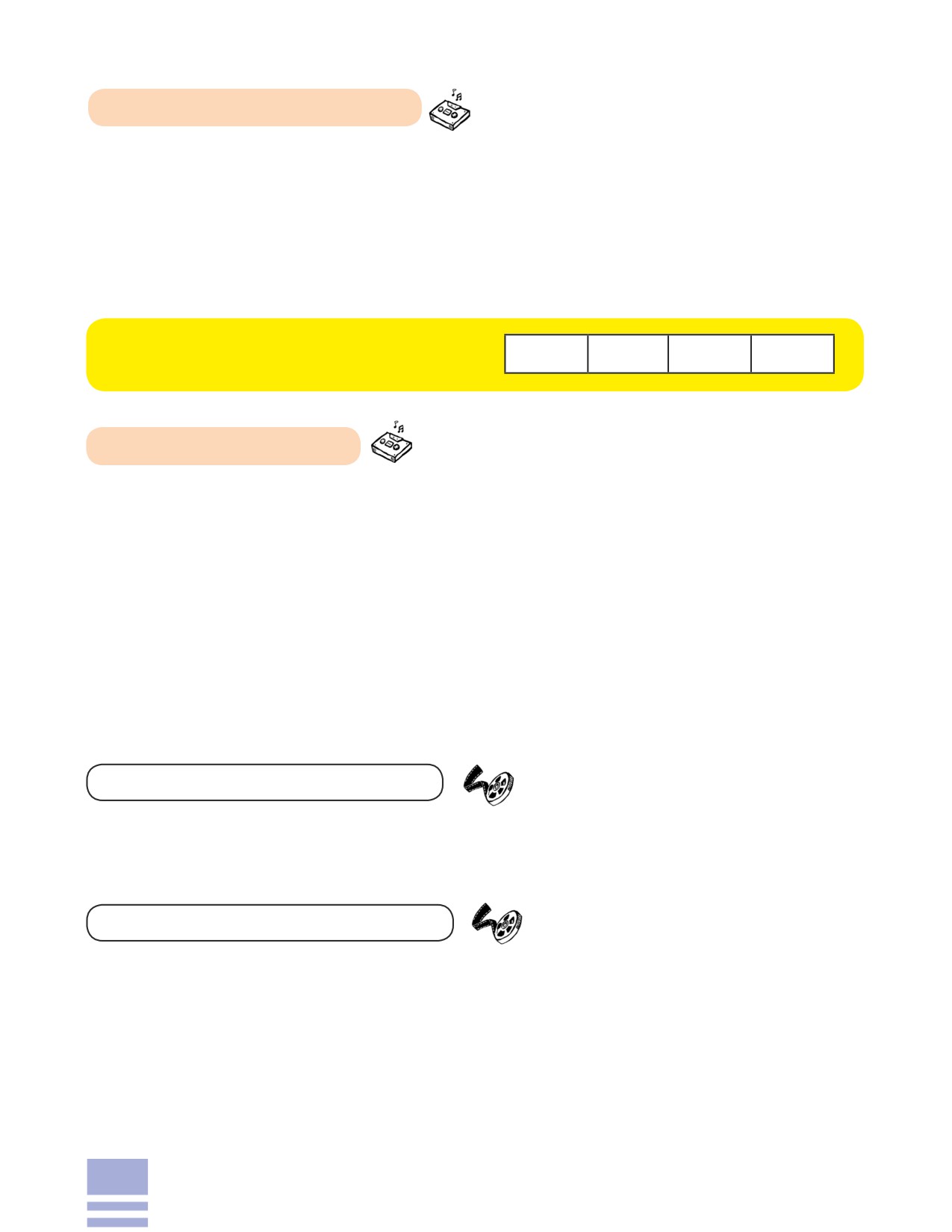
6. Listen and write the words you hear.
.٥
.۴
.٣
.٢
.١
.۱۰
.۹
.۸
.۷
.۶
قرب
قشاق
هربقم
زمرق
Part
2: qâf
/q/
__ق__ﻗ__
1. Listen to the audio file for ق qâf.
This letter represents a sound with no equivalent in English. Its sound is somewhat like a mix between a deep
/g/ mixed with khe. It is pronounced far back in the throat, at the very back of the tongue.
Take a minute to become more familiar with your throat muscles. Open your mouth and say aah, as if you were
at the doctor. Your tongue should be flat in your mouth. Without raising your tongue, pull it back so that the base
of your tongue closes off air by pulling back against the throat. At this point, you should not be able to breathe
through your mouth, although it is wide open. Practice doing this first without making a sound. After performing
this exercise several times, make a sound by releasing the air forcefully and allowing your vocal cords to vibrate.
The result will be the sound ق . Listen to the examples to hear how ق is pronounced.
2. Watch the video and follow the instructions.
...............................................................................................ق
ﻗ
3. Watch the video and write the following words.
.................................. اقآ
هقيقد
يلاق
................................. قاتا
قشاق
بلقنا
................................ هلاقم
زمرق
قوب
83
PERSIAN OF IRAN TODAY
4. Listen and check when you hear the /q/ sound in the word.
.٥
.۴
.٣
.٢
.١
.۱۰
.۹
.۸
.۷
.۶
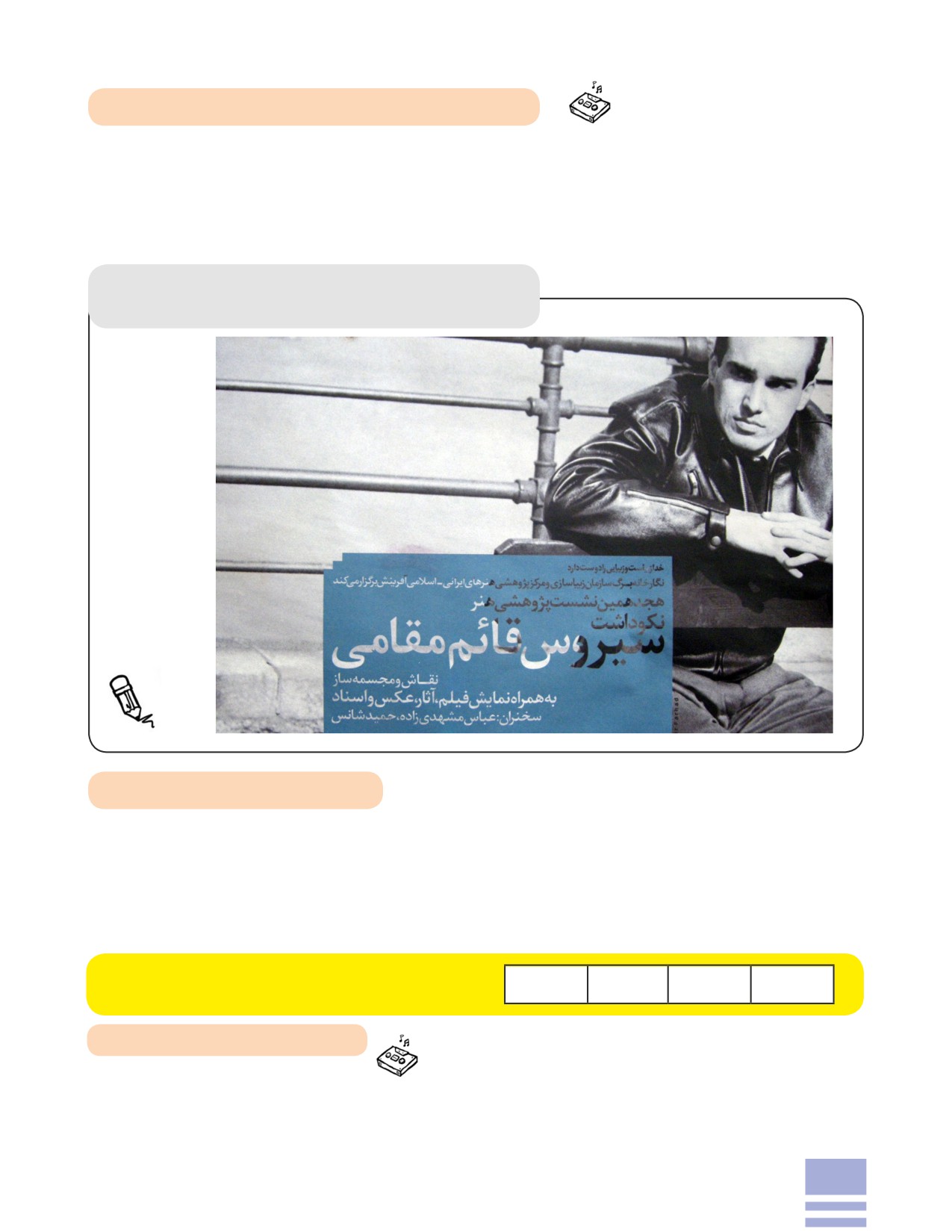
5. Circle the letters ف in the following texts. Report to your
instructor how many ف you identified in the text.
6. Listen and write the words you hear.
.٥
.۴
.٣
.٢
.١
.۱۰
.۹
.۸
.۷
.۶
Part
3: kâf
/k/
__ک__ﻛ__
کاپ
کش ا
ناکم
رانک
1. Listen to the audio file for ک kâf.
This letter corresponds to English k as in likewise. However, the way it is pronounced is slightly different.
SHAHSAVARI | ATWOOD
84
2. Watch the video and follow the instructions.
. . . . . . . . . . . . . . . . . . . . . . . . . . . . . . . . . . . . . . . . . . . . . . . . . . . . . . . . . . . . . . . . . . . . . . . . . . . . . . . . . . . . . . . . . . . . . . . . . . . . . . . . . . . . . . . . . . . . . . .ک
ﻛ
3. Watch the video and write the following words.
. . . . . . . . . . . . . . . . . . . . . . . . . . . . . . . . . . . باتک
رمک
راک
. . . . . . . . . . . . . . . . . . . . . . . . . . . . . . . . . . . . رکف
رکش
ناکتسا
. . . . . . . . . . . . . . . . . . . . . . . . . . . . . کمشپ
کات کيت
کناب
4. Listen and check when you hear the /k/ sound in the word.
□ .۸
□ .۷
□ .۶
□ .۵
□ .۴
□ .٣
□ .٢
□ .١
5. Circle the letter ک in the following text.
Report to your instructor how many ک you
identified in the text.
6. Listen and write the words you hear.
.٥
.۴
.٣
.٢
.١
.۱۰
.۹
.۸
.۷
.۶
85
PERSIAN OF IRAN TODAY
Part
4: gâf
/g/
__گ__ﮔ__
گرب
گنس
رگم
مرگ
1. Listen to the audio file for گ gâf.
This letter corresponds to English “g” as in “goal.” It is written exactly like kaaf, but with a short line drawn above
it following the contour of the letter.
2. Watch the video and follow the instructions.
. . . . . . . . . . . . . . . . . . . . . . . . . . . . . . . . . . . . . . . . . . . . . . . . . . . . . . . . . . . . . . . . . . . . . . . . . . . . . . . . . . . . . . . . . . . . . . . . . . . . . . . . . . . . . . . . . . . . . . .گ
ﮔ
3. Watch the video and write the following words.
. . . . . . . . . . . . . . . . . . . . . . . . . . . . . . . . . . . .رگم
نتشگ
شوگ
. . . . . . . . . . . . . . . . . . . . . . . . . . . . . . . . . . . .گرم
گنج
گنهن
4. Listen and check when you hear the /g/ sound in the word.
□ .۵
□ .۴
□ .٣
□ .٢
□ .١
□ .۱۰
□ .۹
□ .۸
□ .۷
□ .۶
5. Circle the letter گ in the following text. Report to your
instructor how many گ you identified in the text.
SHAHSAVARI | ATWOOD
86

6. Listen and write the words you hear.
.٥
.۴
.٣
.٢
.١
.۱۰
.۹
.۸
.۷
.۶
.١۵
.١۴
.١۳
.١۲
.۱۱
7. Connect the letters to form words.
م + س + ي + ن + ي + م +ف .١
ي + ق + ي + س + و + م .٢
ف + ي + ل .٣
ق + ف + ش .4
ا + ق + ي + ر + ف + آ .٥
ک + ي + ف + ا + ر + ت .٦
ن + ت + گ + ن + ش + ا + و .7
8. You will hear some words. For each, write the missing letter(s) in the blank
and rewrite the word on a separate piece of paper.
اــــــوي .4
لاـــــــيدار .3
وــــــاکيش .2
هدنشــــــرف .١
اــــــيرمآ .8
ـــــــــنوت .7
هلــــــاق .6
روســــــ ورپ .5
ناتسلــــــ .١2
هسنارـــــــ .١1
ـــــــلام
.١0
رــــــراک .9
هنيباـــــــ .١6
نوناـــــــ .١5
راـــــــفا
.١4
سنارـــــــنک .١3
ــــيک .20
يروــــــ .١9
اتدوــــــ .١8
تباــــــر .١7
قاـــــــتشا .22
وـــــــنات .2١
87
PERSIAN OF IRAN TODAY

9. Read aloud the following word
10. Listen to the audio file and mark the
with your partner.
word you hear.
لابتوف .۳
يکسا .۲
رفس .١
يروق
قوس
۷
۱
يروگ
گوس
هتيمک .۶
هفسلف .۵
لوسنک.۴
مرگ
رگم
۸
نرق
۲
رقم
ناتسقازق .۹
اداناک .۸
ناتسزيقرق .۷
رگا
داقن
۹
۳
کيتنامر .۱۲
قفا .۱۱
تاوارک .۱۰
لقا
راگن
شوگ
بيرق
10
۴
ميدقت .۱۵ نويماک .۱۴
يروق .۱۳
چوق
ميلگ
تواقش
نيارق
هنسرگ .۱۸
گنس .۱۷
مرگ .۱۶
۱۱
۵
تياکش
هيلگ
قشم
يراگ
گرزب .۲۰ کچ يروهمج .۱۹
۶
۱۲
کشم
يراق
11. In Class: Read the texts and guess what they are. What are some words that you know?
(source: Vaseteh.com)
شورف
شورف
ناموت
8,800,000 تميق
ون ،DELL ،کوب تون رتويپماک
کلپ ،رادرلوک ،رد ۴ ،بقع لايسنرفد ،هدند ۶ ،۱۹۹۱ لدم ،اتویوت
:تاحيضوت
،۲۰۰۰ روتوم ،هدش گنر ،ديفس گنر ،ريگدزد هب زهجم ،یرزيل
TESHSA-ALL BRANDS OF LAPTOP
،سکبریگ ،ملاس روتوم ،۹۰% کيتسل ،ملاس قاتا ،ردنليس ۴
Tehran Office:
ملاس یزودوت ،ملاس دروبشاد ،ملاس ليسنارفيد
Dubai Office: +۹۷۱۵۰۷۸۴۹۰۱۴ +۹۸۲۱-۵۵۸۰۷۳۷۲
Canada Office: +۱-۴۱۶۳۰۲۸۰۶۰
ینف هنياعم ،بقع هشيش نکمرگ ،کيلورديه نامرف ،لوف همين
ینيعم
:یفاضا مزاول
۵۵۸۰۷۳۷۲ :نفلت
طسو لوسنک ،شخپ ويدار ،یلدنص شکور
نارهت :ناتسا
:هانپ ناهج
نارهت :رهش
۰۹۳۵۳۷۶۱۰۷۰ :نفلت
۰۹۱۲۴۲۳۱۰۰۲ :ليابوم
هبترم ۱۶۹۸۳ :ديدزاب تاعفد دادعت
SHAHSAVARI | ATWOOD
88
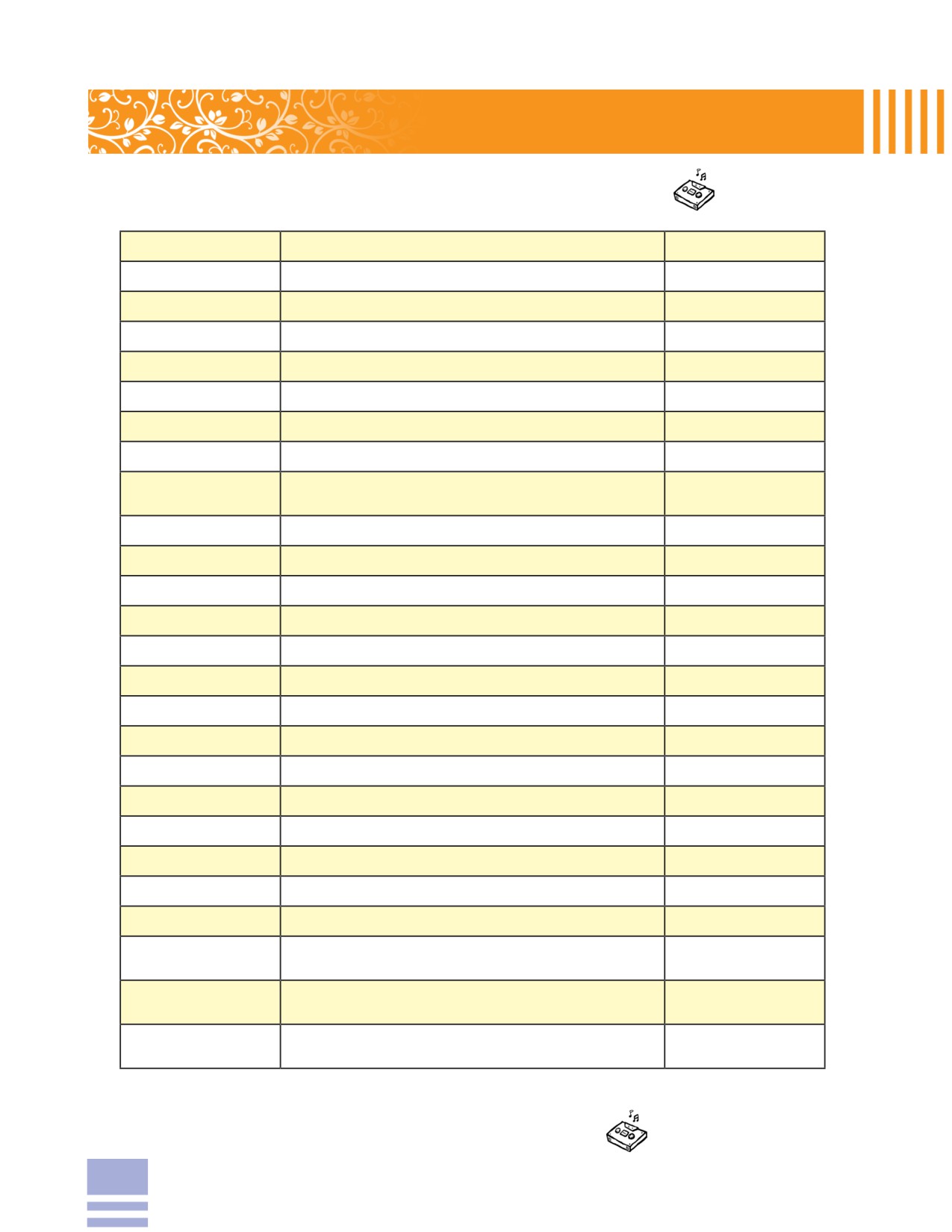
Vocabulary 1
1 ناگژاو
1. Listen to and learn these words. Translate the sentences. The spoken variations
have been included in parentheses.
thank you
.ردام مرکشتم
مرکشتم .1
you’re welcome
.منکيم شهاوخ
منکيم شهاوخ .2
excuse me
)؟نيتسه وجشناد امش ،ديشخبب( ؟ديتسه وجشناد امش ،ديشخبب
ديشخبب .٣
class
.مراد یسراف سلک
سلک .4
university
).ميتسه هاگشناد یوت/وت ام( .ميتسه هاگشناد رد ام
هاگشناد .5
sir, gentleman, man
)؟نيتسه يناريا امش ،اقآ( ؟ديتسه يناريا امش ،اقآ
اقآ .6
ma’am, lady, Mrs., Miss
).هوجشناد...( .تسا وجشناد مناخ نيا
مناخ .7
Persian
).نتسه يسراف داتسا نوشيا( .دنتسه يسراف داتسا ناشيا
يسراف .8
I know (how to do
؟يدلب يسراف وت
يدلب ،مدلب .9
something), you know
I know (knowledge)
منادیم یسراف / .هن اي ميراد سلک منادیمن
)منودیم( منادیم .10
you know
)ینودیم ونوا مسا( ؟ینادیم ار وا مسا
)ینودیم( ینادیم .11
English
.متسين دلب یسيلگنا نم
یسيلگنا .12
I live
). .منکیم یگدنز نارهت وت نم( .منکیم یگدنز نارهت رد نم
منکیم یگدنز .13
with
.منکیم یگدنز مردام و ردپ اب نم
اب .14
coffee
)؟نيراد هوهق ،ديشخبب( ؟ديراد هوهق ،ديشخبب
هوهق .15
United States
).تساکيرمآ اج نيا( .تسا اکيرمآ اج نيا
اکيرمآ .16
American
) .نتسه يياکيرمآ انوا( .دنتسه يياکيرمآ اهنآ
يياکيرمآ .17
soccer
.مراد تسود لابتوف نم
لابتوف .18
street
).هجاک نوبايخ وت ام یهنوخ( .تسا جاک نابايخ رد ام یهناخ
)نوبايخ( نابايخ .19
here
؟تساجنيا وت سلک
اجنيا /اجنيا .20
there
).تساجنوا مرهاوخ( .تسا اجنآ مرهاوخ
)اجنوا( اجنآ .21
where-where is it?
؟تساجک یسراف سلک
تساجک ،اجک .22
how many
)؟هراد وجشناد ات دنچ...( ؟دراد وجشناد دنچ سلک نيا
)ات دنچ( دنچ .2٣
)؟هنوتلاس دنچ( .24
how old are you?
)؟هنوتلاس دنچ امش(
؟ديراد لاس دنچ =
).هملاس تسيب(.25
I am twenty.
).هملاس راهچ و تسيب(
.مراد لاس تسيب =
).هشلاس تسيب( .26
He is twenty years old.
).هشلاس تسيب رسپ نوا(
.دراد لاس تسيب =
2. Listen to the audio file again. Based on what you hear, write the vowels on the example sentences. Now listen to the next
audio file. Write the sentences you hear and translate them to English.
89
PERSIAN OF IRAN TODAY
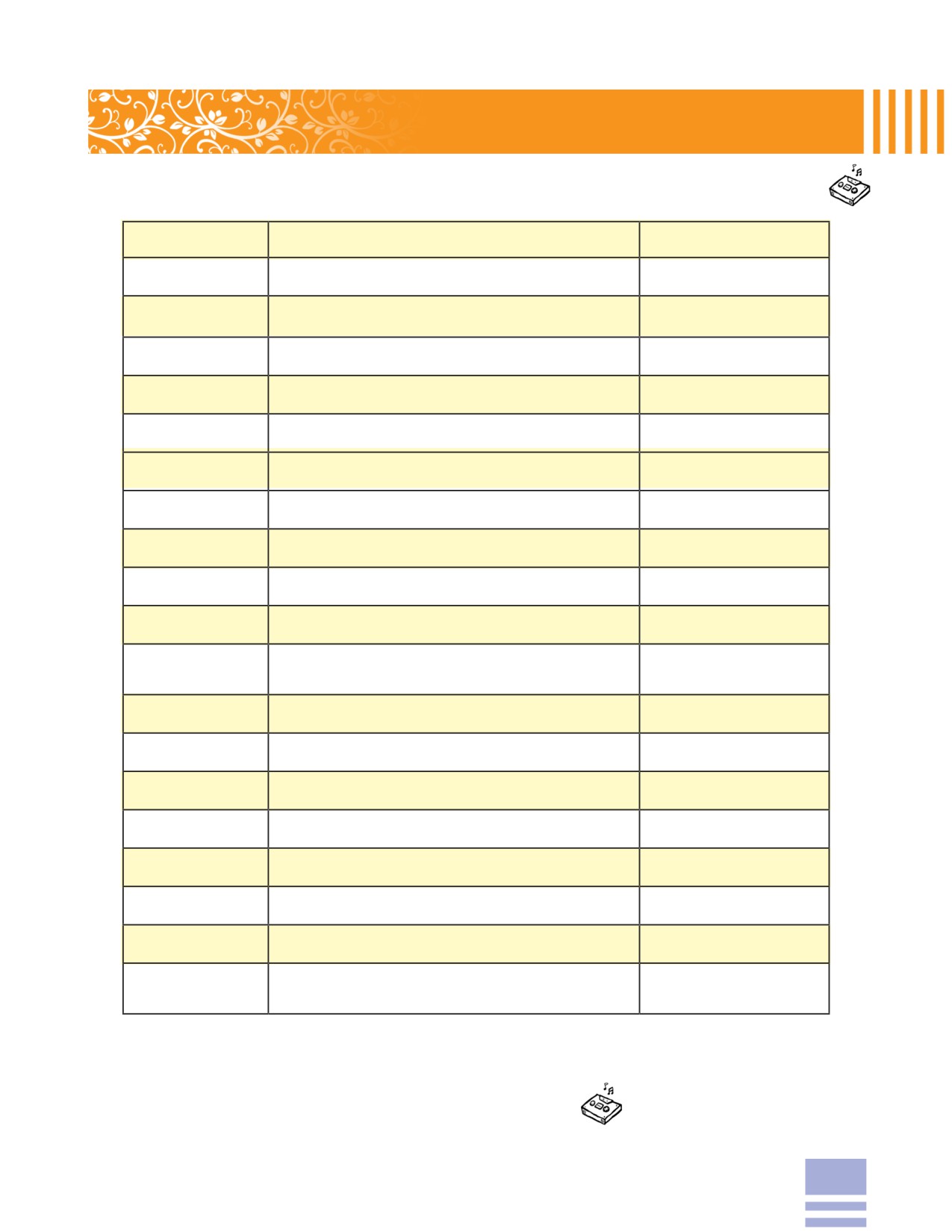
Vocabulary 2
2 ناگژاو
3. Listen to and learn these words. Translate the sentences. The spoken variations have been included in parentheses.
one
).مراد ردارب هي( .مراد ردارب کي
کي .۱
two
) .هراد ردارب ات ود( .دراد ردارب ود
ود ۲.2
three
) .نراد ردارب ات هس( .دنراد ردارب هس
هس .3
four
)؟نيراد ردارب ات راهاچ( ؟ديراد ردارب راهچ
)راهاچ( راهچ .4
five
).ميتسه رهاوخ ات جنپ( .ميتسه رهاوخ جنپ
جنپ .5
six
).نتسه ردارب ات شيش( .دنتسه ردارب شش
)شيش( شش .6
seven
).مراد يناريا تسود ات تفه( .مراد يناريا تسود تفه
تفه .7
eight
)؟يراد يياکيرمآ تسودات تشه( ؟يراد يياکيرمآ تسود تشه
تشه .8
nine
).نتسه سلک وت وجشناد ات هن( .دنتسه سلک رد وجشناد هن
هن .9
ten
).نتسه اجنوا يياکيرمآ ات هد( .دنتسه اجنآ يياکيرمآ هد
هد .10
eleven
).نتسه اجنيا ینپاژ ات هدزاي( .دنتسه اجنيا ينپاژ هدزاي
هدزاي .11
.دنتسه هاگشناد رد يناريا یوجشناد هدزاود
twelve
هدزاود .12
).نتسه هاگشناد وت یناريا یوجشناد ات هدزاود(
thirteen
).ميراد هاگشناد ات هدزيس اجنيا( .ميراد هاگشناد هدزيس اجنيا
هدزيس .13
fourteen
).مراد نون ات هدراهاچ( .مراد نان هدراهچ
)هدراچ( هدراهچ .14
fifteen
).ميراد داتسا ات هدزنوپ( .ميراد داتسا هدزناپ
)هدزنوپ( هدزناپ .15
sixteen
).هراد وجشناد ات هدزنوش( .دراد وجشناد هدزناش
)هدزنوش( هدزناش .16
seventeen
).ميراد سلک ات هدويه اجنيا( .ميراد سلک هدفه اجنيا
)هدويه( هدفه .17
eighteen
).نتسه سلک یوت مناخ ات هدژيه( .دنتسه سلک رد مناخ هدجه
)هدژيه( هدجه .18
nineteen
) .نتسه سلک یوت اقآ هدزون( .دنتسه سلک رد اقآ هدزون
هدزون .19
.دراد يياکيرمآ داتسا تسيب هاگشناد نيا
twenty / thirty
یس ،تسيب .20
) .هراد يياکيرمآ داتسا ات تسيب هاگشناد نيا(
4. Listen to the audio file again. Based on what you hear, write the vowels on the example sentences. Now listen to the
next audio file. Write the sentences you hear and translate them to English.
SHAHSAVARI | ATWOOD
90
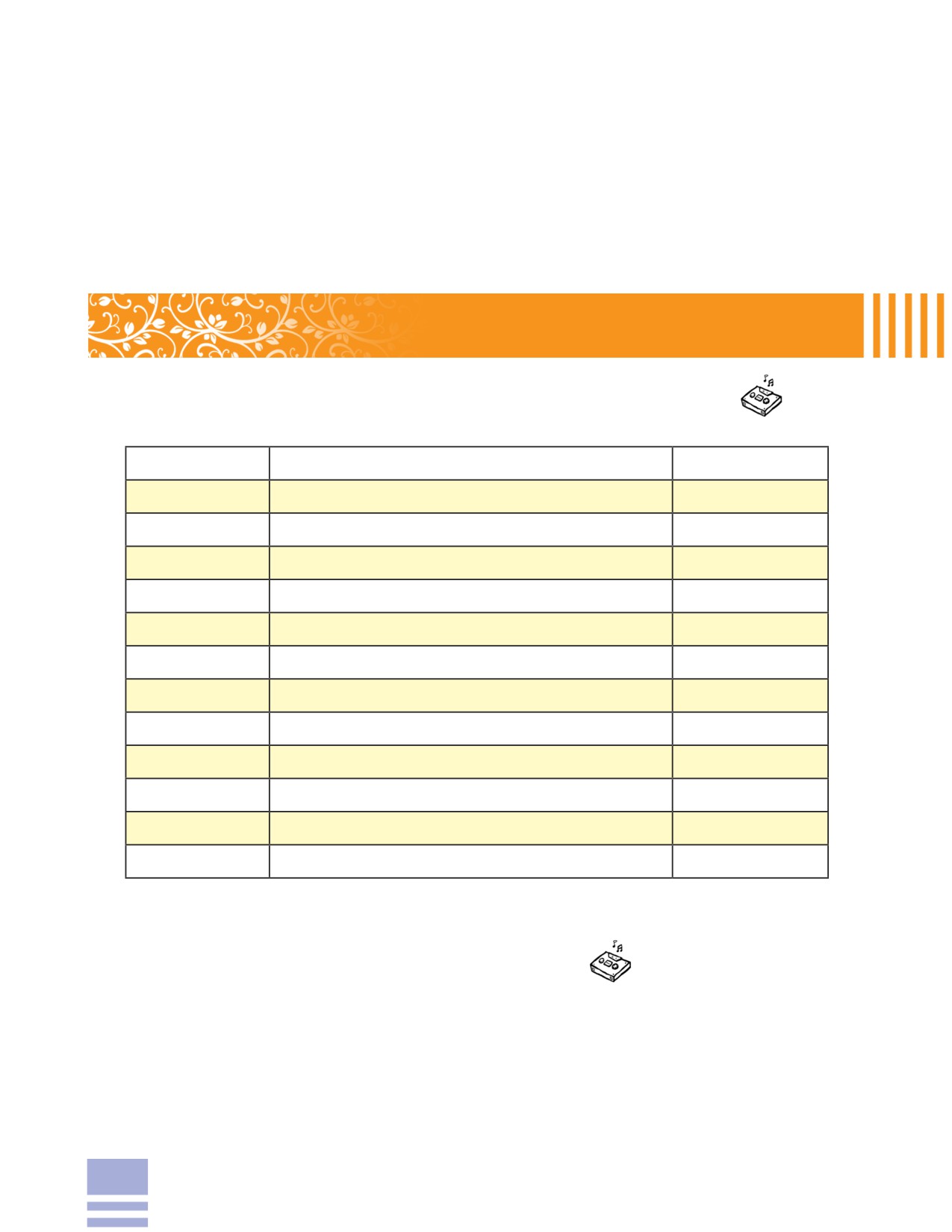
In class:
1. Listen to your instructor ask questions like “how many students are there in the class?” and answer the questions.
2. Your instructor will ask you to do some addition. Listen carefully and answer the questions.
3 ناگژاو
Vocabulary 3
5. Vocabulary you already know! Listen to and learn these words. Translate the sentences.
park
).هنوبايخ نيا یوت کراپ کي( .تسا نابايخ نيا رد کراپ کي
کراپ .1
villa
).ميراد نارهت وت ليو هي ام( .ميراد نارهت رد ليو کي ام
ليو .2
doctor
)؟تسامش رتکد نوا( ؟تسامش رتکد وا
رتکد .٣
concert
.مراد تسود کار ترسنک نم
ترسنک .4
movie theater
).هنوبايخ نيا وت امنيس ات جنپ( .تسا نابايخ نيا رد امنيس جنپ
امنيس .5
super market
).هراد تکرام رپوس مردپ( .دراد تکرام رپوس مردپ
تکرام رپوس .6
ski
.مرادن تسود یکسا
یکسا .7
tennis
).هراد تسود سينت مرهاوخ( .دراد تسود سينت مرهاوخ
سينت .8
opera
؟یراد تسود ارپا
ارپا .9
radio
؟تساجک ويدار
ويدار .10
jacket
).تساج نيا مردپ تکاژ ( .تسا اج نيا مردپ تکاژ
تکاژ .11
marker
؟یراد کيژام
کيژام .12
television
).هقاتا نيا یوت نويزيولت ات ود( .تسا قاتا نيا رد نويزيولت ود
نويزيولت .1٣
6. Listen to the audio file again. Based on what you hear, write the vowels on the example sentences. Now listen to the
next audio file. Write the sentences you hear and translate them to English.
91
PERSIAN OF IRAN TODAY
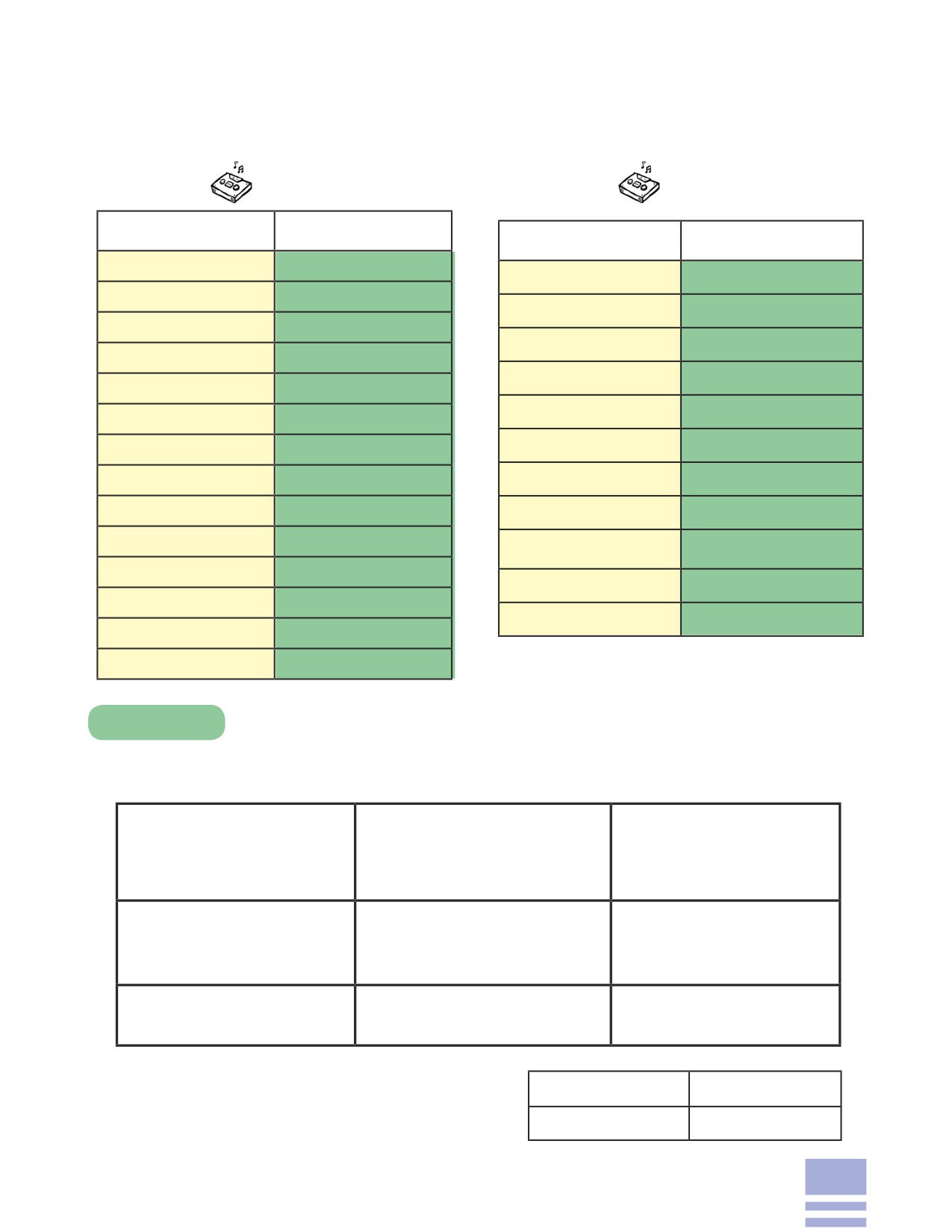
7. Look at the following list of countries and the corresponding nationalities. Read them aloud with your partner,
and try to discover the rule for forming nationalities from country names. Do they all follow the rule? Circle the
ones that don’t follow the rule.
7
8
تيلم
روشک
لها
رهش
کيجات
ناتسکيجات
کرويوين لها
کرويوين
يياداناک
اداناک
سلاد لها
سلاد
ينپاژ
نپاژ
سلجنآ سل لها
سلجنآ سل
ييايناپسا
ايناپسا
نتنگنشاو لها
نتنگنشاو
يسيلگنا
سيلگنا
لوبناتسا لها
لوبناتسا
ينيچ
نيچ
يروس
هيروس
هبنشود لها
هبنشود
یکيزکم
کيزکم
دابآ ملسا لها
دابآ ملسا
یناتسکاپ
ناتسکاپ
ندنل لها
ندنل
سور
هيسور
لباک لها / یلباک
لباک
ناتسنمرا لها
ناتسنمرا
زاريش لها /یزاريش
زاريش
هيکرت لها
هيکرت
دهشم لها /یدهشم
دهشم
ناتسقازق لها
ناتسقازق
یاهرک
هرک
Spelling Note
When we add ی to a word, it may pronunced ye or i, depending on the role of ی. If it’s pronunced /i/, the fol-
lowing rule will be applied in writing the word.
/. . . â/ + /i/
ییاکیرمآ :ی + اکیرمآ
/. . . vowels*/ + /i/
/. . . u/ + /i/
ییورمک :ی + ورمک
*except for e
/. . . o/ + /i/
ییون :ی + ون
یدهشم :ی + دهشم
یزاریش :ی + زاریش
/. . . consonant/ + /i/
/. . . b, p, t, d, s, j, etc/ + /i/
ینیچ :ی + نیچ
/. . . e/ + /i/
/. . . e/ + /i/
یاهیکرت :ی + هیکرت
Note that the sound /i:/ is different from /y/. For example:
u âmrikâ-i ast
.تسا ییاکیرمآ وا
âmrikâ-ye jonubi
یبونج یاکیرمآ
SHAHSAVARI | ATWOOD
92
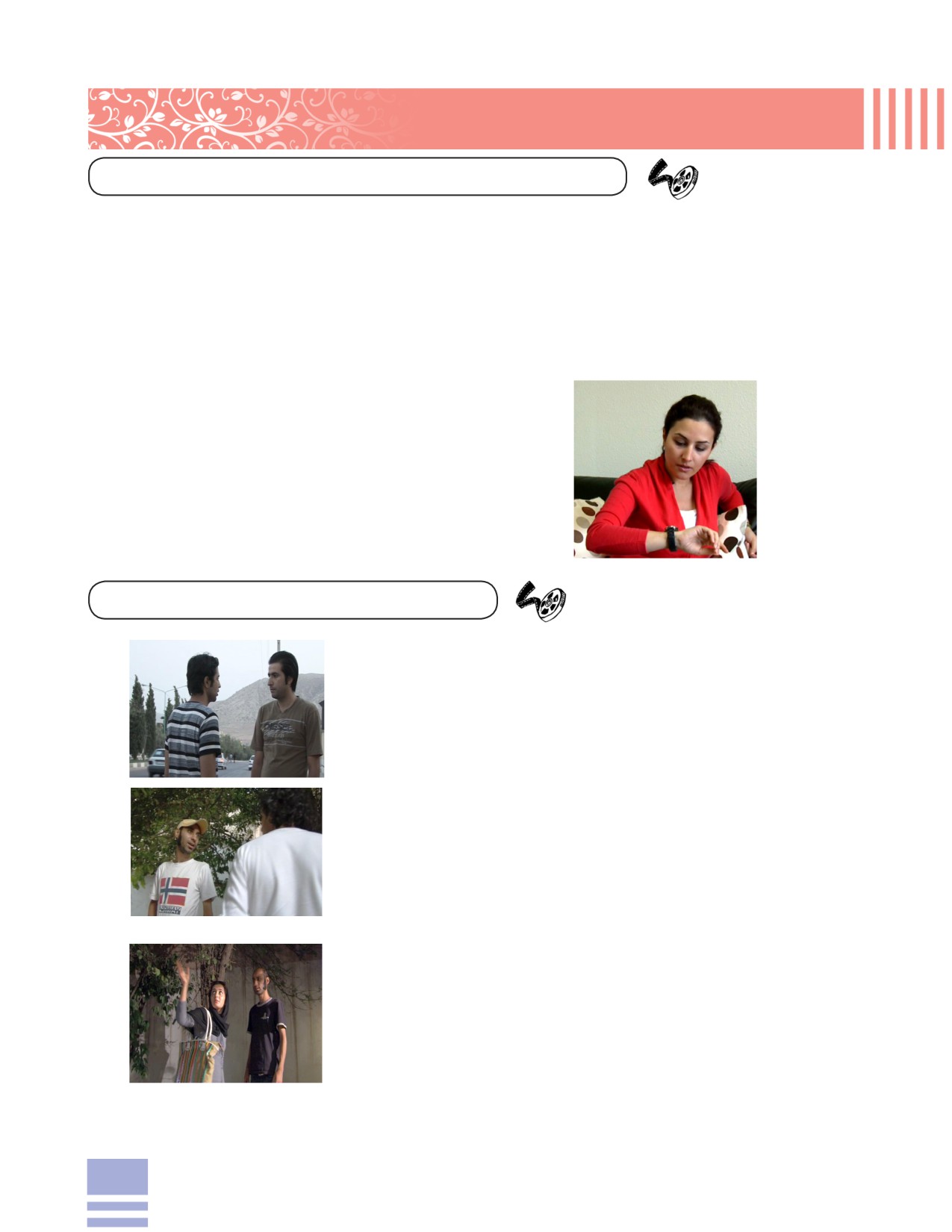
Listening Comprehension رادينش کرد
1. Watch the videos and answer the following questions in written Persian.
1. How many languages does Shayli know? What are they?
2. What time does Shayli have class today? What is the class?
3. When does she go to هاگشناد ?
4. How many minutes (هقيقد) is it from Lake Austin Street to school by bus?
5. How many Iranian friends does Shayli have in Austin? How many American friends?
6. What do two American friends of Shayli like?
7. What time is Shayli planning to go to her friend’s house today?
8. Does Shayli like football?
2. Watch the videos and write what you hear in Persian.
؟
.1
.تساج نيمه ،
؟
.2
؟
.3
93
PERSIAN OF IRAN TODAY
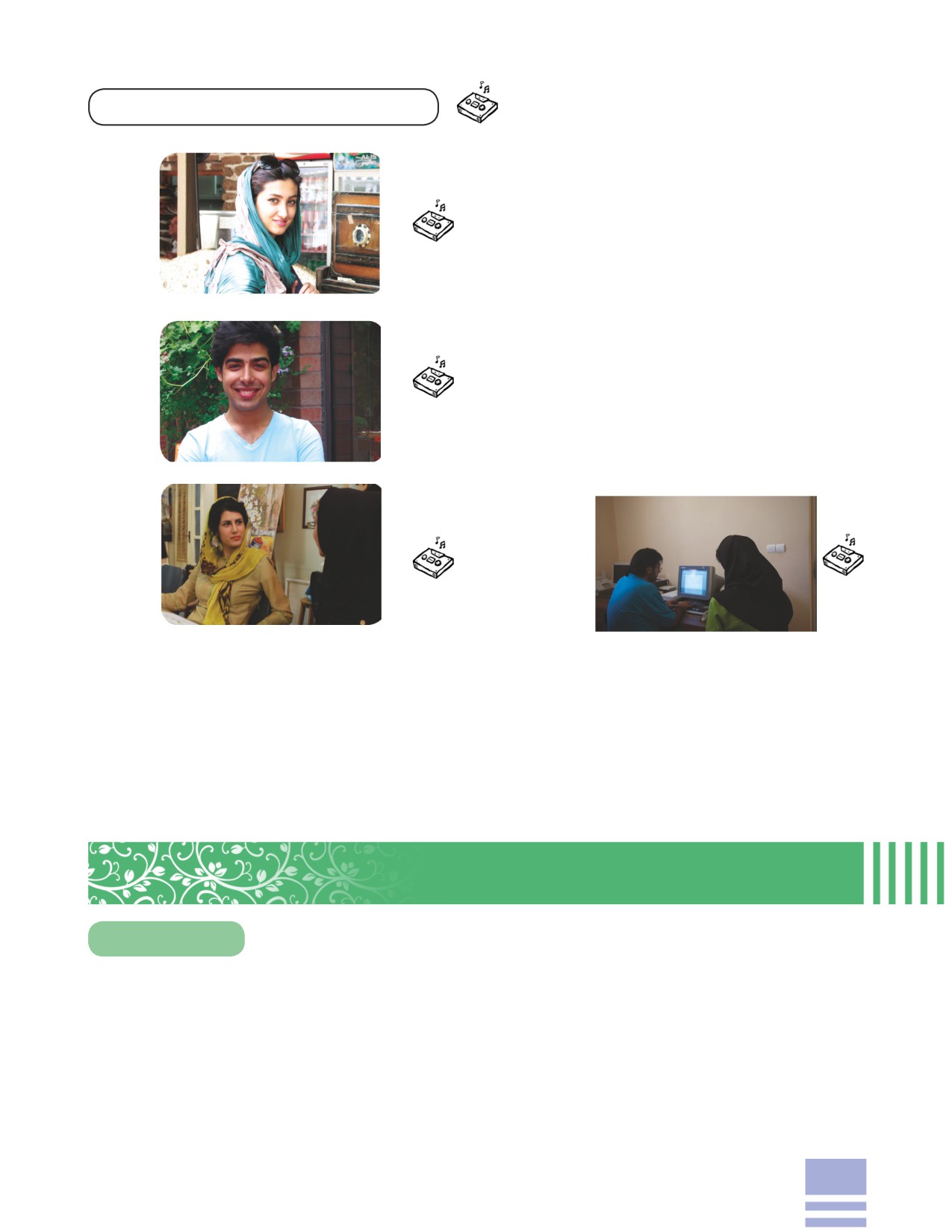
3. Listen to the audio files and fill in the blanks.
لاس
متسه
نم
A
.مراد تسود
و
مراد
...................... .متسه هاگشناد مود
و
و
متسه
.منودیم
B
.هملاس
و متسه نایاش نم
...................... لاس .مراد تسود
و
لها و هاگشناد
.مدلب
D
C
.متسه
نم ملس•
.ملس
•
•
؟
اجک لها امش .متسه
ملس•
؟هيچ نوتمسا
•
•
.متسه
لها•
•
•
؟تساجک هبنشود•
؟
امش
•
•
.تسا
رد هبنشود•
•
•
؟ديياجک
امش•
؟هدنچ نوتنفلت
•
•
.متسه
نم•
۹۷۶-۲۳۴۵-۴۳۵۶
•
•
Grammar Note
يروتسد تشادداي
Using Pronouns
In Persian, the use of nominal pronouns such as نم or امش with verbs is somewhat redundant. You don’t
usually need to say the nominal pronoun before conjugated verbs. The conjugated form of the verb,
together with the context, will generally make it clear who the subject of the sentence is. Native speakers of
Persian will generally drop the pronoun, and we recommend that you do also.
.مروخیمن یاچ
؟ديتسه اجک
SHAHSAVARI | ATWOOD
94
Present Tense Conjugation
The present tense in Persian has much wider use than the present tense in English. In Persian, we can use the present
tense to express actions that are occuring right now or habitually or actions in the future. While there is a future
tense in Persian, in spoken Persian we almost always use the present tense to indicate future. At this point, you have
learned three verbs in the present tense, “to have,” “to be,” and “to eat” (in your most recent vocabulary list). Think
about these three verbs in the present tense. How is “to eat” different from “to be” and “to have”? The present tense
of “to eat” starts with the prefix یم . Even though you learned “to be” and “to have” first, they are, in fact, the two
most common irregular verbs in the present tense. As you learn the patterns and rules for the regular present-
tense verbs, don’t forget that “to be” and “to have” are the exceptions! Verbs must be conjugated for person and
number in Persian. This is done by adding prefixes and suffixes to the verb stems. In general, regular verbs in Persian
are conjugated in the present tense according to the following pattern:
Personal Verb Endings
+
Present Tense Stem
يم
+
يم
م
+
روخ
+
Look at the chart below, which features the present
روخ -ندروخ
tense conjugations for a verb you know.
مروخیم
نم
Note that يم is written in an unconnected
form even though ي is generally a connecting
یروخیم
وت
letter. This is just a spelling convention.
ـ)هروخیم( دروخیم
(نوا( وا
میروخیم
ام
ـ)نیروخیم( دیروخیم
امش
ـ)نروخیم( دنروخیم
(انوا( اهنآ
Spoken form of Nega-
Negation of verb “to
Pronoun
tion forms of “to eat”
eat”
مروخیمن
نم
Negating “to eat”
Here are the negative forms for all pronouns.
یروخیمن
وت
Read carefully and explain the rule. Negating
دروخیمن
( نوا ( وا
all present-tense verbs except for the verbs
“to be” and “to have” follow the same rule.
ميروخیمن
ام
Complete the spoken column with the
ديروخیمن
امش
appropriate words.
دنروخیمن
(انوا( اهنآ
95
PERSIAN OF IRAN TODAY

Counting
Examine the following example sentences from your vocabulary list (p. 105).
.مراد یناریا تسود تفه .١
.دراد ییاکیرمآ داتسا تسیب هاگشناد نیا .2
.دنتسه سلک رد مناخ هدجه .3
What do you notice about the nouns that follow the verbs?
………………………………………………………………………………………………………………
…………………………………………………………………………………………………
Although you will learn more about counting in Lesson 9, for now keep in mind that in Persian numbers are always
followed by singular nouns!
Grammar Exercises
1. Complete with the negative of “to be”.
2. Fill in the blank with the appropriate words.
. ........................... وجشناد نم .١
مروخيمن /ديتسه / ديروخيم / ميروخيم
. ........................... سلک نيا .2
. ................................ یسپپ نم .۱
. ......................... وجشناد امش .۳
؟
بآ .۲
. ............................. داتسا وا .4
. ........................ بيس بآ مردارب و نم .۳
. .......................... وجشناد ام .۵
................................ اجک لها امش .۴
3. Organize the following sets of words into
meaningful sentences.
4. Match the following words to their
corresponding picture and write a sentence for
. ........................ اجنيا
،ام ،یسراف ،سلک ،تسا .۱
each word. In each sentence use a number you
. ............................... وجشناد
،ام ،میتسه .۲
have learned in this unit.
. ............................ لها
،نيتسآ ،متسين ،نم .۳
.باتک ،وا
،درادن .۴
اقآ .۷
هن .۶
اکیرمآ .۵
اجنیا .۴
مناخ .۳
نابایخ .۲
هاگشناد .۱
SHAHSAVARI | ATWOOD
96
Speaking Activities ندز فرح
In Class:
1. First, complete the spoken column with the appropriate words. Then ask your classmates where their family
members live. Report your findings to your instructor.
نک یگدنز -ندرک یگدنز
Your Notes:
Negation
Verb “to live”
Pronoun
of “to live”
spoken form
منکیم یگدنز
نم
وت
(نوا( وا
ام
نینکیم یگدنز
امش
(انوا( اهنآ
2. Do the following exercise step by step.
2-1. Read the questions in the first box and ask three classmates to answer them.
2-2. Your classmates will probably answer your question in the format of the second box. Take notes of what you
will learn about your classmates in the boxes and be ready to report the information to the class.
2-3. Report to the class what you have learned. The format of your report should have the format of the third
box. Use the format of box number four if you would like to use respectful form.
:مسا
؟*هيچ امش مسا(
:نس
1
؟*هنوتلاس دنچ
:لها
؟ديتسه يياجک
:یگدنز لحم
؟دينکیم یگدنز اجک
.دنکیم یگدنز
اب
)؟دينکیم یگدنز نوتردام و ردپ اب
97
PERSIAN OF IRAN TODAY
:مسا
ینامرک .هملاس هدزون .تسا هنامس نم مسا(
:نس
یگدنز نارهت رد مردام و ردپ اب و متسه
:لها
).منکیم
:یگدنز لحم
۲
.دنکیم یگدنز
اب
:مسا
:نس
هینامرک .هشلاس هدزون .تسا هنامس نوا مسا(
:لها
).هنکیم یگدنز نارهت رد شردام و ردپ اب و
:یگدنز لحم
.دنکیم یگدنز
اب
۳
:مسا
:نس
.هنوشلاس هدزون .تسا هنامس نوشيا مسا(
نارهت رد نوشردام و ردپ اب و دنتسه ینامرک
:لها
).ننکیم یگدنز
:یگدنز لحم
۴
.دنکیم یگدنز
اب
3-I. First, try to figure out what each of these languages is. There may be some letters that you haven’t learned
yet, but do your best. Once you have figured them all out, your instructor can help you pronounce them.
/arabi/ /porteqâli/
یلاغترپ ،ینيچ ،ینپاژ ،یدنه ،ودرا ،یيايناپسا ،یبرع ،یوسنارف /هسنارف ،یسيلگنا ،یسراف
Now, using دلب find out from your classmates what language they speak. Be sure to greet them politely first!
Later, you will report to the class what you have learned.
3-2. Practice with ندروخ! find out from your classmates what kinds of food (اذغ /qazâ/) they like. Some of the
adjectives above and below will help you.
یناريا ،یمانتيو ،یليزرب ،یياکيرمآ ،یکيزکم
؟نيروخیم یسازگت یاذغ امش !ملس
!مروخیمن یسازگت یاذغ نم
!هن
Example: What is the most popular type of food in the class?
SHAHSAVARI | ATWOOD
98

Writing Exercise نتشون
1. Use the vocabulary you have learned so far to write a short paragraph about yourself.
subject + object + verb
.مروخیم راهان نم
subject + adverb of time + object + verb
order of objects: direct object + obj of preposition + indirect object
.مروخیم راهان زورما نم
order of adverbs: adverb of time + adv of manner + adv of place
.مروخیم راهان متسود اب زورما نم
.مروخیم راهان زربلا ناروتسر رد متسود اب زورما نم
2. Use the vocabulary you have learned to write a conversation. Your conversation should have a setting
(e.g. a restaurant, a classroom) and a short narrative. Write at least 20 sentences for your conversation.
Speaking Activities ندز فرح
Homework:
Review the vocabulary and grammar for this lesson and think about how you would ask (and answer) the
following questions. Practice them aloud until you can ask them fluidly.
~ At what time do you eat dinner?
~ Where do you eat dinner?
~ How many brothers do you have? How many sisters?
~ How many students are in your house?
~ Where are you from?
~ Where do you live?
~ Do you know where our professor lives?
In Class:
First watch the video (segment 9) with your instructor to learn some new greetings. Try them out on your
classmates, then ask the questions listed above. Remember what they say so you can report it to the class later.
99
PERSIAN OF IRAN TODAY
Language Games
1. The instructor will write a sentence on the board. The group with the most questions about that sentence will
be the winner.
.مروخیم یکيزکم یاذغ یناريا ناروتسر کي رد نارهت رد : لاثم
2. The instructor writes 20 words on the board and then erases them. The groups (of three) have 45 seconds to
write down as many of the words as they remember on a piece of paper. Misspelled words will not be counted.
3. Red Rover Interview: Your instructor will divide the class into two groups. Each group will write one
question for each person in the other group. Each question must use at least two new vocabulary words.
Then you will ask your questions of the other group and they must answer it on the spot. You can ask anything
you want, so make it juicy!!
SHAHSAVARI | ATWOOD
100
UNIT 6
ص
آ
ض
ب
ط
پ
ظ
ت
ع
ث
غ
ج
ف
چ
ق
ح
ک
خ
گ
د
ل
ذ
م
ر
ن
ز
و
ژ
ه
س
ي
ش
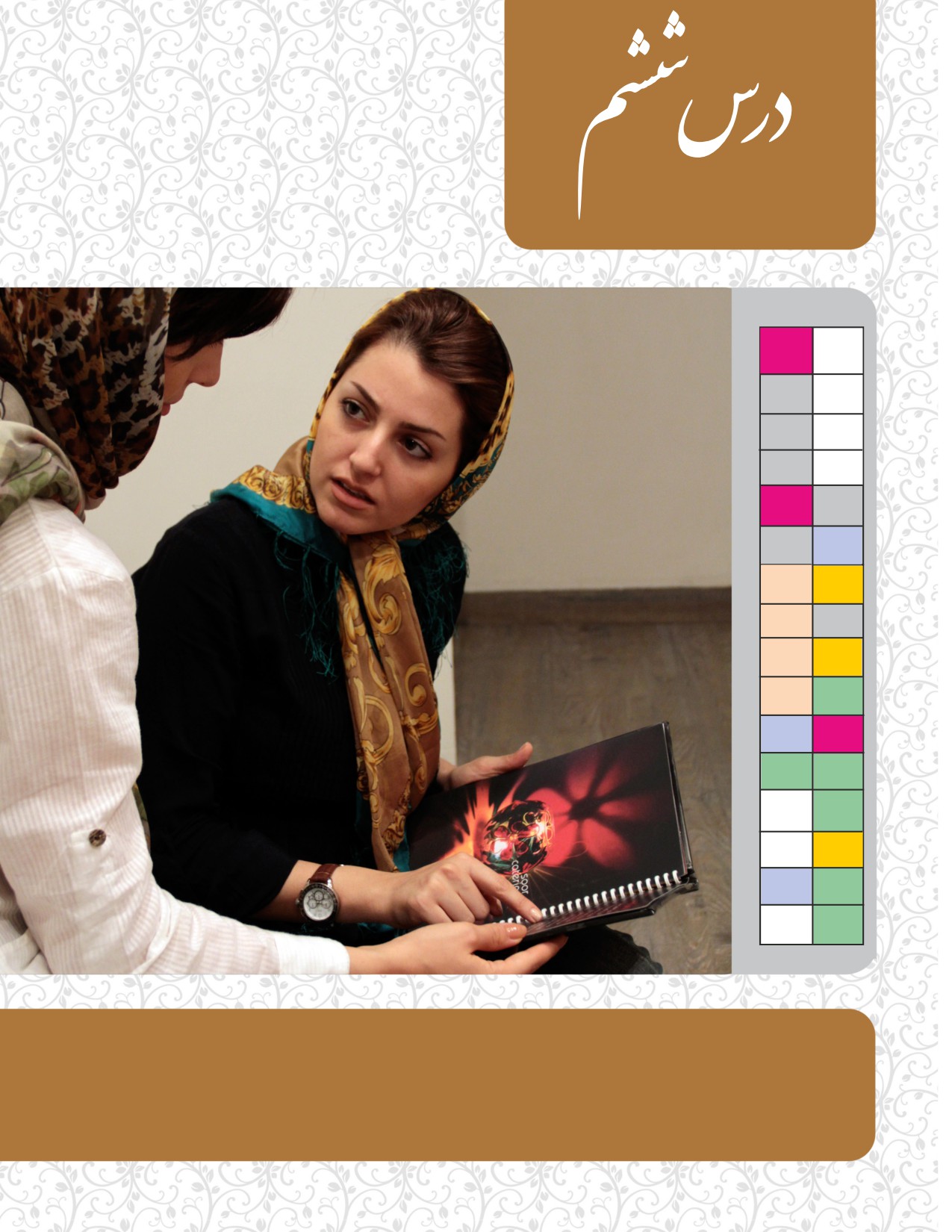
Who is this?
؟دنتسه یک نوشيا
1

Cultural Note یگنهرف تشاددای
Hospitality یزاوننامهم
Hospitality is a very important in Iranian culture. Accepting guests in one’s home at any time and in any situation,
inviting people over and serving delicious food with a smile and an open heart are considered fundamental to
Iranian culture. Meeting up with old and new friends is one of the most common pastimes among Iranians.
Regular social gatherings constitute a cultural practice that forms close relationships among Iranians. Such relationships
shape the social life of Iranians into a tightly woven network, which leaves little room for alone time. Although these
relationships provide a warm and supportive social environment, intense social interactions consume a majority of
people’s time in everyday life. They create socio-cultural norms and rituals which one must follow in order to be
accepted in the society. For example, inviting people to dinner is not just a hobby but rather the responsibility of
families, and neglecting such a responsibility may cause drama or clashes among family members.
Short Conversations هاتوک یاهوگتفگ
In class, listen to the audio files, repeat what you hear and try to fill in the blanks. At home repeat what you
hear several times and try to follow the rhythm. Write two sentences in Persian about each conversation you
hear (you can use made up names for the people who speak). During the next class time, you will work with a
classmate to create a scenario that uses these expressions.
؟نتسه
نوشيا .
.نتسه
نوشيا .
؟هنوشلاس
!
نووج .
.هنوشلاس
1
1
2
2
SHAHSAVARI | ATWOOD
102
؟
یک نوشيا .
؟هيک نيا .
.نتسه
،متسود .
.ديعس ،
نيا .
؟
داتسا ؟
؟یدج .
؟
.هلب .
!یلاع هچ !؟نتسه
نوشيا .
. ........................ نوا .
1
1
1
1
2
2
2
2
.....ع...ﻊ...ﻌ...ﻋ
...ذ
...ص...ﺻ...
ـــــ ديدشت
In this unit you will learn the symbol for doubling consonants and three more letters of the alphabet. Beginning in
this unit, you will learn some letters that represent the same sound as letters you’ve learned before in previous
units. This has to do with the origin of some words in Persian and it can make spelling tricky. However, this idea
is nothing new for you. Consider the English words “fish” and “phase.” How do you know “fish” starts with an “f”
and “phase” with a “ph”? You memorized it! And that’s what you’ll have to do in Persian too.
103
PERSIAN OF IRAN TODAY