PERSIAN OF IRAN TODAY AN INTRODUCTORY COURSE VOLUME 1 (2015) - page 2
3-1. Watch the video and write the following words.
.....................................يب
بيب
نانيا
.....................................يت
باي
نايب
.........................................................................ناياپ
يپ
3-2. Watch the video and write the following words.
..............................................ياپ
ايب
...............................................يا
يآ
4. Listen and check when you hear the /i/ sound in the word (as opposed to /e/).
□ .۵
□ .۴
□ .٣
□ .٢
□ .١
5. Circle the letter ي in the following text.
Report to your instructor how many ي you
identified in the text.
6. Listen and write the words you hear.
.٥
.۴
.٣
.٢
.١
.۱۰
.۹
.۸
.۷
.۶
SHAHSAVARI | ATWOOD
14
7. Listen and repeat the words you hear. Pay close attention to the sounds.
In class, read the following words with your partner.
تاپ .۵
تپ .۴
تپ .۳
تپ .۲
تيپ .۱
تن .۱۰
تن .۹
تان .۸
تن .۷
تين .۶
بيا .۱۵
بي .۱۴
بي .۱۳
بي .۱۲
باي .۱۱
8. Read the following words with your partner.
تن / تن .۴
تاپ / تپ / تپ .۳
تان /تن /تين .۲
تپ / تيپ .۱
باي / بي / بي .۶
بي / باي .۵
Part 7: vâv
/u/, /o/
_وا__و__
__و_←_و__
____و__
هنوپ
وا
ديشروخ
ود
داوس
ياو
1. Listen to the audio file for و vâv.
This letter also functions as both a consonant and a vowel. When it is used as a consonant, it is pronounced /v/.
When و is used as a vowel, it is pronounced /u/ or /o/. As a vowel, vâv is most often pronounced as an /u/. When
it is pronounced as an /o/ we have the option of marking it with a pish in vocalized texts. Like alef, this letter does
not connect to any following letter, so its shape does not change much.
Like ی the letter و is interpreted as a consonant sound when it is at the beginning of a word. In order to get an
/u/ sound at the beginning of a word, we must use the combination وا (alef + vâv).
2. Writing و : Watch the video and follow the instructions.
. . . . . . . . . . . . . . . . . . . . . . . . . . . . . . . . . . . . . . . . . . . . . . . . . . . . . . . . . . . . . . . . . . . . . . . . . . . . . . . . . . . . . . . . . . . . . . . . . . . . . . . . . . . . . . . . . . . . . . . . . . . . . . . . . . . . .و
15
PERSIAN OF IRAN TODAY
3. Watch the video and write the following words.
..................................................ناوت
وب
....................................................ابو
وا
4. Listen and check when you hear the /o/ sound in the word (as opposed to /u/).
□ .۶
□ .۵
□ .۴
□ .٣
□ .٢
□ .١
5. Circle the letter و in the following text.
Report to your instructor how many و you
identified in the text.
6. Listen and write the words you hear.
.١
.٢
.٣
.۴
.٥
SHAHSAVARI | ATWOOD
16
7. In class, read the following words with your partner.
وت .٥
يوان .۴
ناوات .٣
نابآ .٢
اوآ .۱
انوا
.١۰
پوت .٩
نوا .٨
توا .٧
ابوت .٦
8. Connect the letters to form words and read them after you have connected them.
ا + ن + ي + ن .۱
ي + ا .۲
ن + ا + ي + ب .۳
ن + ا + ي + ا + پ .۴
ي + ب + آ .۵
ن + ا + ن + و + ي .۶
9. Listen to the following words. Write the missing letters in the blank and rewrite the word.
ا ــ ـب .٦
ــــ ا ـــآ .١
ـــ ـبآ .٧
پ ـــ ـپ .٢
ت ــ او .٨
ا ــ ا ــ ـت . ٣
ي ــآ .٩
ي ــ و .۴
نا ــ ـت .١۰
تا ــ ـن .٥
10. In class, read the following words with your partner.
زوآ .۵
زاوآ .۴
زوا .٣
زوا .٢
زاوآ .۱
زوا .۱۰
زوا .۹
زوآ .٨
زاوا .٧
زاوا .٦
17
PERSIAN OF IRAN TODAY
Vocabulary
ناگژاو
1. Listen to and learn these words. The spoken variations have been included in parentheses.
In order to write several sentences below you need to know how to write the word “is” (/ast/) in Persian. س is
called sin and it corresponds to the English /s/ as in the word “seen.” You can check to see how it is written in Unit 2
before you read the following sentences. When you have finished Unit 2, come back and review the following words.
this
).هنايار نيا( .تسا نايار نيا
نيا .۱
.تسا یناريا نان ،نان نآ
that
)نوا( نآ .۲
).هيناريا نون ،نون نوا(
Iran
).هناريا نيا( تسا ناريا نيا
ناريا .۳
is
).تساراس نيا( .تسا اراس نيا
)ﻪ/ه( تسا .۴
bread
.تسا یناريا نان نيا
)نون( نان .۵
2. Listen to the audio file again. Based on what you hear, write the vowels on the example sentences.
Now listen to the next audio file. Write the sentences you hear and translate them to English.
Listening Comprehension رادينش کرد
1. Watch Videos 1-3 and transcribe the conversation you hear.
SHAHSAVARI | ATWOOD
18
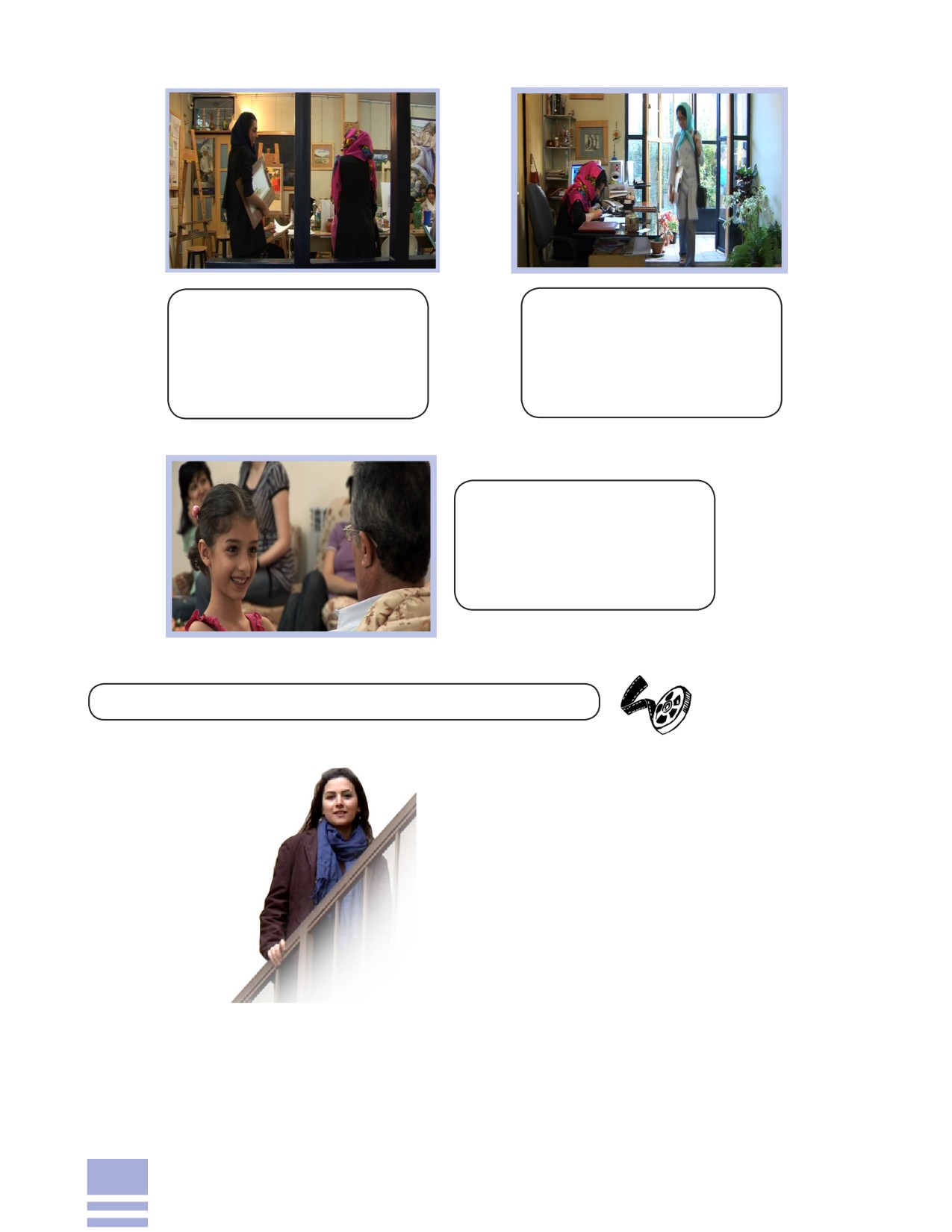
2. Watch Videos 4 and 5 and answer the following questions in Persian.
1- What is the girl’s name?
2- Do you hear any numbers? What are they?
19
PERSIAN OF IRAN TODAY

Grammar Note
یروتسد تشادداي
1. A Note on Names
Many Iranian family names end with /i/:
Karimi
Milani
Shushtari
Think of 5 Iranian last names you know which end with /i/ and write them here (in English).
.۴
.١
.٥
.٢
.٣
2 . Derivation
Since Persian is an Indo-European language, its structure is similar to that of English and other related languages.
Like English, Persian words consist of word stems, prefixes, and suffixes, all of which change the meaning of the
word. Look at the following sets of words in English and see if you can identify the different parts of the words.
Likeness, likely, unlikely, likelihood
Spain, Spanish
Activity, hyperactive
What this means for you as a learner of Persian is that you will be able to leverage the structure of the language
to your benefit. As you learn more of the word-building pieces (stems, prefixes, and suffixes), you will be able to
learn new words more quickly and even create words from roots, prefixes and suffixes you know. The first suffix
we will look at is /i/. Look at the following words in transcription and try to guess how the /i/ at the end of the
words changes the meaning of the stem word in this context.
/tehrân/(Tehran), /tehrâni/
/arab/ (Arab), /arabi/
/bârân/ (rain), /bârâni/
SHAHSAVARI | ATWOOD
20
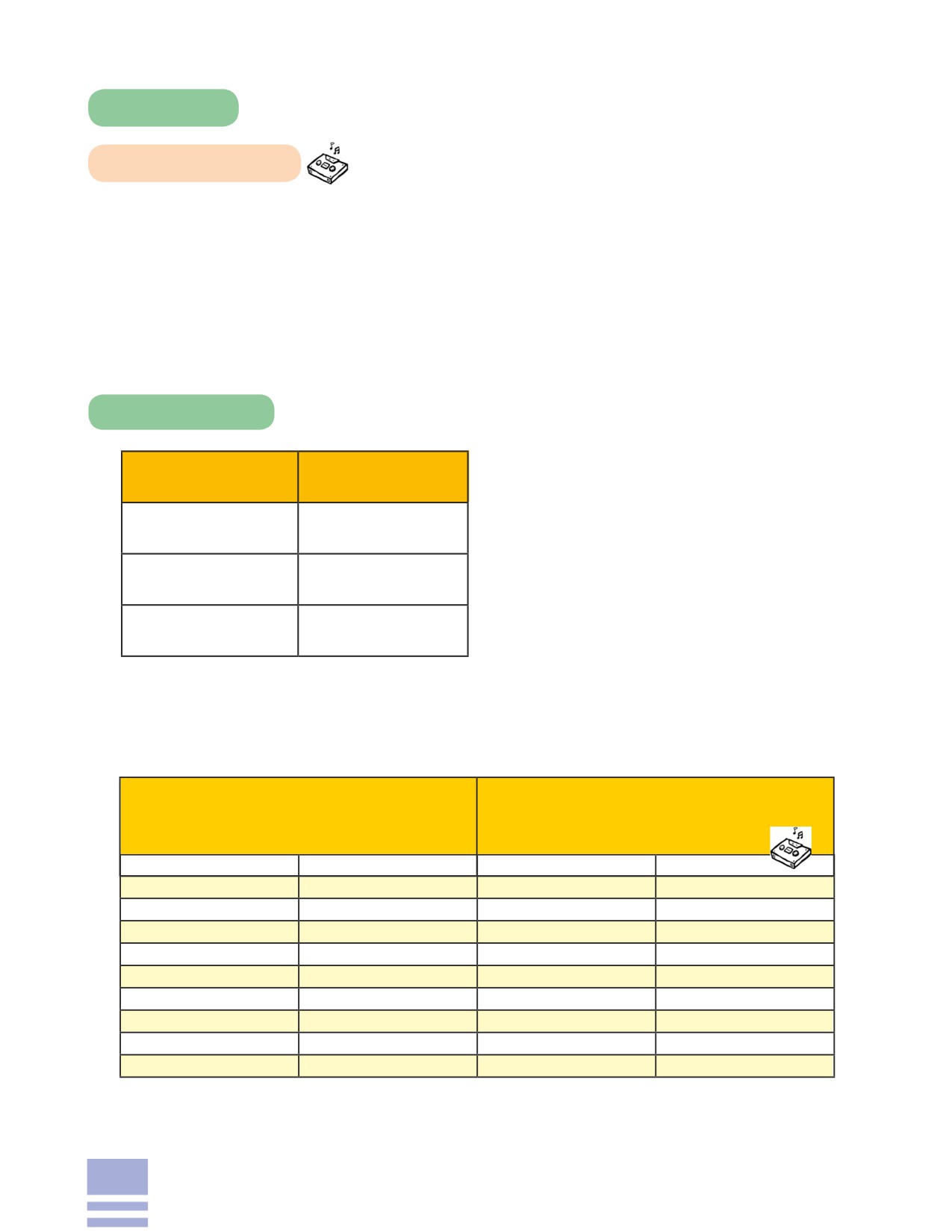
3. Word Stress
Listen to the following words.
یناريا
ملس
وجشناد
In Persian the stress generally falls on the final syllable of the word. The exceptions include verbs, conjunctions,
indefinite nouns, and the interrogative particle “âyâ,” among others. We will examine these exceptions in future units.
4. Syllable Structure
Written form in English
Pronunciation
Syllables in Persian
Firouz
Fi/ruz
Syllables may be structured as C V (C) (C)*
Firouzeh
Fi/ru/ze
* C = Consonant, V = Vowel
Omid/Omeed
O/mid
One syllable in each word (or breath group) is stressed, and knowing the rules is conducive to proper pronunciation.
Stress falls on the last stem syllable of most words.
Several Iranian names with their pronunciation
Listen to the audio file and write the pronunciation
are listed below.
for each name. Divide the words according to their
syllables, like the examples to the left.
Written Form
Pronunciation
Written Form
Pronunciation
Afshin
af-shin
Sanaz
Kasra
kas-râ
Farangis
Kaveh
kâ-ve
Amirali
Arzhang
ar-zhang
Alireza
Bahman
bah-man
Fatemeh
Bardia
bar-diyâ
Elnaz
Behrang
beh-rang
Hasan
Bozorgmehr
bo-zorg-mehr
Ehsan
Kamiar
kam-yâr
Masud
21
PERSIAN OF IRAN TODAY
Classroom Activities سلک رد یداهنشيپ یاهتيلاعف
1. عيرس یباي تسود
Watch the following video in class and try to guess what it’s about:
Now, arrange your chairs in two rows so that you are facing one other person. Mimic what you’ve seen in the
video and have a short converstion with your partner. Make sure you use the greetings that you’ve learned in the
short conversations. If you like your partner, ask him or her for a phone number. After one minute, row one will
move to the right, and row two will remain. Have another short converastion and repeat until you have spoken
with all the people in the other row!
2. هگیم نارماک
At home, use the audio file to learn the following commands.
look negâh konid
listen gush konid
read bekhunid
write benevisid
see
bebinid
work kâr konid
say
begid
In class, play a variation of the game “Simon Says!”, “Kamran mige,” which means “Kamran says.” To begin, one
student will stand in front of the class and all of the other students will stand up. The person who is it will give
commands to the class and you must act out the command when it is preceeded by “Kamran mige...” If s/he does
not say “Kamran mige...” and you act out the command then you are out and must sit down. You are also out if
you do not know the command and cannot act it out! Once everyone but one person has been elimanated, a
winner is crowned! The winner of the previous round plays “Kamran” in the new round. Continue playing until
everyone has been it.
3. Name Game: Use the Grammar Note on Iranian names to make up an Iranian name for yourself. Form a
circle with your classmates. The first person in the circle should introduce him/herself using the Iranian name that
s/he picked and then must ask the next person in the circle what his/her name is. The next person says, “My name
is...,” and then introduces the first person before asking the next person what his/her name is. The next person
must introduce him/herself and say the names of all the people who came before.
SHAHSAVARI | ATWOOD
22
UNIT 2
ص
آ
ض
ب
ط
پ
ظ
ت
ع
ث
غ
ج
ف
چ
ق
ح
ک
خ
گ
د
ل
ذ
م
ر
ن
ز
و
ژ
ه
س
ي
ش
Thank you!
نونمم یليخ
2
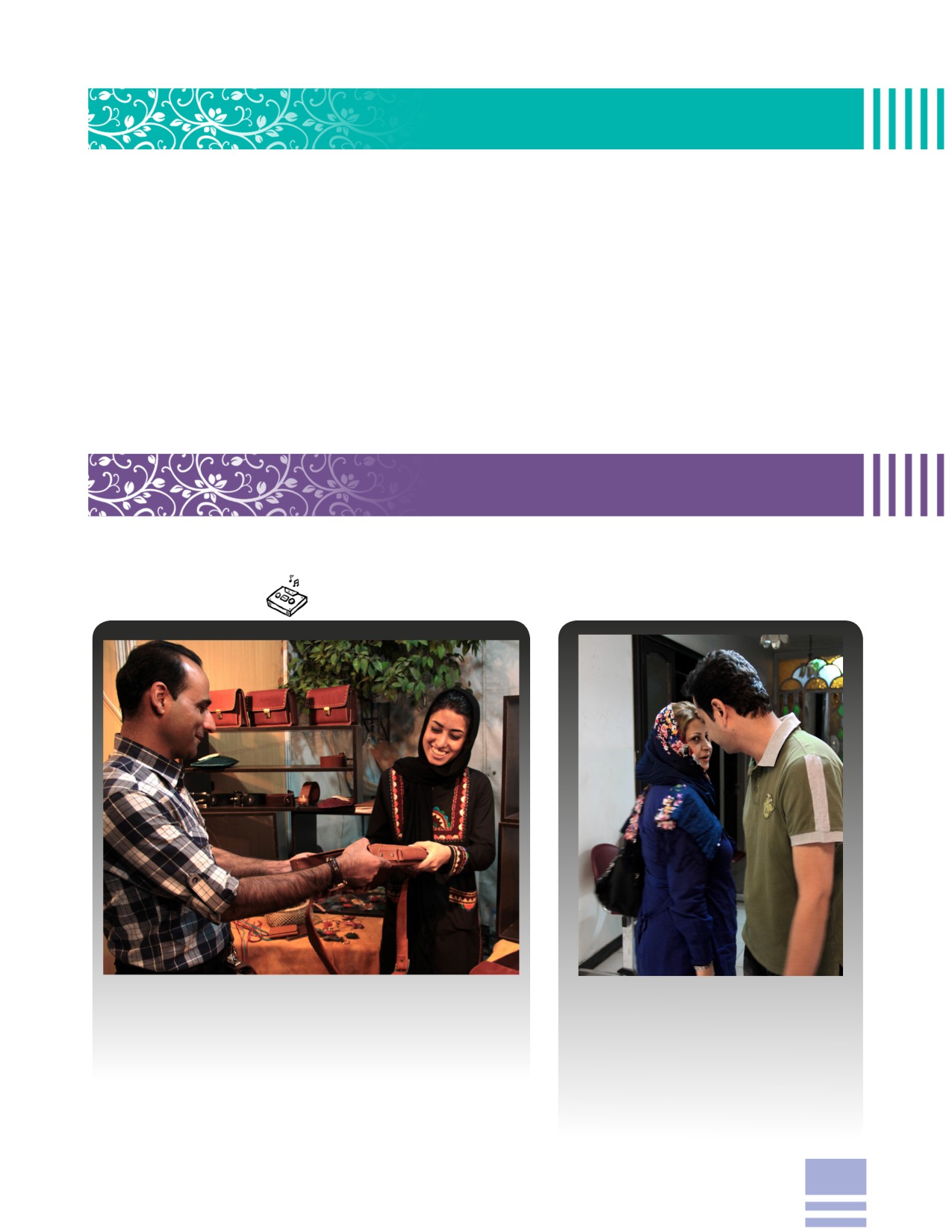
Cultural Note یگنهرف تشاددای
Greetings 2
۲ یسرپلاوحا و ملس
منونمم [mamnunam] is the shortest word to give thanks to someone. It is also one response to «امش لاح
؟هروطچ» [hâl-e shomâ chetore?], and it shows your respect to the person who greets you. منونمم [mamnunam]
is usually followed by other phrases such as امش نابرق [qorbân-e shomâ] or مدنمتدارا [erâdatmandam]. These
phrases, which carry an exaggerated meaning, are part of a system of politeness in Iranian culture called taarof.
These words and phrases are used in conversations to show the warmth of people’s relationships and to indicate
friendliness in daily greetings. These greetings are often used with a smiling face and humble gestures (i.e. placing
one’s right hand on the chest and bending forward slightly).
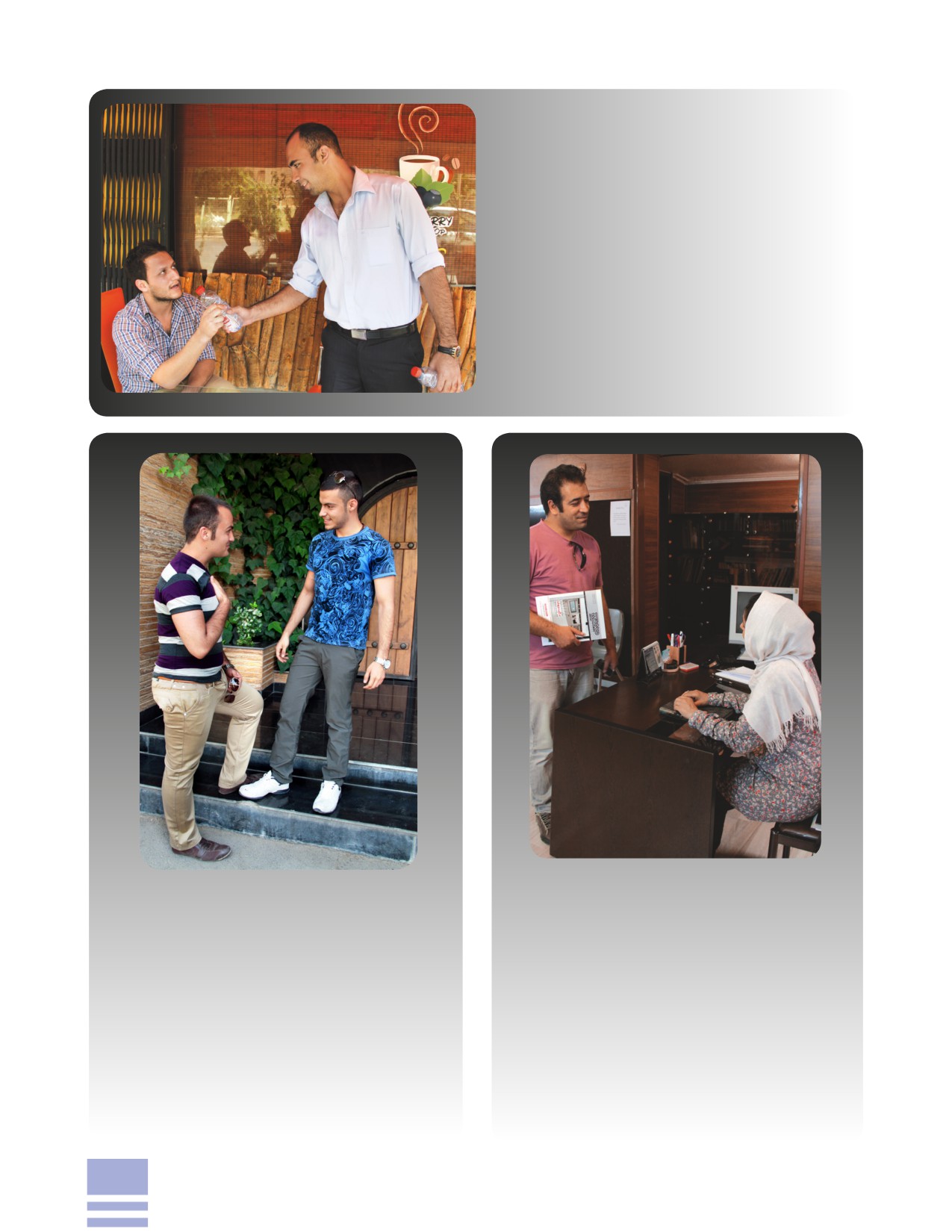
Short Conversations هاتوک یاهوگتفگ
In class, listen to the audio files and transcribe the conversations. At home repeat what you hear several times
and try to follow the rhythm. During the next class time, you will work with a classmate to create a scenario that
uses these expressions.
.تسا هدش هتشون باتک یاهتنا رد اهوگتفگ نیا یسراف نتم
SHAHSAVARI | ATWOOD
24
25
PERSIAN OF IRAN TODAY
....ه...ﻪ
...ا
...م...ﻣ...
...ش..ﺷ...
...س...ﺳ...
...ز
...ر ...
...د...
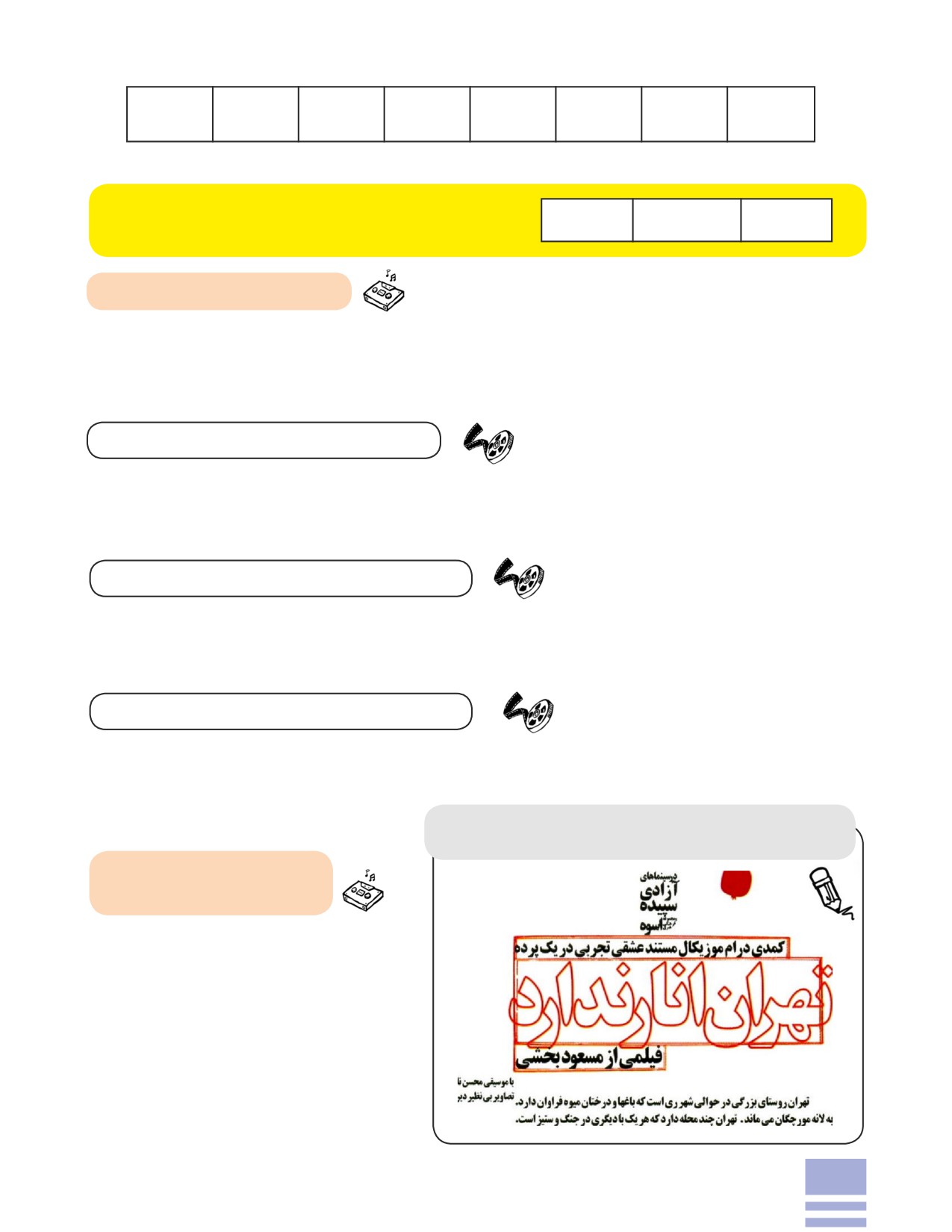
In this unit, you will be introduced to seven more letters and sounds of the Persian alphabe t.
____د___
داب
ردپ
دود
Part 1: dâl
/d/
1. Listen to the audio file for د dâl.
This consonant is pronounced like a clear, frontal /d/ in English, as in the word “dentist” (not like the /d/ sound
in “puddle”). Pay close attention to your pronunciation of medial and final د , making sure to pronounce a crisp
d sound. The letter د does not connect to any letter that follows it.
2. Watch the video and follow the instructions.
................................................................................................................د
3-1. Watch the video and write the following words.
...........................نادابآ
دب
داب
اناد
3-2. Watch the video and write the following words.
...................................................دود
دوب
5. Circle the letter د in the following text. Report to your
instructor how many د you identified in the text.
4. Listen and check when you
hear the /d/ sound in the word.
□ .١
□ .٢
□ .٣
□ .۴
□ .٥
SHAHSAVARI | ATWOOD
26
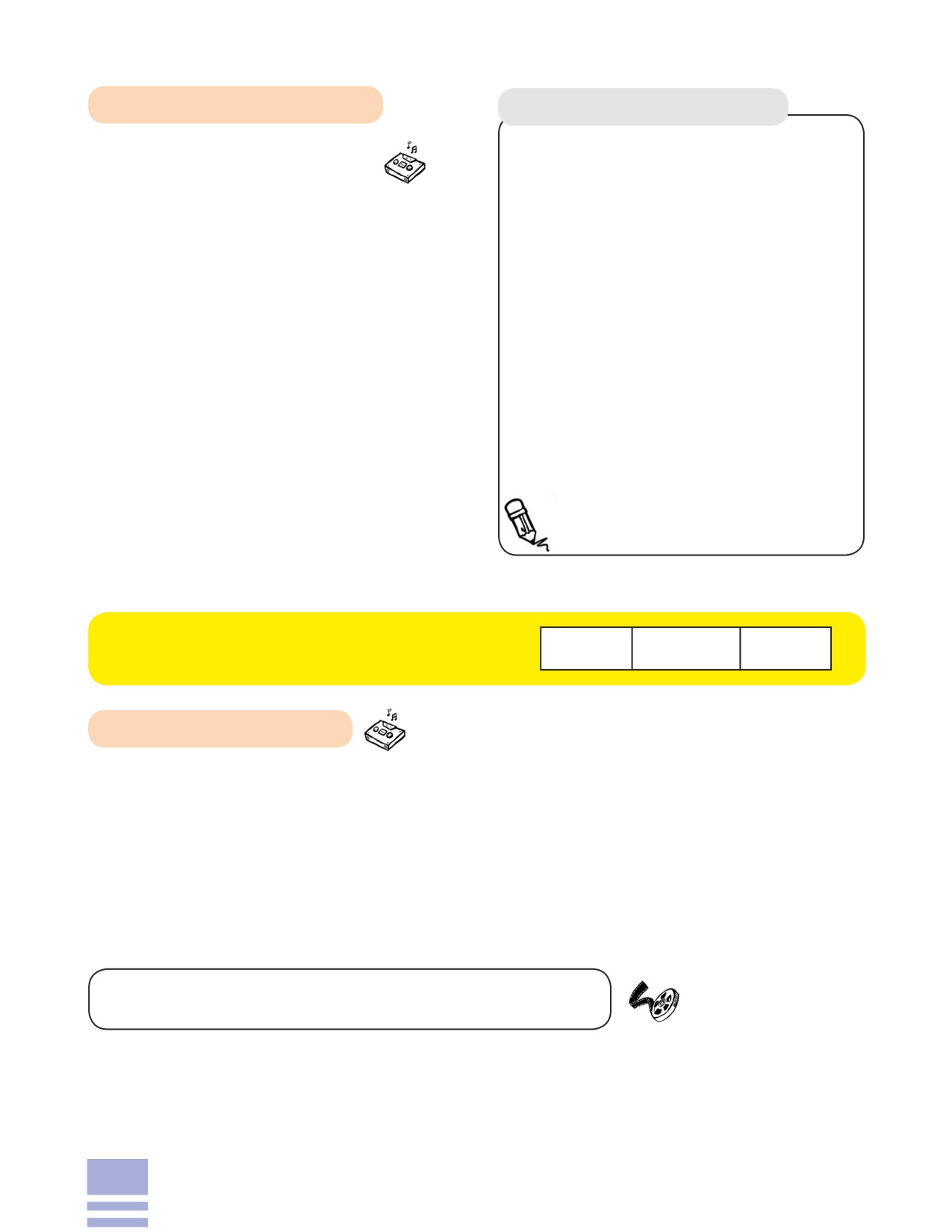
6. Listen and write the words you hear.
7. Connect the letters to form words.
ي + د + ا + ب .۱
د + ا + د + ي + ب .۲
.١
ي + د + ب .۳
.٢
ي + د + ا + ب + آ .۴
.٣
ن + د + و + ب .۵
.۴
ی + و + د + ب .۶
ن + ا + د + ن + د .۷
.٥
____ر___
رسپ
ردارب
دور
Part 2: re
/r/
1. Listen to the audio file for ر re.
This sound is similar to the Spanish or Italian /r/, sometimes called a flap. You already know how to make this
sound. It is similar to the sound American English speakers make when saying “gotta” as in “gotta go.” Say “gotta”
several times in a row very quickly and pay attention to what your tongue is doing. You should feel it flapping
against the roof of your mouth behind your teeth. Now pronounce the sound alone. Another good exercise is
to practice making a whirring sound: rrrrrrrrrr. Do these exercises daily until you have mastered this sound. This
letter is a nonconnector, meaning it does not connect to any letters following it.
2. Watch the video and follow the instructions. Note that the character
is slightly different when typewritten than when handwritten.
............................................................................................................ر
27
PERSIAN OF IRAN TODAY
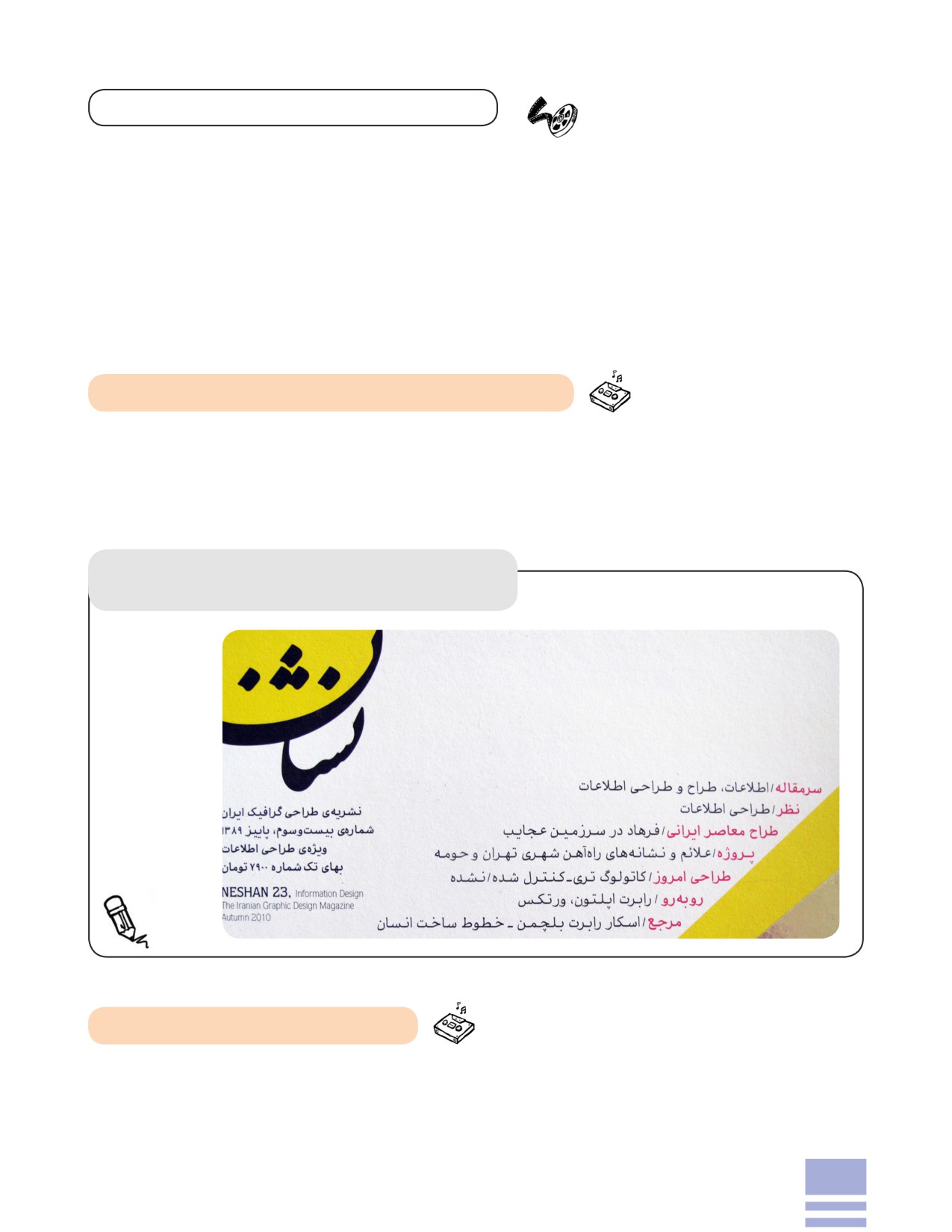
3. Watch the video and write the following words.
................................ربب
باراد
رد
................................ريپ
ريد
ربت
.............................درادن
درد
اپورا
4. Listen and check when you hear the /r/ sound in the word.
□ .۵
□ .۴
□ .٣
□ .٢
□ .١
5. Circle the letter ر in the following text. Report to your
instructor how many ر you identified in the text.
6. Listen and write the words you hear.
.٥
.۴
.٣
.٢
.١
SHAHSAVARI | ATWOOD
28
7. Connect the letter to form words and read them.
ن + ا + و + ي + د .۱
ي + ب +د .۲
ن + ا + د + ن + د .۳
ن + د + و + ب .۴
ن + د + ب .۵
ا + د + ي + پ .۶
8. In class, read aloud the following words with your partner.
ناريا .٧
ور .٦
راب .٥
ردپ .۴
رادار . ٣
وربا .٢
ناراب .١
ديرادن .۱۴
ريات .۱۳ ديدرب .۱۲
دراد .۱۱
رادرب .۱۰
وربور .٩
يرادن .٨
درب .۱۸
ناروپ .۱۷
ريس .۱۶
نارود .۱۵
____ ز___
زورید
گرزب
دوز
Part 3: ze
/z/
1. Listen to the audio file for ز ze.
This consonant corresponds to the English sound /z/ in “zebra.” The letter ز is a nonconnector and has the same
shape as ر except that it takes one dot above.
2. Watch the video and follow the instructions.
...................................................................................................................ز
29
PERSIAN OF IRAN TODAY
3. Watch the video and write the following words.
.....................................................روبنز
دوز
.........................................................زب
رازاب
........................................................نز
زور
4. Listen and check when you hear /z/ sound in the word.
□ .۵
□ .۴
□ .٣
□ .٢
□ .١
5. Circle the letter ز in the following text. Report to your
instructor how many ز you identified in the text.
6. Listen and write the words you hear.
.٥
.۴
.٣
.٢
.١
.۱۰
.۹
.۸
.۷
.۶
SHAHSAVARI | ATWOOD
30
Part
4: sin
/s/
_س__ﺳ___
سراف
سيد
تسيب
هراتس
1. Listen to the audio file for س sin.
This letter is called sin and it corresponds to the English “s” as in the word “seen.” Remember that English “s” represents
several different sounds, the most common of which is /z/ (like “easy” or plural ending, as in “dogs” or “bugs”).
Persian س on the other hand, always retains the soft /s/ sound as in “song.”
2. Watch the video and follow the instructions.
...............................................................................................س
ﺳ
3. Watch the video and write the following words.
..........................................................ايسآ
زبس
........................................................سيخ
رس
.......................................................يسراپ
سيسران
......................................................نيرسن
رايسب
......................................................... رسپ
تسيب
4. Listen and check when you hear the /s/ sound in the word.
□ .۵
□ .۴
□ .٣
□ .٢
□ .١
31
PERSIAN OF IRAN TODAY
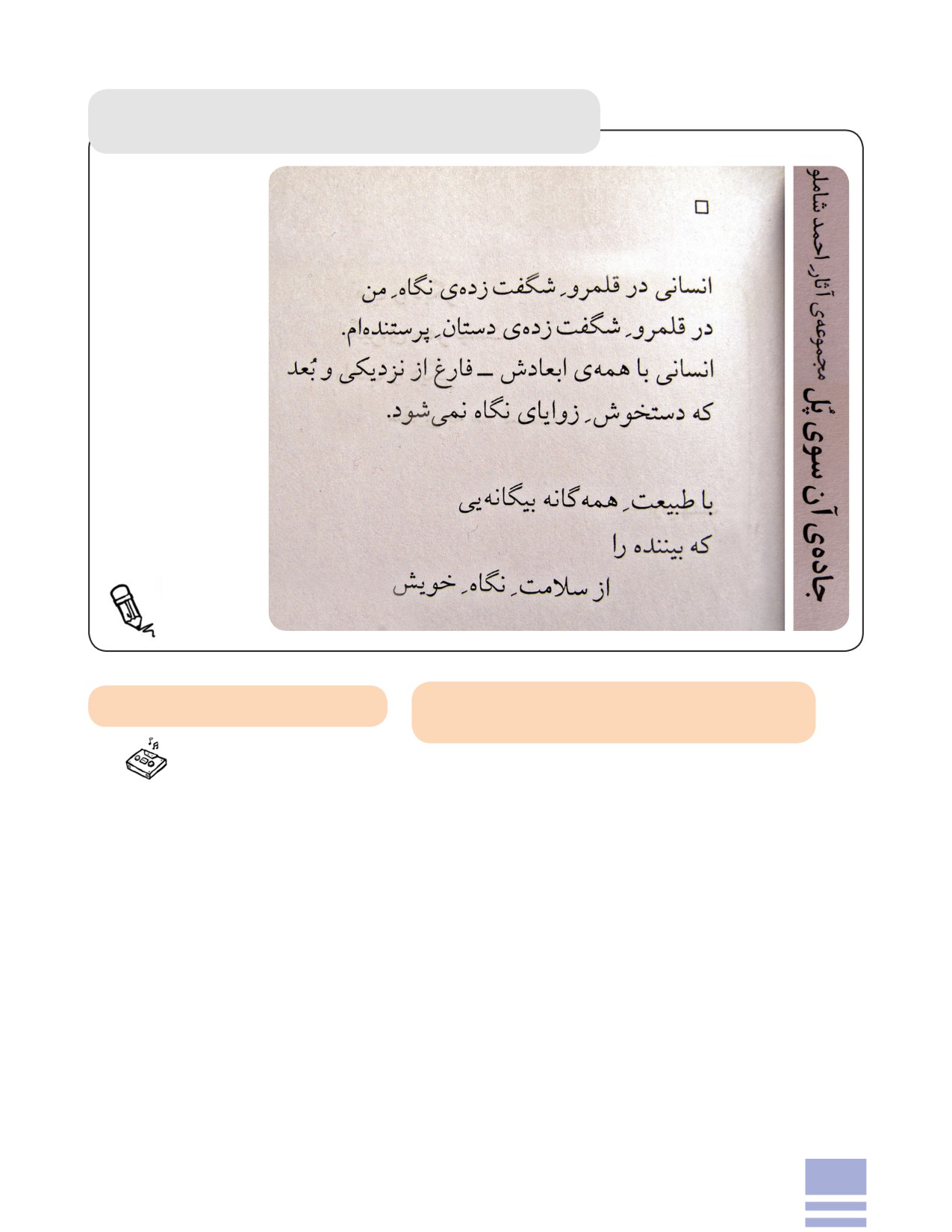
5. Circle the letter س in the following text. Report to your instructor
how many س you identified in the text.
6. Listen and write the words you hear.
7. Connect the letters to form words. Make sure your
answers fit on the line provided.
ن + ي + ز + و .١
.٢
.١
س + و + ر .٢
.۴
.٣
ت + ي + ز + ي + و . ٣
.۶
.٥
س + ي + ر + ا + پ .۴
ن + ا + د + ز + ي .٥
.۸
.۷
ا + م + ي + س .٦
.۱۰
.۹
ي + د + ا + ز + آ .۷
SHAHSAVARI | ATWOOD
32
8. Listen to the following words. Write in the missing letter or letters and
rewrite the completed words on a separate piece of paper.
نا ـــــــوتسر .۳
رو ـــــــناس .۲
د ـــــــد .۱
ز ـــــــپ . ۶
ـــــــوريو .۵
ـــــــيرپ .۴
سي ـــــــوس .۹
ـــــــزود .۸
ادو ـــــــ .۷
پ ـــــــز .۱۲
ان ـــــــ ـس .۱۱
زو ـــــــ .۱۰
ي ـــــــيد .۱۵
س ـــــــي .۱۴
نات ـــــــوب .۱۳
نات ــــــــبات .۱۸
ز ـــــــر .۱۷
ـــــــينت .۱۶
9. Read the following words aloud with your partner.
دايز .۴
انيس .۳
زوريرپ .۲
زوريد .۱
ربز .۸
نايسراپ .۷
ريز .۶
ناسآ .۵
روز .۱۲
يس .۱۱
زر .۱۰
بيسآ .۹
زيياپ .۱۶
زاناس .۱۵
زودب .۱۴
پوس .۱۳
نيتسآ .۲۰
سيد .۱۹
زودن .۱۸
سينت .۱۷
Part 5: shin
/sh/
_ش__ﺷ___
شوم
رتشيب
تبرش
1. Listen to the audio file for ش shin
The letter shin corresponds to the sound sh in shoe. It is written exactly like س , but with three dots above
it in an upside-down v-shape.
33
PERSIAN OF IRAN TODAY
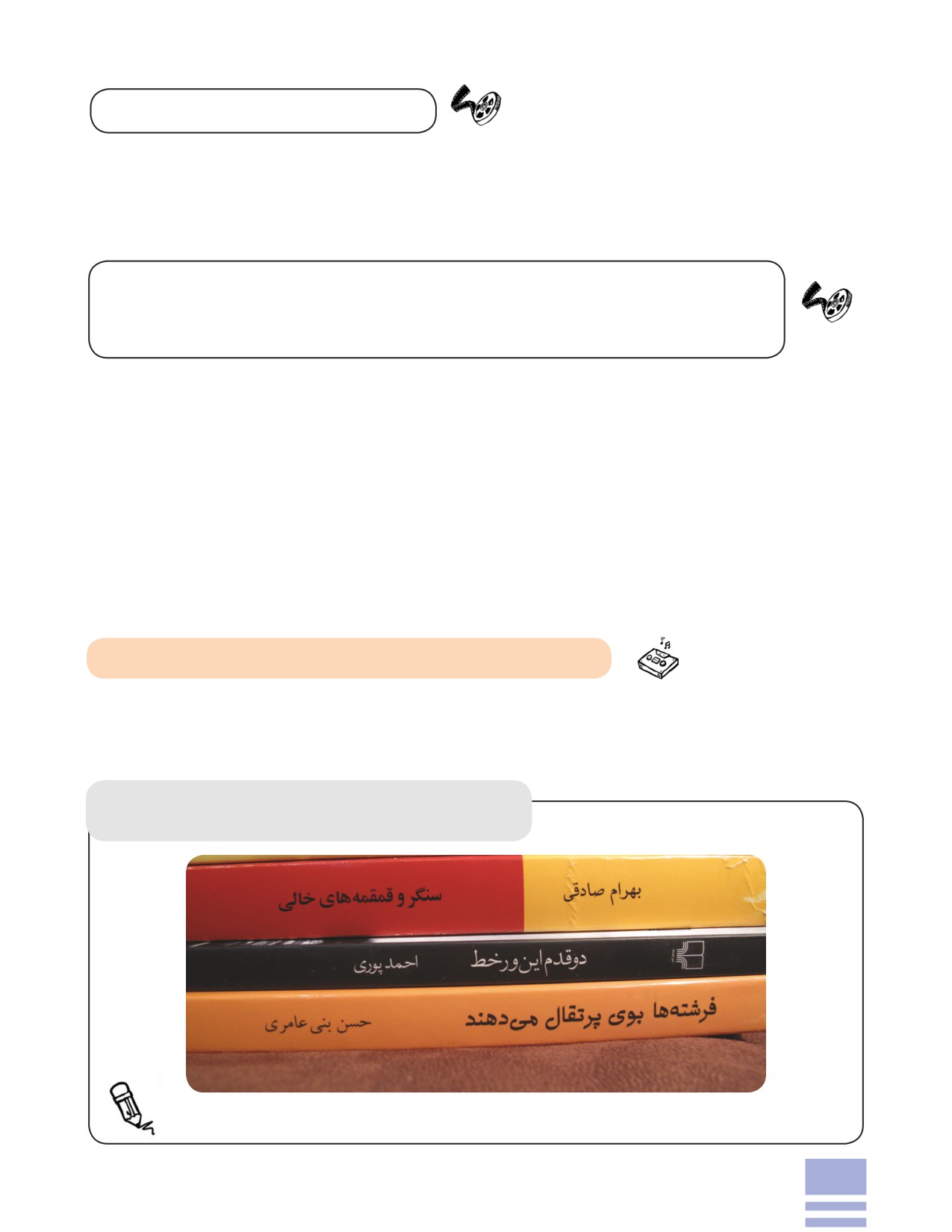
2. Watch the video and follow the instructions.
.................................................................................................ش
ﺷ
3. Watch the video and write the following words. You’ll notice that three words have a letter you
don’t recognize. Try writing these words like you see in the video and you will learn more about
this letter in the next part.
.............................. نيريش
تداشر
داش
................................شوم
روش
شير
...................................دش
شش
شيورد
...............................بشما
وتشپ
تروشم
4. Listen and check when you hear the /sh/ sound in the word or phrase.
□ .۵
□ .۴
□ .٣
□ .٢
□ .١
5. Circle the letter ش in the following text. Report to your
instructor how many ش you identified in the text.
SHAHSAVARI | ATWOOD
34
6. Listen and write the words you hear.
.٥
.۴
.٣
.٢
.١
.۱۰
.۹
.۸
.۷
.۶
Part 6: mim
/m/ _م__ﻣ___
ماش
ميب
راميب
درم
1. Listen to the audio file for م mim.
The pronunciation of the letter mim corresponds to the English “m” as in “may.”
2. Watch the video and follow the instructions.
....................................................................................................م
ﻣ
3. Watch the video and write the following words.
..............................ماش
شوم
تسام
..............................مسا
درم
مور
...........................ناماس
رمک
تمس
4. Listen and check when you hear the /m/ sound in the word.
□ .۵
□ .۴
□ .٣
□ .٢
□ .١
35
PERSIAN OF IRAN TODAY
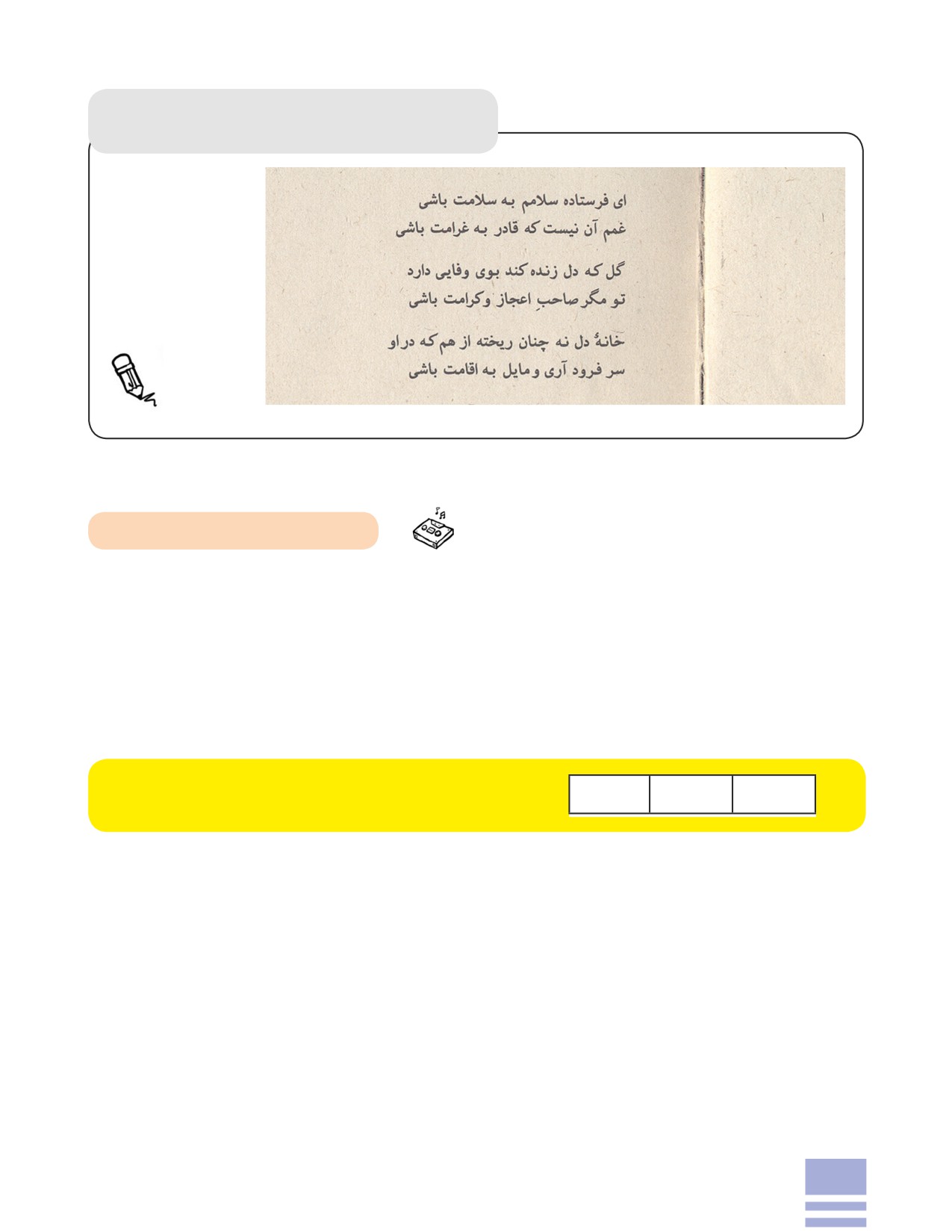
5. Circle the letter م in the following text. Report to
your instructor how many م you identified in the text.
6. Listen and write the words you hear.
.٥
.۴
.٣
.٢
.١
.۱۰
.۹
.۸
.۷
.۶
_ه__ﻪ___
Part 7: e âkhar
/e/
هناش
هروک
هس
1. Listen to the audio file. The first word you hear is emruz, which starts with the /e/ sound (zir). This word is
not included in the box above, but we have included it to let you know that the sound /e/ which starts emruz is
represented by a different letter when it comes at the end of the word.
This letter, called he, has two functions in Persian, the first of which you will learn now. With this first function, he
represents the vowel sound /e/ in Desirée. but only when it comes at the very end of a word and is preceded by
a consonant and not another vowel.
SHAHSAVARI | ATWOOD
36
2. Watch the video and follow the instructions.
..........................................................................................ﻩ
ﻪ
ا
3. Watch the video and write the following words.
. . . . . . . . . . . . . . . . . . . . . . . . . . . . . . . . . . . . . . . . . . . . . . . . . . . . . . . . . . . . . . . . . . . . . . . . . . . . . . . . . . . . . . . .هبنش
هس
. . . . . . . . . . . . . . . . . . . . . . . . . . . . . . . . . . . . . . . . . . . . . . . . . . . . . . .هروک
هناش
هيروس
4. Listen and check when you hear the /e/ sound in a word that
is written with ه.
□ .۵
□ .۴
□ .٣
□ .٢
□ .١
5. Circle the letter ه in the following text. Report to your instructor
how many ه you identified in the text.
6. Listen and write the words you hear.
.٥
.۴
.٣
.٢
.١
.۱۰
.۹
.۸
.۷
.۶
37
PERSIAN OF IRAN TODAY
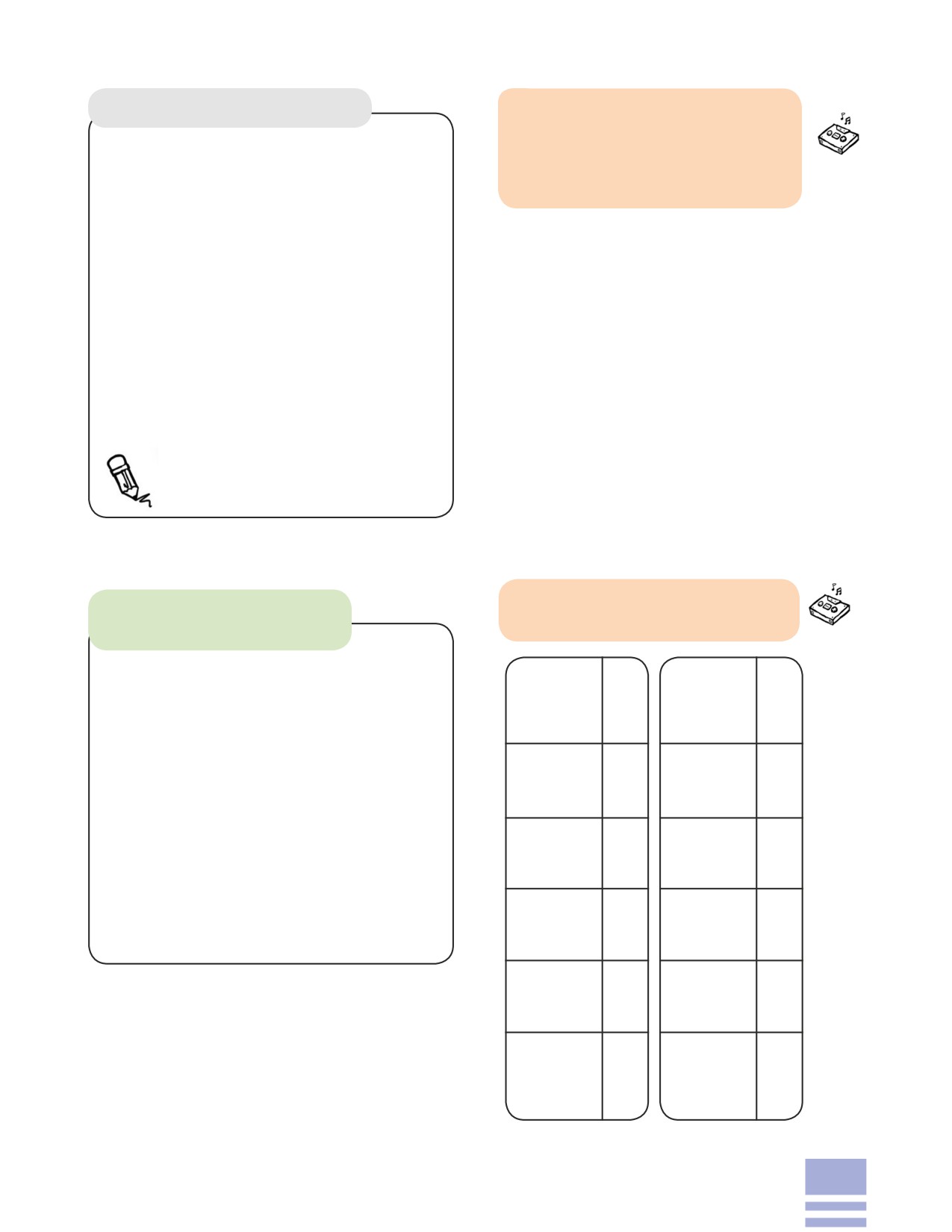
7. Connect the letters to form words.
8. Listen to the following words. Fill in
the missing letter or letters and rewrite
the completed word on a separate piece
ش + و + ر .١
of paper.
ه + و + ي + م .٢
وپـــــاش .۲
روـــــورب .۱
ت + ر + ا + ش + ب . ٣
نيشاـــــ .۴
ـــــﻴـﺷ .۳
روـــــوت .۶
رـــــش .۵
ه + ر + ا + و +س .۴
ر ـــــام .۸
بـــــب .۷
ه + ش + و + پ .٥
نوزا ـــــآ .۱۰
يـــــرم .۹
د + ا + ت + س + ا .٦
ت ـــــم .۱۲
ناتسنـــــرا .۱۱
م + د + ر + م .٧
نات ــــراميب .۱۴
ت ـــــم .۱۳
اد ـــــش .۱۶
ـــــوم .۱۵
رـــــشبآ .۱۸
يتـــــآ .۱۷
10. Listen to the audio file and mark the
9. Read the following words aloud
word you hear.
with your partner.
داب O
دوب O
هدنرب .۳
متير .۲
شوش .۱
۷
۱
دب O
دب O
هداس .۶
نيماتيو .۵
هسردم .۴
دد O
روپ O
يميش .۹
هراوس .۸
موسرم .۷
۸
۲
داد O
رپ O
رشرش .۱۲
ايموم .۱۱
هدايپ .۱۰
راد O
ران O
تبرش .۱۵
نايم .۱۴
هداد .۱۳
۹
۳
رد O
رن O
زيمت .۱۸
زوم .۱۷
هدنمرش .۱۶
ريس O
روش O
۱•
۴
ناتسمز .۲۱
ردام .۲۰
هشيش .۱۹
رس O
رش O
روس O
راد O
۱۱
۵
رس O
رد O
رود O
رات O
۱۲
۶
رد O
رت O
SHAHSAVARI | ATWOOD
38
Vocabulary
ناگژاو
1. Listen to the following words and memorize them. The spoken variations are included in parentheses.
I
؟نم
نم .۱
you (plural or respectful singular)
؟امش
امش .۲
friend / my friend
).هنم تسود نيا( .تسا نم تسود نيا
متسود/تسود .۳
I have / I do not have
).مرادن نون نم( .مرادن نان نم
مرادن /مراد .۴
you have / you do not have
)؟نيراد نون امش( ؟ديراد نان امش
ديرادن /ديراد .۵
I like
)؟نيراد تسود نون( ؟ديراد تسود نان
مراد تسود .۶
I do not like
)!؟مرادن تسود نون نم(
!؟مرادن تسود نان نم
مرادن تسود .۷
you like
)؟نيرادن تسود نون( ؟ديرادن تسود نان
ديراد تسود .۸
you do not like
)؟نيرادن تسود نون امش( ؟ديرادن تسود نان امش
ديرادن تسود .۹
brother
.مرادن ردارب نم
ردارب .10
sport, exercise
)؟نيرادن تسود شزرو( ؟ديرادن تسود شزرو
شزرو .11
sweets, dessert
)نيراد تسود ينيريش امش( ؟ديراد تسود ينيريش امش
ينيريش .۱2
ice cream
.مراد تسود ينتسب نم
ينتسب .۱3
mother
).هنم ردام نوا( تسا نم ردام وا
ردام .۱4
father
).تسامش ردپ نوا( .تسا امش ردپ وا
ردپ .۱5
he, she
)هنم ردارب نوا( .تسا نم ردارب وا
)نوا( وا .۱6
he, she (polite)
).تسامش ردپ نوشيا( . تسا امش ردپ نوشيا
)نوشيا( ناشيا .۱7
thirsty
)تسهنشت نم ردام( .تسا هنشت نم ردام
هنشت .۱8
and
.مراد تسود ینيريش و ینتسب نم
و .۱9
pomegranate
.مراد تسود رانا نم
.20
رانا
apple
.مراد تسود رانا و بيس
بيس .21
almond
)؟نيراد تسود موداب( ؟ديراد تسود ماداب
ماداب .۲2
but
.مراد تسود رانا اما ،مرادن تسود بيس
اما .۲3
tennis
.مراد تسود سينت اما ،مرادن تسود شزرو
سينت .۲4
soup
).هراد موداب پوس نيا( .دراد ماداب پوس نيا
پوس .۲5
2. Listen to the audio file again. Based on what you hear, write the vowel on the example sentences. Now listen
to the next audio file. Write the sentences you hear and translate them to English.
39
PERSIAN OF IRAN TODAY
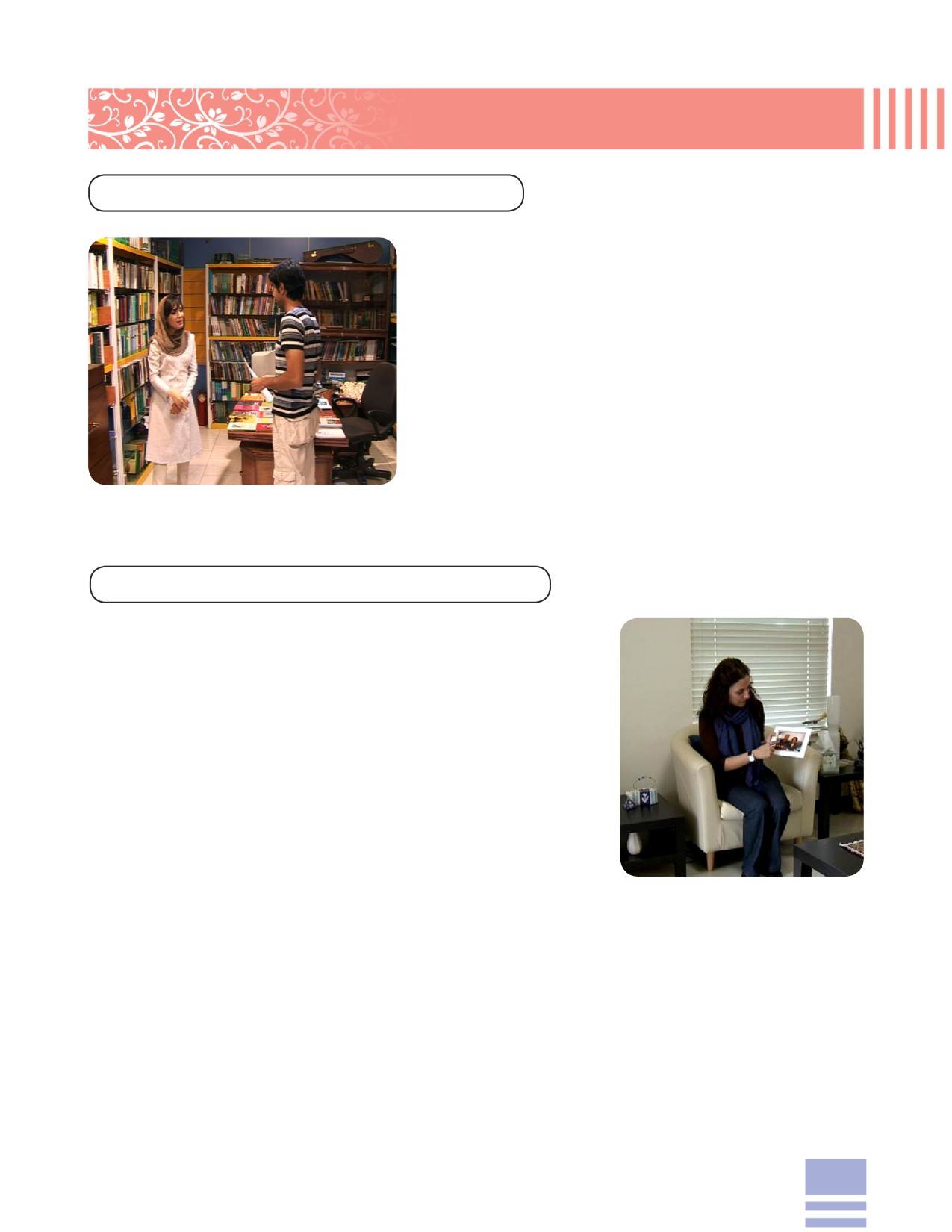
Listening Comprehension رادينش کرد
1. Watch Video 1 and transcribe the conversation you hear.
•
• .
• .
• .
• .
•
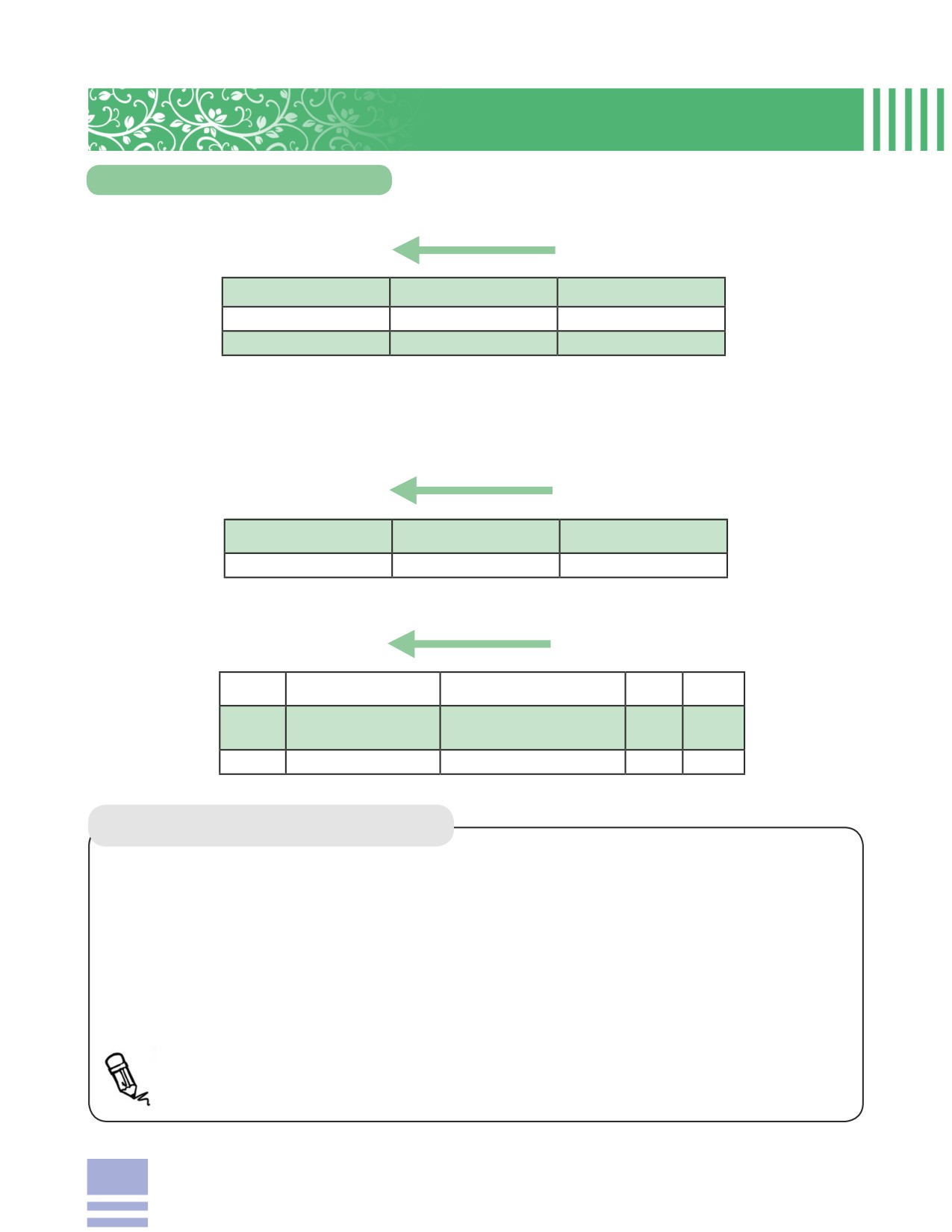
2. Watch Video 2 and answer the following questions in Persian.
1. What do Shayli’s parents like?
2. Where do you think they live?
3. How many hours do they exercise every day?
4. Does Shayliy like to exercise?
5. What does she like?
6. What does she say before she drinks the water?
Start making flash cards for each word you learn. Write the word in Persian on one side. On the other side, write
the translation and create a sentence using the word.
SHAHSAVARI | ATWOOD
40
Grammar Note
یروتسد تشادداي
Sentence Structure or Word Order
The simplest sentence structure in Persian is subject + verb. The verb is placed at the end of the sentence.
miravam موریم
man نم
Persian Sentence
go
I
English Equivalent
verb
subject
Function in Sentence
In English sentences, the subject comes first, followed by the verb and then the object. This is often referred
to as Subject-Verb-Object (SVO) word order. Word order in Persian is slightly different in that it follows SOV
word order, with the verb usually coming at the end of the sentence. Look at the examples below:
تسا
متسود
نیا
is
my friend
this
The following sentence is more complex. Read it from right to left.
مهدیم
متسود هب
ار مباتک
زورما
نم
give
to my friend
my book
today
I
verb
object of preposition
direct object
adverb
subject
Now write sentences with each set of the words.
ردارب . امش . ديراد .١
ینتسب . مردارب . دراد تسود .٢
مردارب . تسا . وا . ٣
امش . تسود . تسا . وا .۴
ردارب .مرادن . نم .٥
41
PERSIAN OF IRAN TODAY
Subject Pronouns یلعاف ريمض
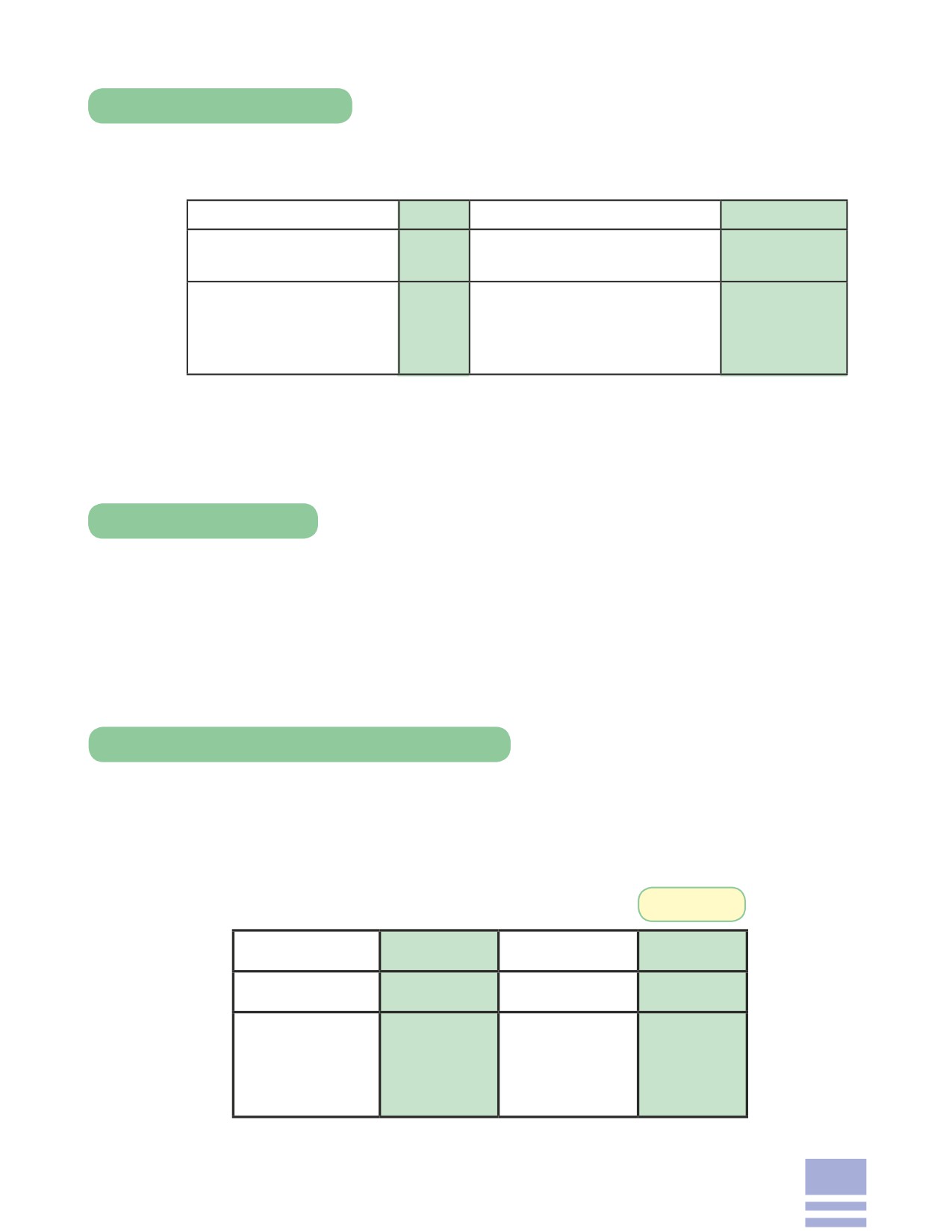
So far you’ve seen several of the personal pronouns in class. Study the chart below and memorize the pronouns and
their spellings.
ام
I
نم
we
you (singular polite/plural)
امش
you (just for close friends)
وت
(نوا( وا
they
(انوا( اهنآ
he/she
(نوشيا( ناشيا
he/she (polite)
(نوا( نآ
it
• The spoken variations are in parentheses.
• وت is used for close friends, sometimes family members, when addressing God, and also for insults.
• Use نوشيا or نوا for “he” or “she” when you speak rather than ناشيا or وا, and use نوا for “it.”
Infinitive /masdar/ ردصم
Infinitive in English is the basic form of a verb, without an inflection binding it to a particular subject or tense
(e.g., I am going to see him, or let me see.) Infinitive is called ردصم “masdar” in Persian. The infinitive in Persian
is normally equated with the English infinitive, but it is more like the English gerund, that is, a verb in -ing when it
does not represent a progressive form as in “Reading is good”: تسا یبوخ راک ندناوخ xāndan kār-e xubi ast. There-
fore, in Persian an infinitive also functions as a gerund.
To Have (Present Tense)
(لاح نامز( نتشاد لعف
In Persian, the verb “to have” has a present-tense stem راد . We add endings to that stem to conjugate the verb
for different pronouns. Look at the chart below; notice that the first three letters are the same for each conju-
gation. Only the last letter or two letters differ.
Present-tense stem is called “bon-e haal” in Persian.
راد -نتشاد
ميراد
ام
مراد
نم
)نيراد( ديراد
امش
يراد
وت
)هراد( دراد
)نوا( وا
)نراد( دنراد
)انوا( اهنآ
)نراد( دنراد
نوشيا
SHAHSAVARI | ATWOOD
42
Verb Endings
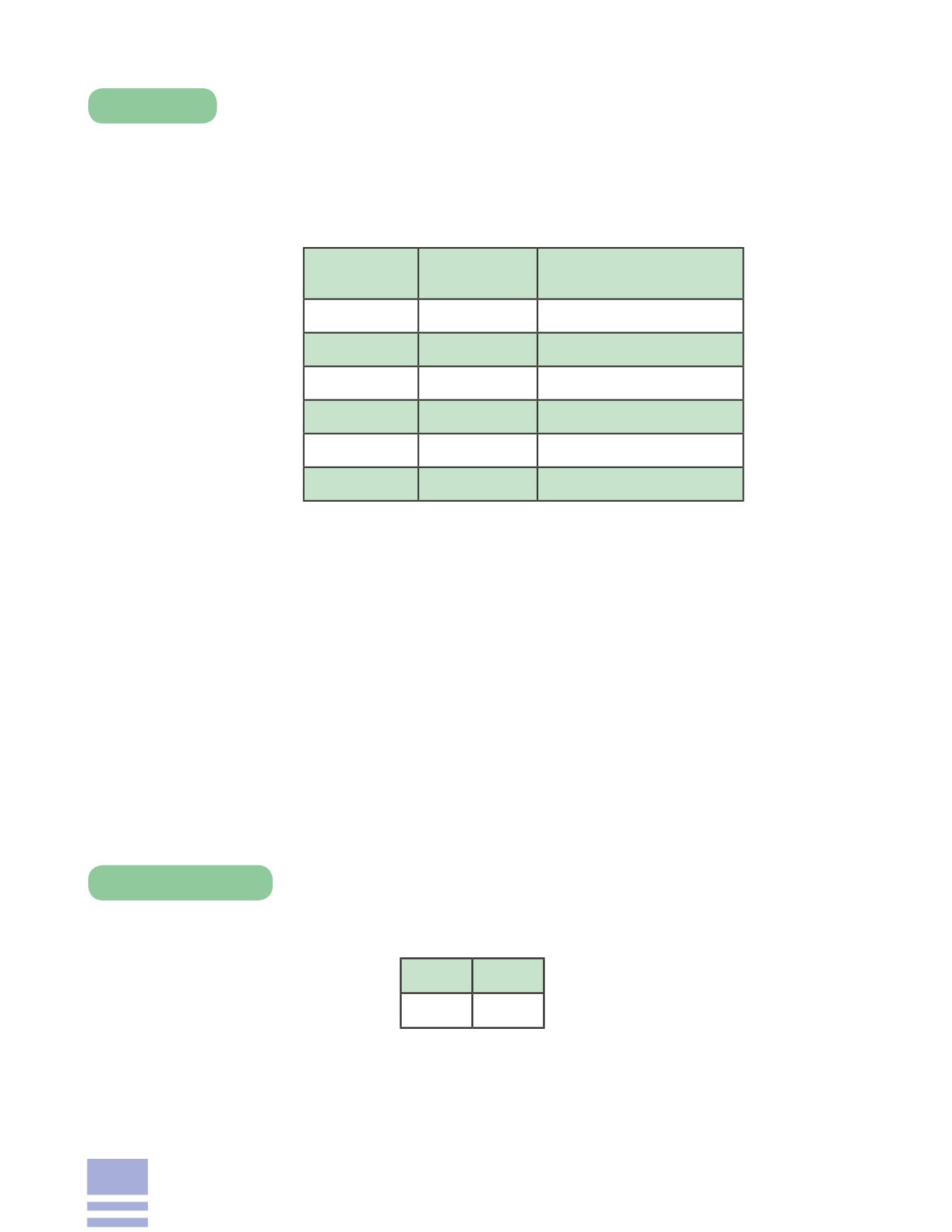
Look at the chart on the previous page. Determine what letter or letters we put at the end of the present-
tense stem راد to indicate a particular person. Use that information to complete the chart below. Memorize
these endings. We will use them again and again to conjugate verbs.
Verb Ending
Verb Ending
Pronoun
یلعاف ريمض
Spoken
Written
نم
وت
)نوشيا( ناشيا
/)نوا( وا
ام
امش
)انوا( اهنآ
Practice: Complete the following sentences with the appropriate form of the verb “to have.”
........................................................................................... ینتسب ام
................................................................................... ینيريش وت و نم
.................................................................................... رهاوخ امش و ام
..................................................................................... ینتسب وا و نم
.................................................................................. ماداب وا و وت و نم
.................................................................................... سينت امش و نم
........................................................................................رانا اهنآ و امش
Negating “to have”
You have already learned how to say “I do not have” and “you do not have.” Look at the chart below.
مرادن
مراد
دیرادن
دیراد
Can you see the difference between the two columns? What changes are marking negation? Try filling in the chart
below using the information you have just discovered.
43
PERSIAN OF IRAN TODAY