PERSIAN OF IRAN TODAY AN INTRODUCTORY COURSE VOLUME 1 (2015) - page 1
T A B L E O F C O N T E N T S
To the Student
vii
Tips for Using this Book
viii
To the Instructor
ix
Introduction to the Persian Alphabet
xi
Notes on the Pronunciation of Persian
xiv
Introductory Exercise
xvi
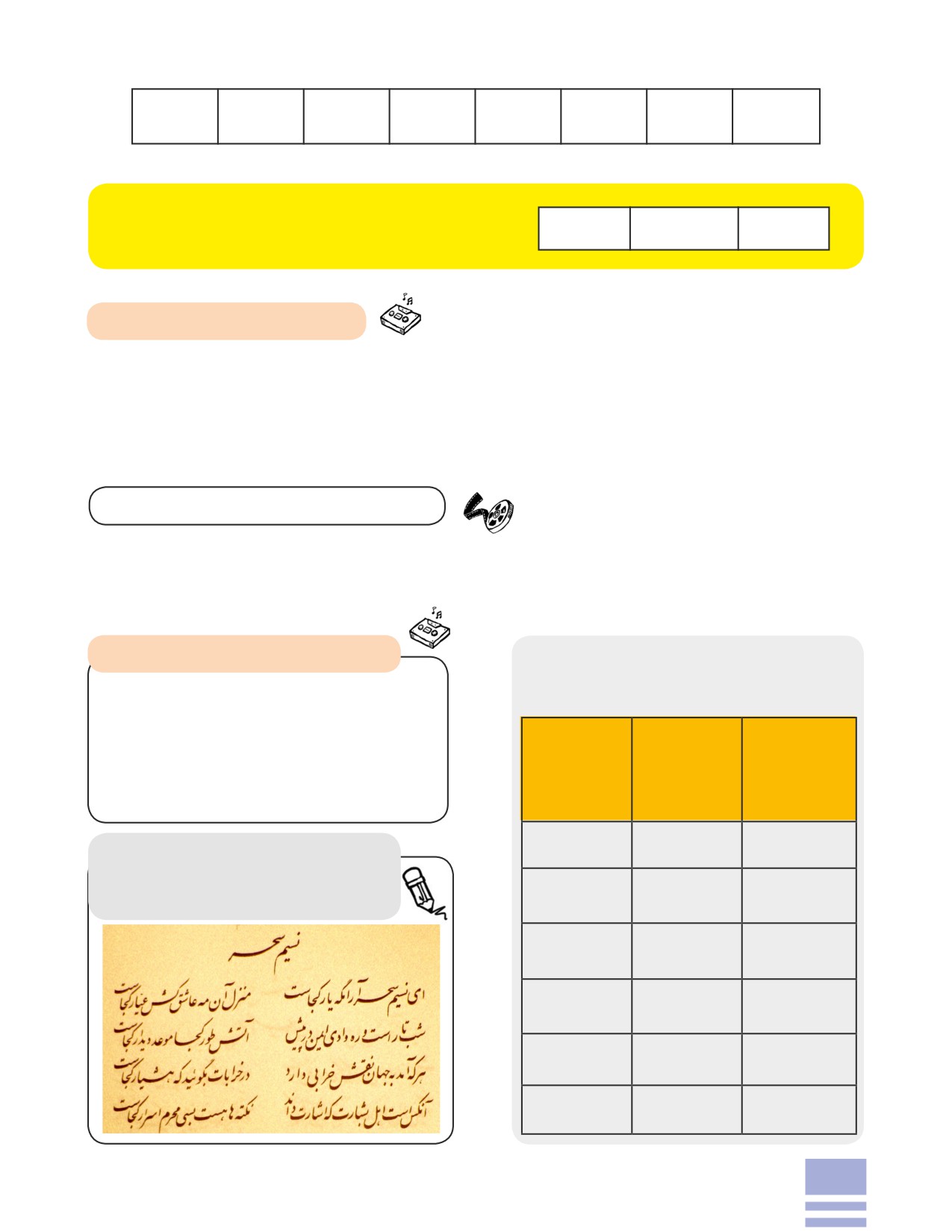
Unit1: Cultural Note: Greetings 1
2
Short Conversations: Hello, how are you?/ What is your name?
Alphabet: alef, be, nun, zebar, zir, pish, pe, te, ye, vaav
Vocabulary: List 1
Listening Comprehension: Greetings and Numbers
Grammar: A Note on Names, Derivation, Word Stress, Syllable Structure
Unit 2: Cultural Note: Greetings 2
23
Short Conversations: Thank you!
Alphabet: dâl, re, ze, sin, shin, mim, e, he
Vocabulary: List 1
Listening Comprehension: Greetings, What do I like?
Grammar: Sentence Structure or Word Order, Subject Pronouns, Verb Endings
Writing Exercise
Speaking Activity
Unit 3: Cultural Note: Introductions
48
Short Conversations: I am Asadi!
Alphabet: jim, lâm, he
Vocabulary: List 1
Listening Comprehension: Introduction and Asking Questions, About My Brother
Grammar: The Verb “to be”, Negating the Verb “to be”
Writing Exercise
Speaking Activity
Unit 4: Cultural Note: Food
63
Short Conversations: What would you like to drink/eat?
Alphabet: che, khe, zhe, khâ
Vocabulary: List 1
Listening Comprehension: What do I eat for Breakfast, Every Day conversation
Grammar: Possession, âyâ
Writing Exercise
Speaking Activity
Unit 5: Cultural Note: Diverse Iran
79
Short Conversations: Where are you from?
Alphabet: fe, qâf, kâf, gâf
Vocabulary: List 1, List 2: Numbers, List 3: English words in Persian
Listening Comprehension: I Have a Class Today, Where Is Eram Hotel?, I am Sulmaz
Grammar: Using Pronouns, Present Tense Conjugation, Counting
Writing Exercise
Listening Comprehension: I Have a Class Today, Where Is Eram Hotel?, I am Sulmaz
iii
Grammar: Using Pronouns, Present Tense Conjugation, Counting
Writing Exercise
Speaking Activity
Language Game
Unit 6: Cultural Note: Hospitability
101
Short Conversations: Who Is This?
Alphabet: tashdid, sâd, zâl, eyn
Vocabulary: List 1, List 2: Home
Listening Comprehension: My House
Grammar: Ezâfe
Writing Exercise
Speaking Activity
Unit 7: Cultural Note: I Do Not Want to Bother You!
120
Short Conversations: How Old Are You?
Alphabet: se, he, zâd, tâ
Vocabulary: List 1, List 2: Numbers
Listening Comprehension: My Plan for Tonight, Every Day Conversation
Grammar: More on The Verb “to be”, Simple and Compound Verbs
Writing Exercise
Speaking Activity
Language Game
Unit 8: Cultural Note: Early Bird
140
Short Conversations: Good Morning!
Alphabet: fe, qâf, kâf, gâf
Vocabulary: List 1, List 2: Numbers
Listening Comprehension: This Is My Friend, It Is Hot Today, Wrong Number!, What Time Is It?
Grammar: Answering “yes” To A Negative Question
Writing Exercise
Speaking Activity
Language Game
Unit 9: Cultural Note: Befarmâ’id
152
Short Conversations: What Do You Do?
Alphabet: tanvin, hamze, Sokun
Vocabulary: List 1, List 2: prepostions
Listening Comprehension: What Do You Do and Where Do You Live?, It Was Fun!
Grammar: Possessive Pronouns, Counting, Asking How Many, Answeing How Many, There Is
Writing Exercise
Speaking Activity
Language Game: Hoarders
Unit 10: Cultural Note: Studying in Iran
166
Short Conversations: What Is Your Major?
Vocabulary: List 1, List 2: Countries
Listening Comprehension: Practice!, I Am Going to My Setâr Class Today!
Grammar: Plural, Specific Direct Object Marker “râ”
Speaking Activity
Language Game
Review Exercises, Texts of Short Conversations for Units 1 & 2, and Vocabulary List 180
iv
T O T H E S T U D E N T
Khosh Amadid! Welcome to Persian! This textbook, Persian of Iran Today 1, represents the first in a series
of textbooks aimed at teaching Persian to English-speaking students, and is followed by Persian of Iran
Today, Book II.
The present book aims to help you learn to pronounce the sounds of Persian and write its
letters, and to begin speaking Persian. The materials will introduce basic vocabulary, including important
expressions for polite interaction and aspects of Persian culture. The book is accompanied by audio
and video clips on a website for you to use outside of class. The website (http://www.laits.utexas.edu/
persian_teaching_resources/) includes videos that demonstrate how to write the letters so that you
have a model to follow as you work through the book.
This book consists of an introduction and ten writing units. The introduction provides an overview
of Persian and introduces the Persian writing system and sounds. The ten units present the alphabet
in groups following an order designed to maximize your exposure to the Persian script from the
beginning, meaning that transliteration will generally be avoided. Each sound that is introduced will be
followed by a brief explanation of the writing of the corresponding letter, and video footage on the
website will show how to write each of the letters. Each unit contains a number of recorded listening
exercises and drills on reading, writing, connecting letters, and dictation. We have used only meaningful
words in these exercises, but we do not expect you to learn these words; their purpose is merely to
demonstrate sounds and stress. The vocabulary that you are expected to learn is listed in a section
called vocabulary.
We have also included in this book examples of authentic or “real-life” Persian from websites,
newspapers, books, and magazines, and on the website you will find pictures of Persian signs from the
streets of Iran. We have also included short cultural notes explaining some aspects of the situations that
you will see in the clips.
We believe that it is crucial for you to learn to recognize and produce Persian sounds accurately
and master the Persian script from the outset for several reasons. First, you must learn to pronounce
and write Persian correctly in order to communicate effectively with Persian speakers. Second, Persian
sounds are not very difficult. Many non-native speakers have learned to pronounce Persian sounds
accurately, and there is no reason why you should not expect to do so as well. Third, it is important to
learn the sounds and writing system correctly now when you have the time to concentrate on them;
later you will be concentrating on other aspects of the language, such as vocabulary and grammar. Finally,
although all languages require a certain amount of exposure, time, and effort to learn, by mastering the
Persian sounds and script from the outset, you will enhance your ability to learn the language and make
your future interaction with the language more rewarding.
v
PERSIAN OF IRAN TODAY
باتک زا هدافتسا یارب ییاهدومنهر
.1
،دينک شوگ يتوص ياهلياف هب سلک زا شیپ دياب ،فده نیا هب ندیسر یارب .ديشاب هدامآ سلک رد لاعف تکراشم يارب
تسا مزل ردقهچ ره .ديسيونب ار ديدج فورح و دينک شوگ ديدج ياهادص هب .ديهد ماجنا ار اهنآ ياهنيرمت و دينيبب ار اهويديو
شيپ ار هناخ رد ياهنيرمت .دوش ناسآ و تحار ناتيارب فورح و اهادص نيا ديلوت و نتخانش هک يتقو ات ،دینک رارکت ار راک نيا
ينارنخس ندينش هن ،دوش نيرمت فرص دياب سلک تقو .ديشاب هدامآ سلک رد نتشون و ندناوخ يارب ات ديهد ماجنا سلک زا
.ناتداتسا
To access online resources: http://www.laits.utexas.edu/persian_teaching_resources/
.2
هچ و دیدج فورح نتشون نیرمت هچ ،دشاب ديدج ياهادص ظفلت نیرمت هچ ،ديهديم ماجنا ينيرمت ره .تسين يفاک راب کي
فورح نتشون و اهادص ظفلت هک دينک رارکت اجنآ ات .دوش رارکت ،تسا نکمم هک راب دنچ ره دياب ،اههژاو يريگداي و هعلاطم
نیرمت هب راک نيا و دنتسه یديدج بلاطم يريگداي لاح رد ناتياههچيهام و زغم هک ديشاب هتشاد هجوت .دوش تحار ناتيارب
هناخ رد و هدوب لکشم ناتيارب هک ار ییاهنیرمت و ديهد شوگ هدش هتشاذگ تياسبو رد هک یياهلياف هب اهراب .دراد زاین دایز
هتشاد داي هب ،دنتسه هارمه ريوصت اب دينکيم هعلاطم هک يبلاطم رتشيب هک نيا اب .دينک رورم هرابود ،ديهد ماجنا دیدوب هتسناوتن
هب ندرک شوگ فرص هک يناوارف تقو اب .نتشون و ندناوخ اب هن ،ديتفرگ داي ندرک شوگ و ندينش اب ار ناتلوا نابز هک ديشاب
.دينک هبرجت هرابود ار ندينش هار زا نابز يريگداي رد دوخ يعيبط يياناوت ،دينکيم هتکيد یاهنیرمت ماجنا و ندينش ياهنيرمت
.3
رارکت نامزمه و دينک شوگ .دينکن هيکت ییاناوت کي هب ،دينکيم راک باتک نيا بلاطم اب يتقو .دينک هعلاطم دنلب يادص اب
رارکت دنلب يادص اب ار ديسيونيم هچنآ ،ديسيونب توکس رد هکنيا ياج هب .دينک روصت ار هژاو ای فرح لکش و دينک رارکت .دينک
زا !تسین یفاک نآ یریگدای یارب نابز هب ندرک رکف ؛دنريگب ارف ار نابز نيا دنناوتيم ندز فرح اب طقف ناتناهد و زغم .دينک
قفوم نازومآنابز رتشيب .ناتدوخ اب هچ و ناتگس اب هچ ،ناتيسلکمه اب هچ ،دينک هدافتسا ندز فرح نيرمت يارب یتصرف ره
.دننزيم فرح دوخ اب بترم
.4
یواح باتک نيا ياهسرد یهمه .دوشیم رتشیب هورگ رد شخبرمث و لاعف یهعلاطم لامتحا هشیمه .ديناوخب سرد یهورگ
،رگيدکي هب نتفگ هتکيد ،باتک نیا راذگریثأت يهورگ ياهتيلاعف .دنوشیم ارجا رتهب هرفنود ياههورگ رد هک دنتسه يياهتيلاعف
.تساهوگتفگ و اههلمج نتخاس و
.5
رايسب نياربانب ،تسا يتشابنا تیلاعف کی نابز يريگداي .دیناجنگب دوخ یهنازور یهمانرب رد ار ناگژاو ندرک هرود و هعلاطم
ندرک هرود يارب هزات بلاطم زا هدافتسا .دينک هتسبمه و ديزيمايب يميدق بلاطم اب ار هزات تاحلطصا و اههژاو هک دراد تيمها
رجنم نابز زا اجهب و تسرد یهدافتسا رد ریگمشچ ییاناوت و یناور هب ،تیاهن رد اما ،دراد زاین يهدنامزاس هب يميدق بلاطم
يديدج فورح يتقو .دينک رورم ار دياهتفرگ داي لبق هک يياهادص ،ديتسه يديدج یهژاو يريگداي لاح رد يتقو .دش دهاوخ
یسراف هب ،ديدوب هتفرگ داي اهوگتفگ رد ار اهنآ یراتفگ لکش طقف هک ار يياههژاو دینک شلت و ديدرگرب بقع هب ،دیزومآیم
.دينک هورگمه يميدق ۀژاو کي اب ار هزات ۀژاو ره .ديسيونب
.6
و دياهدرک زکرمت امش هک تسانعم نيا هب :تسا يبوخ تملع ندش هتسخ .ديشاب هتشاد ار هاگيب و هاگ یگتسخ راظتنا
ناتيارب زاغآ رد هچنآ هک ديشاب هتشاد رطاخهب .تسا ديدج ياهادص تسرد ديلوت يريگداي و نيرمت لاح رد ناتياههچيهام
.دوشيم رتناسآ و ناسآ يدوزهب ،تسا تخس
!ميدنموزرآ ناتيارب ار يريذپلد و قفوم يريگداي یهبرجت
SHAHSAVARI | ATWOOD
vi
1.
Prepare for active participation in class. To do this you need to spend time outside of class listening to and
working with the audio and video exercises. Listen to and write the new sounds and letters as many
times as you need to in order to feel comfortable recognizing and producing them. Prepare the lesson
assigned beforehand, so that you will be ready to read and write. Class time should be spent practicing,
not listening to lectures.
To access online resources: http://www.laits.utexas.edu/persian_teaching_resources/
2.
Once is not enough. Whether you are pronouncing new sounds, writing new letters, or studying
vocabulary, you should repeat the activity as many times as you can. Repeat until you can produce a
sound or write a letter easily. Remember that you are training your brain and your muscles to do new
things, and this takes practice. Listen to the materials on the website as many times as you can, and
go back over items that you missed on the homework. Although most of your studies now are visually
oriented, you learned your native language mainly through hearing and listening, and not through reading
and writing. Rediscover your native ability to learn through listening by devoting as much time as you
can to the listening and dictation exercises while working through this book.
3.
Study out loud. As you work through these materials, engage more than one faculty at the same time.
Listen and repeat together. Repeat and picture the shape of the letter or word. Rather than write silently,
repeat whatever you are writing out loud. The only way to train your brain and your mouth to speak this
language is by doing; thinking about it is not enough! Practice speaking at every chance you get, whether
with classmates, the dog, or yourself. Most successful language learners talk to themselves regularly.
4.
Study with others. You are much more likely to study actively when you study with a partner. Every
lesson in this book contains activities that are best done in pairs. Good group activities include dictating
to each other and making up sentences and dialogues.
5.
Make vocabulary study and review part of your day. Language is cumulative, and while you are learning
new words and expressions, it is important to integrate the old in with them. Using the new to review
the old will take some organization, but it will pay off in greater fluency and accuracy. When you learn new
words, take the opportunity to work on previously learned sounds. When you learn new letters, go back
to words you have learned only in spoken form to see if you can write any of it in Persian script. Pair up
each new word with an old one.
6.
Expect to feel tired occasionally. Being tired is a good sign: it means that you are concentrating, and that
you are training your muscles to produce new sounds correctly. Remember that you will soon be able
to do easily things that tire you at first.
We wish you a successful and enjoyable learning experience!
vii
PERSIAN OF IRAN TODAY
و لوصا يريگراکهب اب و يطابترا یهويش هب نابز يريگداي و شزومآ هفسلف ساسا رب ،نآ یدعب ياهدلج و يسرد باتک نيا
امش زا .تسا يسراف نابز رد ينابز ياهتراهم ياقترا اهنآ فده و دناهدش نيودت و يحارط نابز شزومآ نردم ياههويش
نيا هک ديهاوخب مه دوخ نايوجشناد زا و ديناوخب ار »نازومآ يسراف اب ينخس« زین و ، راتفگشيپ نیا هک ميهاوخيم زيزع ناداتسا
یاوتحم و راتخاس هک یدعاوق زا همه ات دینک رظن لدابت و ثحب دناهدناوخ هک هچنآ هرابرد سلک رد هاگنآ ؛دنناوخب ار اهشخب
.دنشاب هاگآ ،هدش انب نآ رب باتک
ناشدربراک نازیم هب هجوت اب ناگژاو .تسا هدوب نتشون يناسآ و فورح دماسب ،ابفلا فورح هئارا رد شنیچ رایعم ،دلج نيا رد
انشآ یسراف دماسبرپ فورح اب تعرسهب و ادتبا زا نازومآنابز هک اجنآ زا اما ؛ییابفلا مدقت ساسا رب هن ،دنوشيم يفرعم نابز رد
.دنسیونب یسراف هب ار سرد ره یاههژاو رتشیب دوب دنهاوخ رداق لوا ياهزور نامه زا ،دنوشیم
هک ارچ ،دنکیم انشآ یسراف نابز )یمسر ریغ( یراتفگ و )یمسر( يراتشون يهويش ود ره اب ار نايوجشناد ،ادتبا نامه زا ،باتک
نآ عونتم یگنهرف یاهنحل زا دناوتب زومآنابز هک دوشیم کیدزن یگدنسب زرم هب ینامز ،نابز کی هب نتفگ نخس تسا دقتعم
ياههمانرب ساسا رب هک دهدیم ار ناکما نيا امش هب اهنآ عونت و بلاطم هئارا هويش .دنک هدافتسا بسانم یاهتیعقوم رد ،نابز
.دیهد رارق شزومآ یانبم ار یسراف نابز يمسر ريغ اي يمسر یهنوگ نایوجشناد زاین و يسرد
رد و دنشاب هتشاد سلک زا نوریب ار يريگداي و يگدامآ نازیم نیرتشيب نازومآنابز هک تس یاهنوگهب باتک نیا یاوتحم یحارط
هرابرد ندينش ياج هب( يسراف نابز اب یعقاو لماعت و ،اهوگتفگ نيرمت و اهويديو نديد ،يلماعت ياهتيلاعف هب سلک رد ،ضوع
.دنزادرپب )نآ
نازومآنابز سرتسد رد ،هدمآ باتک دلج تشپ هک یسردآ هب ،نآ تياسبو رد ،باتک لوا یهخسن يراديد-يرادينش داوم یهمه
.دناهعومجم نیا زا یشخب زین هاتوک یاهوگوتفگ و ابفلا نتشون شزومآ ياهويديو .تسا
اما ،تسا هديشک ازارد هب باتک نیا رد ،دسرب نایاپ هب هسلج دنچ رد دناوتیم هک ابفلا شزومآ دسرب رظنهب دياش ،لوا هاگن رد
شزومآ ،باتک لوا دلج فده هک نآ رتمهم و هدش هداد شزومآ مجنپ سرد رخآ ات ابفلا فورح نیرتدماسبرپ هک تشاد هجوت دياب
نابز يريگداي رب يفنم ريثأت چيه اهنت هن ،ميهديم نازومآنابز هب ابفلا یریگارف يارب هک ينامز .تساهتراهم همه نامزمه
عورش يرتشيب سفن هب دامتعا اب دهدیم تصرف اهنآ هب و دناسريم لقادح هب ار نتشون تراهم يريگداي تلکشم ،تشاد دهاوخن
.دريگيم تروص زومآنابز وخ طسوت و هناخ رد ابفلا شزومآ ،نآ يريوصت -يتوص داوم و باتک نيا زا هدافتسا اب .دننک نتشون هب
یسراف هب نازومآنابز اب سلک تسخن ياهزور نامه زا دیناوتیم ،يسيلگنا نابز هب انشآ بطاخم اب و باتک نيا زا هدافتسا اب
.دییوگب نخس
لباقم رد و دننک »سلک يارب يگدامآ« فرص يدايز يورين ،سلک زا شیپ دياب نايوجشناد ،باتک نیا یشزومآ درکیور رب انب
کت کت تکراشم ندناسر رثکادح هب اب ناوتيم هويش نيا اب .دوش کچوک ياههورگ رد يلماعت ياهتيلاعف فرص دياب سلک تقو
.دناشن رمث هب ار اهنآ سلک زا جراخ ياهشلت ،سلک ياهتيلاعف رد نازومآنابز
يريگارف تعرس ،دريگ ارف و دناوخب ار بلاطم بولطم تعرس اب دناوتيم زومآنابز ره هک هدش يحارط ياهويش هب باتک هک اجنآ زا
هفيظو ،يريگداي هک دزومآیم نازومآنابز هب زاغآ زا هویش نیا ،رگید یوس زا .تشاد دهاوخن سلک راک دنور رب ینادنچ ریثأت دارفا
زا دياب دوخ سلک راگزومآ هک نيا رخآ يساسا هتکن .دهدیم تداع هنلاعف یریگدای هب ار اهنآ ،بیترت نیا هب و ،تساهنآ دوخ
SHAHSAVARI | ATWOOD
viii
هب ،دوش هدناوخ سلک زا شیپ هدوب رارق هک يبلاطم شزومآ اب هک انعم نیا هب ،دنک يوريپ یتسردهب هداهن انب هک يدعاوق
.درازاین ار شلترپ و هدامآ یوجشناد لباقتم و دهدن شاداپ شلتمک و هدامآان یوجشناد
رد« و »هناخرد« یاهبسچرب اب اهتيلاعف مامت .دوشيم ماجنا سلک زا شیپ ،فيلکت و يگدامآ ناونع هب ،ندينش ياهتيلاعف
هک تسا نيا ام داهنشيپ .دنک کمک امش هب يگتفه و هنازور سرد حرط نيودت رد دناوتيم هتکن نيا .دناهدش کیکفت
»سلک
تاعلطا هلدابم هب نآ رد فرط ود هک( يشنکمه تيلاعف دنچ لقادح هک دينک يزيرهمانرب يلکش هب سلک یهسلج ره يارب
يياهتنا ياهلصف رد .تشاد دنهاوخ زاین يرتشيب نامز هب اهتيلاعف نيا ،رتشيب ياههژاو یریگارف اب .ديشاب هتشاد )دنزادرپيم
ود ياههورگ و کچوک ياههورگ یهژیو ياهتيلاعف .درذگب اهتيلاعف هنوگ نيا هب سلک تقو دصرد 75 دوريم راظتنا ،باتک
نامه هک شاداپ تفایرد اب ،نتفگ نخس هابتشایب و تسرد .دنراد ينابز ياهتراهم شرورپ و تخاس رد یداینب يشقن ،هرفن
رد نتفگ نخس ماگنه نازومآنابز ینابز یاهشزغل کتکت هک تسین انعم نادب نیا اما ،دوشیم تیوقت ،تسا یریگارف تذل
.دوش حلصا دیاب ،سلک
یاهادص دیلوت هب ار نازومآنابز ادتبا زا تسا مزل سپ ،دننک ادا تسرد ار يسراف نابز ياهادص دنرداق همه هک ميرواب نيا رب ام
مهارف يتصرف ناتنايوجشناد و امش يارب ،دلج نيا تسخن سرد دنچ .میشاب هتشاد ار عقوت نیا اهنآ زا و مینک قیوشت تسرد
نيا دياب یسراف نابز راگزومآ ناونع هب امش درکیور .دیشاب هتشاد یفاک زکرمت یسراف نابز يياوآ هبنج رب ادتبا زا هک دنکيم
.دننک دیلوت تسرد ار یسراف نابز یاهادص دنناوتیم همه هک دشاب
.دراد دوخ رد هزات یاههژاو ندرک لاعف یارب یددعتم ياهنيرمت و اهتيلاعف هک تسا هژاو شزومآ شخب کي لماش سرد ره
يارب ات ،دننک شوگ اهوگتفگ هب و دنهد ماجنا ار ناگژاو شخب یگناخ ياهنيرمت ،سلک هب ندمآ زا شیپ دياب نازومآنابز
اهوگتفگ نيا هکلب ؛دسيونب ار اهوگتفگ زومآنابز هک تسين نيا فده ،هلحرم نيا رد .دنوش هدامآ یسلک هباشم ياهتيلاعف
رتشيب هک مينک قيوشت ار نايوجشناد تسا رتهب .دناهدش یحارط ندینش تراهم یریگدای رد یو سفن هب دامتعا شرورپ یارب
يريگداي ياهتراهم ياراد يعيبط روط هب اهناسنا یهمه .دوخ يريوصت هظفاح رب هن دننک هيکت دوخ يتشاگناوآ هظفاح رب
.تسا هتفرگن داي ندناوخ هار زا ار دوخ لوا نابز سکچيه تفگ ناوتیم نیقیهب و دنتسه يرادينش و يهافش
روط ره دیناوتب ات تسا هدشن نیعم شخب نيا شزومآ يارب يقيقد همانرب اما ،دوشیم زاغآ یگنهرف تشاددای کی اب سرد ره
،اهويديو زا دیدنسپیم روط ره .دينک زکرمت ديآيم مهم ناترظن هب هک يياههبنج رب و دينک يزيرهمانرب شخب نيا يارب دیلیام
نيا ام داهنشيپ .دينک هدافتسا ثحب زاغآ و شسرپ حرط يارب عورش هطقن ناونع هب يگنهرف ياهتشادداي و اهریوصت ريواصت
:دنهد شوگ ،ريز بيترت هب ،راب نيدنچ ار وگتفگ ره ديهاوخب نازومآنابز زا هک تسا
.دناهدرک تفایرد هچ ديسرپب سپس و دنزادنایب عوضوم هب یلک یهاگن ديهاوخب اهنآ زا ،يحيضوت ره زا شیپ )1
؛دنونشيم ار ییاهترابع ای اههژاو هچ دوش مولعم ات ،دننک اشامت ار ويديو دنناديم مزل هک راب دنچ ره ديهاوخب اهنآ زا )2
.دنبایرد ار وگتفگ مامت امش کمک اب تیاهن رد و دننک ثحب اهنآ هرابرد سپس
هتفگ روطچ« هک هتکن نیا رب ،دوشيم هتفگ هچ دندش هجوتم هکنيا زا دعب و دننک هاگن راب نيرخآ يارب ديهاوخب اهنآ زا )3
هب .دنیامزایب و دننک نایب ار اهترابع نيا دوخ هک دنشاب هدامآ دياب ،لحارم نيا یط زا سپ نايوجشناد .دننک زکرمت »دوشيم
تکراشم .دننک ارجا سلک رد ار نآ و دنزاسب ،دنراد تسود هک يتيعقوم ره اب ار ناشدوخ هاتوک همانشيامن ات ديهد تصرف اهنآ
.دراد ییازسب شقن یشزومآ داوم نيا یدمآراک رد امش
ix
PERSIAN OF IRAN TODAY
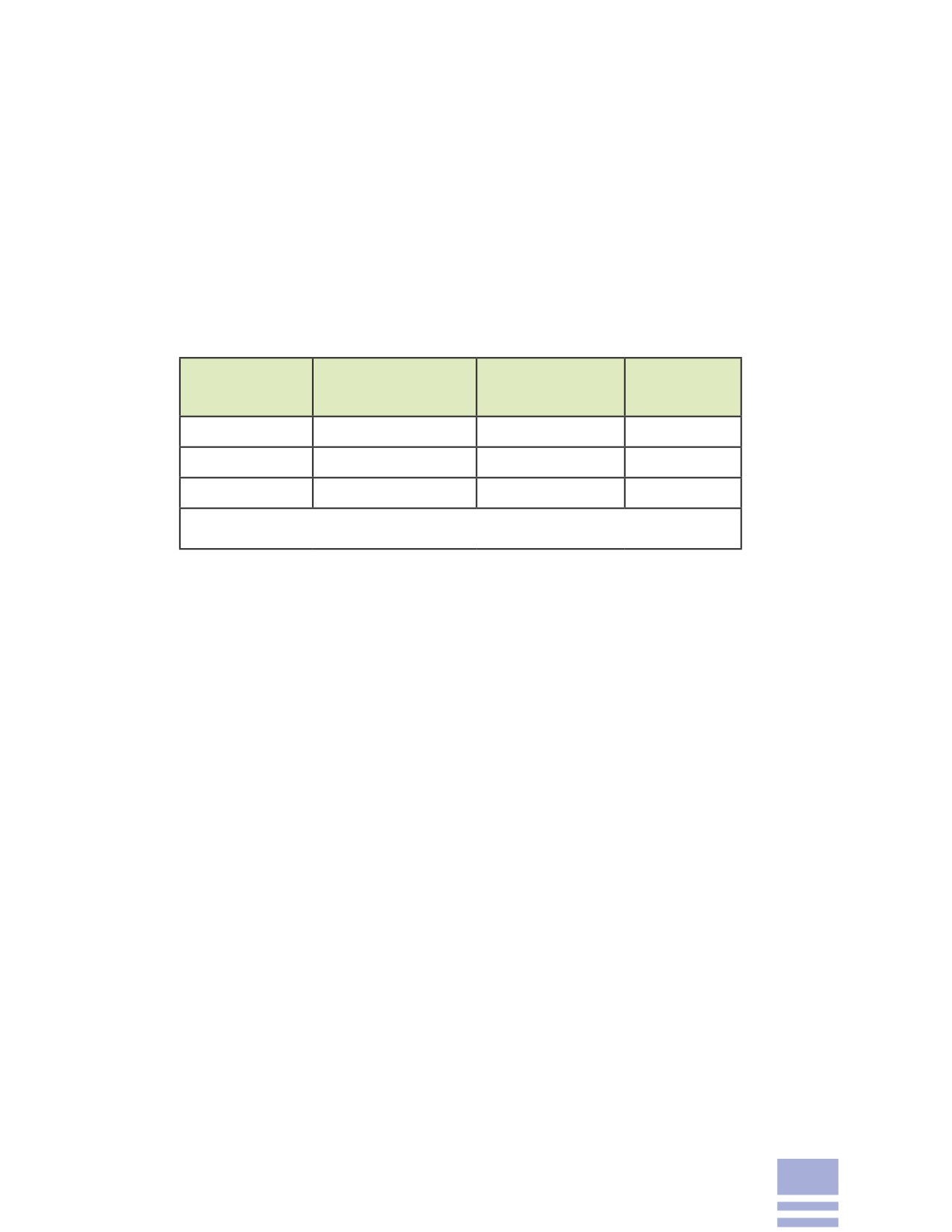
يياهتيلاعف باستحا اب نامز نيا .تفرگ راکهب يسلک تعاس 90 لوط رد يبيرقت روط هب ناوتیم ار باتک نيا يشزومآ داوم
زا و تشذگ دهاوخن حیضوت و ینارنخس هب هجوچیه هب سلک نامز هک ضرف نيا اب و ،دوش ماجنا سلک رد تسا رارق هک تسا
تسا رارق باتک ياهنيرمت رتشيب .تخادرپ دنهاوخ یگناخ یاهفیلکت ماجنا هب تعاس ود ات کي بش ره نايوجشناد رگید یوس
زومآنابز یارب سلک زا نوریب ناشماجنا هک دینارذگب ییاهتیلاعف هب ار سلک نامز ديناوتيم هک اجنآ ات سپ دنوش ماجنا هناخ رد
ميرواب نيا رب ام اريز ،تسا رادروخرب یدایز تیمها زا هتکید ،یشزومآ شور نیا رد .لما و نتفگ نخس دننام ،تسین ریذپناکما
تيوقت و دبای شرورپ نابز يريگداي هيلوا لحارم رد دياب ابفلا فورح و اهادص نایم طابترا یرارقرب يياناوت و اهادص رب طلست هک
ناشیا زا ،ديرادرب نازومآنابز شود زا ار يدرف يارجا راشف و ینارگن هکنيا يارب و ،دينک رارکت بترم ار اههملک و اهادص .دوش
.دننک رارکت ار اههژاو و اهادص يهورگ تروص هب ديهاوخب
تعاس عومجم
یارب هک یاهتفه دادعت
رد راک تاعاس عومجم
تعاس تدم
همانرب رد یسلک
تسا مزل سرد هد مامتا
هتفه لوط رد هناخ
هتفه رد یسرد
90
15
12
6
90
22-23
8
4
90
30
6
3
لیمکت یارب مزل تاعاس دادعت
و دنک کمک امش هب سلک ندرک رترابرپ رد داوم نيا هک ميراوديما ام .دريگيمن ار بوخ راگزومآ کي ياج يباتک چيه ،نيقيهب
.دزاس ريذپلد ياهبرجت ناتنايوجشناد يارب ار يسراف نيريش نابز يريگداي
SHAHSAVARI | ATWOOD
x
T O T H E I N S T R U C T O R
This textbook, and the continuing books in the Persian of Iran series, are constructed around a philosophy
of teaching and learning Persian in a communicative manner designed to maximize students proficiency.
We ask that you, the instructor, read this preface as well as the Preface to the Student, and that you
have your students read the latter and discuss it with them in class, so that everyone understands the
principles underlying the structure and contents of these materials.
In this volume, the alphabet is presented in a way designed to take advantage of both letter frequency
and letter shape. Vocabulary is introduced according to function, not alphabet, but by presenting letters
based on frequency, students will be able to write many of the words they learn using the Persian script
from the beginning. In addition, we introduce our students to both formal and informal varieties, based
on the principle that learning to speak in a culturally appropriate manner is a part of proficiency that
should not be ignored. The extent to which you emphasize each variety will depend on your program
and the needs of your students.
These materials are designed so that students can do most of the preparation and actual learning
of new material outside of class, in order for class time to be spent doing interactive activities, watching
and practicing conversations, and working with Persian (instead of hearing about it). In this first
edition, students have available to them audiovisual materials on the website, including visual footage
demonstrating how to write all the letters of the alphabet, and dialogues, whose texts are found in
the Appendix.
We believe that it is crucial to expect a high degree of effort from students in preparing for class,
and equally, that this effort must be rewarded by spending class time doing interactive and small-group
activities that permit maximum participation by all students. Since the book is designed so that the
students can do much of their learning outside of class, each person may work at his or her own pace, so
that differences in learning speed need not affect the class as a whole. It is also important that students
realize right away that the burden of learning is on them, because this helps them to become active
learners. Finally, it is essential to follow through on the expectations you set. Do not reward students
who have not prepared, and punish those who have, by “teaching” them what they should have done
outside of class.
The listening exercises are all meant to be done outside class as part of homework and preparation.
We have specified the drills that are meant to be done as homework and those that are meant to be
done in class as interactive or small group exercises and projects. We suggest that, in preparing your
lesson plans, you aim to have at least some interactive work each and every class period, and that the
time set aside for this increases as students learn more vocabulary so that, by the end of the book, you
are spending 75% of class time with students working together speaking directly with each other. Small
group work and pair work is essential for students to build skills. Accuracy will improve if students see
it rewarded, and it will not suffer if we do not correct every single utterance.
xi
PERSIAN OF IRAN TODAY
We believe that everyone can produce Persian sounds accurately and that it is necessary to encourage
and even to expect accuracy from the outset. These early units are an opportunity for you and the
students to focus all of your attention on the phonetic aspects of Persian, and it is also better to form
good habits from the start. Your attitude as a teacher of Persian should be that everyone can learn to
produce these sounds accurately.
Each unit includes a vocabulary section complete with several exercises and activities that activate new
words. Students should prepare the vocabulary and listen to dialogues on the website before class and
be prepared to perform similar tasks in class. At this stage, it is not our goal for the students to write
out the dialogues. Instead, it is good training for the students to develop confidence in their aural and
oral skills at this stage, and they need to be encouraged to rely on their “phonographic” rather than their
“photographic” memory. Everyone has natural aural and oral language learning skills; no one learned her
or his native language through reading.
While we have included short cultural notes in the book, we have not provided detailed lesson plans in
order to give you the flexibility to proceed as you wish and focus on the aspects you deem important.
Use the videos, pictures, and cultural notes as starting points to encourage questions and discussion, and
expand as you wish. We suggest that you have students listen to each dialogue several times as follows:
(1) Before explaining anything, have them watch for general content, then ask what they understood.
(2) Have them watch again, as many times as necessary, to listen for individual words or expressions,
followed by discussion and explanation of what they heard. (3) Have them watch a final time, after they
have understood what is said, to focus on how it is said. After that, the students should be ready to try
out the expressions themselves, so let them make up their own situations and act them out. Your own
contribution will be vital to the success of these materials.
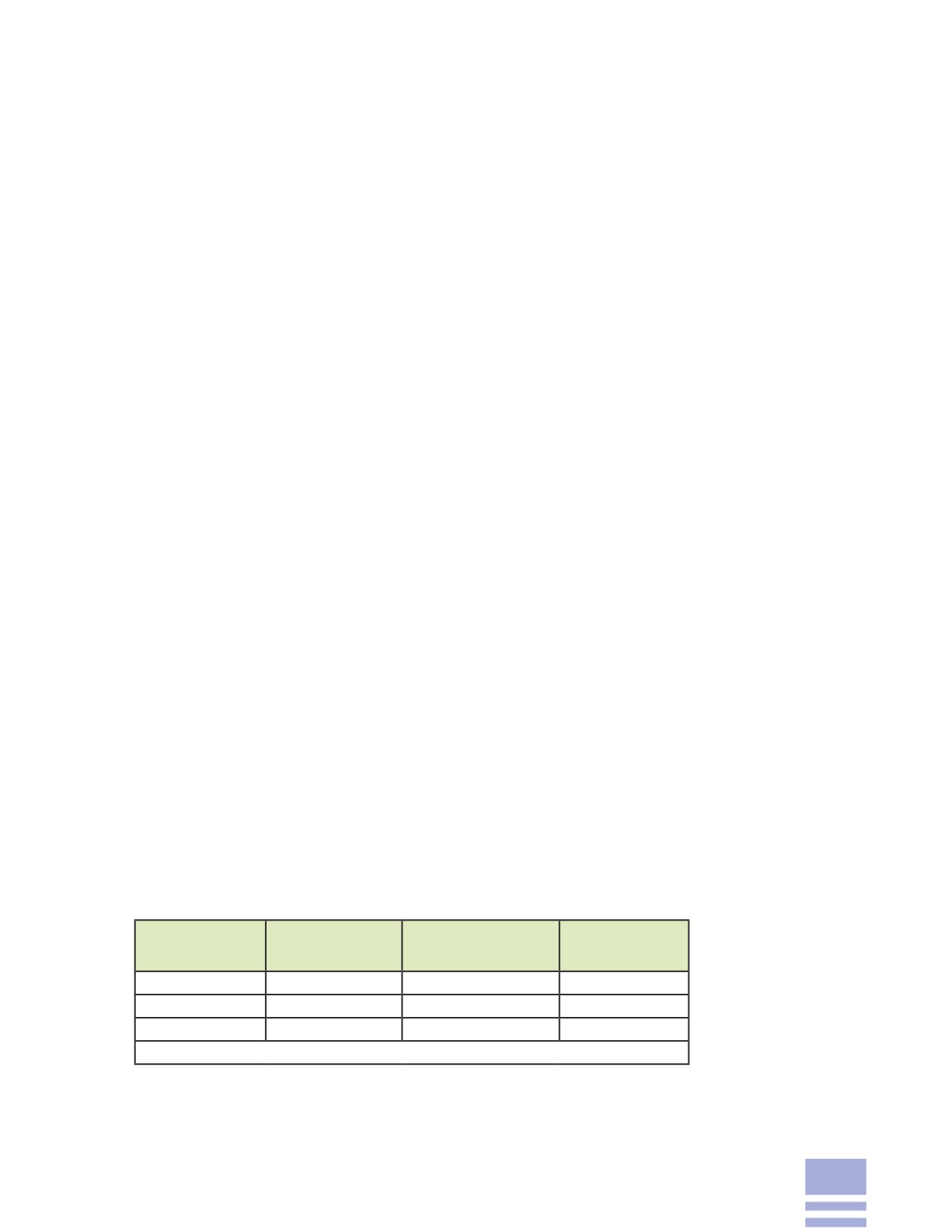
The material in this textbook can be covered well in approximately ninety contact hours, depending on
the amount of time devoted to the various activities, assuming class time is not spent on lectures and
students will devote one to two hours a night to homework. Most of the exercises in the textbook are
meant to be done as homework. Spend as much class time as possible on activities that students cannot
complete at home alone; such activities might include speaking and dictation. This approach stresses
dictation because we believe that the mastery of sounds and the ability to relate sounds and writing
must be developed early. Repeat sounds and words many times over, and have students repeat as a group
to take the pressure off individual performance.
Contact Hours
Homework Hours
Number of Weeks to
Total Contact
per Week
per Week
Complete Units 1-10
Hours
6
12
15
90
4
8
22-23
90
3
6
30
90
Hours to Completion
Of course, no textbook can take the place of a good teacher. It is our hope that these materials will help
you to enrich your classroom and make learning Persian an enjoyable experience for your students.
SHAHSAVARI | ATWOOD
xii
I
N T R O D U C T I O N
The Persian Alphabet
The Persian alphabet contains thirty-two letters consisting of consonants and vowels, and eight
symbols that function as vowels and pronunciation markers, or as markers of certain grammatical
functions. Units One through Ten will introduce these letters and symbols individually.
First, take a look at the alphabet in the chart below, which shows the thirty-two letters.
Starting in the upper right-hand corner, the chart reads across from right to left, which is the
direction Persian is written and read. To see and hear the pronunciation of these letters, listen
to Introduction-1 on the website.
ت
پ
ب
ا
ح
چ
ج
ث
ر
ذ
د
خ
ش
س
ژ
ز
ظ
ط
ض
ص
ق
ف
غ
ع
م
ل
گ
ک
ي
ه
و
ن
The next chart shows the eight extra-alphabetical symbols. They include vowels, pronunciation
symbols, and grammatical endings. These symbols will be introduced in Units One through Ten
along with the alphabet.
ـ
ـ
ـ
ـ
ء
ـ
آ
ـ
xiii
PERSIAN OF IRAN TODAY
Special Characteristics of the Persian Script
The Persian writing system has several major characteristics that distinguish it from its European
counterparts:
1. Persian is written from right to left. One consequence of this ordering system is that Persian books,
newspapers, and magazines open and are read in the opposite direction from European and American
printed materials.
2. Letters are connected in both print and handwriting. Unlike languages written in the Latin alphabet,
which are generally connected only in certain types of handwriting, Persian letters are written connected
in both print and handwriting. The following are individual letters which are written one after the other
in correct order, but which do not form a word written this way:
ن ا ن
When they are connected, however, they do spell a word “نان ” /nân/ which means bread.
Notice that not all the letters in نان connect to the following letter. This is a characteristic of certain
letters that you will master as you learn to write. See if you can identify the non-connecting letters in
the following words:
تقو
تسود
نز
ردام
درس
As you learn the alphabet, note which letters connect and which do not, and when you write words, do
not lift the pen or pencil from the page until you get to a natural break with a non-connecting letter.
3. Letters have slightly different shapes depending on where they occur in a word. The chart on the next
page gives the forms of the letters when written independently; these forms vary when the letters are
written in initial/medial and final position. “Initial position” means not connected to a previous letter,
“medial position” is usually written the same as the initial position, except that it is connected to the
previous letter, and “final position” means connected to the preceding letter only. Most letters have a
particularly distinct shape when they occur in final position, similar to the way English can have capital
letters at the beginning of words. The chart below gives you an idea of the extent of this variation. You
will see that each letter retains a basic shape throughout; this is the core of the letter. If the letter has
dots, their number and position also remain the same. Note that the last three letters, which all connect,
appear to have a “tail” in their independent and final forms which drops off when they are connected
and is replaced by a connecting segment that rests on the line. Try to find the core shape of each letter,
its dots, if any, the connecting segments, and the final tail in the following chart.
SHAHSAVARI | ATWOOD
xiv
Initial/Medial
Independent Shape
Final Position
Position
اـ
اـ ، ا
ا
تـ
ـتـ ، ـت
ت
جـ
ـجـ ، ـج
ع
عـ
عـ ، ـع
ج
As you learn each letter of the alphabet, you will learn to read and write all its various shapes. You will
be surprised how quickly you master them with a little practice!
4. Persian script consists of two separate “layers” of writing. The basic skeleton of a word is made
up of the consonants and the three vowels that have alphabetic forms, which were historically called
long vowels following the Arabic tradition. The other three vowels, historically called short vowels,
and other pronunciation and grammatical markers are separated from the consonant skeleton of the
word. This second layer, called vocalization, is normally omitted in writing, and the reader recognizes
words without it. Compare the following two versions of the same text, a line of poetry, the second
of which represents the normal way of writing, without vocalization, and the first of which has all the
pronunciation markers added:
تسوا زا مرخ ناهج هک منآ زا مرخ ناهج هب
Most books, magazines, and newspapers are unvocalized, as the following text demonstrates.
تسوا زا مرخ ناهج هک منآ زا مرخ ناهج هب
In unvocalized texts, there may be several possible pronunciations for one written word; however,
because of context this rarely results in ambiguous word meaning. On the other hand, the meaning of a
phrase may not be immediately apparent to the reader because of unwritten grammatical markers, such
as the ezafe marker, which will be covered in Unit Four. For this reason, reading a text aloud without
prior preparation may be difficult.
In this textbook series, vocalization marks will be used when new vocabulary is introduced, but
thereafter you will be expected to have memorized the pronunciation of the word, and these marks will
be omitted. Since Persian speakers normally read and write without vocalization, it is best to become
accustomed to reading and writing that way from the beginning.
xv
PERSIAN OF IRAN TODAY
Notes On The Pronunciation Of Persian
In addition to the characteristics of the Persian script, you should also be aware of certain features
of the sounds of Persian.
1. Persian does not have a one-to-one correspondence between sound and letter. Due to historical
reasons, many Arabic words have been borrowed into Persian, including their original Arabic
spelling. The pronunciation of these words has been modified to fit the Persian sound system, which
contains fewer consonants than Arabic, meaning that there are multiple ways of writing certain
sounds in Persian. For example, both Persian and Arabic have a letter ز /z/ in their writing and sound
systems, but the letters ذ ض ظ , which represent different sounds in Arabic, are all pronounced as
ز /z/ in Persian.
2. The Persian writing system is regularly phonetic, which means that words are generally written
as they are pronounced. American English speakers sometimes confuse pronunciation and spelling
without realizing it. For example, think about the word television. This word has been adopted into
Persian and is pronounced something like televizyun. It is also spelled with the Persian letter that
corresponds to the sound z, because that is the way it is pronounced. English spelling, on the other
hand, requires an s, even though there is no s sound in the word. Pay attention to the sounds of the
Persian letters, and avoid associating English letters with them. Learn to recognize and pronounce
the sounds correctly now, and not only will you avoid spelling problems, but you will also learn and
retain vocabulary more easily.
3. Most Persian consonantal sounds are similar to sounds you already know. Many of the sounds of
Persian are similar to sounds present in English, but do not assume that they are exactly the same.
Pay attention to what parts of the mouth you must use to produce these sounds properly from the
beginning, when you are able to focus the most attention on them. Just as you must train your arm
to hit a tennis ball, you must train your mouth to make the Persian sounds properly. Do not allow
yourself to speak lazily, as that will hinder your ability to
speak with good pronunciation. Keep your mind on the
sounds you are making at all times. With practice, you will
be able to do this with less and less effort.
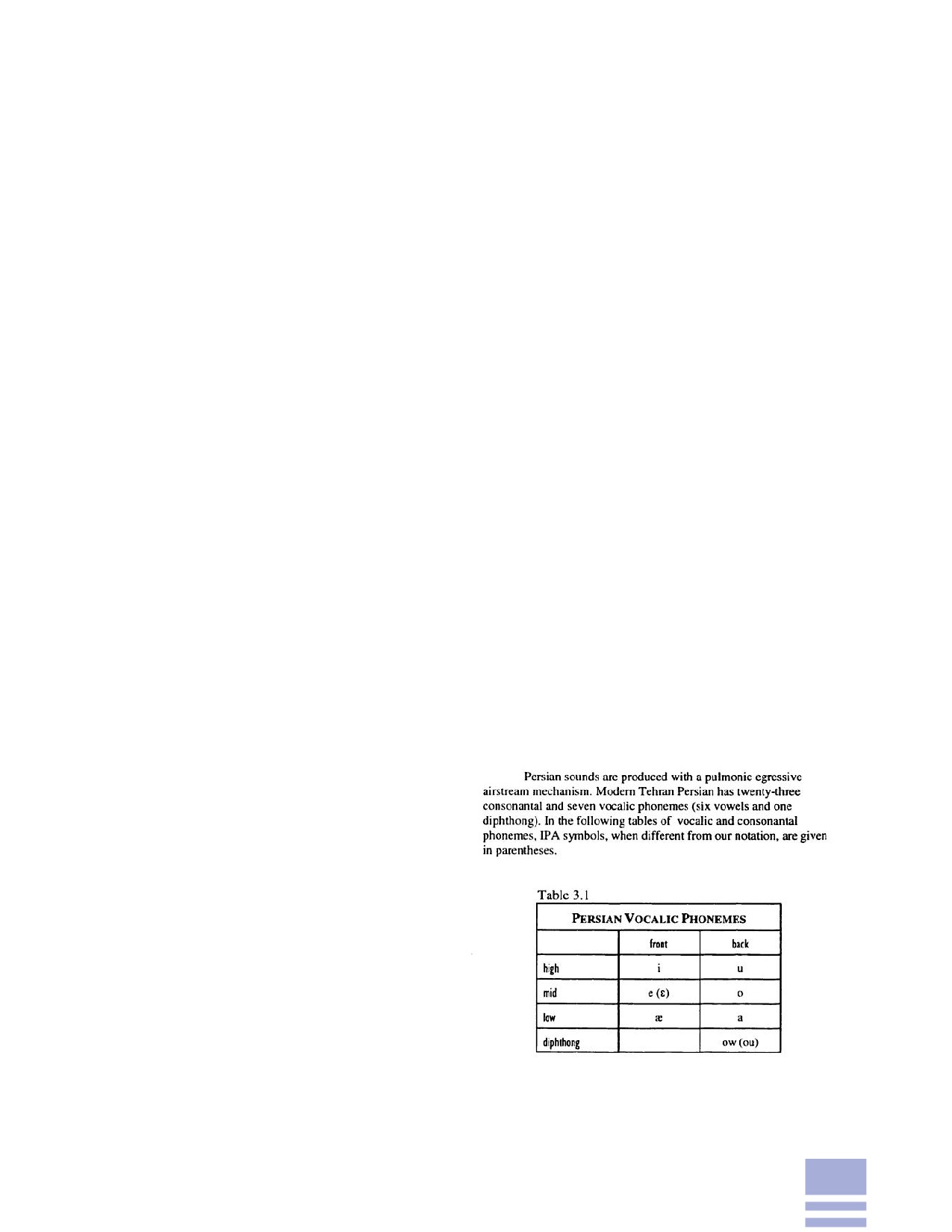
4. Persian vowel sounds: You may have been taught in
school that English has five vowels: a, e, i, o, u. This is true of
the English writing system, but in speech, English has many
possible vowel sounds, which are ambiguously represented
in our writing system by only these five symbols. Compare,
for example, the vowel quality in each of the following
words: book, bug, blue, black, bother, beep, bed, bid. In
contrast, Persian has only six vowel sounds.
Shahrzad Mahootian, P: 286
Persian. Routledge Descriptive Grammars
Routledge, London, Great Britain, 1997.
SHAHSAVARI | ATWOOD
xvi
5. Word stress: The stress in Persian words generally falls on the last syllable of a word, with few
exceptions. You will learn the other rules for stress as they become necessary.
6. Word-final shortening: You will probably notice in class that when a word ends in two consonants,
the second consonant will not be pronounced heard clearly. For example, the word [pokht] is
pronounced [pokhd]. You’ll learn more about this later in the book.
A Note on Transcription
While you are learning the alphabet, you will learn to say some words before you learn to write them
in Persian. Using transcription should be a temporary, transitional stage, and you should move to
writing only in Persian as soon as possible. Do not let transcription become a crutch!
Units One through Ten
In Units One through Ten, you will learn the basics of reading, writing, and speaking Persian. Listen to
the audio files as you read, make a habit of pronouncing out loud everything you write while you are
writing it, and practice on your own in addition to doing the exercises in the book. The more time you
put in now, the easier it will be to learn vocabulary, pronounce and spell words correctly, and speak
and read fluently.
xvii
PERSIAN OF IRAN TODAY
Introductory Exercise
Listen to the audio file. You hear the pronunciation of the words with their meaning in English. Write the English
words you hear. Which words sound familiar to you? Some of the words you hear are the words you will learn
in the first 10 units.
Persian Word
Persian Word
Persian Word
Symbol used
English Words
with the Sound
with the Sound
with the Sound
in the book
with Similar Sounds
at the End
in the Middle
at the Beginning
for transcribing
Persian words
arm, father, hot
â
امش .3
ردام .2
هرآ .1
a
cat, black
ردارب .6
درس .5
زا .4
met, bed
e
هناخ .9
ردپ .8
ناحتما .7
hit, sitting, see, heat
i
یراد .12
ريپ .11
ناريا .10
four, go, home
o
ود .15
اجک .14
قاتا .13
u
blue, food, put, could
وراد .18
روش .17
وا .16
ow
oh!, row
ور .20
زورون .19
b
bad, lab
بآ .23
حبص .22
هلب .21
did, lady
d
داتسا .26
دادم .25
وجشناد .24
find, if
f
فيک .29
رتفد .28
ادرف .27
give, flag
g
گرزب .32
یگدنز .31
هبرگ .30
This sound is similar to
the sound you made
gh/q
when you were a kid and
غولش .35
لغش .34
راغ ،یلاق .33
you would gulp water
h
how, hello
هد .38
راهان .37
تفه .36
SHAHSAVARI | ATWOOD
xviii
Persian Word
Persian Word
Persian Word
Symbol Used
English Words
with the Sound
with the Sound
with the Sound
in the Book for
with Similar Sounds
at the End
in the Middle
at the Beginning
Transcribing
Persian Words
y
yes, yellow
یاچ .41
ديع .40
کي .39
k
cat, back
کي .44
اکيرمآ .43
روشک .42
l
leg, little
لدنص .47
سلک .46
بل .45
m
man, lemon
ملس .50
اما .49
نم .48
n
no, ten
نز .53
یلدنص .52
هن .51
p
pet, map
پوس .56
تکرام رپوس .55
ريپ .54
r
red, try
رود .59
درم .58
زور .57
s
sun, miss
سدنهم .62
تسود .61
ملس .60
sh
she, crash
شزرو .65
هنشت .64
ماش .63
t
tea, getting
تشه .68
رتخد .67
وت .66
ch
check, church
چيه .71
کچوک .70
یاچ .69
v
voice, five
واگ .74
هدزاود .73
شزرو .72
Listen to the audio file to
kh
خيم .77
مروخیم .76
بوخ .75
hear this sound
zh
/zh/, as in mirage
ژاراگ .80
هژم .79
نپاژ .78
z
zoo, lazy
زيم .83
همانزور .82
نز .81
Glottal stop. Say “uh-oh!”
‘
In between “uh” and “oh”
تعاس .84
there is a glottal stop.
xix
PERSIAN OF IRAN TODAY
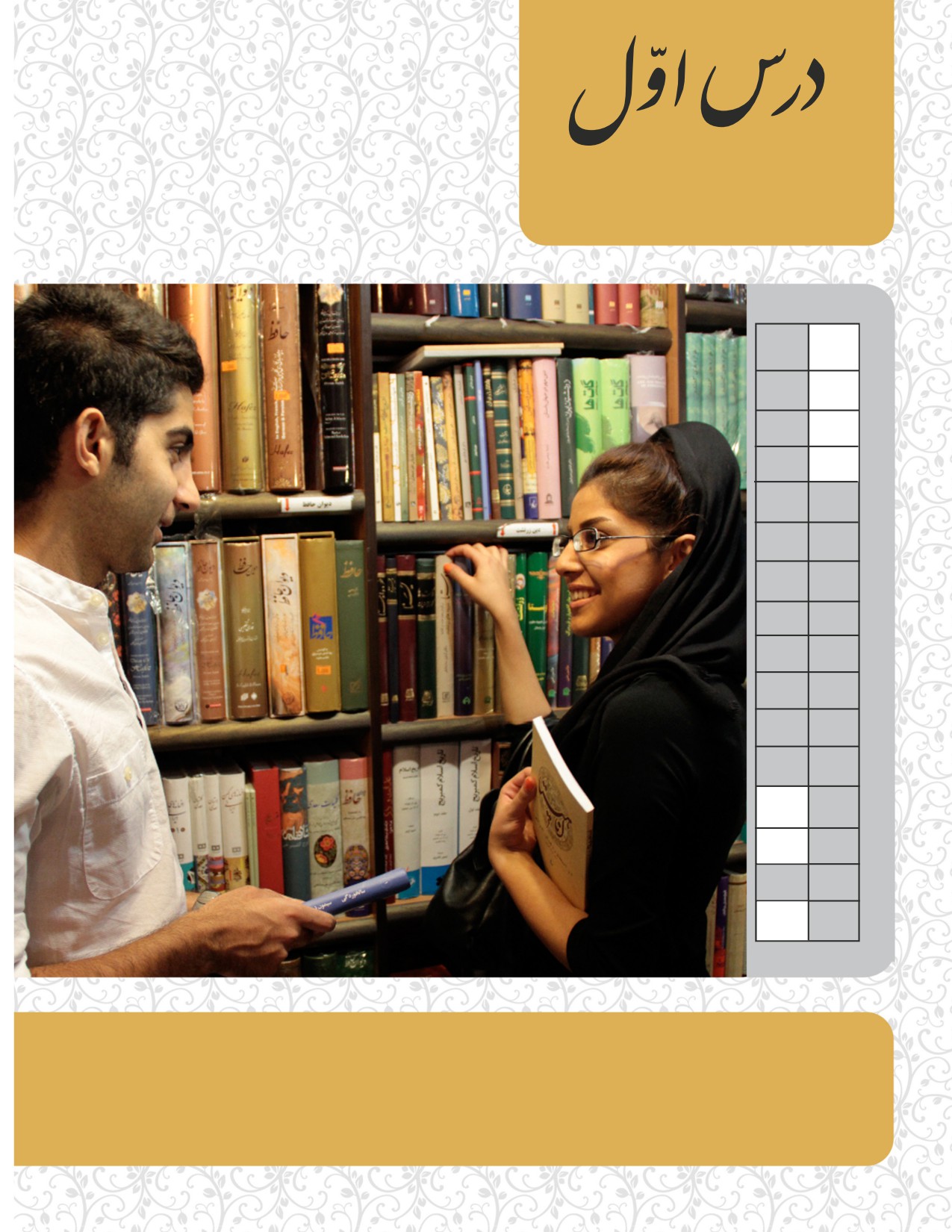
UNIT 1
ص
آ
ض
ب
ط
پ
ظ
ت
ع
ث
غ
ج
ف
چ
ق
ح
ک
خ
گ
د
ل
ذ
م
ر
ن
ز
و
ژ
ه
س
ي
ش
؟هروط هچ امش لاح ،ملس
Hi, how are you?
؟هيچ امش مسا
What is your name?
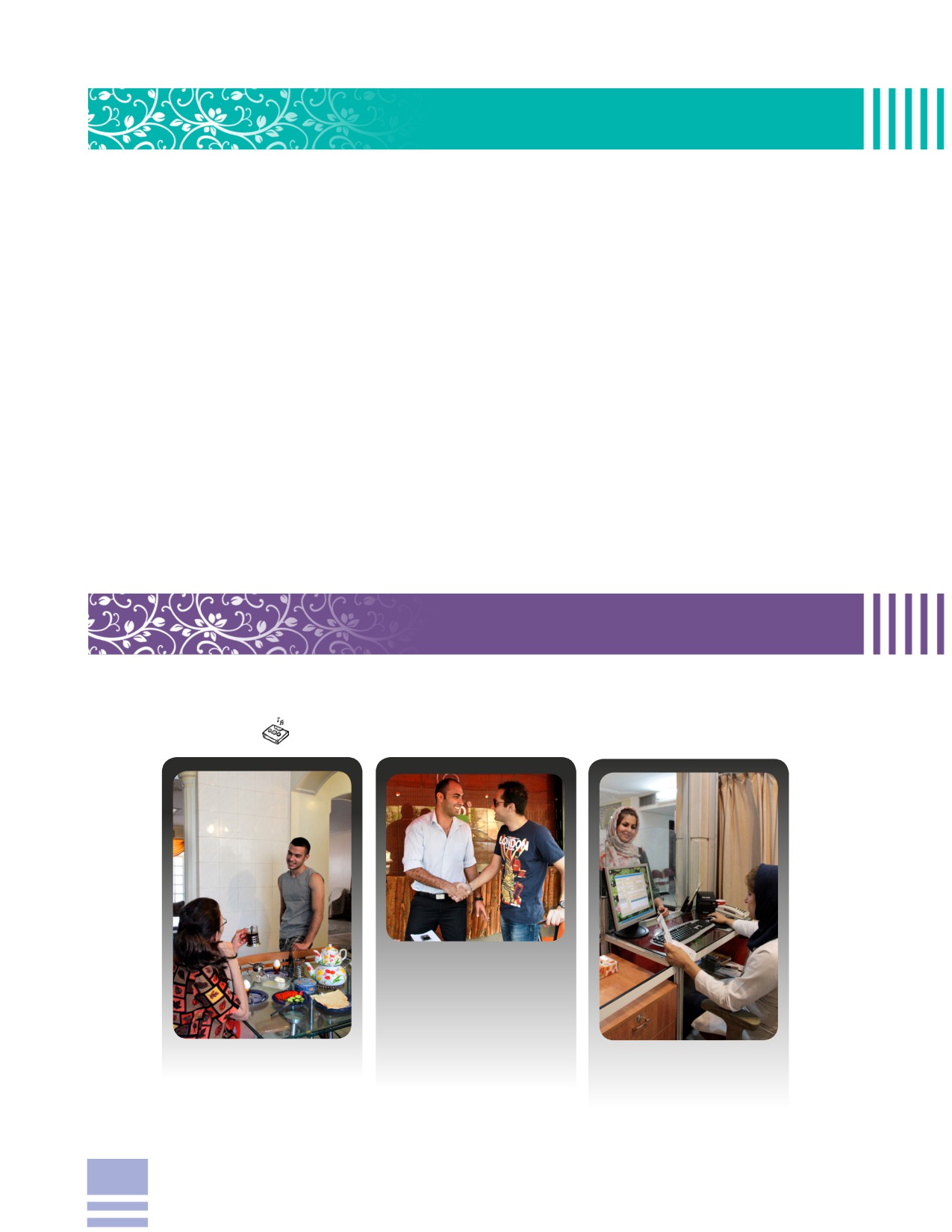
Cultural Note
یگنهرف تشاددای
Greetings 1
۱ یسرپلاوحا و ملس
”؟هروطهچ امش لاح ،ملس” [Salâm, hâl-e shomâ chetore?] is the most common way to greet someone in everyday
conversation. The phrase literary means “Hello, how are you?” and it is a polite and formal way to start an
interaction with someone. Persian greetings are usually long and detailed. They may consist of several exchanges
and often include questions about family as well. However, sometimes this phrase is used as a quick greeting
as familiar faces pass one another in a hallway of an office or on the street. In such cases, people may use the
shortened version of the phrase “؟امش لاح ،ملس” [Salâm, hâl-e shomâ ?] The answer to such a quick greeting
is usually equally as short, such as “منونمم ،ملس” [Salâm, mamnunam] or “؟نیروطچ امش !بوخ ،ملس” [Salâm,
khub! shomâ chetorin?]. When two women greet each other saying ”؟هروطچ امش لاح ،ملس” [Salâm, hâl-e shomâ
chetore?], they usually shake hands. If they already know each other well, they also often kiss twice, once on each
cheek. Men usually greet another in the same fashion, shaking hands and kissing on the cheeks. However, men and
women do not shake hands or kiss one another, unless they are mahram to each other (i.e. brother and sister,
father and daughter, husband and wife, or uncle and niece), or if they know each other well enough and know that
it is appropriate to do so.
Short Conversations هاتوک یاهوگتفگ
In class, listen to the audio files and transcribe the conversations. At home repeat what you hear several times
and try to follow the rhythm. During the next class time, you will work with a classmate to create a scenario that
uses these expressions.
.تسا هدش هتشون باتک یاهتنا رد اهوگتفگ نیا یسراف نتم
-
. esme shomâ chiye?
. esme man samâne ast.
3
PERSIAN OF IRAN TODAY
...ي...ﻳ...
...و...
...ن...ﻧ...
...ت
ﺗ...
...پ
ﭘ...
...ب... ﺑ...
...ا...آ...
This unit will introduce you to seven letters of the Persian alphabet as well as the vowel symbols.
Part 1: alef
/â/
___ا____آ___
ايرد
بارس
نامسآ
* Note: These words show how alef appears in different
positions in a word. You do not need to know how to
1. Listen to the audio file for آ alef.
read these words.
The name of the first letter of the Persian alphabet is alef. Alef has two main functions, the first of which will
be introduced here, and the second of which will be introduced later in this unit. For now, alef represents the
vowel sound /â/. This sound is a deep, open sound, somewhat similar to the a in talk or father but with a bit of
the sound /o/ in it. Note that alef does not connect to the letter that follows it.
2. Watch the video and follow the instructions.
................................................................................................... .آ
.....................................................................................................ا
3. Mark X for each word you hear /â/.
5. Numbers in Persian: Like English they are
written and read from left to right.
□ . ٣
□ .٢
□ .١
Number in
Persian
Pronunciation in
English
equivalent
Persian
□ .۵
□ .۴
/sefr/
4. Circle آ or ا in the text. Report to your
0
0
instructor how many “ ا / آ ” you identified
1
/yek/
in the text?
1
2
/do/
2
/se/
3
3
4
/châhâr/ (/châr/(
4
5
/panj/
5
SHAHSAVARI | ATWOOD
4
6. Watch the video and write the numbers in Persian three times. Read them aloud as you write.
1-2-3-4-5………………………………………………………………………………………………
…………………………………………………………………………….……………………………………
7. Listen to the audio file and write the number you hear.
.۵
.۴
.۳
.۲
.١
.10
.9
.8
.7
.6
8. Listen to the audio file and check the number that you hear.
□ ۱ □ ۵ □۵ .3
□ ۳ □ ۲ □۴ .2
□ ۵ □ ۳ □۱ .1
□ ۲ □ ۱ □۳ .5
□ ۳ □ ۴ □۲ .4
کرابم
بش
زاب
Part 2: be /b/
___ب____ﺑ___
1. Listen to the audio file for ب be.
The second letter of the Persian alphabet, be, is pronounced like the English “b.” Unlike alef, this is a
connecting letter, which means that it connects to any letter following it in the same word.
2. Watch the video and follow the instructions.
. . . . . . . . . . . . . . . . . . . . . . . . . . . . . . . . . . . . . . . . . . . . . . . . . . . . . . . . . . . . . . . . . . . . . . . . . . . . . . . . . . . . . . . . . . . . . . . . . . . . . . . . . . . . . . . . . . . . . . . . . . . . . . . . . . . . . . . . ب
. . . . . . . . . . . . . . . . . . . . . . . . . . . . . . . . . . . . . . . . . . . . . . . . . . . . . . . . . . . . . . . . . . . . . . . . . . . . . . . . . . . . . . . . . . . . . . . . . . . . . . . . . . . . . . . . . . . . . . . . . . . . . . . . . . . . . . . . . . . . ﺑ
5
PERSIAN OF IRAN TODAY
3. Watch the video and write the following words.
................................................................................................................... اب
.. . . . . . . . . . . . . . . . . . . . . . . . . . . . . . . . . . . . . . . . . . . . . . . . . . . . . . . . . . . . . . . . . . . . . . . . . . . . . . . . . . . . . . . . . . . . . . . . . . . . . . . . . . . . . . . ب آ
............................................................................................................... ب اب
4. Listen and check when you hear the /b/ sound in the word.
□ .۵
□ .۴
□ .٣
□ .٢
□ .١
5. Circle the letter ب in the following text. Report to your instructor how many “ب” you
identified in the text.
بتك و يمسر نوتم و تابتاكم و دانسا .تسا يسراف ناريا مدرم كرتشم و يمسر طخ و نابز
ياههناسر و تاعوبطم رد يموق و يلحم ياهنابز زا هدافتسا يلو دشاب طخ و نابز نيا اب دياب يسرد
.تسا دازآ يسراف نابز رانك رد ،سرادم رد اهنآ تايبدا سيردت و يهورگ
ناريا يملسا يروهمج يساسا نوناق مهدزناپ لصا
روشک يمسر مچرپ و خيرات ،طخ ،نابز :مود لصف
6. Listen and write the numbers you hear.
.٥
.۴
.٣
.٢
.١
Part 3: nun
/n/
___ن____ﻧ___
نان
گنس
کمن
1. Listen to the audio file for ن nun.
The letter nun is pronounced like the English “n.” Nun is a connecting letter whose shape resembles that of ب
in initial and medial positions, except for the placement of the dot, which comes above the tooth. It differs from
ب in that the independent and final forms of ن take a characteristic “tail” shape that dips well below the line.
SHAHSAVARI | ATWOOD
6
2. Watch the video and follow the instructions.
............................................................................................................ﻧ
ن
3-1. Watch the video and write the following words.
.......................................................................................انب
نان
.....................................................................................ناب
نابآ
3-2. Watch the video and write the following words.
....................................................................................نآ
بان
4. Listen and check when you hear /n/ sound in the word.
□ .۵
□ .۴
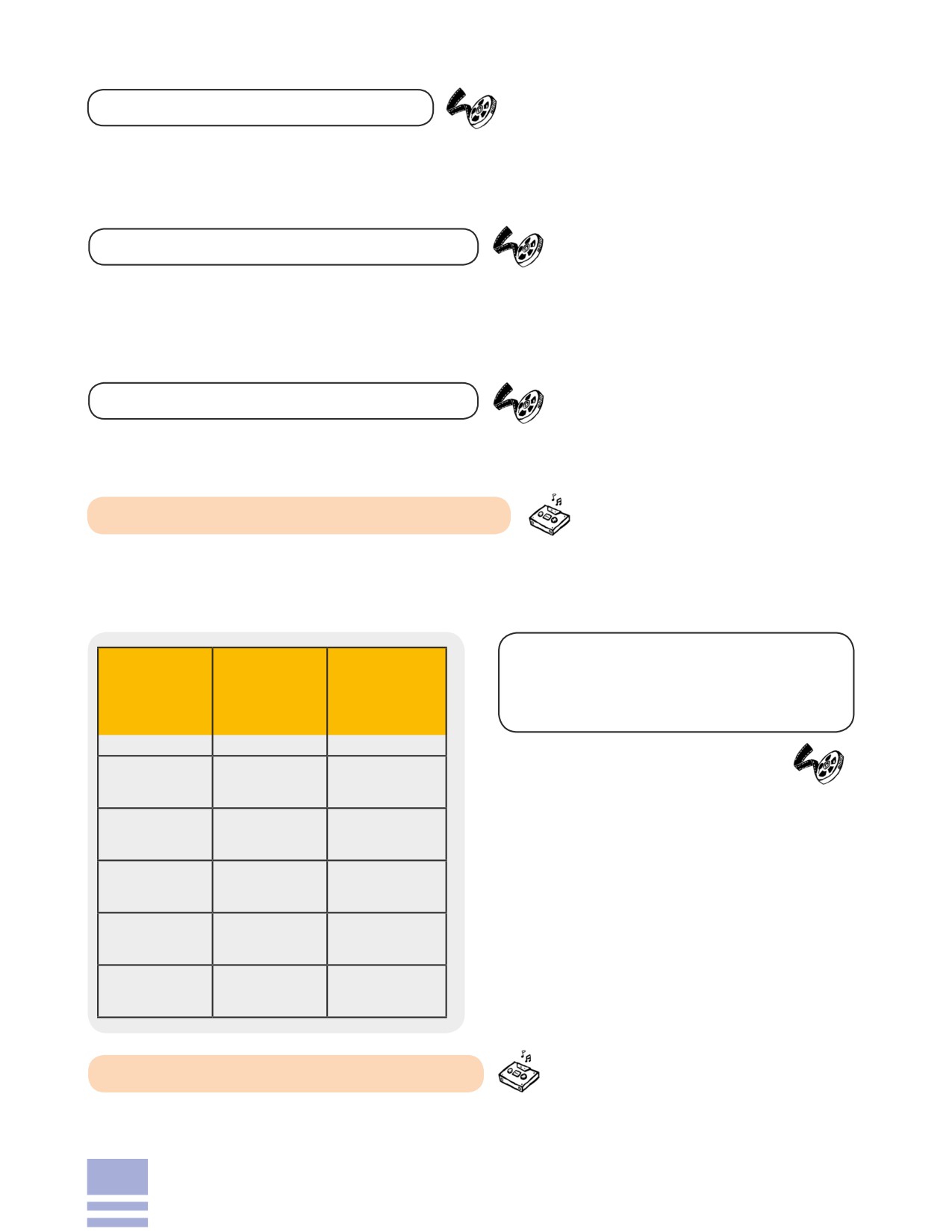
□ .٣
□ .٢
□ .١
5. Watch the video and write the numbers
Pronunciation
in Persian four times. Read them aloud as
Number in
Persian
in
you write. Use the chart on the left as a
English
equivalent
pronunciation guide.
Persian
6-7-8-9-10
6
/shesh/ (/shish/)
6
………………………………
7
/haft/
7
………………………………
8
/hasht/
………………………………
8
………………………………
/noh/
9
9
………………………………
10
/dah/
10
6. Listen to the audio and write the number you hear.
.۵
.۴
.۳
.۲
.١
7
PERSIAN OF IRAN TODAY
7. Circle the letter ن in the following text.
Report to your instructor how many “ن” you
یریگیم هک ییاهسکع
identified in the text.
،ینیزگیمرب هک یتاعوضوم و
.دنکیم راکشآ ار وت نورد صخش
،تاعوضوم هب وت یکیدزن نازیم
. تساهنآ هب وت قایتشا زا ناشن
8. Listen and repeat.
1-2-3-4-5-6-7-8-9-10
9. Listen to the audio file and write the word you hear.
.٥
.۴
.٣
.٢
.١
Part 4: zebar, zir, pish
/a, e, o/ ـــــــــــــ
1. Watch the video and listen to the audio file for ـــــــ a e o vowel markings
As you learned in the introduction, Persian has six vowel sounds, but only three of them have alphabetic equiva-
lents. Three of the vowel sounds in Persian are indicated in Persian by markings written above or below the shape
of the word. By convention, these vowels are written above or below the consonant they follow. Writing vowels
is the third and final step in writing a word, after both the skeleton and the dots have been completed. Although
at the beginning of words, these markers sit on or under an alef, these vowels are usually not written at all; they
are generally used only in teaching language and for unfamiliar words.
The names of these vowel symbols are zebarـــ, zirــ, and pishـــ .
1. Zebar, which is written as a diagonal dash above the letter, sounds like the a sound in apple.
2. Zir is written as a diagonal dash below the letter. It is pronounced like the “e” in “bet.”
3. Lastly, pish is written similar to a small, diagonal number 9 above the letter. It sounds like a pure letter “o,” not like
the English “o,” which often has a hidden “u” sound after it. Try pronouncing the word boat slowly. The lips round
at the end of the “o” sound, becoming more like a “u.” The Persian pish is only the pure “o” sound, without the “u.”
SHAHSAVARI | ATWOOD
8
بش
ملس
ربا
ــــــــاــــــ
ــــــــاــــــ
باتک
تخرد
رختسا
درک
گرزب
قاتا
ــــــــاــــــ
2-1. Watch the video and follow the instructions.
............................................................................................ ﺑ
ﺑ
ﺑ
..............................................................................................ا
ا
ا
2-2. Watch the video and follow the instructions.
...........................................................................نب
نان
.............................................................................ابا
انب
............................................................................انبا
انا
3. Listen and check when you hear the /a/ sound in the word (as opposed to /â/).
□ .۵
□ .۴
□ .٣
□ .٢
□ .١
4. Mark X for each word in which you hear /â/ (as opposed to /a/).
□ .۵
□ .۴
□ .٣
□ .٢
□ .١
5. Listen and write the words you hear.
.٥
.۴
.٣
.٢
.١
.۱۰
.۹
.۸
.۷
.۶
9
PERSIAN OF IRAN TODAY
6. Listen to the audio file and check the
7. Read the following words with your partner.
numbers that you hear.
ابا
.۱
□ ۱
□ ۷
□۶ .1
□ ۹
□ ۳
□۴ .2
نابآ .2
□ ۲
□ ۵
□
۱
.3
□ ۵
□ ۲
□۱۰ .4
ناباب .3
□ ۳
□ ۱۰
□۸ .5
نبا .4
□ ۴
□ ۶
□۹ .6
□ ۷
□ ۱
□۵ .7
انبآ .۵
□۱۰
□ ۵
□
۳
.8
□ ۶
□ ۹
□۱ .9
□۸
□۴
□۲ .10
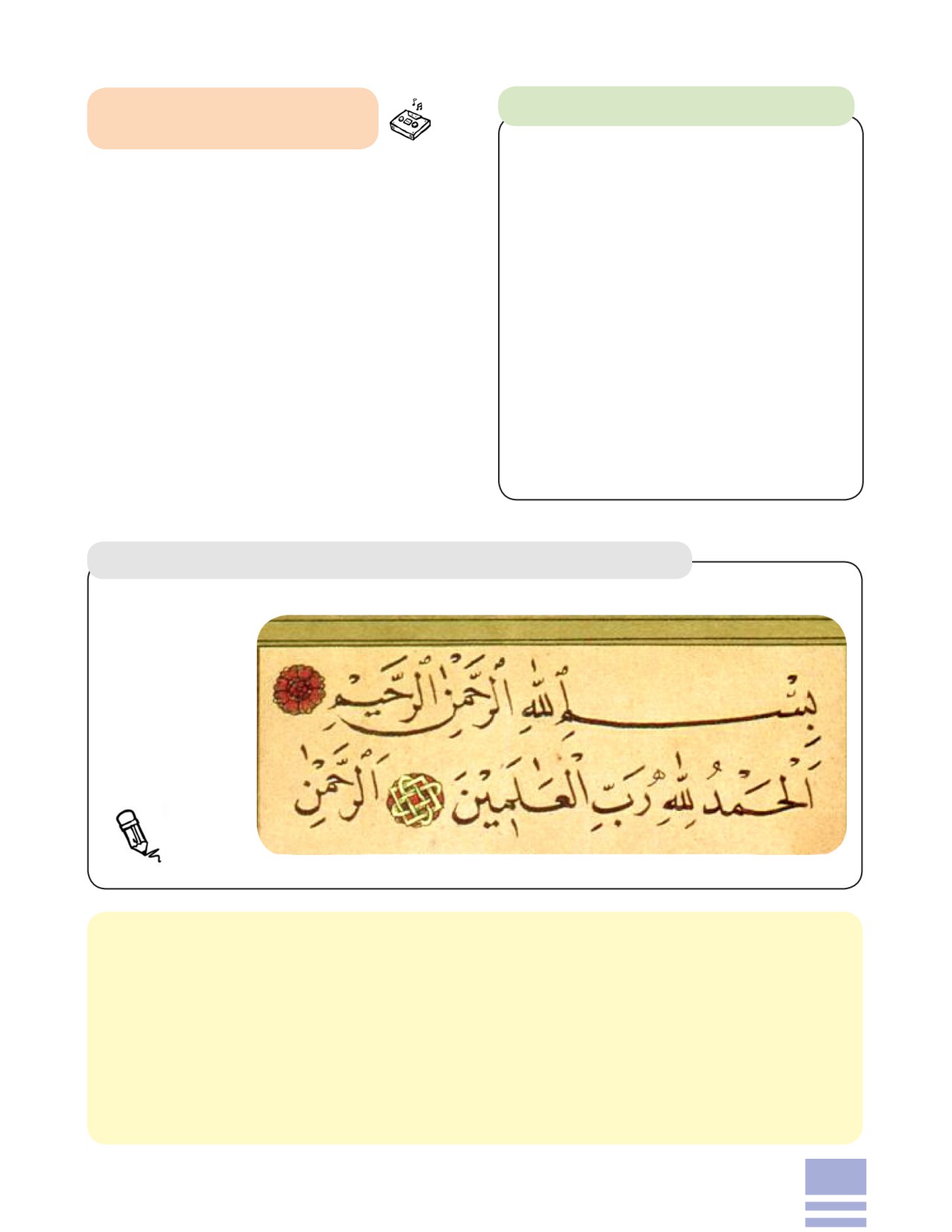
8. Circle the following vowel markings in the following text from the Quran.
ـــــــــــــ
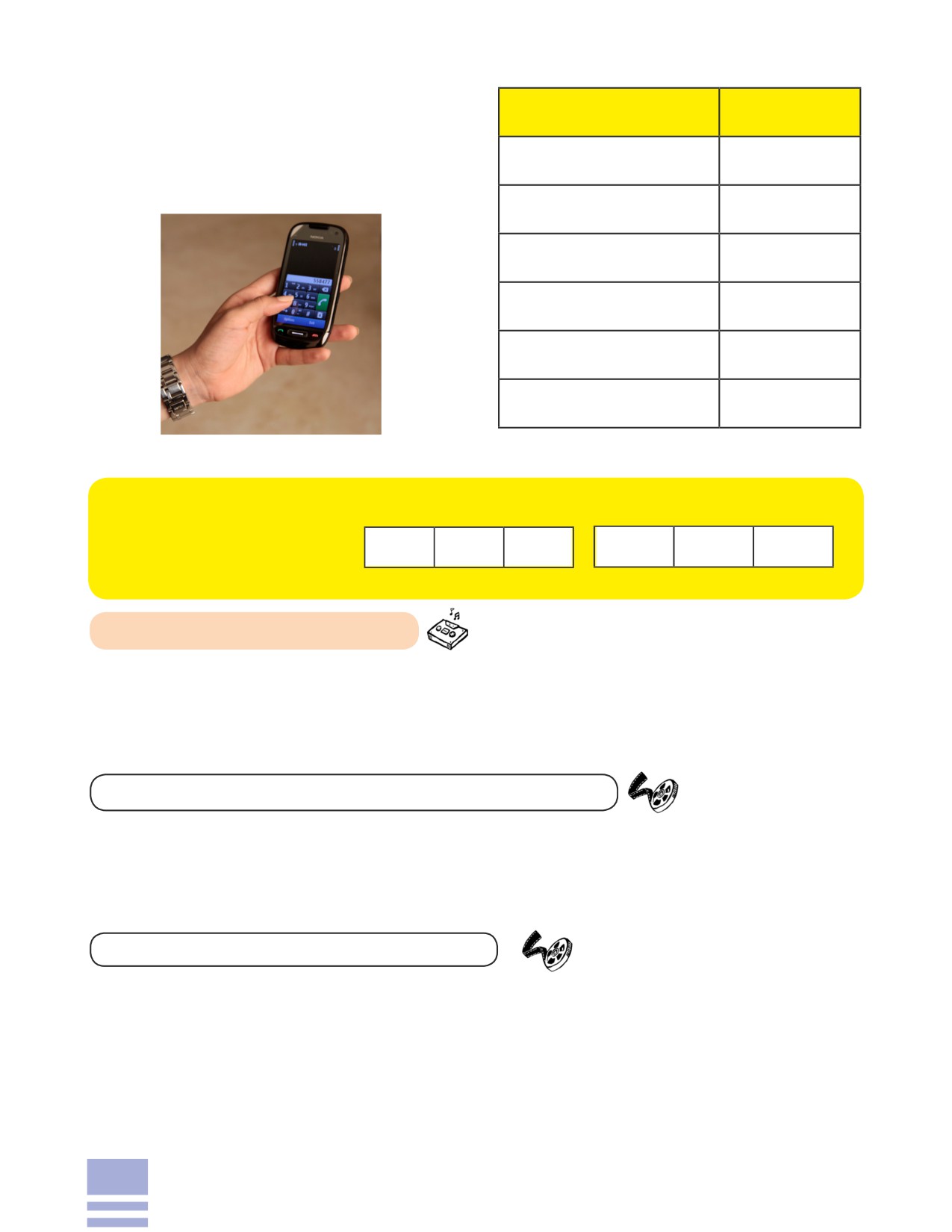
9. Homework: Memorize giving your phone number digit by digit. While someone would not actually give his
phone number this way in Persian, your goal for now is to review numbers 1-10.
10. In class: Ask your classmates for their phone numbers. Write their names and numbers in the list. Use
this question to ask for their numbers: shomâre-ye telefonetun chand-e?
؟هدنچ نوتنفلت یهرامش
SHAHSAVARI | ATWOOD
10
نفلت یهرامش
مان
:منفلت یهرامش
Shomâreye telefonam:
__ ت__ ﺗ__
__پ__ ﭘ __
Part 5: pe, te
/p/, /t/
تسب
باتک
پوت
پوت
رپب
رينپ
1. Listen to the audio file for پ pe ت te.
پ pe: The name of the next letter is pe, which is pronounced like the English /p/. It is written exactly like
ب but with three dots below it.
ت te: The next letter, te, is pronounced like a clear, frontal English “t” like in Tom.
2. Writing پ and ت : Watch the video and follow the instructions.
. . . . . . . . . . . . . . . . . . . . . . . . . . . . . . . . . . . . . . . . . . . . . . . . . . . . . . . . . . . . . . . . . . . . . . . . . . . . . . . . . . . . . . . . . . . . . . . . . . . . . . . . . . . . . . . . . پ
ﭘ
. . . . . . . . . . . . . . . . . . . . . . . . . . . . . . . . . . . . . . . . . . . . . . . . . . . . . . . . . . . . . . . . . . . . . . . . . . . . . . . . . . . . . . . . . . . . . . . . . . . . . . . . . . . . . . . . . ت
ﺗ
3. Watch the videos and write the following words.
. . . . . . . . . . . . . . . . . . . . . . . . . . . . . . . . . . . . نابات
تابن
پاپ
. . . . . . . . . . . . . . . . . . . . . . . . . . . . . . . . . . . . . . . .نآ
نابآ
ناتا
. . . . . . . . . . . . . . . . . . . . . . . . . . . . . . . . . . . . . . . . .اپ
انب
نتآ
11
PERSIAN OF IRAN TODAY
4. Because pe and te are familiar sounds, let’s continue working on distinguishing between /a/ and
/â/. Listen and check when you hear the /â/ sound in the word (as opposed to /a/).
□ .۵
□ .۴
□ .٣
□ .٢
□ .١
5. Circle the letters پ and ت in the
following texts. Report to your instruc-
tor how many پ and ت you identified
in the text.
6. Listen and write the words you hear.
.٥
.۴
.٣
.٢
.١
.۱۰
.۹
.۸
.۷
.۶
7. Connect the letters to form words as shown in the example. Sound the words out as you write them.
......تابن
←
ت + ا + ب + ن
←
ن + ا + ن + ب
←
ن + ب
← ن + ا + ب + ا + ت
←
ن + ت + آ
SHAHSAVARI | ATWOOD
12
8. In class, read the following words with your partner.
پاپ .۵
انب .۴
نابات .3
نابآ .۲
بات .۱
اپ .۱۰
نانآ .۹
نان .۸
تابن .۷
نتآ .۶
نت .۱۲
نب .۱۱
Part 6: ye
/y/, /i/
يا__ ي__ ﻳ__ ﻳا__
ياهمروس
يبآ
راديب
ناريا
1. Listen to the audio file for ی ye.
The letter ye is the first of four letters that function as both a consonant and a vowel. It functions as a consonant
at the beginning of a word, or when preceded or followed by a vowel. In these cases, it is pronounced like /y/
in “yes.” When it functions as a vowel, it sounds like the /i/ in feet. Notice that the initial and medial shapes are
similar to those shapes of the letter ب only with two dots below. In the independent and final forms, it has a
long tail that goes well below the line before coming back up to the level of the line. In independent and final
positions, the two dots under the letter are not written. A ی at the beginning of a word makes the /y/ sound.
In order to get an /i/ sound at the beginning of a word we use the combination ـيا (alef + ye).
2. Writing ی : Watch the video and follow the instructions.
. . . . . . . . . . . . . . . . . . . . . . . . . . . . . . . . . . . . . . . . . . . . . . . . . . . . . . . . . . . . . . . . . . . . . . . . . . . . . . . . . . . . . . . . . . . . . . . . . . . . . . . . . . . . . . . . . . .ﻲ
ي
ﻳ
Note
Pronounced
Ex.
Pronounced
Written
inân
i
نانيا
ﻳا
âydâ
ây
اديآ
يآ
ayyâm
ay
There are only a few words that start with “يا”
مايا
يا
ey
يا
ey
يا
There are only a few words that start with “يا”
oy
يا
oy
There are a few words that start with “يا”
يا
13
PERSIAN OF IRAN TODAY