FANUC Series 0i-MC. OPERATOR’S MANUAL - page 21
B-64124EN/01
OPERATION
8. DATA INPUT/OUTPUT
8.11
By setting the I/O channel (parameter No. 0020) to 4, files on a memory
card inserted into the memory card interface located to the left of the
DATA INPUT/OUTPUT
display can be referenced. Different types of data such as part programs,
USING A MEMORY
parameters, and offset data on a memory card can also be input and output
CARD
in text file format.
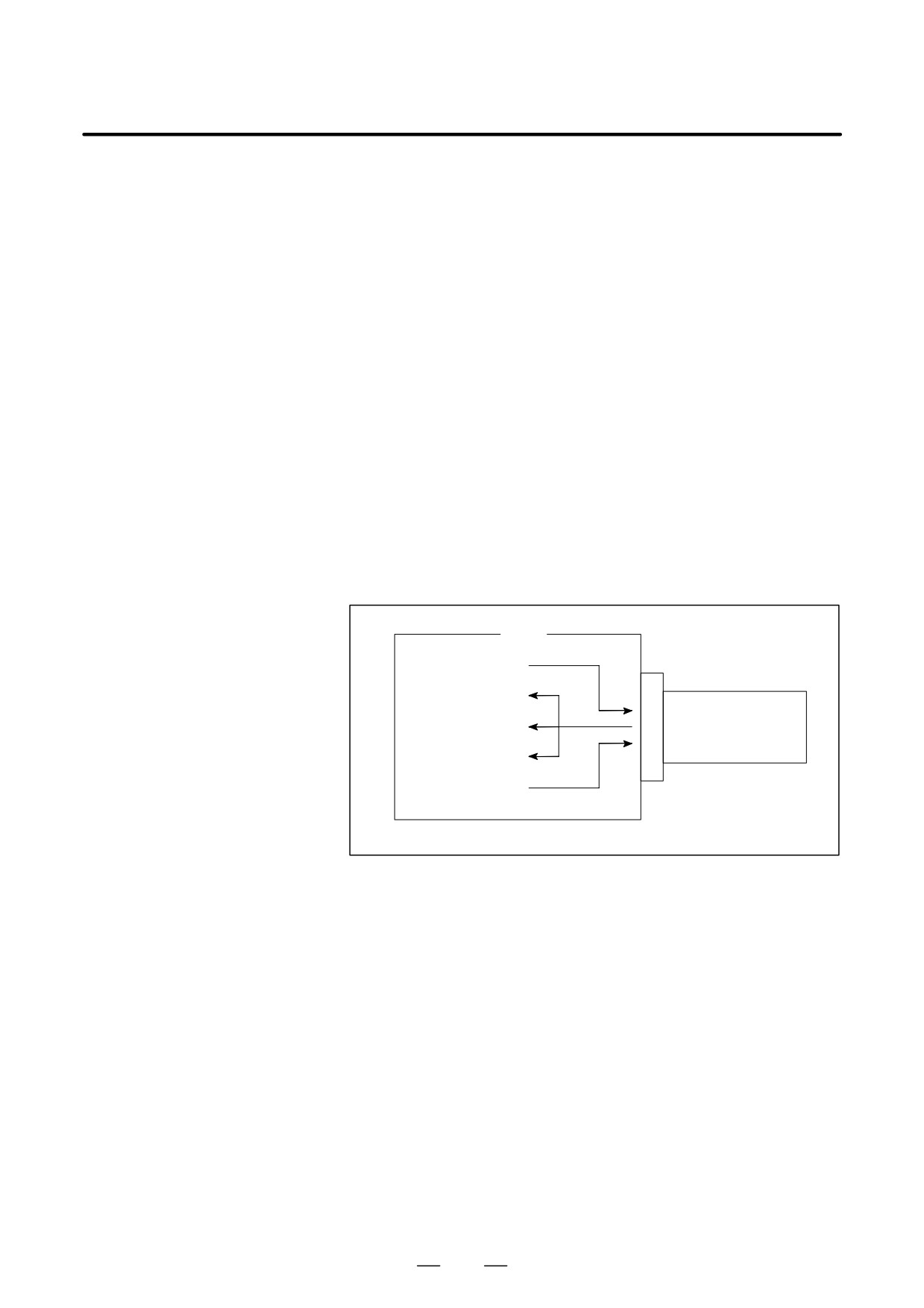
The major functions are listed below.
⋅
Displaying a directory of stored files
The files stored on a memory card can be displayed on the directory
screen.
⋅
Searching for a file
A search is made for a file on a memory card and, if found, it is
displayed on the directory screen.
⋅
Reading a file
Text-format files can be read from a memory card.
⋅
Writing a file
Data such as part programs can be stored to a memory card in text file
format.
⋅
Deleting a file
A file can be selected and deleted from a memory card.
CNC
Writing a file
Reading a file
Displaying a directory
Memory card
Searching for a file
Deleting a file
583
8. DATA INPUT/OUTPUT
OPERATION
B-64124EN/01
Displaying a directory of stored files
Procedure
1
Press the EDIT switch on the machine operator’s panel.
2
Press function key
PROG
3
Press the rightmost soft key
(next-menu key).
4
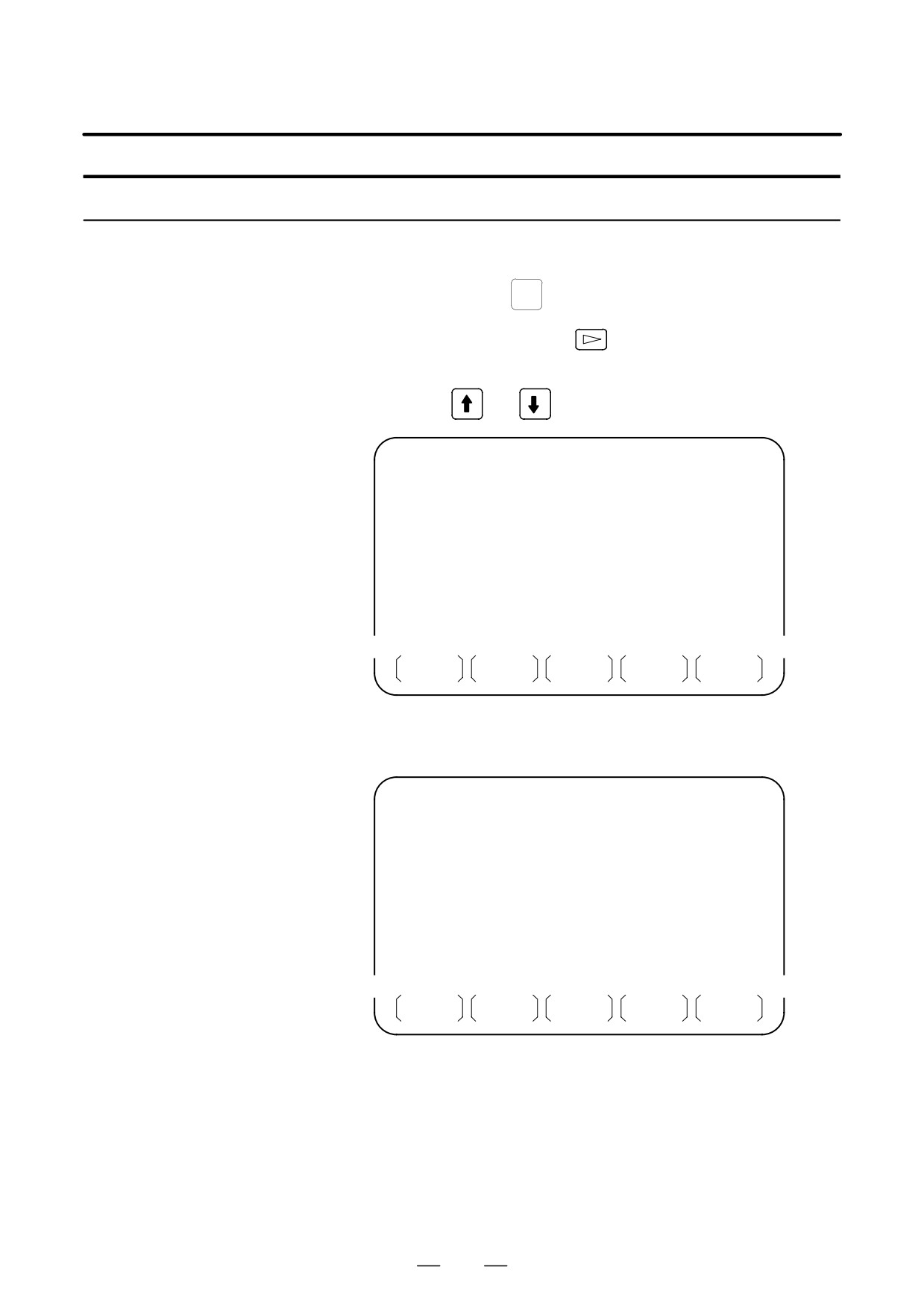
Press soft key [CARD]. The screen shown below is displayed. Using
page keys
and
, the screen can be scrolled.
DIRECTORY (M-CARD)
O0034 N00045
No. FILE NAME
SIZE
DATE
0001
O1000
123456
96/07/10
0002
O1001
118458
96/07/30
0003
O0002
113250
96/07/30
0004
O2000
173456
96/07/31
0005
O2001
113444
96/07/31
0006
O3001
118483
96/08/02
0007
O3300
111406
96/08/05
0008
O3400
112420
96/07/31
0009
O3500
117460
96/07/31
~
~
PROG
DIR +
(OPRT)
5
Comments relating to each file can be displayed by pressing soft key
[DIR+].
DIRECTORY (M-CARD)
O0034 N00045
No. FILE NAME
COMMENT
0001
O1000
(COMMENT
)
0002
O1001
(SUB PROGRAM )
0003
O0002
(12345678
)
0004
O2000
(
)
0005
O2001
(
)
0006
O3001
(SKIP-K
)
0007
O3300
(HI-SPEED
)
0008
O3400
(
)
0009
O3500
(TEST PROGRAM)
~
~
PROG
DIR +
(OPRT)
6
Repeatedly pressing soft key [DIR+] toggles the screen between the
display of comments and the display of sizes and dates.
The comment area displays a comment following the O number in
each file. Up to 18 characters can be displayed on the screen.
584
B-64124EN/01
OPERATION
8. DATA INPUT/OUTPUT
Searching for a file
Procedure
1
Press the EDIT switch on the machine operator’s panel.
2
Press function key
PROG
3
Press the rightmost soft key
(next-menu key).
4
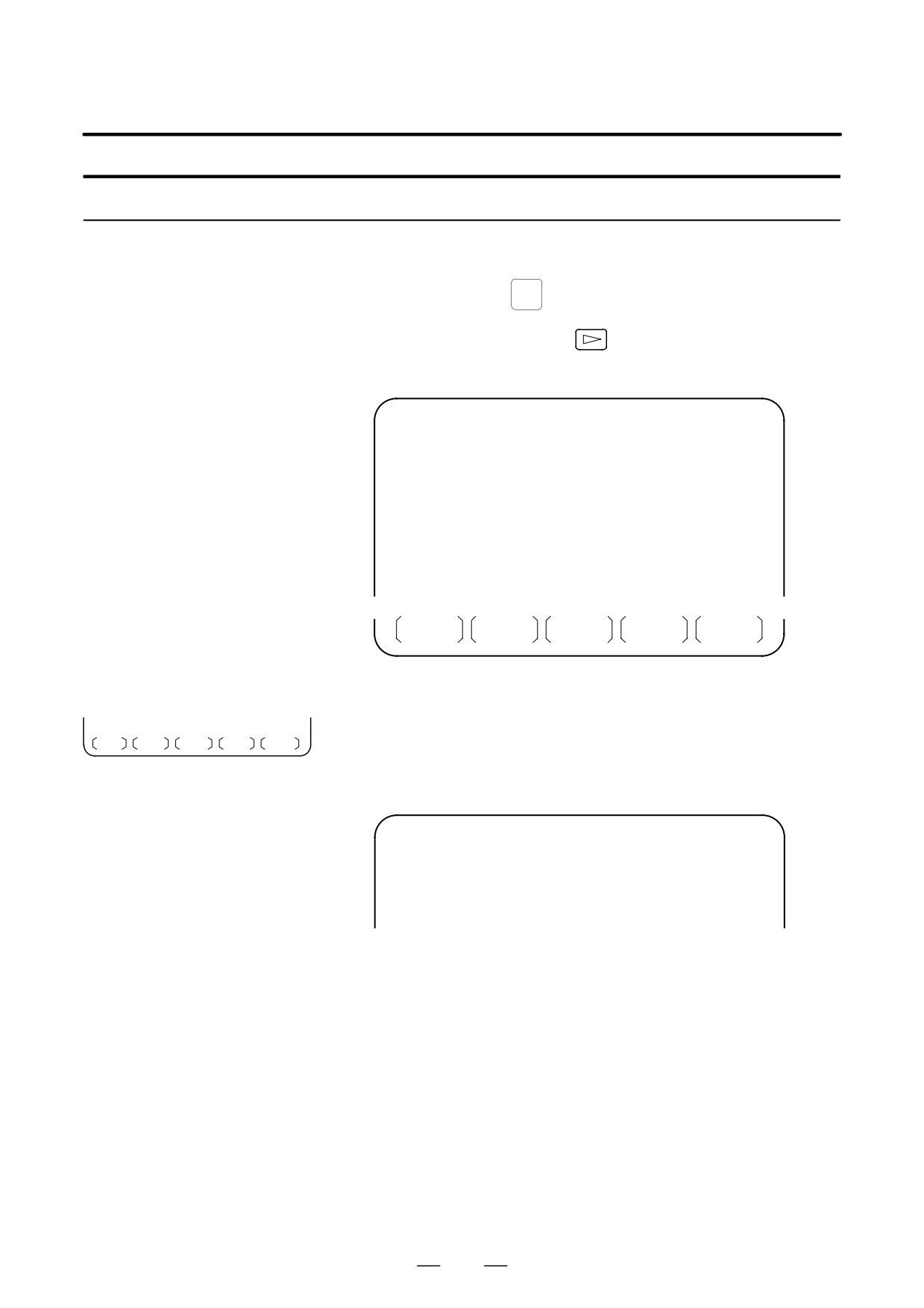
Press soft key [CARD]. The screen shown below is displayed.
DIRECTORY (M-CARD)
O0034 N00045
No. FILE NAME
SIZE
DATE
0001
O1000
123456
96/07/10
0002
O1001
118458
96/07/30
0003
O0002
113250
96/07/30
0004
O2000
173456
96/07/31
0005
O2001
113444
96/07/31
0006
O3001
118483
96/08/02
0007
O3300
111406
96/08/05
0008
O3400
112420
96/07/31
0009
O3500
117460
96/07/31
~
~
PROG
DIR +
(OPRT)
5
Press soft key [(OPRT)].
6
Set the number of the desired file number with soft key [F SRH].
F SRH F READ N READ PUNCH DELETE
Then, start the search by pressing soft key [EXEC]. If found, the file is
displayed at the top of the directory screen.
When a search is made for file number 19
DIRECTORY (M-CARD)
O0034 N00045
No. FILE NAME
COMMENT
0019
O1000
(MAIN PROGRAM)
0020
O1010
(SUBPROGRAM-1)
0021
O1020
(COMMENT
)
0022
O1030
(COMMENT
)
~
~
585
8. DATA INPUT/OUTPUT
OPERATION
B-64124EN/01
Reading a file
Procedure
1
Press the EDIT switch on the machine operator’s panel.
2
Press function key PROG.
3
Press the rightmost soft key
(next-menu key).
4
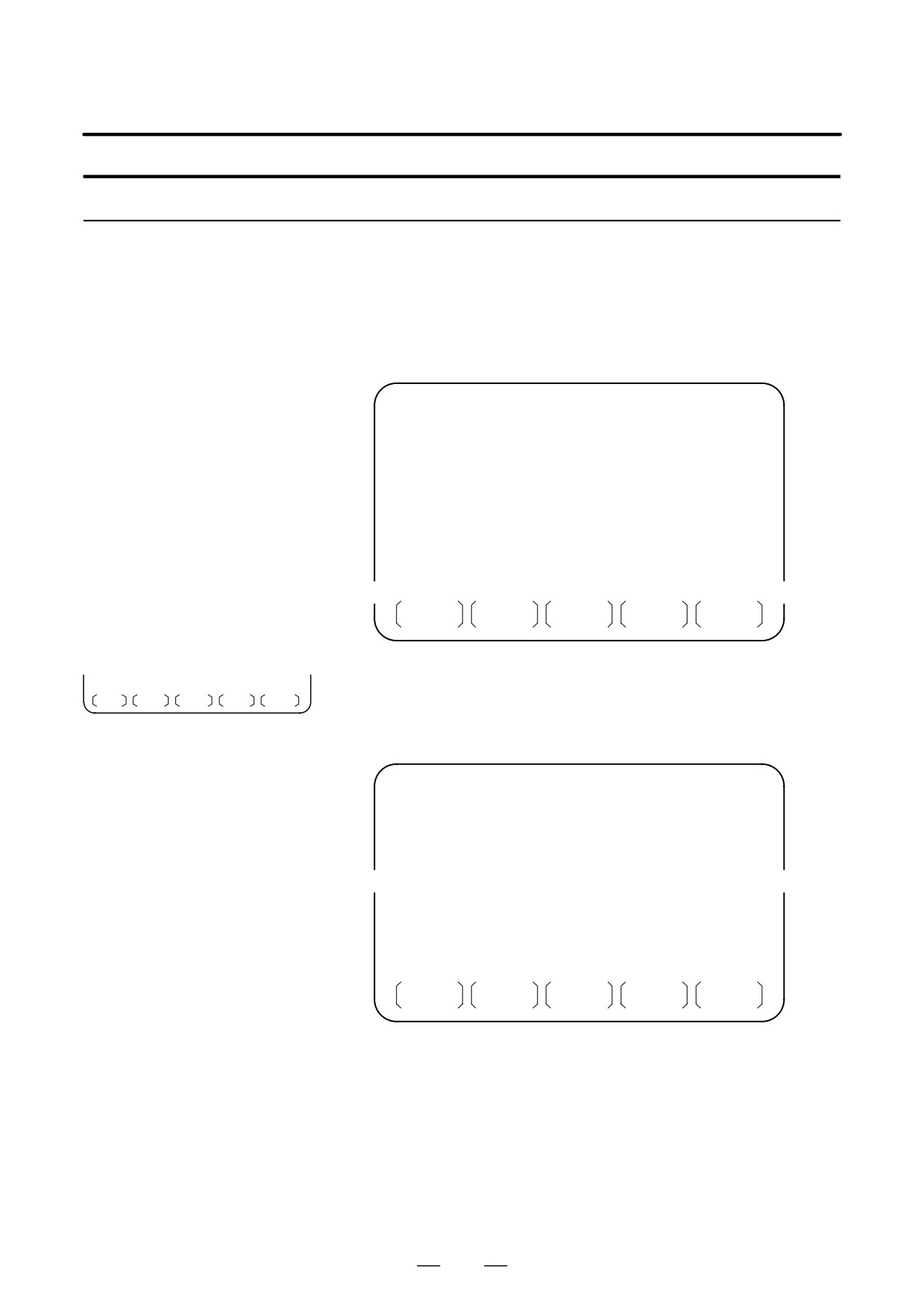
Press soft key [CARD]. Then, the screen shown below is displayed.
DIRECTORY (M-CARD)
O0034 N00045
No. FILE NAME
SIZE
DATE
0001
O1000
123456
96/07/10
0002
O1001
118458
96/07/30
0003
O0002
113250
96/07/30
0004
O2000
173456
96/07/31
0005
O2001
113444
96/07/31
0006
O3001
118483
96/08/02
0007
O3300
111406
96/08/05
0008
O3400
112420
96/07/31
0009
O3500
117460
96/07/31
~
~
PROG
DIR +
(OPRT)
5
Press soft key [(OPRT)].
F SRH F READ N READ PUNCH DELETE
6
To specify a file number, press soft key [F READ]. The screen shown
below is displayed.
DIRECTORY (M-CARD)
O0001 N00010
No. FILE NAME
COMMENT
0019
O1000
(MAIN PROGRAM)
0020
O1010
(SUBPROGRAM-1)
0021
O1030
(COMMENT
)
~
~
READ
FILE NAME=20
PROGRAM No.=120
>
EDIT
15:40:21
* * *
* * * *
* * *
* * * *
F NAME
O SET
STOP
CAN
EXEC
7
Enter file number 20 from the MDI panel, then set the file number by
pressing soft key [F SET]. Next, enter program number 120, then set
the program number by pressing soft key [O SET]. Then, press soft
key [EXEC].
⋅
File number 20 is registered as O0120 in the CNC.
⋅
Set a program number to register a read file with a separate O
number. If no program number is set, the O number in the file name
column is registered.
586

B-64124EN/01
OPERATION
8. DATA INPUT/OUTPUT
8
To specify a file with its file name, press soft key [N READ] in step 6
above. The screen shown below is displayed.
DIRECTORY (M-CARD)
O0001 N00010
No. FILE NAME
COMMENT
0012
O0050
(MAIN PROGRAM)
0013
TESTPRO
(SUB PROGRAM-1)
0014
O0060
(MACRO PROGRAM)
~
~
READ
FILE NAME
=TESTPRO
PROGRAM No. =1230
>
EDIT
15:40:21
* * *
* * * *
* * *
* * * *
F NAME
O SET
STOP
CAN
EXEC
9
To register file name TESTPRO as O1230, enter file name TESTPRO
from the MDI panel, then set the file name with soft key [F NAME].
Next, enter program number 1230, then set the program number with
soft key [O SET]. Then, press soft key [EXEC].
587
8. DATA INPUT/OUTPUT
OPERATION
B-64124EN/01
Writing a file
Procedure
1
Press the EDIT switch on the machine operator’s panel.
2
Press function key
PROG
3
Press the rightmost soft key
(next-menu key).
4
Press soft key [CARD]. The screen shown below is displayed.
DIRECTORY (M-CARD)
O0034 N00045
No. FILE NAME
SIZE
DATE
0001
O1000
123456
96/07/10
0002
O1001
118458
96/07/30
0003
O0002
113250
96/07/30
0004
O2000
173456
96/07/31
0005
O2001
113444
96/07/31
0006
O3001
118483
96/08/02
0007
O3300
111406
96/08/05
0008
O3400
112420
96/07/31
0009
O3500
117460
96/07/31
~
~
PROG
DIR +
(OPRT)
5
Press soft key [(OPRT)].
6
Press soft key [PUNCH].
F SRH
F READ
N READ
PUNCH
DELETE
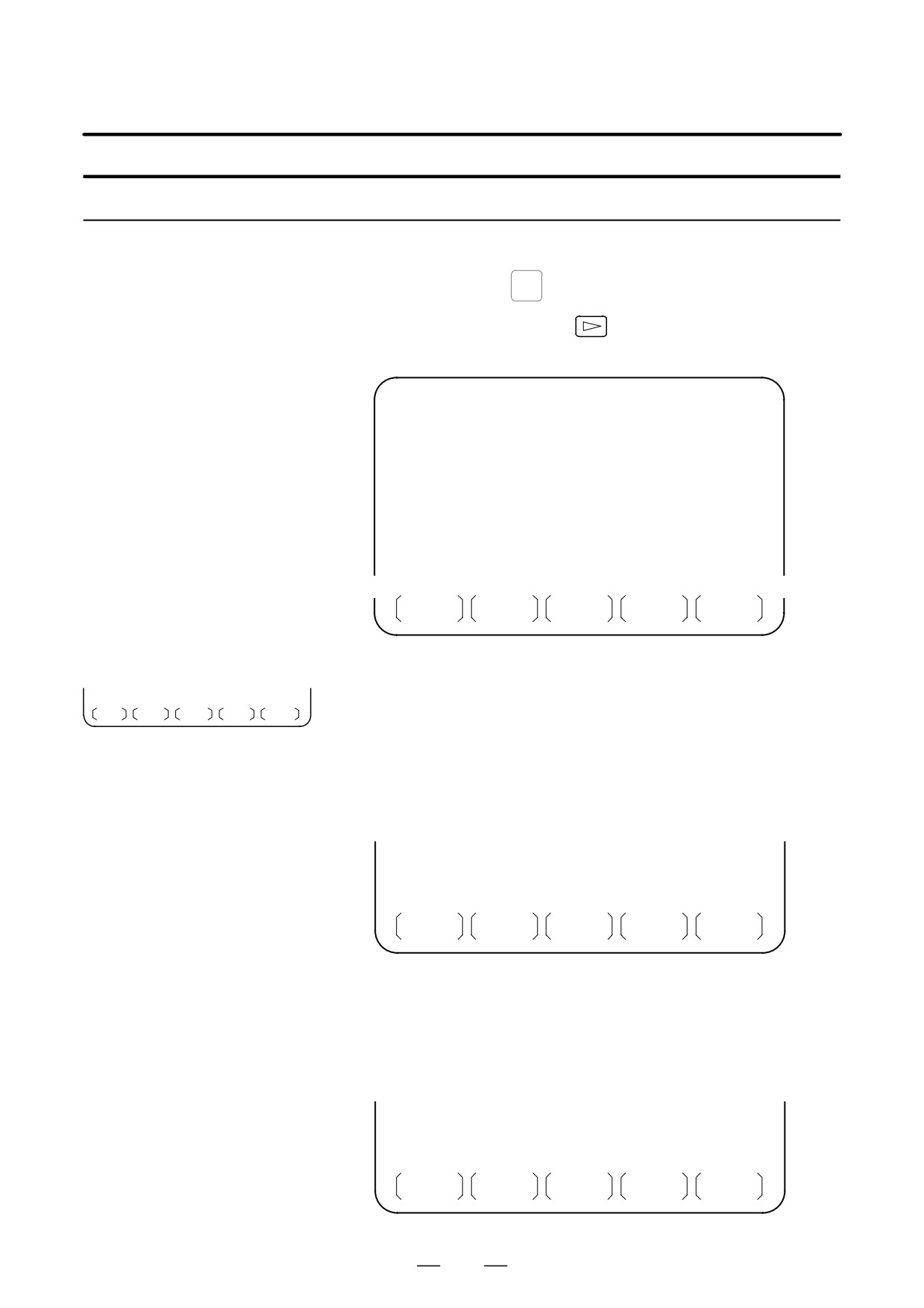
7
Enter a desired O number from the MDI panel, then set the program
number with soft key [O SET].
When soft key [EXEC] is pressed after the setting shown below has
been made, for example, the file is written under program number
O1230.
~
~
PUNCH
FILE NAME
=
PROGRAM No. =1230
>
EDIT
15:40:21
* * *
* * * *
* * *
* * * *
F NAME
O SET
STOP
CAN
EXEC
8
In the same way as for O number setting, enter a desired file name
from the MDI panel, then set the file name with soft key [F SET].
When soft key [EXEC] is pressed after the setting shown below has
been made, for example, the file is written under program number
O1230 and file name ABCD12.
~
~
PUNCH
FILE NAME
=ABCD12
PROGRAM No. =1230
>
EDIT
* * *
* * * *
* * *
* * * *
15:40:21
F NAME
O SET
STOP
CAN
EXEC
588
B-64124EN/01
OPERATION
8. DATA INPUT/OUTPUT
Explanations
D Registering the same file
When a file is output to the memory card, another file having the same
name
name may already exist in the memory card. Bit 6 (OWM) of parameter
No. 0138 can be used to select whether to overwrite the existing file
unconditionally or display a message confirming the overwriting.
A message appears when OWM is 0; overwriting occurs unconditionally
when OWM is 1. Even when OWM is 0, however, file overwriting occurs
unconditionally if the overwriting is specified by the screen hardcopy
function or an operation on the maintenance information screen or PMC
screen.
D Writing all programs
To write all programs, set program number = -9999. If no file name is
specified in this case, file name PROGRAM.ALL is used for registration.
D File name restrictions
The following restrictions are imposed on file name setting:
<File name setting>
VVV
°
°
Not longer than 8
Extension not longer
characters
than 3 characters
589
8. DATA INPUT/OUTPUT
OPERATION
B-64124EN/01
Deleting a file
Procedure
1
Press the EDIT switch on the machine operator’s panel.
2
Press function key
PROG
3
Press the rightmost soft key
(next-menu key).
4
Press soft key [CARD]. The screen shown below is displayed.
DIRECTORY (M-CARD)
O0034 N00045
No. FILE NAME
SIZE
DATE
0001
O1000
123456
96/07/10
0002
O1001
118458
96/07/30
0003
O0002
113250
96/07/30
0004
O2000
173456
96/07/31
0005
O2001
113444
96/07/31
0006
O3001
118483
96/08/02
0007
O3300
111406
96/08/05
0008
O3400
112420
96/07/31
0009
O3500
117460
96/07/31
~
~
PROG
DIR +
(OPRT)
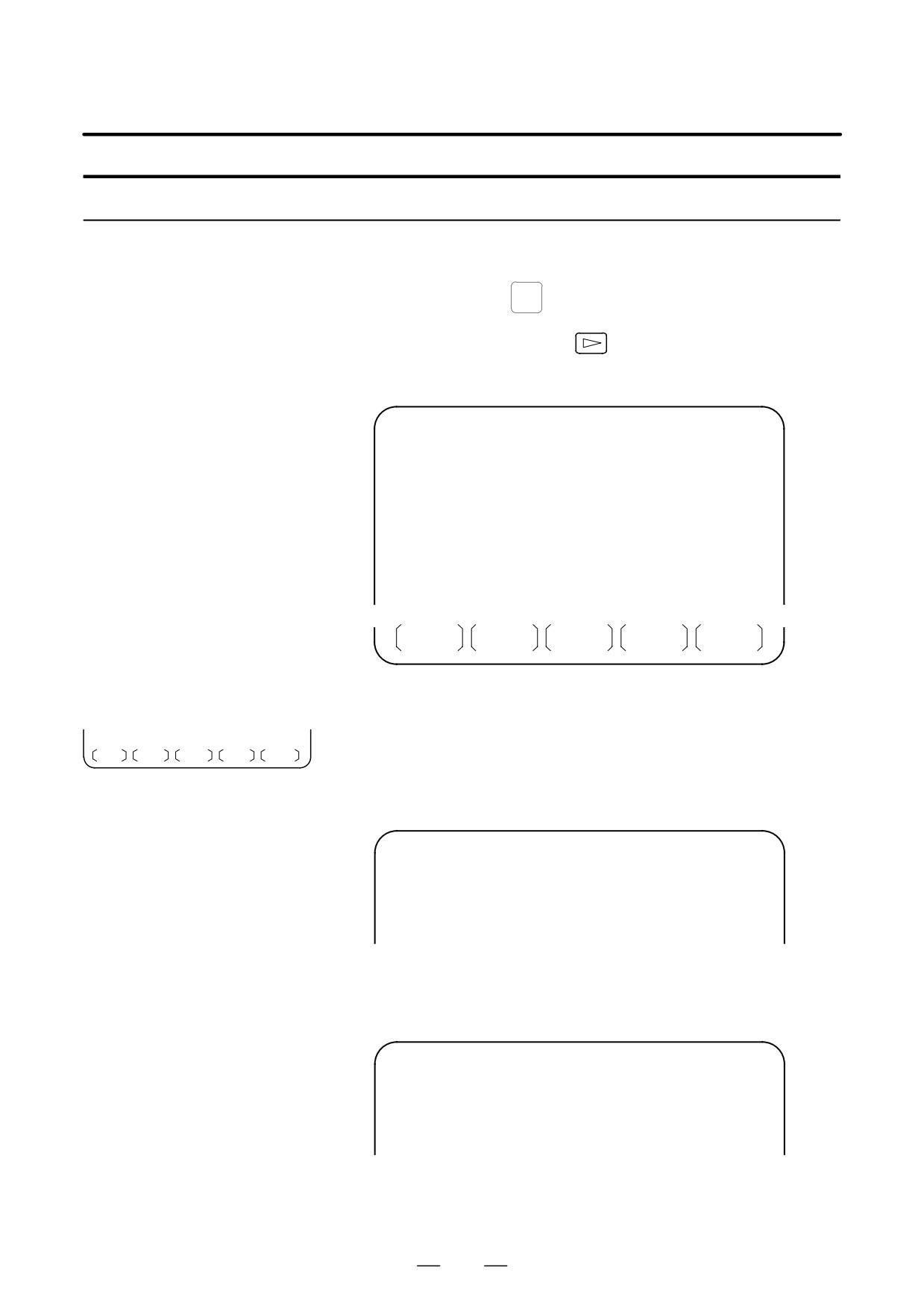
5
Press soft key [(OPRT)].
6
Set the number of the desired file with soft key [DELETE], then press
F SRH F READ N READ PUNCH DELETE
soft key [EXEC]. The file is deleted, and the directory screen is
displayed again.
When file number 21 is deleted
DIRECTORY (M-CARD)
O0034 N00045
No. FILE NAME
COMMENT
0019
O1000
(MAIN PROGRAM)
0020
O1010
(SUBPROGRAM-1)
0021
O1020
(COMMENT
)
0022
O1030
(COMMENT
)
~
~
File name O1020 is deleted.
DIRECTORY (M-CARD)
O0034 N00045
No. FILE NAME
COMMENT
0019
O1000
(MAIN PROGRAM)
0020
O1010
(SUBPROGRAM-1)
0021
O1020
(COMMENT
)
0022
O1030
(COMMENT
)
~
~
File number 21 is assigned to the next file name.
590
B-64124EN/01
OPERATION
8. DATA INPUT/OUTPUT
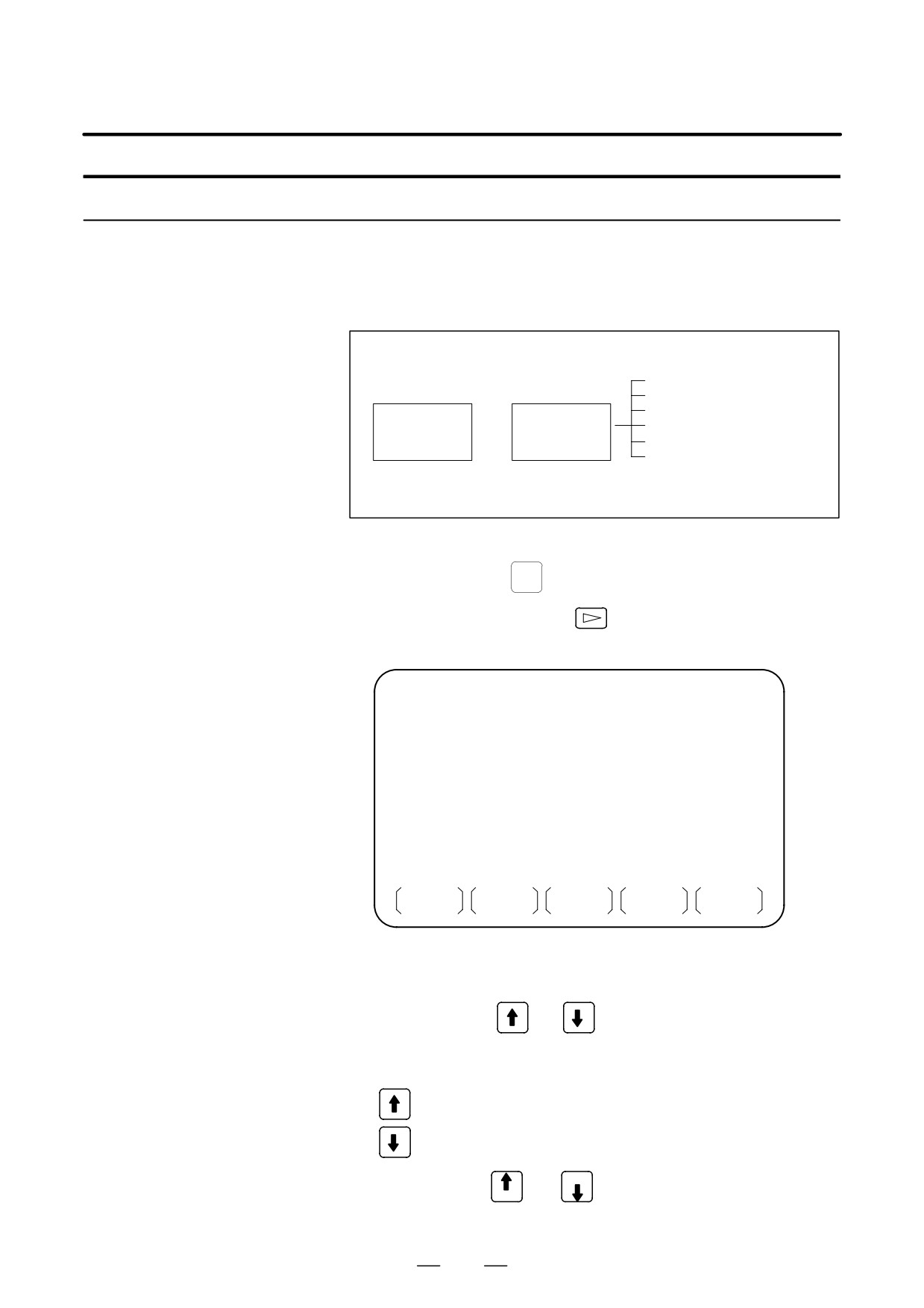
Batch input/output with a memory card
On the ALL IO screen, different types of data including part programs,
parameters, offset data, pitch error data, custom macros, and workpiece
coordinate system data can be input and output using a memory card; the
screen for each type of data need not be displayed for input/output.
Data item name
Part program
Parameter
Offset data
Memory card
²
ALL IO screen
Pitch error data
Custom macro
³
Workpiece coordinate system
data
(additional coordinate systems)
Procedure
1
Press the EDIT switch on the machine operator’s panel.
2
Press function key
SYSTEM
3
Press the rightmost soft key
(next-menu key) several times.
4
Press soft key [ALL IO]. The screen shown below is displayed.
READ/PUNCH (PROGRAM)
O0001 N00001
No. FILE NAME
SIZE
DATE
*0001
O0222
332010
96-04-06
*0002
O1003
334450
96-05-04
*0003
MACROVAR.DAT 653400
96-05-12
*0004
O0002
341205
96-05-13
[PROGRAM]
*O0001
O0002
O0003
O0005
O0100
O0020
*O0006
O0004
O0110
O0200
O2200
O0441
*O0330
>
EDIT
10:07:37
* * *
* * * *
* * *
* * * *
PROG
PARAM
OFFSET
(OPRT)
Upper part : Directory of files on the memory card
Lower part : Directory of registered programs
5
With cursor keys
and
, the user can choose between upper
part scrolling and lower part scrolling. (An asterisk (*) displayed at
the left edge indicates the part for which scrolling is possible.)
: Used for memory card file directory scrolling.
: Used for program directory scrolling.
6
With page keys
and PAGE
, scroll through the file directory or
PAGE
program directory.
591
8. DATA INPUT/OUTPUT
OPERATION
B-64124EN/01
Explanations
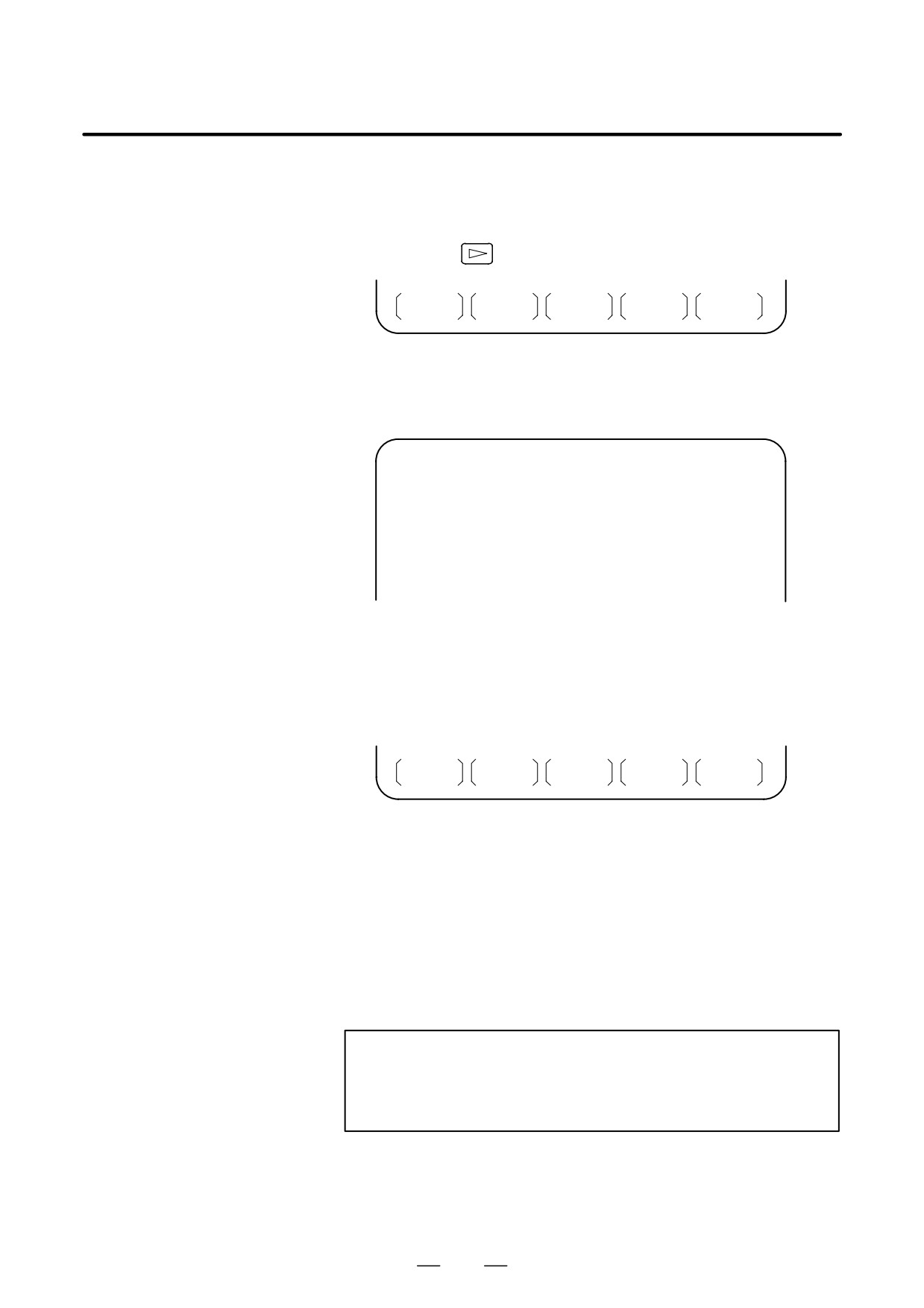
D Each data item
When this screen is displayed, the program data item is selected. Select
other items by pressing the soft keys that appear when the user presses
next-menu key
MACRO
PITCH
WORK
(OPRT)
When a data item other than program is selected, the screen displays only
a file directory.
A data item is indicated, in parentheses, on the title line.
READ/PUNCH (PARAMETER)
O0001 N00001
No. FILE NAME
SIZE
DATE
0001
O0222
332010
96/04/06
0002
O1003
334450
96/05/04
0003
MACROVAR.DAT
653400
96/05/12
0004
O0003
334610
96/05/04
0005
O0001
334254
96/06/04
0006
O0002
333750
96/06/04
0007
CNCPARAM.DAT
334453
96/06/04
~
~
D Program directory
Program directory display does not match bit 0 (NAM) of parameter No.
display
3107, or bit 4 (SOR) of parameter No. 3107.
D Using each function
Display the following soft keys with soft key [(OPRT)].
F SRH
F READ
N READ
PUNCH
DELETE
The operation of each function is the same as on the directory (memory
card) screen. Soft key [O SET], used for program number setting, and the
”PROGRAM NUMBER =” indication are not displayed for data items
other than program.
[F SRH]
: Finds a specified file number.
[F READ] : Reads a specified file number.
[PUNCH]
: Writes a file.
[N READ] : Reads a file under a specified file name.
[DELETE] : Deletes a specified file number.
NOTE
With a memory card, RMT mode operation and the
subprogram call function (based on the M198 command)
cannot be used.
592
B-64124EN/01
OPERATION
8. DATA INPUT/OUTPUT
File format and error messages
Format
All files that are read from and written to a memory card are of text format.
The format is described below.
A file starts with % or LF, followed by the actual data. A file always ends
with %. In a read operation, data between the first % and the next LF is
skipped. Each block ends with an LF, not a semicolon (;).
⋅
LF: 0A (hexadecimal) of ASCII code
⋅
When a file containing lowercase letters, kana characters, and several
special characters (such as $, \, and !) is read, those letters and
characters are ignored.
Example:
%
O0001(MEMORY CARD SAMPLE FILE)
G17 G49 G97
G92 X-11.3 Y2.33
⋅
⋅
M30
%
⋅
ASCII code is used for input/output, regardless of the setting
parameter (ISO/EIA).
⋅
Bit 3 of parameter No. 0100 can be used to specify whether the end of
block code (EOB) is output as ”LF” only, or as ”LF, CR, CR.”
Error messages
If an error occurs during memory card input/output, a corresponding error
message is displayed.
~
~
0028
O0003
777382 01-06-14
M-CARD ERROR
FILE No. =
1
PROGRAM No. =13
>_
EDIT
* * *
* * * *
* * *
* * * *
15:40:21
F SET
O SET
STOP
CAN
EXEC
represents a memory card error code.
593

8. DATA INPUT/OUTPUT
OPERATION
B-64124EN/01
Memory Card Error
Codes
Code
Meaning
99
A part preceding the FAT area on the memory card is destroyed.
102
The memory card does not have sufficient free space.
105
No memory card is mounted.
106
A memory card is already mounted.
110
The specified directory cannot be found.
111
There are too many files under the root directory to allow a
directory to be added.
114
The specified file cannot be found.
115
The specified file is protected.
117
The file has not yet been opened.
118
The file is already open.
119
The file is locked.
121
The memory card does not have sufficient free space.
122
The specified file name is invalid.
124
The extension of the specified file is invalid.
129
A non-corresponding function was specified.
130
The specification of a device is invalid.
131
The specification of a pathname is invalid.
133
Multiple files are open at the same time.
135
The device is not formatted.
140
The file has the read/write disabled attribute.
594
B-64124EN/01
OPERATION
9. EDITING PROGRAMS
EDITING PROGRAMS
9
General
This chapter describes how to edit programs registered in the CNC.
Editing includes the insertion, modification, deletion, and replacement of
words. Editing also includes deletion of the entire program and automatic
insertion of sequence numbers. The extended part program editing
function can copy, move, and merge programs. This chapter also
describes program number search, sequence number search, word search,
and address search, which are performed before editing the program.
Registration
Editing
1) Program number search: .
See III-9.3.
Search for part
2) Sequence number search: .
See III-9.4.
of program to be
3) Word search: .
See III-9.1.1.
edited
4) Address search: .
See III-9.1.1.
1) Inserting, altering, and deleting a word: .
See III-9.1.3 to 9.1.5.
Inserting, altering,
2) Replacing words and addresses: .
See III-9.6.6.
and deleting
3) Deleting blocks: .
See III-9.2.
programs
4) Copying, moving, and merging programs: See III-9.6.1 and 9.6.5.
5) Deleting programs: .
See III-9.5.
Output
Execution
595

9. EDITING PROGRAMS
OPERATION
B-64124EN/01
This section outlines the procedure for inserting, modifying, and deleting
9.1
a word in a program registered in memory.
INSERTING,
ALTERING AND
DELETING
A WORD
Procedure for inserting, altering and deleting a word
1
Select EDIT mode.
2
Press
PROG
3
Select a program to be edited.
If a program to be edited is selected, perform the operation 4.
If a program to be edited is not selected, search for the program
number.
4
Search for a word to be modified.
⋅ Scan method
⋅ Word search method
5
Perform an operation such as altering, inserting, or deleting a word.
Explanation
D Concept of word and
A word is an address followed by a number. With a custom macro, the
editing unit
concept of word is ambiguous.
So the editing unit is considered here.
The editing unit is a unit subject to alteration or deletion in one operation.
In one scan operation, the cursor indicates the start of an editing unit.
An insertion is made after an editing unit.
Definition of editing unit
(i) Program portion from an address to immediately before the next
address
(ii)An address is an alphabet, IF, WHILE, GOTO, END, DO=,or ; (EOB).
According to this definition, a word is an editing unit.
The word “word,” when used in the description of editing, means an
editing unit according to the precise definition.
WARNING
The user cannot continue program execution after altering, inserting, or deleting data of the
program by suspending machining in progress by means of an operation such as a single block
stop or feed hold operation during program execution. If such a modification is made, the
program may not be executed exactly according to the contents of the program displayed on
the screen after machining is resumed. So, when the contents of memory are to be modified
by part program editing, be sure to enter the reset state or reset the system upon completion
of editing before executing the program.
596
B-64124EN/01
OPERATION
9. EDITING PROGRAMS
9.1.1
A word can be searched for by merely moving the cursor through the text
(scanning), by word search, or by address search.
Word Search
Procedure for scanning a program
1
Press the cursor key
The cursor moves forward word by word on the screen; the cursor is
displayed at a selected word.
2
Press the cursor key
The cursor moves backward word by word on the screen; the cursor is
displayed at a selected word.
Example) When Z1250.0 is scanned
Program
O0050 N01234
O0050 ;
N01234 X100.0
Z1250.0
;
S12 ;
N56789 M03 ;
M02 ;
%
3
Holding down the cursor key
or
scans words
continuously.
4
The first word of the next block is searched for when the cursor key
is pressed.
5
The first word of the previous block is searched for when the cursor
key
is pressed.
6
Holding down the cursor key
or
moves the cursor to the
head of a block continuously.
7
Pressing the page key PAGE
displays the next page and searches for
the first word of the page.
8
Pressing the page key
displays the previous page and searches
PAGE
for the first word of the page.
9
Holding down the page key PAGE
or
displays one page after
PAGE
another.
597
9. EDITING PROGRAMS
OPERATION
B-64124EN/01
Procedure for searching a word
Example) of Searching for S12
PROGRAM
O0050 N01234
N01234 is being
O0050 ;
searched for/
N01234
X100.0 Z1250.0 ;
scanned currently.
S12 ;
S12 is searched
N56789 M03 ;
for.
M02 ;
%
1
Key in address
S
2
Key in
1
2
⋅ S12 cannot be searched for if only S1 is keyed in.
⋅ S09 cannot be searched for by keying in only S9.
To search for S09, be sure to key in S09.
3
Pressing the [SRH↓] key starts search operation.
Upon completion of search operation, the cursor is displayed at S12.
Pressing the [SRH↑] key rather than the [SRH↓] key performs search
operation in the reverse direction.
Procedure for searching an address
Example) of Searching for M03
PROGRAM
O0050 N01234
N01234 is being
O0050 ;
searched for/
N01234
X100.0 Z1250.0 ;
scanned currently.
S12 ;
N56789 M03 ;
M03 is searched
M02 ;
for.
%
1
Key in address
M
2
Press the [SRH↓] key.
Upon completion of search operation, the cursor is displayed at M03.
Pressing the [SRH↑] key rather than the [SRH↓] key performs search
operation in the reverse direction.
Alarm
Alarm number
Description
71
The word or address being searched for was not found.
598

B-64124EN/01
OPERATION
9. EDITING PROGRAMS
9.1.2
The cursor can be jumped to the top of a program. This function is called
heading the program pointer. This section describes the three methods
Heading a Program
for heading the program pointer.
Procedure for Heading a Program
Method 1
1
Press
RESET
when the program screen is selected in EDIT mode.
When the cursor has returned to the start of the program, the contents
of the program are displayed from its start on the screen.
Method 2
Search for the program number.
1
Press address
O
,when a program screen is selected in the
MEMORY or EDIT mode.
2
Input a program number.
3
Press the soft key [O SRH].
Method 3
1
Select [MEMORY] or [EDIT] mode.
2
Press
PROG
3
Press the [(OPRT)] key.
4
Press the [REWIND] key.
599
9. EDITING PROGRAMS
OPERATION
B-64124EN/01
9.1.3
Inserting a Word
Procedure for inserting a word
1
Search for or scan the word immediately before a word to be inserted.
2
Key in an address to be inserted.
3
Key in data.
4
Press the
INSERT
key.
Example of Inserting T15
Procedure
1
Search for or scan Z1250.
Program
O0050 N01234
O0050 ;
Z1250.0 is
N01234 X100.0
Z1250.0
;
searched for/
S12 ;
scanned.
N56789 M03 ;
M02 ;
%
2
Key in
T
1
5
3
Press the
INSERT
key.
Program
O0050 N01234
O0050 ;
N01234 X100.0 Z1250.0 T15 ;
T15 is inserted.
S12 ;
N56789 M03 ;
M02 ;
%
600
B-64124EN/01
OPERATION
9. EDITING PROGRAMS
9.1.4
Altering a Word
Procedure for altering a word
1
Search for or scan a word to be altered.
2
Key in an address to be inserted.
3
Key in data.
4
Press the
ALTER
key.
Example of changing T15 to M15
Procedure
1
Search for or scan T15.
Program
O0050 N01234
O0050 ;
T15 is searched
N01234 X100.0 Z1250.0
T15
;
for/scanned.
S12 ;
N56789 M03 ;
M02 ;
%
2
Key in
M
1
5
3
Press the
ALTER
key.
Program
O0050 N01234
O0050 ;
N1234 X100.0 Z1250.0 M15 ;
T15 is changed to
S12 ;
M15.
N5678 M03 ;
M02 ;
%
601
9. EDITING PROGRAMS
OPERATION
B-64124EN/01
9.1.5
Deleting a Word
Procedure for deleting a word
1
Search for or scan a word to be deleted.
2
Press the
DELETE
key.
Example of deleting X100.0
Procedure
1
Search for or scan X100.0.
Program
O0050 N01234
O0050 ;
X100.0 is
N01234
X100.0
Z1250.0 M15 ;
searched for/
S12 ;
scanned.
N56789 M03 ;
M02 ;
%
2
Press the
DELETE
key.
Program
O0050 N01234
O0050 ;
N01234 Z1250.0 M15 ;
X100.0 is deleted.
S12 ;
N56789 M03 ;
M02 ;
%
602
B-64124EN/01
OPERATION
9. EDITING PROGRAMS
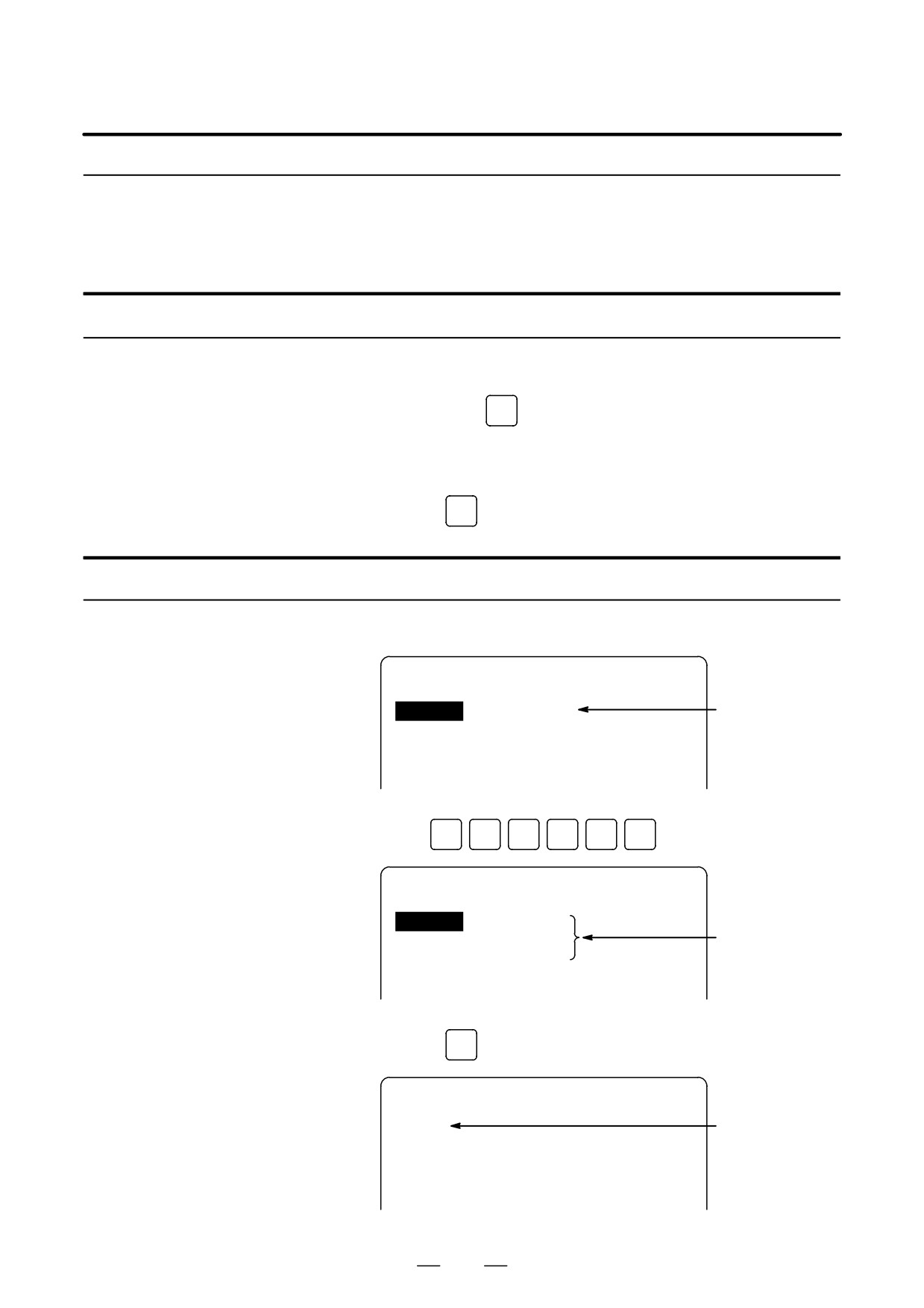
A block or blocks can be deleted in a program.
9.2
DELETING
BLOCKS
9.2.1
The procedure below deletes a block up to its EOB code; the cursor
advances to the next word.
Deleting a Block
Procedure for deleting a block
1
Search for or scan address N for a block to be deleted.
2
Key in
EOB
3
Press the
DELETE
Example of deleting a block of N01234
Procedure
1
Search for or scan N01234.
Program
O0050 N01234
O0050 ;
N01234
Z1250.0 M15 ;
N01234 is
S12 ;
searched for/
scanned.
N56789 M03 ;
M02 ;
%
2
Key in
EOB
3
Press the
DELETE
key.
Program
O0050 N01234
Block containing
O0050 ;
N01234 has
S12 ;
been deleted.
N56789 M03 ;
M02 ;
%
603
9. EDITING PROGRAMS
OPERATION
B-64124EN/01
9.2.2
The blocks from the currently displayed word to the block with a specified
sequence number can be deleted.
Deleting Multiple
Blocks
Procedure for deleting multiple blocks
1
Search for or scan a word in the first block of a portion to be deleted.
2
Key in address
N
3
Key in the sequence number for the last block of the portion to be
deleted.
4
Press the
DELETE
key.
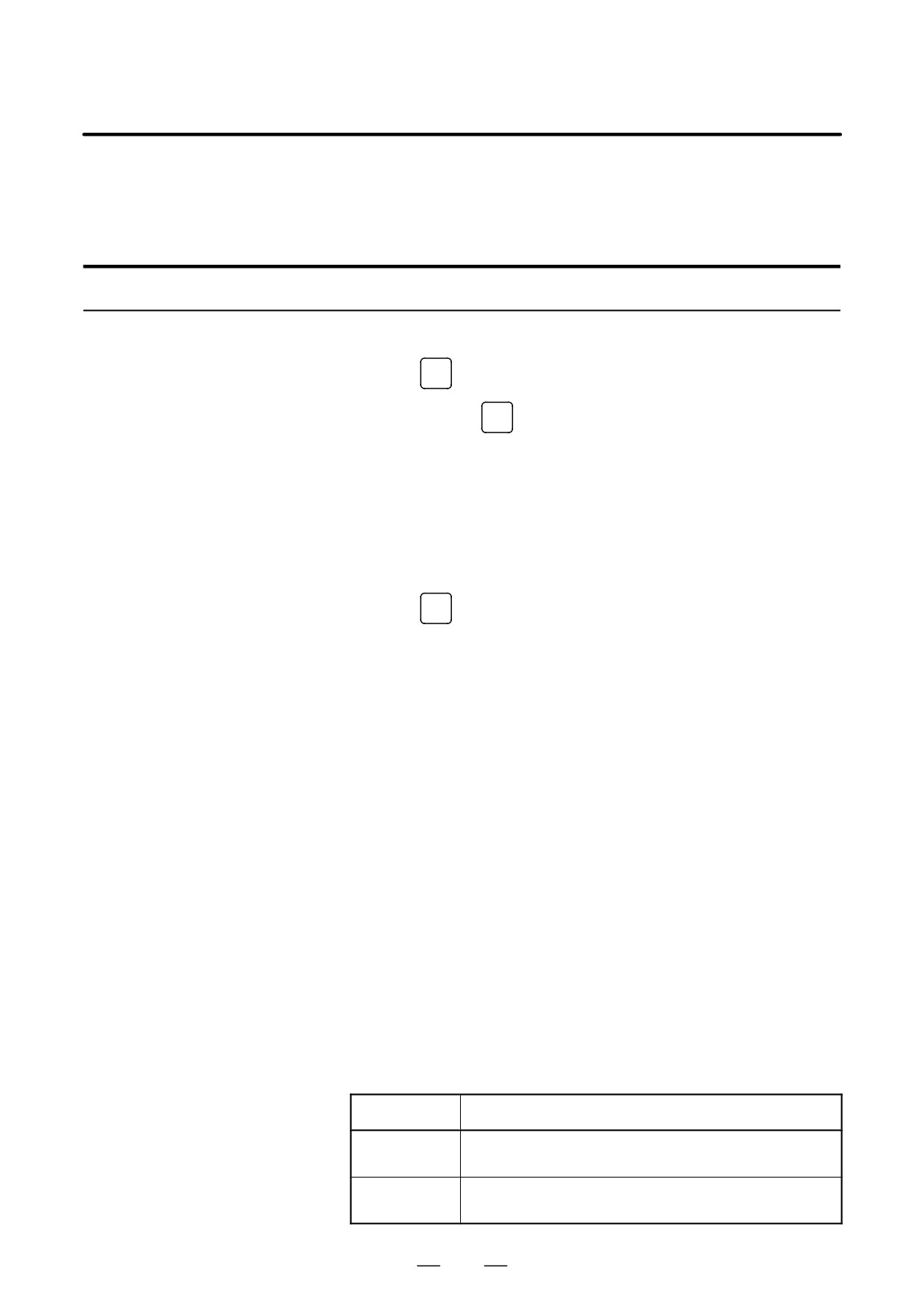
Example of deleting blocks from a block containing N01234 to a block containing N56789
Procedure
1
Search for or scan N01234.
Program
O0050 N01234
O0050 ;
N01234
Z1250.0 M15 ;
N01234 is
searched for/
S12 ;
scanned.
N56789 M03 ;
M02 ;
%
2
Key in
N
5
6
7
8
9
Program
O0050 N01234
O0050 ;
N01234
Z1250.0 M15 ;
Underlined
S12 ;
part is de-
N56789 M03 ;
leted.
M02 ;
%
3
Press the
DELETE
key.
Program
O0050 N01234
O0050 ;
Blocks from block
M02 ;
containing
%
N01234 to block
containing
N56789 have
been deleted.
604
B-64124EN/01
OPERATION
9. EDITING PROGRAMS
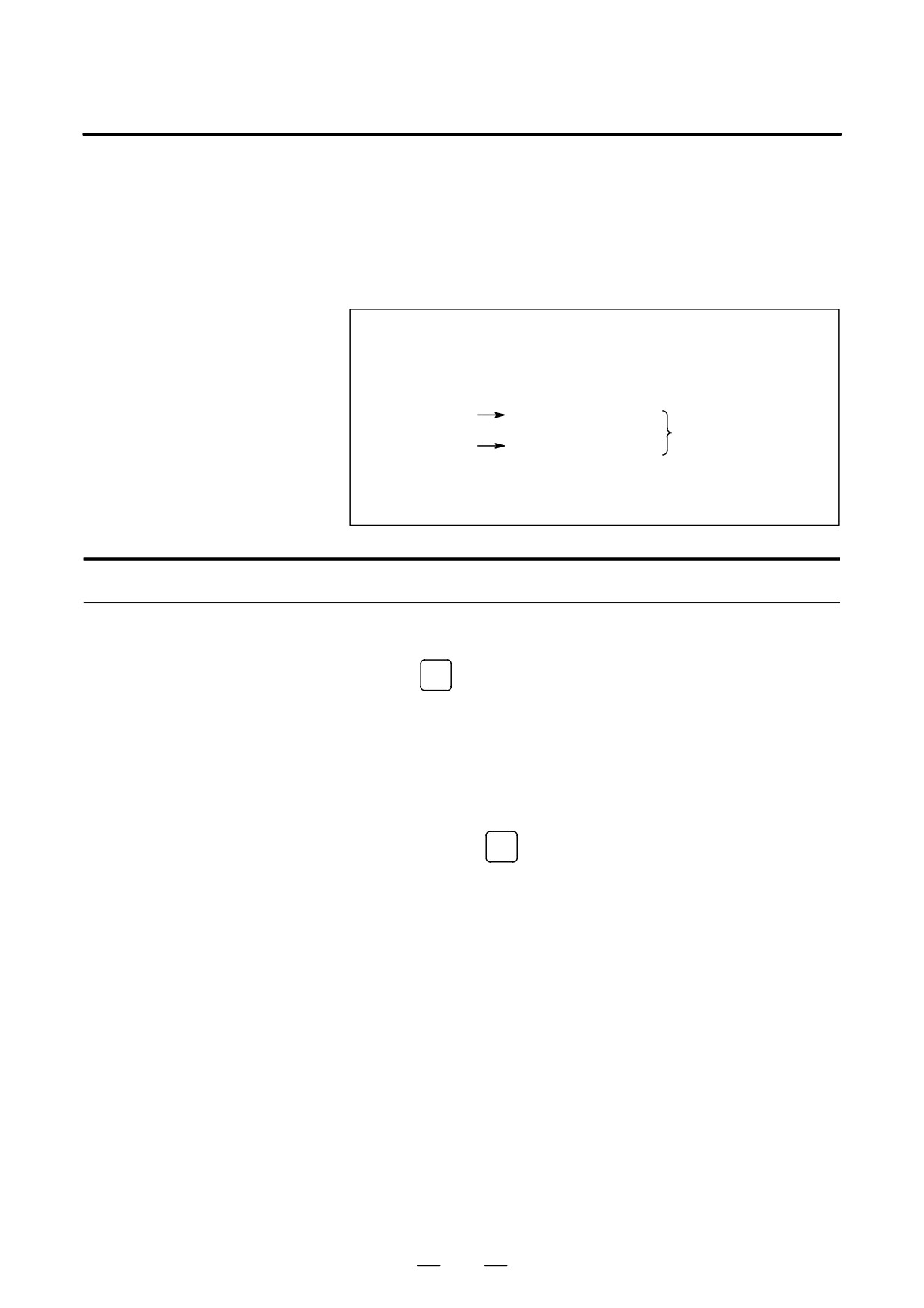
When memory holds multiple programs, a program can be searched for.
9.3
There are three methods as follows.
PROGRAM
NUMBER SEARCH
Procedure for program number search
Method 1
1
Select EDIT or MEMORY mode.
2
Press
PROG
to display the program screen.
3
Key in address
O
4
Key in a program number to be searched for.
5
Press the [O SRH] key.
6
Upon completion of search operation, the program number searched
for is displayed in the upper-right corner of the screen
If the program is not found , P/S alarm No. 71 occurs.
Method 2
1
Select EDIT or MEMORY mode.
2
Press
PROG
to display the program screen.
3
Press the [O SRH] key.
In this case, the next program in the memory is searched for .
Method 3
This method searches for the program number (0001 to 0015)
corresponding to a signal on the machine tool side to start automatic
operation. Refer to the relevant manual prepared by the machine tool
builder for detailed information on operation.
1
Select MEMORY mode.
2
Set the reset state(*1)
⋅ The reset state is the state where the LED for indicating that
automatic operation is in progress is off.
(Refer to the relevant
manual of the machine tool builder.)
3
Set the program number selection signal on the machine tool side to a
number from 01 to 15.
⋅ If the program corresponding to a signal on the machine tool
side is not registered, P/S alarm (No. 059) is raised.
4
Press the cycle start button.
⋅ When the signal on the machine tool side represents 00,
program number search operation is not performed.
Alarm
No.
Contents
The program with the selected number cannot be searched
59
during external program number search.
The specified program number was not found during
71
program number search.
605
9. EDITING PROGRAMS
OPERATION
B-64124EN/01
Sequence number search operation is usually used to search for a
9.4
sequence number in the middle of a program so that execution can be
SEQUENCE
started or restarted at the block of the sequence number.
NUMBER SEARCH
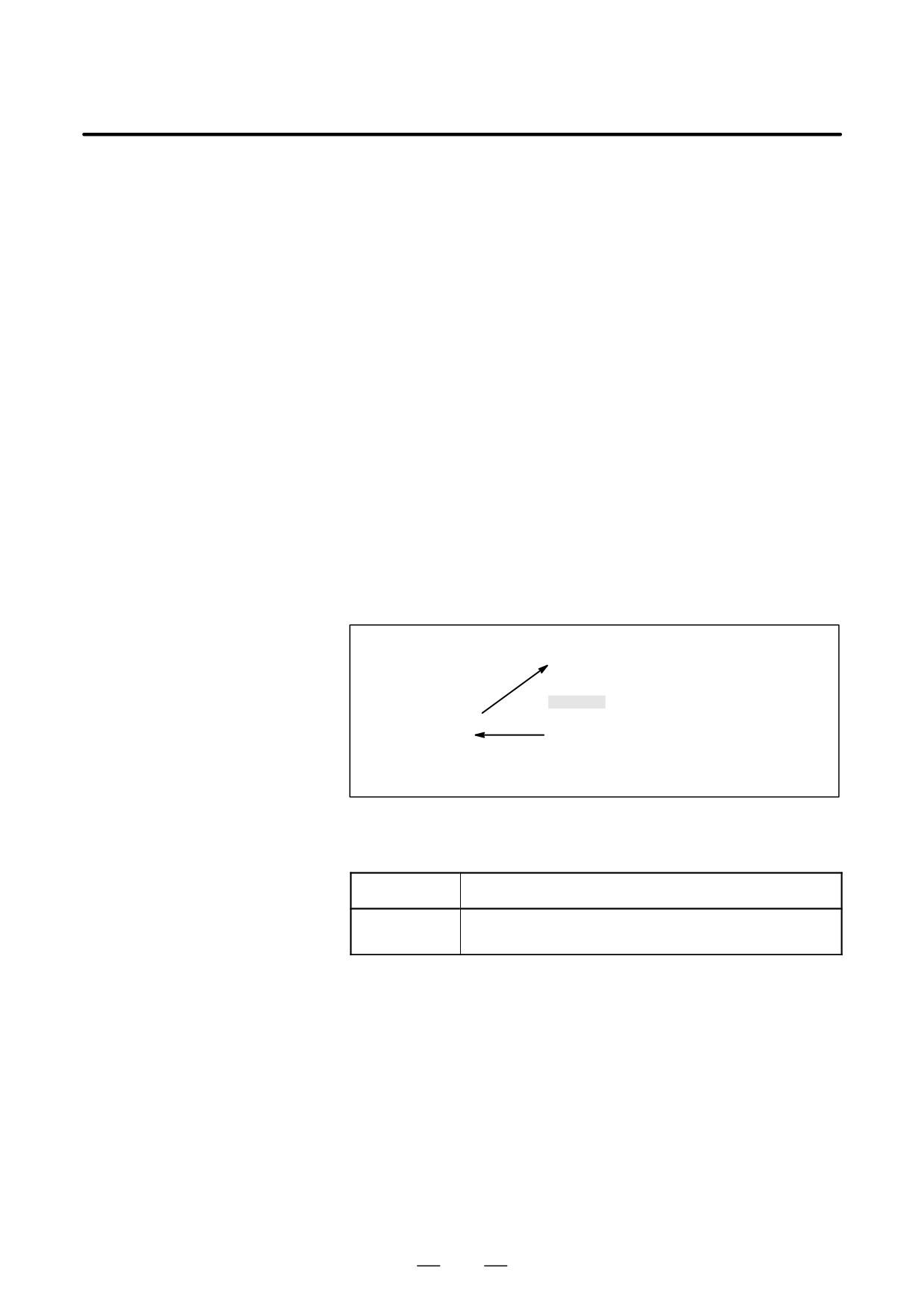
Example) Sequence number 02346 in a program (O0002) is
searched for.
Program
O0001 ;
N01234 X100.0 Z100.0 ;
S12 ;
:
Selected program
O0002 ;
This section is
N02345 X20.0 Z20.0 ;
searched starting at
Target sequence
N02346 X10.0 Y10.0 ;
the beginning.
number is found.
:
(Search operation is
O0003 ;
performed only within a
:
program.)
Procedure for sequence number search
1
Select MEMORY mode.
2
Press
PROG
3
⋅ If the program contains a sequence number to be searchedfor,
perform the operations 4 to 7 below.
⋅ If the program does not contain a sequence number to be searched
for,select the program number of the program that contains the
sequence number to be searched for.
4
Key in address
N
5
Key in a sequence number to be searched for.
6
Press the [N SRH] key.
7
Upon completion of search operation, the sequence number searched
for is displayed in the upper-right corner of the screen.
If the specified sequence number is not found in the program currently
selected, P/S alarm No. 060 occurs.
606
B-64124EN/01
OPERATION
9. EDITING PROGRAMS
Explanations
Those blocks that are skipped do not affect the CNC. This means that the
D Operation during Search
data in the skipped blocks such as coordinates and M, S, and T codes does
not alter the CNC coordinates and modal values.
So, in the first block where execution is to be started or restarted by using
a sequence number search command, be sure to enter required M, S, and
T codes and coordinates. A block searched for by sequence number
search usually represents a point of shifting from one process to another.
When a block in the middle of a process must be searched for to restart
execution at the block, specify M, S, and T codes, G codes, coordinates,
and so forth as required from the MDI after closely checking the machine
tool and NC states at that point.
D Checking during search
During search operation, the following checks are made:
⋅ Optional block skip
Limitations
D Searching in
During sequence number search operation, M98Pxxxx (subprogram call)
sub-program
is not executed. So a P/S alarm (No.060) is raised if an attempt is made
to search for a sequence number in a subprogram called by the program
currently selected.
Main program
Subprogram
O1234
O5678
:
:
:
N88888
M98 P5678 ;
:
:
M99 ;
:
:
If an attempt is made to search for N8888 in the example above, an alarm is raised.
Alarm
Number
Contents
Command sequence number was not found in the se-
60
quence number search.
607
9. EDITING PROGRAMS
OPERATION
B-64124EN/01
Programs registered in memory can be deleted,either one program by one
9.5
program or all at once. Also, More than one program can be deleted by
DELETING
specifying a range.
PROGRAMS
A program registered in memory can be deleted.
9.5.1
Deleting One Program
Procedure for deleting one program
1
Select the EDIT mode.
2
Press
PROG
to display the program screen.
3
Key in address
O
4
Key in a desired program number.
5
Press the
DELETE
key.
The program with the entered program number is deleted.
9.5.2
All programs registered in memory can be deleted.
Deleting All Programs
Procedure for deleting all programs
1
Select the EDIT mode.
2
Press
PROG
to display the program screen.
3
Key in address
O
4
Key in -9999.
5
Press edit key
DELETE
to delete all programs.
608

B-64124EN/01
OPERATION
9. EDITING PROGRAMS
9.5.3
Programs within a specified range in memory are deleted.
Deleting More Than One
Program by Specifying a
Range
Procedure for deleting more than one program by specifying a range
1
Select the EDIT mode.
2
Press
PROG
to display the program screen.
3
Enter the range of program numbers to be deleted with address and
numeric keys in the following format:
OXXXX,OYYYY
where XXXX is the starting number of the programs to be deleted and
YYYY is the ending number of the programs to be deleted.
4
Press edit key
DELETE
to delete programs No. XXXX to No. YYYY.
609
9. EDITING PROGRAMS
OPERATION
B-64124EN/01
With the extended part program editing function, the operations described
9.6
below can be performed using soft keys for programs that have been
EXTENDED PART
registered in memory.
PROGRAM EDITING Following editing operations are available :
⋅ All or part of a program can be copied or moved to another program.
FUNCTION
⋅ One program can be merged at free position into other programs.
⋅ A specified word or address in a program can be replaced with another
word or address.
610
B-64124EN/01
OPERATION
9. EDITING PROGRAMS
9.6.1
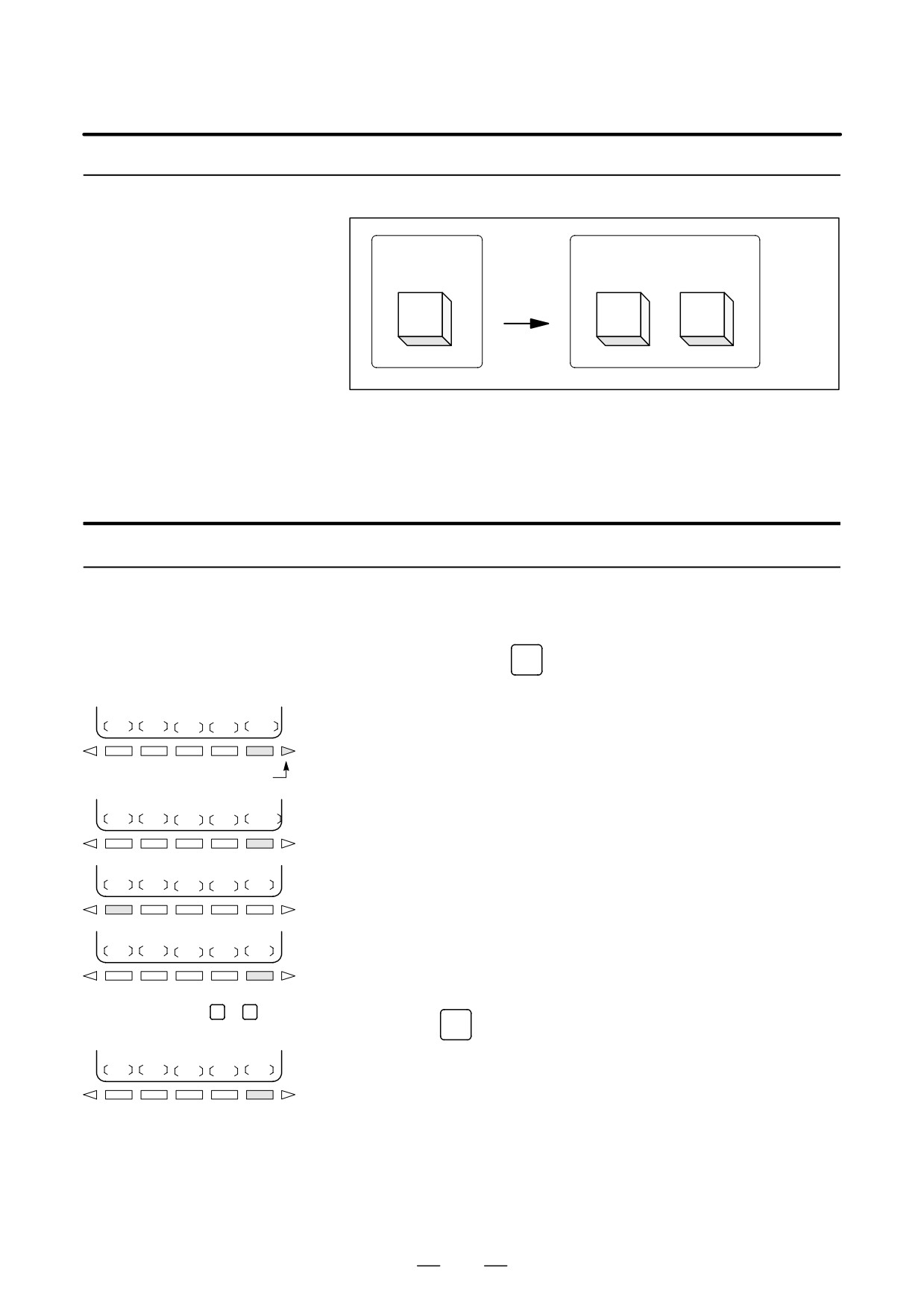
A new program can be created by copying a program.
Copying an Entire
Program
Before copy
After copy
Oxxxx
Oxxxx
Oyyyy
A
Copy
A
A
Fig. 9.6.1 Copying an entire program
In Fig. 9.6.1, the program with program number xxxx is copied to a newly
created program with program number yyyy. The program created by
copy operation is the same as the original program except the program
number.
Procedure of copying an entire program
1
Enter the EDIT mode.
2
Press function key
PROG
3
Press soft key [(OPRT)].
(OPRT)
Continuous
4
Press the continuous menu key.
menu key
(EX-EDT)
5
Press soft key [EX-EDT].
6
Check that the screen for the program to be copied is selected
COPY
and press soft key [COPY].
ALL
7
Press soft key [ALL].
8
Enter the number of the new program (with only numeric keys ) and
Numeric keys
0
X
9
press the
INPUT
key.
EXEC
9
Press soft key [EXEC].
611
9. EDITING PROGRAMS
OPERATION
B-64124EN/01
9.6.2
A new program can be created by copying part of a program.
Copying Part
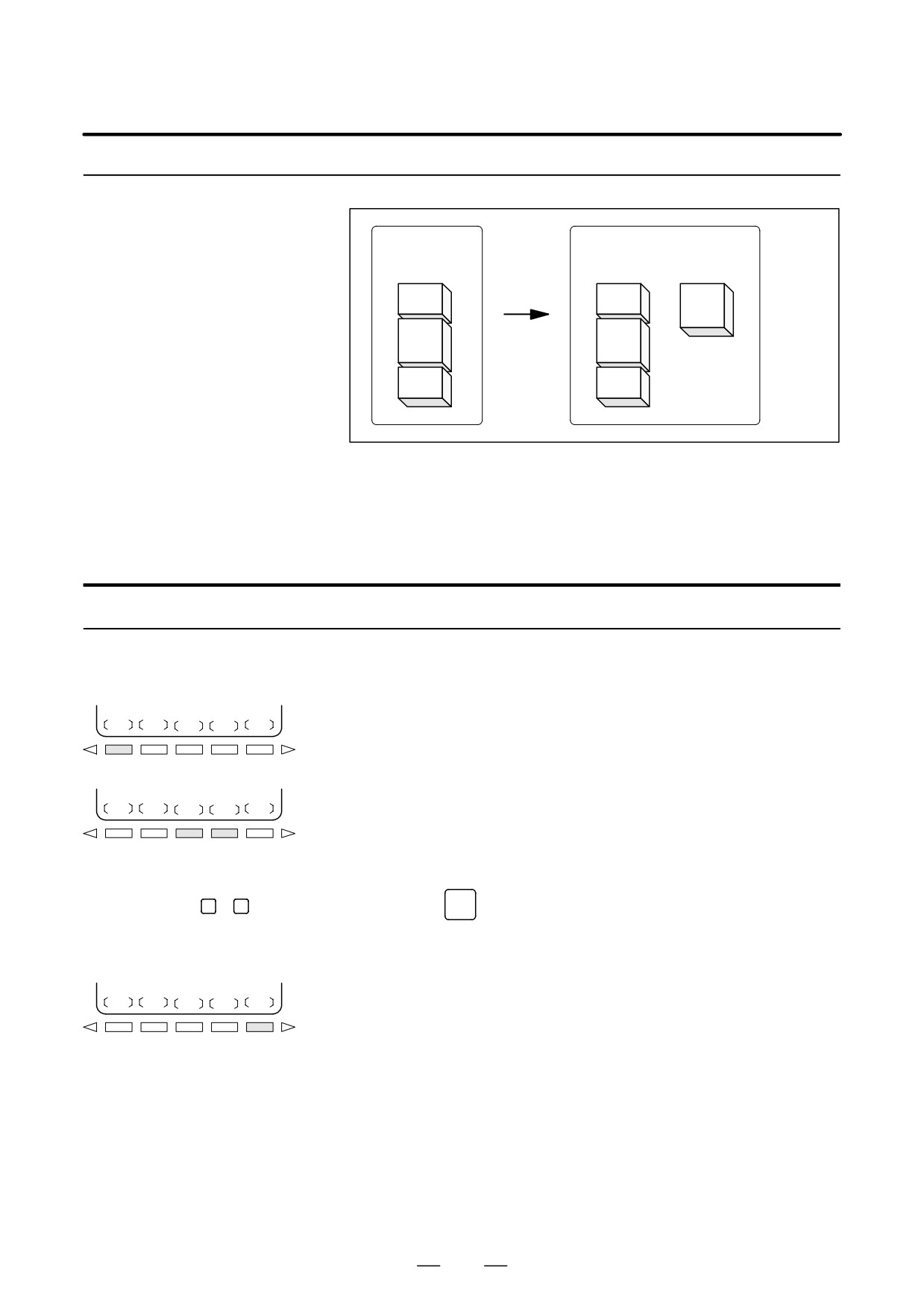
Before copy
After copy
of a Program
Oxxxx
Oxxxx
Oyyyy
A
Copy
A
B
B
B
C
C
Fig. 9.6.2 Copying part of a program
In Fig. 9.6.2, part B of the program with program number xxxx is copied
to a newly created program with program number yyyy. The program for
which an editing range is specified remains unchanged after copy
operation.
Procedure for copying part of a program
1
Perform steps 1 to 6 in III-9.6.1.
2
Move the cursor to the start of the range to be copied and press soft key
CRSR
[CRSR
].
3
Move the cursor to the end of the range to be copied and press soft key
CRSR
BTTM
[ CRSR] or [ BTTM] (in the latter case, the range to the end of the
program is copied regardless of the position of the cursor).
4
Enter the number of the new program (with only numeric keys) and
Numeric keys
0
9
press the
INPUT
key.
5
Press soft key [EXEC].
EXEC
612