AHA/ACC SCIENTIFIC STATEMENT (2024) - page 7
38
Maddox et al
JACC VOL.
-, NO. -, 2024
ACC Expert Consensus Decision Pathway for Treatment of HFrEF
-, 2024:---
132. Arora S, Thornton K, Murata G, et al. Outcomes of
148. Vaduganathan M, Fonarow GC, Greene SJ, et al.
165. Gandhi S, Chen S, Hong L, et al. Effect of mobile
treatment for hepatitis C virus infection by primary
Contemporary treatment patterns and clinical out-
health interventions on the secondary prevention of
care providers. N Engl J Med. 2011;364:2199-2207.
comes of comorbid diabetes mellitus and HFrEF: The
cardiovascular disease: systematic review and meta-
CHAMP-HF Registry. J Am Coll Cardiol HF. 2020;8:
analysis. Can J Cardiol. 2017;33:219-231.
133. Inglis SC, Clark RA, McAlister FA, et al. Which
469-480.
components of heart failure programmes are effective?
166. Maddison R, Rawstorn JC, Shariful Islam SM, et al.
A systematic review and meta-analysis of the out-
149. Fitzgerald AA, Powers JD, Ho PM, et al. Impact of
mHealth interventions for exercise and risk factor
comes of structured telephone support or tele-
medication nonadherence on hospitalizations and
modification in cardiovascular disease. Exerc Sport Sci
monitoring as the primary component of chronic heart
mortality in heart failure. J Card Fail. 2011;17:664-669.
Rev. 2019;47:86-90.
failure management in
8323
patients: Abridged
150. Chin KL, Skiba M, Tonkin A, et al. The treatment
167. Auton A, Zaman S, Padayachee Y, et al. Smart-
Cochrane Review. Eur J Heart Fail. 2011;13:1028-1040.
gap in patients with chronic systolic heart failure: a
phone-based remote monitoring for chronic heart
134. Chaudhry SI, Mattera JA, Curtis JP, et al. Tele-
systematic review of evidence-based prescribing in
failure: mixed methods analysis of user experience
monitoring in patients with heart failure. N Engl J Med.
practice. Heart Fail Rev. 2016;21:675-697.
from patient and nurse perspectives. JMIR Nurs.
2010;363:2301-2309.
2023;6:e44630.
151. Greene SJ, Fonarow GC, DeVore AD, et al. Titration
135. Koehler F, Winkler S, Schieber M, et al. Impact of
of medical therapy for heart failure with reduced
168. Nabutovsky I, Breitner D, Heller A, et al. Home-
remote telemedical management on mortality and
ejection fraction. J Am Coll Cardiol. 2019;73:2365-
based cardiac rehabilitation among patients unwilling
hospitalizations in ambulatory patients with chronic
2383.
to
participate
in
hospital-based
programs.
heart failure: the telemedical interventional monitoring
J Cardiopulm Rehabil Prev. 2024;44(1):33-39.
152. Ezekowitz JA, McMullan CJ, Westerhout CM, et al.
in heart failure study. Circulation. 2011;123:1873-1880.
Background medical therapy and clinical outcomes
169. Lundgren KM, Langlo KAR, Salvesen O, et al.
136. Hindricks G, Taborsky M, Glikson M, et al.
from the VICTORIA Trial. Circ Heart Fail.
2023:
Feasibility of telerehabilitation for heart failure pa-
Implant-based multiparameter telemonitoring of pa-
e010599.
tients inaccessible for outpatient rehabilitation. ESC
tients with heart failure (IN-TIME): a randomised
Heart Fail. 2023;10:2406-2417.
153. Garavalia L, Garavalia B, Spertus JA, et al.
controlled trial. Lancet. 2014;384:583-590.
Exploring patients’ reasons for discontinuance of heart
170. Sosa Liprandi MI, Elfman M, Zaidel EJ, et al.
137. Sammour Y, Spertus JA, Austin BA, et al. Outpa-
medications. J Cardiovasc Nurs. 2009;24:371-379.
Impact of a telemedicine program after a heart failure
tient Management of Heart Failure During the COVID-
hospitalization on 12 months follow-up events. Curr
154. Dolansky MA, Hawkins MA, Schaefer JT, et al.
19 Pandemic After Adoption of a Telehealth Model.
Probl Cardiol. 2023;48:101624.
Association between poorer cognitive function and
J Am Coll Cardiol HF. 2021;9:916-924.
reduced objectively monitored medication adherence
171. Cutler DM, Everett W. Thinking outside the
138. Poppas A, Rumsfeld JS, Wessler JD. Telehealth is
in patients with heart failure. Circ Heart Fail. 2016;9:
pillbox-medication adherence as a priority for health
having a moment: will it last? J Am Coll Cardiol.
e002475.
care reform. N Engl J Med. 2010;362:1553-1555.
2020;75:2989-2991.
155. Unni EJ, Farris KB. Unintentional non-adherence
172. MacLaughlin EJ, Raehl CL, Treadway AK, et al.
and belief in medicines in older adults. Patient Educ
Assessing medication adherence in the elderly: which
139. Ghazi L, Yamamoto Y, Riello RJ, et al. Electronic
Couns. 2011;83:265-268.
tools to use in clinical practice? Drugs Aging. 2005;22:
alerts to improve heart failure therapy in outpatient
231-255.
practice: a cluster randomized trial. J Am Coll Cardiol.
156. World Health Organization. Adherence to long-
2022;79:2203-2213.
term therapies: evidence for action. Accessed July
173. Blood AJ, Fischer CM, Fera LE, et al. Rationale and
140. Anand IS, Tang WH, Greenberg BH, et al. Design
design of a navigator-driven remote optimization of
guideline-directed medical therapy in patients with
and performance of a multisensor heart failure moni-
157. Ho PM, Bryson CL, Rumsfeld JS. Medication
heart failure with reduced ejection fraction. Clin Car-
toring algorithm: results from the Multisensor Moni-
adherence: its importance in cardiovascular outcomes.
diol. 2020;43:4-13.
toring in Congestive Heart Failure (MUSIC) study.
Circulation. 2009;119:3028-3035.
J Card Fail. 2012;18:289-295.
174. Fonarow GC, Albert NM, Curtis AB, et al.
158. Masoudi FA, Baillie CA, Wang Y, et al. The
Improving evidence-based care for heart failure in
141. Masterson Creber RM, Maurer MS, Reading M,
complexity and cost of drug regimens of older patients
outpatient cardiology practices: primary results of the
et al. Review and analysis of existing mobile phone
hospitalized with heart failure in the United States,
Registry to Improve the Use of Evidence-Based Heart
apps to support heart failure symptom monitoring and
1998-2001. Arch Intern Med. 2005;165:2069-2076.
Failure Therapies in the Outpatient Setting (IMPROVE
self-care management using the Mobile Application
159. Allen LA, Fonarow GC, Liang L, et al. Medication
HF). Circulation. 2010;122:585-596.
Rating Scale (MARS). JMIR mHealth and uHealth.
initiation burden required to comply with heart failure
2016;4:e74.
175. Wurmbach VS, Schmidt SJ, Lampert A, et al.
guideline recommendations and hospital quality mea-
Development of an algorithm to detect and reduce
142. Gardetto NJ. Self-management in heart failure:
sures. Circulation. 2015;132:1347-1353.
complexity of drug treatment and its technical real-
where have we been and where should we go?
160. Fumagalli LP, Radaelli G, Lettieri E, et al. Patient
isation. BMC Med Inform Decis Mak. 2020;20:154.
J Multidiscip Healthc. 2011;4:39-51.
empowerment and its neighbours: clarifying the
176. Sukumar S, Wasfy JH, Januzzi JL, et al. Financial
143. Peterson PN, Shetterly SM, Clarke CL, et al.
boundaries and their mutual relationships. Health
toxicity of medical management of heart failure: JACC
Health literacy and outcomes among patients with
Policy. 2015;119:384-394.
review topic of the week. J Am Coll Cardiol. 2023;81:
heart failure. JAMA. 2011;305:1695-1701.
161. Rosenstock IM, Strecher VJ, Becker MH. Social
2043-2055.
144. Riegel B, Dickson VV. A qualitative secondary data
learning theory and the Health Belief Model. Health
177. Driscoll A, Currey J, Tonkin AM. Nurse-led titration
analysis of intentional and unintentional medication
Educ Q. 1988;15:175-183.
of angiotensin-converting enzyme inhibitors, beta-
nonadherence in adults with chronic heart failure.
162. Bandura A. Human agency in social cognitive
adrenergic blocking agents, and angiotensin receptor
Heart Lung. 2016;45:468-474.
theory. Am Psychol. 1989;44:1175-1184.
blockers in patients with heart failure with reduced
145. Zhang Y, Baik SH. Race/Ethnicity, disability, and
ejection fraction. JAMA Cardiol. 2016;1:842-843.
163. Conn VS, Ruppar TM. Medication adherence out-
medication adherence among Medicare beneficiaries
comes of 771 intervention trials: Systematic review and
178. Lowrie R, Mair FS, Greenlaw N, et al. Pharmacist
with heart failure. J Gen Intern Med. 2014;29:602-607.
meta-analysis. Prev Med. 2017;99:269-276.
intervention in primary care to improve outcomes in
146. Choudhry NK, Avorn J, Glynn RJ, et al. Full
patients with left ventricular systolic dysfunction. Eur
164. Ruppar TM, Cooper PS, Mehr DR, et al. Medication
coverage for preventive medications after myocardial
Heart J. 2012;33:314-324.
adherence interventions improve heart failure mortal-
infarction. N Engl J Med. 2011;365:2088-2097.
ity and readmission rates: systematic review and meta-
179. Eggink RN, Lenderink AW, Widdershoven JW, van
147. Kini V, Ho PM. Interventions to improve medica-
analysis of controlled trials. J Am Heart Assoc. 2016;5:
den Bemt PM. The effect of a clinical pharmacist
tion adherence: a review. JAMA. 2018;320:2461-2473.
e002606.
discharge service on medication discrepancies in
JACC VOL.
-, NO. -, 2024
Maddox et al
39
-, 2024:---
ACC Expert Consensus Decision Pathway for Treatment of HFrEF
patients with heart failure. Pharm World Sci. 2010;32:
194. Mwansa H, Lewsey S, Mazimba S, Breathett K.
210. Kansal AR, Cowie MR, Kielhorn A, et al. Cost-
759-766.
Racial/ethnic and gender disparities in heart failure
effectiveness of ivabradine for heart failure in the
with reduced ejection fraction. Curr Heart Fail Rep.
United States. J Am Heart Assoc. 2016;5:e003221.
180. Jain A, Mills P, Nunn LM, et al. Success of a
2021;18:41-51.
multidisciplinary heart failure clinic for initiation and
211. Lim AH, Abdul Rahim N, Zhao J, et al. Cost
up-titration of key therapeutic agents. Eur J Heart Fail.
195. Breathett K, Liu WG, Allen LA, et al. African
effectiveness analyses of pharmacological treatments
2005;7:405-410.
Americans are less likely to receive care by a cardiol-
in heart failure. Front Pharmacol. 2022;13:919974.
ogist during an intensive care unit admission for heart
181. Bhat S, Kansal M, Kondos GT, Groo V. Outcomes of
212. Alsumali A, Djatche LM, Briggs A, et al. Cost
failure. J Am Coll Cardiol HF. 2018;6:413-420.
a pharmacist-managed heart failure medication titra-
effectiveness of vericiguat for the treatment of
tion assistance clinic. Ann Pharmacother. 2018;52:724-
196. Krishnaswami A, Steinman MA, Goyal P, et al.
chronic heart failure with reduced ejection fraction
732.
Deprescribing in older adults with cardiovascular dis-
following a worsening heart failure event from a US
ease. J Am Coll Cardiol. 2019;73:2584-2595.
medicare perspective. Pharmacoeconomics. 2021;39:
182. Zheng J, Mednick T, Heidenreich PA, et al. Phar-
1343-1354.
macist- and nurse-Led medical optimization in heart
197. Denfeld QE, Winters-Stone K, Mudd JO, et al. The
failure: a systematic review and meta-analysis. J Card
prevalence of frailty in heart failure: a systematic re-
213. Clarkson EB, Linley A, Frank JS, et al. The imple-
Fail. 2023;29:1000-1013.
view and meta-analysis. Int J Cardiol. 2017;236:283-
mentation of a patient assistance program in a free
289.
clinic setting: a case report. J Health Care Poor Un-
183. Beavers CJ, Jurgens CY. Best practice: using
derserved. 2016;27:1183-1191.
pharmacist- and nurse-led optimization in heart failure
198. Yang X, Lupon J, Vidan MT, et al. Impact of frailty
214. Yancy CW, Januzzi JL Jr, Allen LA, et al. 2017 ACC
to achieve guideline-directed medical therapy goals.
on mortality and hospitalization in chronic heart fail-
expert consensus decision pathway for optimization of
J Card Fail. 2023;29:1014-1016.
ure: a systematic review and meta-analysis. J Am Heart
heart failure treatment: answers to 10 pivotal issues
Assoc. 2018;7:e008251.
184. Gourzoulidis G, Kourlaba G, Stafylas P, et al. As-
about heart failure with reduced ejection fraction: a
sociation between copayment, medication adherence
199. Pandey A, Kitzman D, Reeves G. Frailty is inter-
report of the American College of Cardiology Task
and outcomes in the management of patients with
wined with heart failure: mechanisms, prevalence,
Force on Expert Consensus Decision Pathways. J Am
diabetes and heart failure. Health Policy. 2017;121:363-
prognosis, assessment and management. J Am Coll
Coll Cardiol. 2018;71:201-230.
377.
Cardiol HF. 2019;7:1001-1011.
215. Joynt KE, Orav EJ, Jha AK. Thirty-day readmission
185. Essien UR, Singh B, Swabe G, et al. Association of
200. Heidenreich PA, Albert NM, Allen LA, et al.
rates for Medicare beneficiaries by race and site of care.
prescription co-payment with adherence to glucagon-
Forecasting the impact of heart failure in the United
JAMA. 2011;305:675-681.
like peptide-1 receptor agonist and sodium-glucose
States: a policy statement from the American Heart
216. Sterling MR, Ringel JB, Pinheiro LC, et al. Social
cotransporter-2 inhibitor therapies in patients with
Association. Circ Heart Fail. 2013;6:606-619.
determinants of health and 90-day mortality after
heart failure and diabetes. JAMA Netw Open. 2023;6:
201. Virani SS, Alonso A, Benjamin EJ, et al. Heart
hospitalization for heart failure in the REGARDS Study.
e2316290.
disease and stroke statistics - 2020 Update: a report
J Am Heart Assoc. 2020;9:e014836.
186. Colvin M, Sweitzer NK, Albert NM, et al. Heart
from the American Heart Association. Circulation.
217. Patel SA, Krasnow M, Long K, et al. Excess 30-day
failure in non-caucasians, women, and older adults: a
2020;141:e139-e596.
heart failure readmissions and mortality in black pa-
white paper on special populations from the Heart
202. Mozaffarian D, Benjamin EJ, Go AS, et al. Heart
tients increases with neighborhood deprivation. Circ
Failure Society of America Guideline Committee. J Card
disease and stroke statistic - 2016 update: a report
Heart Fail. 2020;13:e007947.
Fail. 2015;21:674-693.
from the American Heart Association. Circulation.
218. White-Williams C, Rossi LP, Bittner VA, et al.
187. Afilalo J, Alexander KP, Mack MJ, et al. Frailty
2016;133:e38-e360.
Addressing social determinants of health in the care of
assessment in the cardiovascular care of older adults.
203. Karter AJ, Parker MM, Solomon MD, et al. Effect
patients with heart failure: a scientific statement from
J Am Coll Cardiol. 2014;63:747-762.
of out-of-pocket cost on medication initiation, adher-
the American Heart Association. Circulation. 2020;141:
ence, and persistence among patients with type 2
e841-e863.
188. Solomon SD, Claggett B, Desai AS, et al. Influence
diabetes: the Diabetes Study of Northern California
of ejection fraction on outcomes and efficacy of sacu-
219. Breathett K. Latest evidence on racial inequities
(DISTANCE). Health Serv Res. 2018;53:1227-1247.
bitril/valsartan (LCZ696) in heart failure with reduced
and biases in advanced heart failure. Accessed July 2023.
ejection fraction: the prospective comparison of ARNI
204. Echouffo-Tcheugui JB, Xu H, DeVore AD, et al.
with ACEI to determine impact of global mortality and
Temporal trends and factors associated with diabetes
10/01/11/39/Latest-Evidence-on-Racial-Inequities-and-
morbidity in heart failure (PARADIGM-HF) trial. Circ
mellitus among patients hospitalized with heart failure:
Biases-in-Advanced-HF
Heart Fail. 2016;9:e002744.
findings from Get With The Guidelines-Heart Failure
220. Rural Health Information Hub. Tools to Assess
registry. Am Heart J. 2016;182:9-20.
189. Kaplan A, Streefkerk H, Thorburn C, et al. Com-
and Measure Social Determinants of Health. Accessed
parison of angioedema in heart failure patients treated
205. Hauptman PJ, Goff ZD, Vidic A, et al. Variability in
July
with
Sacubitril/Valsartan
or
Enalapril
in
the
retail pricing of generic drugs for heart failure. JAMA
sdoh/4/assessment-tools
PARADIGM-HF Study. J Cardiac Fail. 2016;22:S66-S67.
Intern Med. 2017;177:126-128.
221. Agency for Healthcare Research and Quality. SDOH
190. Chapman B, Hellkamp AS, Thomas LE, et al.
206. Inflation Reduction Act of 2022. Public Law 117-
& Practice Improvement. Accessed July 2023. https://
Angiotensin receptor neprilysin inhibition and associ-
169, 117th Congress. Accessed: July 2023. https://www.
ated outcomes by race and ethnicity in patients with
congress.gov/117/plaws/publ169/PLAW-117publ169.pdf
222. Zaman S, Zaman SS, Scholtes T, et al. The mor-
heart failure with reduced ejection fraction: data from
tality risk of deferring optimal medical therapy in heart
207. Prior Authorization and Utilization Management
CHAMP-HF. J Am Heart Assoc. 2022;11:e022889.
failure: a systematic comparison against norms for
Reform Principles. Accessed July 2023. https://www.
191. Berardi C, Braunwald E, Morrow DA, et al.
acc.org/-/media/Non-Clinical/Files-PDFs-Excel-MS-Word-
surgical consent and patient information leaflets. Eur J
Angiotensin-neprilysin inhibition in Black Americans:
etc/Latest-in-Cardiology/Advocacy-and-Policy/PA-
Heart Fail. 2017;19:1401-1409.
data from the PIONEER-HF Trial. J Am Coll Cardiol HF.
Reform-Principles.pdf?la¼en&hash¼55B06B5BD008
223. Marrouche NF, Brachmann J, Andresen D, et al.
2020;8:859-866.
D6B05AAD2E874F96667DF9366344
Catheter ablation for atrial fibrillation with heart fail-
192. Breathett K, Jones J, Lum HD, et al. Factors
208. Gaziano TA, Fonarow GC, Claggett B, et al. Cost-
ure. N Engl J Med. 2018;378:417-427.
related to physician clinical decision-making for
effectiveness analysis of Sacubitril/Valsartan vs Ena-
224. Joglar JA, Chung MK, Armbruster AL, et al. 2023
African-American and Hispanic patients: a qualitative
lapril in patients with heart failure and reduced ejection
ACC/AHA/ACCP/HRS guideline for the diagnosis and
meta-synthesis. J Racial Ethn Health Disparities.
fraction. JAMA Cardiol. 2016;1:666-672.
management of atrial fibrillation. J Am Coll Cardiol.
2018;5:1215-1229.
2024;83:109-279.
209. Ollendorf DA, Sandhu AT, Pearson SD. Sacubitril-
193. Nayak A, Hicks AJ, Morris AA. Understanding the
Valsartan for the treatment of heart failure: effec-
225. Otto CM, Nishimura RA, Bonow RO, et al. 2020
complexity of heart failure risk and treatment in Black
tiveness and value. JAMA Intern Med. 2016;176:249-
ACC/AHA guideline for the management of patients
patients. Circ Heart Fail. 2020;13:e007264.
250.
with valvular heart disease: a report of the American
40
Maddox et al
JACC VOL.
-, NO. -, 2024
ACC Expert Consensus Decision Pathway for Treatment of HFrEF
-, 2024:---
College of Cardiology/American Heart Association
238. Dunlay SM, Givertz MM, Aguilar D, et al. Type 2
pneumococcal vaccination. ESC Heart Fail. 2016;3:11-
Joint Committee on Clinical Practice Guidelines. J Am
diabetes mellitus and heart failure: a scientific state-
17.
Coll Cardiol. 2021;77:e25-e197.
ment from the American Heart Association and the
254. Centers for Disease Control and Prevention.
Heart Failure Society of America: This statement does
226. Bonow RO, O’Gara PT, Adams DH, et al. 2020
Standards for adult immunization practice. Accessed
not represent an update of the 2017 ACC/AHA/HFSA
focused update of the 2017 ACC expert consensus
July 2023. https://www.cdc.gov/vaccines/hcp/adults/
heart failure guideline update. Circulation. 2019;140:
decision pathway on the management of mitral
for-practice/standards/index.html
e294-e324.
regurgitation: a report of the American College of
255. American College of Cardiology. CardioSmart. Flu
Cardiology Solution Set Oversight Committee. J Am
239. Seferovic PM, Petrie MC, Filippatos GS, et al. Type
shots and your heart. Accessed July 2023. https://
Coll Cardiol. 2020;75:2236-2270.
2 diabetes mellitus and heart failure: a position state-
ment from the Heart Failure Association of the Euro-
227. Stone GW, Lindenfeld J, Abraham WT, et al.
pean Society of Cardiology. Eur J Heart Fail. 2018;20:
256. Groenveld HF, Januzzi JL, Damman K, et al.
Transcatheter mitral-valve repair in patients with heart
853-872.
Anemia and mortality in heart failure patients a sys-
failure. N Engl J Med. 2018;379:2307-2318.
tematic review and meta-analysis. J Am Coll Cardiol.
228. Whelton PK, Carey RM, Aronow WS, et al. 2017
240. Zinman B, Wanner C, Lachin JM, et al. Empagli-
2008;52:818-827.
ACC/AHA/AAPA/ABC/ACPM/AGS/APhA/ASH/ASPC/
flozin, cardiovascular outcomes, and mortality in type 2
NMA/PCNA guideline for the prevention, detection,
diabetes. N Engl J Med. 2015;373:2117-2128.
257. Swedberg K, Young JB, Anand IS, et al. Treatment
evaluation, and management of high blood pressure in
of anemia with darbepoetin alfa in systolic heart fail-
241. Neal B, Perkovic V, Mahaffey KW, et al. Canagli-
adults: a report of the American College of Cardiology/
ure. N Engl J Med. 2013;368:1210-1219.
flozin and cardiovascular and renal events in type 2
American Heart Association Task Force on Clinical
diabetes. N Engl J Med. 2017;377:644-657.
258. Ebner N, Jankowska EA, Ponikowski P, et al. The
Practice Guidelines. J Am Coll Cardiol. 2018;71:e127-
impact of iron deficiency and anaemia on exercise ca-
242. Wiviott SD, Raz I, Bonaca MP, et al. Dapagliflozin
e248.
pacity and outcomes in patients with chronic heart
and cardiovascular outcomes in type 2 diabetes. N Engl
229. Grundy SM, Stone NJ, Bailey AL, et al. 2018 AHA/
failure. Results from the Studies Investigating Co-
J Med. 2019;380:347-357.
ACC/AACVPR/AAPA/ABC/ACPM/ADA/AGS/APhA/
morbidities Aggravating Heart Failure. Int J Cardiol.
ASPC/NLA/PCNA guideline on the management of
243. Perkovic V, Jardine MJ, Neal B, et al. Canagliflozin
2016;205:6-12.
and renal outcomes in type 2 diabetes and nephropa-
blood cholesterol: a report of the American College of
259. Klip IT, Comin-Colet J, Voors AA, et al. Iron
thy. N Engl J Med. 2019;380:2295-2306.
Cardiology/American Heart Association Task Force on
deficiency in chronic heart failure: an international
Clinical Practice Guidelines. J Am Coll Cardiol. 2019;73:
244. Bhatt AS, Adler ED, Albert NM, et al. Coronavirus
pooled analysis. Am Heart J. 2013;165:575-582 e573.
e285-e350.
disease-2019 and heart failure: a scientific statement
260. Anker SD, Comin Colet J, Filippatos G, et al. Ferric
230. Lloyd-Jones DM, Morris PB, Ballantyne CM, et al.
from the Heart Failure Society of America. J Card Fail.
carboxymaltose in patients with heart failure and iron
2017
focused update of the
2016
ACC expert
2022;28:93-112.
deficiency. N Engl J Med. 2009;361:2436-2448.
consensus decision pathway on the role of non-statin
245. Bhatt AS, Jering KS, Vaduganathan M, et al.
therapies for LDL-Cholesterol lowering in the man-
261. Ponikowski P, van Veldhuisen DJ, Comin-Colet J,
Clinical outcomes in patients with heart failure hospi-
agement of atherosclerotic cardiovascular disease risk:
et al. Beneficial effects of long-term intravenous iron
talized with COVID-19. J Am Coll Cardiol HF. 2021;9:
a report of the American College of Cardiology Task
therapy with ferric carboxymaltose in patients with
65-73.
Force on Expert Consensus Decision Pathways. J Am
symptomatic heart failure and iron deficiencydagger.
Coll Cardiol. 2017;70:1785-1822.
246. Cannata A, Bromage DI, Rind IA, et al. Temporal
Eur Heart J. 2015;36:657-668.
trends in decompensated heart failure and outcomes
231. Gerhard-Herman MD, Gornik HL, Barrett C, et al.
262. Ponikowski P, Kirwan BA, Anker SD, et al. Ferric
during COVID-19: a multisite report from heart failure
2016 AHA/ACC guideline on the management of pa-
referral centres in London. Eur J Heart Fail. 2020;22:
carboxymaltose for iron deficiency at discharge after
tients with lower extremity peripheral artery disease: a
2219-2224.
acute heart failure: a multicentre, double-blind, rand-
report of the American College of Cardiology/American
omised, controlled trial. Lancet. 2020;396:1895-1904.
247. Loeb M, Roy A, Dokainish H, et al. Influenza
Heart Association Task Force on Clinical Practice
vaccine to reduce adverse vascular events in patients
263. Kalra PR, Cleland JGF, Petrie MC, et al. Intrave-
Guidelines. J Am Coll Cardiol. 2017;69:e71-e126.
with heart failure: a multinational randomised, double-
nous ferric derisomaltose in patients with heart failure
232. Warner JJ, Harrington RA, Sacco RL, Elkind MSV.
blind, placebo-controlled trial. Lancet Glob Health.
and iron deficiency in the UK (IRONMAN): an
Guidelines for the early management of patients with
2022;10:e1835-e1844.
investigator-initiated, prospective, randomised, open-
acute ischemic stroke:
2019
update to the
2018
label, blinded-endpoint trial. Lancet. 2022;400:2199-
248. Tomasoni D, Inciardi RM, Lombardi CM, et al.
guidelines for the early management of acute ischemic
2209.
Impact of heart failure on the clinical course and out-
stroke. Stroke. 2019;50:3331-3332.
comes of patients hospitalized for COVID-19. Results
264. Graham FJ, Pellicori P, Kalra PR, et al. Intrave-
233. Professional Practice Committee. Standards of
nous iron in patients with heart failure and iron defi-
of the Cardio-COVID-Italy multicentre study. Eur J
Medical Care in Diabetes-2024. Diabetes Care.
ciency: an updated meta-analysis. Eur J Heart Fail.
Heart Fail. 2020;22:2238-2247.
2023;47:Suppl 1.
2023;25:528-537.
249. Panhwar MS, Kalra A, Gupta T, et al. Effect of
234. Cowie MR, Woehrle H, Wegscheider K, et al.
influenza on outcomes in patients with heart failure.
265. Mentz RJ, Garg J, Rockhold FW, et al. Ferric car-
Adaptive servo-ventilation for central sleep apnea in
boxymaltose in heart failure with iron deficiency.
J Am Coll Cardiol HF. 2019;7:112-117.
systolic heart failure. N Engl J Med. 2015;373:1095-
N Engl J Med. 2023.
1105.
250. Vardeny O, Solomon SD. Influenza vaccination: a
one-shot deal to reduce cardiovascular events. Eur
266. Lewis GD, Malhotra R, Hernandez AF, et al. Effect
235. Arnett DK, Blumenthal RS, Albert MA, et al. 2019
Heart J. 2017;38:334-337.
of oral iron repletion on exercise capacity in patients
ACC/AHA guideline on the primary prevention of car-
with heart failure with reduced ejection fraction and
diovascular disease: a report of the American College
251. Vardeny O, Claggett B, Udell JA, et al. Influenza
iron deficiency: the IRONOUT HF Randomized Clinical
of Cardiology/American Heart Association Task Force
vaccination in patients with chronic heart failure: the
Trial. JAMA. 2017;317:1958-1966.
on Clinical Practice Guidelines. J Am Coll Cardiol.
PARADIGM-HF Trial. J Am Coll Cardiol HF. 2016;4:152-
2019;74:e177-e232.
158.
267. Heerspink HJL, Stefansson BV, Correa-Rotter R,
et al. Dapagliflozin in patients with chronic kidney
236. Kang J, Park J, Lee JM, et al. The effects of
252. Yedlapati SH, Khan SU, Talluri S, et al. Effects of
disease. N Engl J Med. 2020;383:1436-1446.
erythropoiesis stimulating therapy for anemia in
influenza vaccine on mortality and cardiovascular
chronic heart failure: a meta-analysis of randomized
outcomes in patients with cardiovascular disease: a
268. Huang C, Wang Y, Li X, et al. Clinical features of
clinical trials. Int J Cardiol. 2016;218:12-22.
systematic review and meta-analysis. J Am Heart Assoc.
patients infected with
2019
novel coronavirus in
2021;10:e019636.
Wuhan, China. Lancet. 2020;395:497-506.
237. Kosiborod MN, Abildstrom SZ, Borlaug BA, et al.
Semaglutide in patients with heart failure with pre-
253. Ahmed MB, Patel K, Fonarow GC, et al. Higher risk
269. Mancia G, Rea F, Ludergnani M, et al. Renin-
served ejection fraction and obesity. N Engl J Med.
for incident heart failure and cardiovascular mortality
angiotensin-aldosterone system blockers and the risk
2023;389:1069-1084.
among community-dwelling octogenarians without
of Covid-19. N Engl J Med. 2020;382:2431-2440.
JACC VOL.
-, NO. -, 2024
Maddox et al
41
-, 2024:---
ACC Expert Consensus Decision Pathway for Treatment of HFrEF
270. Reynolds HR, Adhikari S, Pulgarin C, et al. Renin-
272. de Abajo FJ, Rodriguez-Martin S, Lerma V, et al.
articles/2020/08/29/02/40/tues-8am-brace-corona-
angiotensin-aldosterone system inhibitors and risk of
Use of renin-angiotensin-aldosterone system inhibitors
continuing-suspending-ace-inhibitors-arbs-esc-2020
Covid-19. N Engl J Med. 2020;382:2441-2448.
and risk of COVID-19 requiring admission to hospital: a
case-population study. Lancet. 2020;395:1705-1714.
271. Mehta N, Kalra A, Nowacki AS, et al. Association of
use of angiotensin-converting enzyme inhibitors and
273. BRACE CORONA: Does temporarily suspending
angiotensin II receptor blockers with testing positive
RAAS inhibitors show clinical benefit in hospitalized
KEY WORDS ACC Expert Consensus Decision
for coronavirus disease 2019 (COVID-19). JAMA Car-
COVID-19 patients? ACC News Story; 2020. Accessed
Pathway, ARNI, heart failure, HFrEF, SGLT
diol. 2020;5:1020-1026.
July 2023. https://www.acc.org/latest-in-cardiology/
inhibitor
42
Maddox et al
JACC VOL.
-, NO. -, 2024
ACC Expert Consensus Decision Pathway for Treatment of HFrEF
-, 2024:---
APPENDIX 1. AUTHOR RELATIONSHIPS WITH INDUSTRY AND OTHER ENTITIES (RELEVANT)-2024 ACC
EXPERT CONSENSUS DECISION PATHWAY FOR TREATMENT OF HEART FAILURE WITH REDUCED
EJECTION FRACTION
To avoid actual, potential, or perceived conflicts of
with no relevant relationships with industry (RWI), led by
interest that may arise as a result of industry relationships
a chair with no relevant RWI. RWI is reviewed on all con-
or personal interests among the writing committee, all
ference calls and updated as changes occur. Author RWI
members of the writing committee, as well as peer re-
pertinent to this document is disclosed in the table below,
viewers of the document, are asked to disclose all current
and peer reviewer RWI is disclosed in Appendix 2. Addi-
health care-related relationships, including those existing
tionally, to ensure complete transparency, authors’
12 months before initiation of the writing effort. The ACC
comprehensive disclosure information-including RWI not
Solution Set Oversight Committee reviews these disclo-
pertinent to this document-is available online in a
sures to determine what companies make products (on
Supplemental Appendix. The ACC RWI Policy for the
market or in development) that pertain to the document
Development of Clinical Documents is available online.
under development. Based on this information, a writing
committee is formed to include a majority of members
clinical-documents/relationships-with-industry-policy.
Institutional,
Ownership/
Organizational,
Committee
Speakers Partnership/
Personal
or Other
Expert
Member
Employment
Consultant
Bureau
Principal
Research
Financial Benefit Witness
Thomas M.
BJC HealthCare and Washington University
None
None
None
None
None
None
Maddox (Chair)
School of Medicine-Vice President, Digital
Products and Innovation; Professor
of Medicine
James L. Januzzi,
Harvard Medical School-Hutter Family
n Abbott
None
None
n Abbott*
None
None
Jr (Vice Chair)
Professor of Medicine; Director, Dennis and
n Roche
n Amgen (DSMB)*
Marilyn Barry Fellowship in Cardiology
Diagnostics*
n Boehringer
Research; Senior Cardiometabolic Faculty,
Ingelheim
Baim Institute for Clinical Research
(DSMB)*
n Janssen Phar-
maceuticals
(DSMB)*
n Novartis*
Larry A. Allen
University of Colorado School of Medicine-
n Abbott
None
None
None
n Janssen
None
Professor of Medicine
n Amgen
n Boston
Scientific
n Novartis
Khadijah
Indiana University-Associate Professor of
None
None
None
None
None
None
Breathett
Medicine, Division of Cardiology, Advanced
Heart Failure and Transplant
Sara Brouse
TTUHSC School of Pharmacy-Regional
None
None
None
None
None
None
Dean and Professor
Javed Butler
University of Mississippi Medical Center-
n Abbott
n Janssen*
None
n Amgen (DSMB)
None
None
Patrick H. Lehan Professor; Chairman,
n AstraZeneca
n Novartis*
n Bristol Myers
Department of Medicine
n Boehringer
Squibb (DSMB)
Ingelheim*
n Eli Lilly*
n Janssen*
n Medtronic
n Novartis*
n Relypsa*
n Roche
Diagnostics
Leslie L. Davis
University of North Carolina at Chapel Hill-
None
None
None
None
n AANP
None
Associate Professor of Nursing
Continued on the next page
JACC VOL.
-, NO. -, 2024
Maddox et al
43
-, 2024:---
ACC Expert Consensus Decision Pathway for Treatment of HFrEF
APPENDIX 1. CONTINUED
Institutional,
Ownership/
Organizational,
Committee
Speakers
Partnership/
Personal
or Other
Expert
Member
Employment
Consultant
Bureau
Principal
Research
Financial Benefit Witness
Gregg C.
David Geffen School of Medicine,
n
Abbott*
None
None
None
n Boston
None
Fonarow
UCLA Division of Cardiology-
n
Amgen
Scientific
Professor of Medicine
n
AstraZeneca
n
CHF Solutions
n
Edwards
Lifesciences*
n
Janssen
n
Medtronic
n
Novartis*
Nasrien E.
Massachusetts General Hospital-
n
Roche
None
None
n
Boehringer
None
None
Ibrahim
Assistant Professor of Medicine, Harvard
Diagnostics
Ingelheim†
Medical School; Associate Director,
n
Novartis
Resynchronization and Advanced Cardiac
Therapeutics Program, Massachusetts
General Hospital
JoAnn
Vanderbilt University-Director, Heart Failure
n
Abbott
None
None
n
AstraZeneca†
None
None
Lindenfeld
and Transplantation Program
n
AstraZeneca
n
Boehringer
Ingelheim
n
Edwards
Lifesciences
n
Novartis
Frederick A.
Ascension Health
n
Bristol Myers
None
None
None
None
None
Masoudi
Squibb (steer-
ing committee)
Shweta R.
University of California San Francisco-Associate
n
Eli Lilly
None
None
n
Relypsa†
None
None
Motiwala
Professor of Medicine, Director of Heart Failure
Disease Management
Estefania
Temple University Hospital-Pulmonary
None
None
None
None
None
None
Oliveros
Hypertension, Right Heart Failure
and CTEPH Program
Mary Norine
St. Vincent Heart Center of Indiana-
None
None
None
None
None
None
Walsh
Medical Director, Heart Failure
and Cardiac Transplantation
Alan
The George Washington University School of
None
None
None
None
None
None
Wasserman
Medicine and Health Sciences-
Eugene Meyer Professor of Medicine;
Chairman, Department of Medicine
Clyde W.
Northwestern University, Feinberg School of
None
None
None
None
None
None
Yancy
Medicine-Vice Dean, Diversity and
Inclusion; Magerstadt Professor of Medicine;
Chief, Division of Cardiology
Quentin R.
Northwestern University Feinberg School of
None
None
None
None
None
None
Youmans
Medicine-Assistant Professor, Division of
Cardiology, Department of Medicine
This table represents the relationships of committee members with industry and other entities that were determined to be relevant to this document. These relationships were reviewed and
updated in conjunction with all meetings and/or conference calls of the writing committee during the document development process. The table does not necessarily reflect relationships with
industry at the time of publication. A person is deemed to have a significant interest in a business if the interest represents ownership of $5% of the voting stock or share of the business entity, or
ownership of $$5,000 of the fair market value of the business entity; or if funds received by the person from the business entity exceed 5% of the person’s gross income for the previous year.
Relationships that exist with no financial benefit are also included for the purpose of transparency. Relationships in this table are modest unless otherwise noted. According to the ACC, a person
has a relevant relationship IF: a) the relationship or interest relates to the same or similar subject matter, intellectual property or asset, topic, or issue addressed in the document; b) the company/
entity (with whom the relationship exists) makes a drug, drug class, or device addressed in the document or makes a competing drug or device addressed in the document; or c) the person or a
member of the person’s household has a reasonable potential for financial, professional, or other personal gain or loss as a result of the issues/content addressed in the document.
*Significant relationship.
†No financial benefit.
AANP ¼ American Association of Nurse Practitioners; ACC ¼ American College of Cardiology; DSMB ¼ Data Safety Monitoring Board; CTEPH ¼ chronic thromboembolic pulmonary hypertension;
TTUSHC ¼ Texas Tech University Health Sciences Center; UCLA ¼ University of California, Los Angeles.
44
Maddox et al
JACC VOL.
-, NO. -, 2024
ACC Expert Consensus Decision Pathway for Treatment of HFrEF
-, 2024:---
APPENDIX 2. PEER REVIEWER RELATIONSHIPS WITH INDUSTRY AND OTHER ENTITIES (COMPREHENSIVE)
Institutional,
Ownership/
Organizational,
Peer
Speakers
Partnership/
Personal
or Other
Expert
Reviewer
Representation
Employment
Consultant
Bureau
Principal
Research
Financial Benefit
Witness
Nicole Martin
Official Reviewer-
University of
n
ACCF: clinical
None
None
n
Rednvia, Inc.
None
None
Bhave
Solution Set
Michigan-Clinical
adjudication
Oversight Committee Associate Professor
committee for
vaccine-associated
myocarditis
Lauren
Official Reviewer-
Wake Forest University
None
None
None
None
None
None
Eyadiel
ACC CV Team
School of Medicine-
Section Council
Assistant Professor
Lee R.
Content Reviewer-
University of
n
Abbott
None
None
n
NIH†
None
None
Goldberg
ACC Expert
Pennsylvania-Vice
Laboratories
n
Respircardia/ Zoll†
Chair of Medicine
n
Respircardia/Zoll*
n
Viscardia†
Vicki L
Official Reviewer-
University of Illinois
n
Cytokinetics
None
None
None
None
None
Groo
ACC CV Team
Chicago-Clinical
Section Council
Associate Professor
Benjamin A
Official Reviewer-
Multicare Tacoma
None
n
Merck &
None
None
n
HFSA†
None
Hocutt
ACC CV Team
General Hospital, Pulse
Co.
Section Council
Heart Institute- Nurse
Practitioner
Steven M.
Content Reviewer-
Emory University-
None
None
None
None
None
None
Hollenberg
ACC Expert
Director, Cardiac
Intensive Care
Michelle Maya
Content Reviewer-
Cedars-Sinai-
None
n
Encore
None
n
ATG Study, Sanofi
None
None
Kittleson
ACC Expert
Cardiologist
Medical
(Genzyme
Education
Corporation)‡
n
Eidos AG10-301,
Eidos Therapeutics
Inc‡
n
SOPRANO Study,
Actelion‡
n
TDE-PH-311,
United
Therapeutics‡
n
Tocilizumab study,
NIH‡
n
Trojan-C (Hep-C
Study), Gilead/One
Legacy/Baylor‡
Gurusher S.
Official Reviewer-
George Washington
n
American Regeant*
n
Pfizer
None
n
Guide HF, Abbott
n
Franklin &
n
2022,
Panjrath
Solution Set
University Medical
n
CVRx*
Inc*
Laboratories‡
Prokopik, P.C*
Heart
Oversight Committee
Faculty Associates-
n
TTRTransfrom,
failure
Director, Heart Failure
IONIS‡
related to
and Mechanical
eye
Support Program
injury*
Lynne Warner
Content Reviewer-
Vanderbilt University-
n
American Board of
None
None
n
NHLBI*
n
Abbott†
None
Stevenson
ACC Expert
Director of
Internal Medicine
n
ProACTIV III,
n
Abbott
Cardiomyopathy
n
Novartis- EP
Endotronic‡
Medical
n
LivaNova
n
Biotronik
(DSMB)
n
Boston
Scientific
n
Bristol Myers
Squibb†
n
Endotronic†
n
Johnson and
Johnson
n
NHLBI
Continued on the next page
JACC VOL.
-, NO. -, 2024
Maddox et al
45
-, 2024:---
ACC Expert Consensus Decision Pathway for Treatment of HFrEF
APPENDIX 2. CONTINUED
Institutional,
Ownership/
Organizational,
Peer
Speakers Partnership/
Personal
or Other
Expert
Reviewer
Representation
Employment
Consultant
Bureau
Principal
Research
Financial Benefit
Witness
Justin Marinus
Content Reviewer-
Washington
None
None
None
n NIH*
None
n
2023,
Vader
ACC Expert
University-Associate
n APOLLO Trial,
LVAD
Professor
Medtronic‡
candidate
n CORCINCH-HF,
selection
Ancora Heart, Inc‡
n Donor-Derived
Cell-free DNA-
Outcomes AlloMap
Registry, CareDx,
Inc.‡
n Eli Lilly Protocol
J2L-MC-EZBB, Eli
Lilly‡
n TAVR Unload,
Cardiovascular
Research Founda-
tion (CRF)‡
n VICTOR, Merck &
Co., Inc.‡
This table represents all relationships of reviewers with industry and other entities that were reported by authors, including those not deemed to be relevant to this document, at the time this
document was under development. The table does not necessarily reflect relationships with industry at the time of publication. A person is deemed to have a significant interest in a business if the
interest represents ownership of $5% of the voting stock or share of the business entity or ownership of $$5,000 of the fair market value of the business entity, or if funds received by the person
from the business entity exceed 5% of the person’s gross income for the previous year. Relationships that exist with no financial benefit are also included for the purpose of transparency.
Relationships in this table are modest unless otherwise noted. Please refer to https://www.ACC.org/Guidelines/About-Guidelines-and-Clinical-Documents/Relationships-with-Industry-Policy
for definitions of disclosure categories or additional information about the ACC Disclosure Policy for Writing Committees.
*Significant relationship.
†No financial benefit.
‡Relationship with this company is limited to enrolling patients in clinical trials. This disclosure was entered under the Clinical Trial Enroller category in the ACC’s disclosure system. To appear in
this category, the author acknowledges that there is no direct or institutional relationship with the trial sponsor as defined in the ACC/AHA Disclosure Policy for Writing Committees.
ACC ¼ American College of Cardiology; AHA ¼ American Heart Association; DSMB ¼ Data Safety Monitoring Board; HFSA ¼ Heart Failure Society of America.
APPENDIX 3. ABBREVIATIONS
ACC ¼ American College of Cardiology
GDMT ¼ guideline-directed medical therapy
ACE ¼ angiotensin-converting enzyme
HF ¼ heart failure
AF ¼ atrial fibrillation
HFrEF ¼ heart failure with reduced ejection fraction
AHA ¼ American Heart Association
HFSA ¼ Heart Failure Society of America
ARB ¼ angiotensin receptor blocker
HYD/ISDN ¼ hydralazine/isosorbide dinitrate
ARNI ¼ angiotensin receptor/neprilysin inhibitor
LV ¼ left ventricular
BNP ¼ B-type natriuretic peptide
LVEF ¼ left ventricular ejection fraction
CI ¼ confidence interval
MR ¼ mitral regurgitation
COVID-19 ¼ coronavirus disease of 2019
NT-proBNP ¼ N-terminal pro-B-type natriuretic peptide
CV ¼ cardiovascular
NYHA ¼ New York Heart Association
ECDP ¼ expert consensus decision pathway
RWI ¼ relationships with industry
EF ¼ ejection fraction
SGLT ¼ sodium-glucose cotransporter
eGFR ¼ estimated glomerular filtration rate
T2D ¼ type 2 diabetes
30
CLINICAL GUIDELINES
ACG Clinical Guideline: Alcohol-Associated Liver Disease
Loretta L. Jophlin, MD, PhD1,*, Ashwani K. Singal, MD, MS, FACG2,*, Ramon Bataller, MD, PhD, FACG3, Robert J. Wong, MD, MS, FACG4,
Bryan G. Sauer, MD, MSc, FACG5, Norah A. Terrault, MD, MPH, FACG6 and Vijay H. Shah, MD, FACG7
ABSTRACT
Alcohol-associated liver disease (ALD) is the most common cause of advanced hepatic disease and frequent
indication for liver transplantation worldwide. With harmful alcohol use as the primary risk factor, increasing
alcohol use over the past decade has resulted in rapid growth of the ALD-related healthcare burden. The
spectrum of ALD ranges from early asymptomatic liver injury to advanced disease with decompensation and
portal hypertension. Compared with those with other etiologies of liver disease, patients with ALD progress
faster and more often present at an advanced stage. A unique phenotype of advanced disease is alcohol-
associated hepatitis (AH) presenting with rapid onset or worsening of jaundice, and acute on chronic liver
failure in severe forms conveying a 1-month mortality risk of 20%-50%. The model for end stage disease score
is the most accurate score to stratify AH severity (>20 defined as severe disease). Corticosteroids are currently
the only available therapeutic with proven efficacy for patients with severe AH, providing survival benefit at 1
month in 50%-60% of patients. Abstinence of alcohol use, a crucial determinant of long-term outcomes, is
challenging to achieve in ALD patients with concurrent alcohol use disorder (AUD). As patients with ALD are
rarely treated for AUD, strategies are needed to overcome barriers to AUD treatment in patients with ALD and to
promote a multidisciplinary integrated care model with hepatology, addiction medicine providers, and social
workers to comprehensively manage the dual pathologies of liver disease and of AUD. Liver transplantation, a
definitive treatment option in patients with advanced cirrhosis, should be considered in selected patients with
AH, who are unresponsive to medical therapy and have a low risk of relapse to posttransplant alcohol use. Level
of evidence and strength of recommendations were evaluated using the Grading of Recommendations,
Assessment, Development, and Evaluations system. This guideline was developed under the American
College of Gastroenterology Practice Parameters Committee.
KEYWORDS: ALD; AH; cirrhosis; transplantation; mortality
Am J Gastroenterol 2024;119:30-54. https://doi.org/10.14309/ajg.0000000000002572; published online September 1, 2023
INTRODUCTION
be acknowledged that harmful alcohol use can accelerate progression
Alcohol-associated liver disease (ALD) is a leading cause of pre-
of other hepatic diseases including metabolic dysfunction-associated
ventable liver-related morbidity and mortality worldwide, including
steatotic liver disease (MASLD). Individuals with early ALD may be
the United States. Harmful drinking ($3 drinks/d or $21/wk in men
asymptomatic, with steatosis or steatohepatitis and early stage fi-
and $2 drinks/d or $14/wk in women) is a risk factor for liver
brosis. Advanced patients with ALD may have advanced fibrosis
damage and ALD and often occurs in the setting of alcohol use
including cirrhosis, complications of cirrhosis with decompensating
disorder (AUD) (1,2). This pattern of alcohol use is associated with
events (ascites, hepatic encephalopathy, variceal bleeding, and HCC),
negative social and/or health consequences. The spectrum of ALD
or symptomatic AH with jaundice and/or ACLF (1). Treatment of
ranges from steatosis and steatohepatitis to progressive fibrosis, cir-
AUD with achievement of sustained abstinence is the most effective
rhosis, and hepatocellular carcinoma (HCC) and includes the unique
strategy to prevent disease progression and improve long-term out-
presentation of alcohol-associated hepatitis (AH), with development
comes at any stage of ALD. Liver transplantation (LT) remains a
of acute on chronic liver failure (ACLF) in more severe forms
definitive treatment option for patients with end-stage liver disease
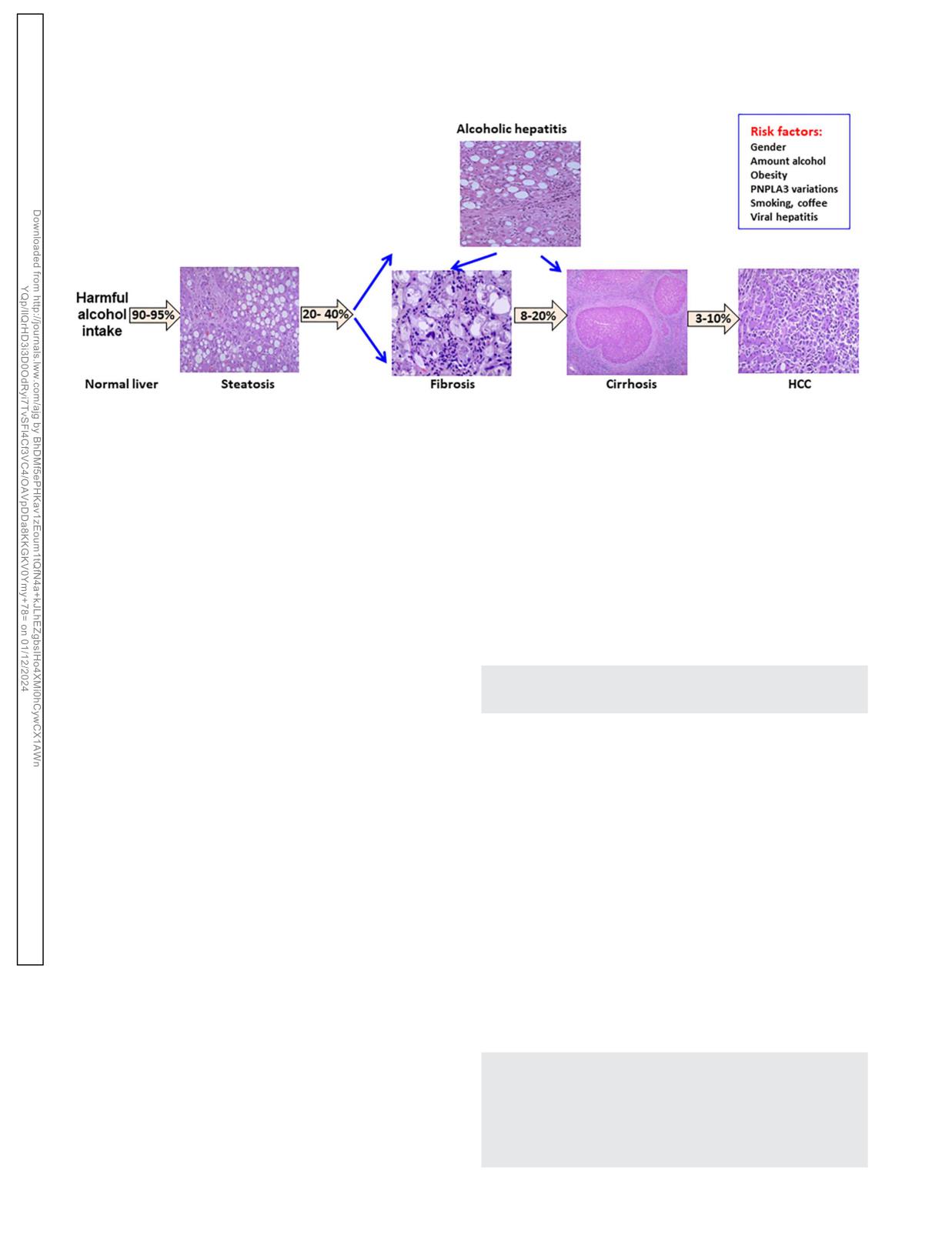
(Figure 1). The diagnosis of ALD requires identification of chronic,
due to alcohol-associated cirrhosis and/or HCC.
harmful alcohol use, by patient report or detection of alcohol bio-
Important advances in our understanding of ALD have oc-
markers, and exclusion of other diseases affecting the liver. It should
curred, including (i) insights into the natural history and prevalence
1Division of Gastroenterology, Hepatology and Nutrition, University of Louisville Health, Louisville, Kentucky, USA;2Division of Gastroenterology and Hepatology,
University of South Dakota, Sioux Falls, South Dakota, USA;3Liver Unit, Department of Digestive and Metabolic Diseases, Hospital Clinic, Barcelona, Spain;
4Division of Gastroenterology and Hepatology, Stanford University School of Medicine, Veterans Affairs Palo Alto Healthcare System, Palo Alto, California, USA;
5Division of Gastroenterology and Hepatology, University of Virginia, Charlottesville, Virginia, USA;6Division of Gastrointestinal and Liver Diseases, University of
Southern California, Los Angeles, California, USA;7Division of Gastroenterology and Hepatology, Mayo Clinic, Rochester, Minnesota, USA. Correspondence:
Vijay H. Shah, MD. E-mail: shah.vijay@mayo.edu.
*Loretta L. Jophlin and Ashwani K. Singal contributed equally to this work.
Received April 19, 2023; accepted October 4, 2023
The American Journal of GASTROENTEROLOGY
VOLUME 119 | JANUARY 2024 www.amjgastro.com
ACG Guideline: ALD
31
Figure 1. Disease spectrum of alcohol-associated liver disease. HCC, hepatocellular carcinoma.
of early ALD among at-risk individuals with harmful alcohol use or
Parameters Committee. The strength of recommendation is
AUD; (ii) increasing prevalence of severe forms of ALD in younger
graded as strong or conditional as a consensus among the authors,
individuals, women, and minorities such as Hispanics and Ameri-
considering the weight of desirable and undesirable effects of
can Indians; (iii) genetic and environmental factors that influence
intervention. The level of evidence was determined by mem-
disease susceptibility and progression; (iv) noninvasive techniques
bers of the GRADE team at ACG (R.J.W. and B.G.S.), and this
to assess liver fibrosis in patients with early ALD; (v) identifying
determination was made independently of the other authors,
patients at high risk of disease progression; (vi) clinical cri-
and designated as high, moderate, low, and very low, consid-
teria for diagnosis of AH simplifying decisions on treatment
ering the confidence in the effect estimate based on current
and recruitment in clinical trials; (vii) benefits of early liver
literature.
transplantation (LT) (i.e., with ,6 months of alcohol absti-
nence) with increasing momentum on acceptability and re-
EPIDEMIOLOGY AND DISEASE BURDEN
finement of selection criteria for this salvage therapeutic
Key concept/statement
option in patients with severe AH; and (viii) the role of mul-
tidisciplinary integrated clinical care models including hep-
1. ALD is a major cause of advanced liver disease and liver-related
atology and addiction specialists to manage the dual
mortality globally, including the United States.
pathologies of liver disease and of AUD, respectively, to im-
prove long-term outcomes of patients with ALD. Although
ALD is one of the main causes of chronic liver disease
significant progress has been made in the therapeutic pipeline
worldwide and is the leading cause of liver-related mortality in the
for patients with ALD and AH, continued efforts are critical in
United States (3). Globally, there are 3 million deaths annually
the development of effective pharmacotherapeutic options.
attributed to harmful alcohol use, accounting for 5.3% of all
The authors were invited by the Board of Trustees and Practice
deaths and 13.5% of deaths in people aged 20-39 years (4).
Parameters Committee of the American College of Gastroen-
According to the National Institute of Alcoholism and Alcohol
terology (ACG) to develop this practice guideline document on
Abuse (NIAAA) Surveillance Report on mortality in 2019, cir-
the management of patients with ALD. Recommendations based
rhosis was the 11th leading cause of death in the United States,
on patient-intervention-comparison-outcome (PICO) format/
with about half of cirrhosis-related deaths due to alcohol (5). The
Grading of Recommendations, Assessment, Development, and
crude death rate from cirrhosis of any etiology was 14.6 deaths per
Evaluations (GRADE) analysis are summarized in Table 1. These
100,000 persons, whereas the rate from alcohol-associated cir-
recommendations and guidelines should be tailored to individual
rhosis was 7.3 per 100,000 (5). There has been a continued nar-
patients and circumstances in routine clinical practice. Key
rowing of the gender gap, with increasing numbers of women
concepts and recommendations based on author expert opinion
with ALD. The World Health Organization has established a
and review of literature are summarized in Table 2.
future goal of reducing the death rate from cirrhosis to below 8.2
To develop these guidelines, a search was performed on the
deaths per 100,000 population (3).
Ovid search platform: Epub Ahead of Print, In-Process & Other
Non-Indexed Citations, Ovid MEDLINE(R) Daily and Ovid
Key concepts/statements
MEDLINE(R), EBM Reviews Cochrane Central Registry of
Controlled Trials, EMBASE, and PsycInfo for the period January
2. ALD prevalence has increased since 2014, with an accelerated
1980 to December 2022. Where appropriate, the PICO method
trajectory in recent years, producing substantial healthcare and
was used as a means of addressing key clinical questions specific
economic burden (6).
to patients with ALD. When a PICO format was not appropriate,
3. Younger adults, women, and minorities have seen the largest
the area of interest was included as a statement or key concept. To
increase in AUD and ALD, highlighting key populations in need of
evaluate the level of evidence and strength of recommendations,
targeted prevention and treatment efforts.
we used the GRADE system, as suggested by the ACG Practice
© 2024 by The American College of Gastroenterology
The American Journal of GASTROENTEROLOGY

32
Jophlin, Singal, et al
Table 1. Recommendations
Risk factors for alcohol-associated liver disease (ALD)
1. In patients with heavy alcohol use, we recommend abstaining from use of tobacco in any form given the associated higher risk of cirrhosis (strong
recommendation, very low level of evidence)
2. In persons with obesity, we recommended avoiding consumption of alcohol (strong recommendation, moderate level of evidence)
3. To assist with weight optimization and glucose control in persons with obesity or type 2 diabetes, we suggest abstinence from alcohol use (conditional
recommendation, very low level of evidence)
4. In patients undergoing or with a history of gastric bypass surgery, we recommend avoidance of heavy alcohol use (strong recommendation, very low level of evidence)
5. In patients with chronic hepatitis C virus infection, we recommend avoiding consumption of alcohol (strong recommendation, high level of evidence)
6. In patients with chronic hepatitis B virus infection, we recommend avoiding consumption of alcohol (strong recommendation, low level of evidence)
Diagnosis and treatment of alcohol use disorder (AUD)
7. In adults being screened for alcohol use, we recommend the use of brief screening tools, such as the Alcohol Use Disorders Identification Test-Consumption tool
(strong recommendation, high quality of evidence)
8. In patients with ALD and AUD, we recommend incorporating brief motivational interventions into clinical care (strong recommendation, low quality of evidence)
9. In patients with compensated ALD, we recommend use of baclofen as an option for treatment of AUD (strong recommendation, moderate level of evidence)
10. In patients with compensated ALD, we suggest use of acamprosate or naltrexone as an option for treatment of AUD (conditional recommendation, very low level
of evidence)
11. In patients with compensated ALD, we suggest use of gabapentin or topiramate as an option for treatment of AUD (conditional recommendation, very low level
of evidence)
12. We suggest against the use of disulfiram in the treatment of AUD along any spectrum of ALD (conditional recommendation, very low level of evidence)
Disulfiram should not be used in the treatment of AUD along any spectrum of ALD (conditional recommendation, very low level of evidence)
13. In patients with ALD and severe alcohol withdrawal syndrome, we recommend cautious use of benzodiazepines as treatment of choice, and careful monitoring
given their potential to precipitate or exacerbate hepatic encephalopathy (strong recommendation, moderate level of evidence)
Management of ALD
14. In persons with ALD, we recommend offering integrated multidisciplinary care models that incorporate behavioral and/or pharmacotherapy for treatment of
AUD (strong recommendation, low level of evidence)
Alcohol-associated hepatitis (AH)
15. In hospitalized patients with severe AH, we recommend against universal administration of prophylactic antibiotics (strong recommendations, moderate level
of evidence)
16. In patients with AH who are malnourished or unable to meet their caloric requirements through oral nutrition alone, we recommend the addition of oral
nutritional supplements (ONS). In patients who remain unable to meet their caloric requirements despite ONS, we recommend enteral nutrition support (strong
recommendation, moderate level of evidence)
17. In patients with severe AH (model for end stage disease .20), we recommend treatment with corticosteroid therapy (strong recommendation, moderate level of evidence)
18. We recommend against the use of pentoxifylline for individuals with severe AH (strong recommendation, moderate level of evidence)
19. There are insufficient data to determine the role of granulocyte colony stimulating factor and microbiome-based therapies in the treatment of severe AH
(conditional recommendation, moderate level of evidence)
20. We recommend use of intravenous N-acetyl cysteine as an adjuvant to corticosteroids in patients with severe AH (strong recommendation, moderate level of evidence)
21. In patients with severe AH who are unresponsive to medical management with high risk of death, early liver transplantation for highly selected patients should
be considered according to regional and institutional protocols (conditional recommendation, low level of evidence)
Alcohol contributes to approximately 48% of cirrhosis-related
ALD-related transplant listing during and after the pandemic
hospitalizations and more than 40% of listings for LT in the
(8,12,13). Overall, AUD-related mortality rates increased during
United States (7-10). The LT activity increased by .50% for AH
the pandemic by 24.8% in 2020 and 22% in 2021 compared with
with a 4-fold increase between 2003 and 2018 among those aged
prepandemic rates (14). Hospitalizations for ALD have also in-
younger than 40 years (7,8). An increase in LT for ALD has been
creased especially among younger individuals, women, and mi-
evident since 2014, reflecting a decreased LT need for hepatitis C
norities such as American Indians and Hispanics (9,15). Women
virus (HCV) because of availability of direct-acting antivirals, a
are less likely to use AUD therapies and prevention services than
true increase in the incidence of ALD, and wider acceptance of LT
men, possibly related to more perceived stigma, conflicting child/
for severe AH (11). The COVID-19 pandemic further increased
family and personal needs, and financial barriers (16). A mod-
the healthcare burden of ALD secondary to a 14% rise in alcohol
eling study showed that the 1-year increase in alcohol con-
use over prior years, resulting in increased ALD mortality and
sumption during the COVID-19 pandemic could result in 8,000
The American Journal of GASTROENTEROLOGY
VOLUME 119 | JANUARY 2024 www.amjgastro.com
ACG Guideline: ALD
33
Table 2. Key concepts and statements
Epidemiology and disease burden
1. Alcohol-associated liver disease (ALD) is a major cause of liver disease and liver-related mortality globally including the United States
2. ALD prevalence has increased since 2014, with an accelerated trajectory during the COVID-19 pandemic era, producing substantial healthcare and economic burden
3. Younger adults, women, and minorities have seen the largest increase in alcohol use disorder (AUD) and ALD, highlighting key populations in need of targeted
prevention and treatment efforts
Risk factors for ALD
4. Amount and duration of alcohol use are the primary risk factors for the development of ALD, and the potential harms of alcohol use should be an integral part of
education on liver health
5. Daily heavy alcohol use and binge alcohol use increase the risk of advanced liver disease in those with liver disease other than ALD, such as metabolic dysfunction-
associated steatotic liver disease (MASLD) and viral hepatitis. Thus, patients with known liver disease should be counseled on the potential harms of alcohol use
6. There are insufficient data to determine whether binge drinking without daily heavy use predisposes to advanced forms of ALD
7. All types of alcohol increase the risk of liver disease; however, limited data suggest that risk may be higher with liquor as opposed to beer or wine
8. Genetic variants of a-1 antitrypsin, PNPLA3, TM6SF2, and MBOAT7 have been associated with risk of ALD, but there are insufficient data to support their
inclusion in clinical management algorithms
9. Persons with obesity or type 2 diabetes should consider abstinence from alcohol use to assist with weight optimization and glucose control
Diagnosis and treatment of AUD
10. Standardized screening practices for AUD should be implemented at every medical encounter, across diverse clinical settings, including the primary care
setting, with attention to conducting screening in a nonbiased manner
11. Alcohol biomarkers may be a useful adjunct to clinical inquiry and alcohol use surveys. The choice of test should be tailored to the suspected window of alcohol
use
12. Alcohol withdrawal syndrome (AWS) in persons with AUD and ALD should be assessed and managed as per the Clinical Institute Withdrawal Assessment-
Alcohol-revised (CIWA-Ar) protocol. Clinicians should be aware to differentiate it from hepatic encephalopathy and acknowledge that the 2 conditions can coexist
ALD disease spectrum
13. Noninvasive blood and/or radiological tests (NITs) should be used to assess the severity of fibrosis in persons with asymptomatic alcohol-associated liver
disease. Fibrosis-4 (FIB-4) score, a blood-based marker, and hepatic transient elastography are best NITs for fibrosis detection among persons with ALD
14. Persons with heavy drinking who have evidence of ALD detected with NITs should be counseled on the risk of progressive liver disease and referred to a
hepatology specialist for further management
15. Liver biopsy is not required for staging of fibrosis but may be needed if there is diagnostic uncertainty based on noninvasive assessment
16. Screening individuals with heavy drinking using NITs for the detection of early ALD is cost-effective
Management of ALD
17. Patients with cirrhosis due to ALD are managed similarly to those with due to other causes
18. Patients with complications of ALD cirrhosis should be referred for liver transplantation
Alcohol-associated hepatitis (AH)
19. The National Institute of Alcoholism and Alcohol Abuse (NIAAA) diagnostic criteria are a useful guide to making a probable diagnosis of AH, and those meeting
criteria can be treated with corticosteroids if eligible or recruitment into clinical trials. A liver biopsy is not required to make a diagnosis of AH in the absence of
confounding factors
20. Individuals with severe AH, defined by model for end stage disease (MELD) .20, have a high short-term mortality and should preferably be hospitalized for
management
21. Individuals with moderate alcohol hepatitis, defined by MELD #20, have significant morbidity and mortality. Studies are needed to study this phenotype
including newer effective drugs for patients with moderate AH
22. Sustained abstinence is associated with long-term survival after severe and moderate AH.
23. For patients with AH, MELD score .20 can be used to stratify disease severity, predict risk of short-term mortality, and guide use of corticosteroid therapy
24. A caloric intake goal of 35 kcal/kg/d with 1.2-1.5 g/kg of protein is recommended for patients with AH. Those patients consuming ,21 kcal/kg/d should receive
nutritional support preferably through oral/enteral routes
25. Thiamine, vitamin B12, and zinc deficiencies are common in individuals with AH and should be supplemented
26. Patients with severe AH and MELD scores ranging from 25 to 39 derive maximum benefit from the use of corticosteroids; careful consideration of risks and
benefits is warranted if considering corticosteroids for those with MELD .50
© 2024 by The American College of Gastroenterology
The American Journal of GASTROENTEROLOGY

34
Jophlin, Singal, et al
Table 2. (continued)
Alcohol-associated hepatitis (AH)
27. Response to corticosteroid treatment can be assessed based on the Lille score at day 7 or day 4
Among nonresponders (Lille score .0.45), corticosteroids should be discontinued.
Liver transplantation (LT)
28. For patients with severe AH with 4 or more organ failures, who are nonresponsive to corticosteroids, and ineligible for early LT, engagement of palliative therapy
would be appropriate
29. Selection for LTin patients with ALD should not be based solely on an arbitrary duration of sobriety. A detailed psychosocial evaluation by a social worker and an
addiction specialist should be used to inform the transplant team’s decision-making
30. Tools such as Stanford Integrated Psychosocial Assessment Tool (SIPAT), High Risk for Alcohol Relapse Score (HRAR), Michigan Alcoholism Prognostics
Score (MAPS), Hopkins Psychosocial Score (HPSS), and Sustained Alcohol Use Posttransplant Score (SALT) may be used in assessing LT candidacy
31. Multidisciplinary integrated care model is recommended for liver transplant recipients to reduce recurrent alcohol use and improve long-term outcomes
32. Liver transplant recipients should be monitored for alcohol use using self-report tools or alcohol biomarkers with the goal of early detection to provide
interventions to support return to abstinence
33. Early and/or heavy alcohol use is a risk for graft loss and long-term patient mortality and requires an aggressive intervention to achieve abstinence
Policy and prevention
34. Public policy interventions can reduce the burden of AUD and alcohol-associated liver complications and should be more widely used to reduce alcohol-related
morbidity and mortality
additional ALD-related deaths, 18,700 cases of decompensated
genetic factors and the existence of comorbidities (e.g., metabolic
cirrhosis, and 1,000 new diagnoses of HCC between 2020 and
syndrome). Furthermore, patients with early ALD are reported to
2040 (17). From 2010 to 2016, ALD had the highest economic
consume similar amounts of alcohol to those with AH, suggesting
cost burden for hospitalizations of any etiology of liver disease
that there are other factors (Figure 1) which contribute to the risk
in the United States, with a total cost of $22.7 billion (95% con-
for and severity of ALD (24). Those factors may include sex and
fidence interval [CI] $22.1-$23.2 billion), and although hospi-
drinking outside of meals. For example, in the Million Women
talizations for hepatitis B virus (HBV), HCV, MASLD, and HCC
UK Study, among women who drank, drinking with meals carried
down trended or remained stable over this time, there was a near
a 31% lower relative risk for cirrhosis when compared with
doubling of hospitalization for ALD (6). These figures become
usually drinking outside of meals (23). Women are at a higher risk
more relevant considering that ALD contributes to 50% of overall
for ALD at a lower daily intake of alcohol compared with men,
burden of liver disease but only receives 5% of the mean research
probably due to higher body fat component and lower gastric
funding (18).
alcohol dehydrogenase activity (25). Binge drinking (see Table 3
for this and other definitions of alcohol use patterns) is reported
RISK FACTORS FOR ALD
in 26% of individuals aged 18 years or older in the United States
(19). It is speculated that higher blood alcohol levels with binge
Key concepts/statements
and high intensity drinking promote bacterial translocation (26)
and liver fibrosis (27); however, the exact role of binge drinking as
4. Amount and duration of alcohol use are the primary risk factors for
a risk factor for cirrhosis remains to be established (28). Although
the development of ALD, and the potential harms of alcohol use
should be an integral part of education on liver health.
daily drinking is associated with higher risk of cirrhosis (29), it is
5. Daily use and binging of alcohol increase the risk of advanced liver
plausible that heavy drinking with superimposed binge and high
disease in those with underlying liver disease other than ALD.
intensity drinking have additive effects. Importantly, binge
Thus, patients with known liver disease should be counseled on
drinking in patients with underlying metabolic syndrome has
the potential harms of any alcohol use.
been associated with higher likelihood of cirrhosis (30).
6. There are insufficient data to determine whether binge drinking
without daily heavy use predisposes to advanced forms of ALD.
Key concept/statement
Harmful drinking is a pattern of alcohol use leading to health
7. All types of alcohol increase the risk of liver disease; however,
or psychosocial problems and is the primary risk factor for the
limited data suggest that risk may be higher with liquor as opposed
development of ALD (19). Increasing evidence suggests that there
to beer or wine.
are minimal or even no health benefits to drinking and that any
amount of alcohol use has potential to cause harm; however, it is
Large epidemiological studies have suggested that wine or beer
estimated that only 10%-20% of individuals with chronic heavy
consumption, perhaps due to antioxidant properties, is less as-
alcohol use develop cirrhosis (20). There is a dose-dependent and
sociated with ALD than liquor-based drinking (31,32). However,
duration-dependent relationship between the amount of alcohol
a study of 43,242 men conscribed to military service in Sweden in
intake and the likelihood of developing advanced forms of ALD
1970 with follow-up data obtained from population-based reg-
(21-23), yet extensive individual variability exists because of
istries showed only a trend toward reduced risk for severe liver
The American Journal of GASTROENTEROLOGY
VOLUME 119 | JANUARY 2024 www.amjgastro.com

ACG Guideline: ALD
35
Table 3. Definitions of alcohol drink and patterns of alcohol use
Organization
Terms
Definition
HHS
One standard drink
A beverage containing approximately 14 g (0.6 fluid ounces) of pure ethanol (i.e., alcohol), corresponding to
12 fluid ounces of regular beer (5% alcohol), 5 fluid ounces of wine (12% alcohol), or 1.5 fluid ounces of 80
proof distilled spirits (40% alcohol)
HHS
Moderate alcohol use
#2 drinks a day for men or #1 drink a day for women (280)
NIAA
Heavy alcohol use
.4 drinks on any day or .14 drinks per wk for man and .3 drinks a day or .7 drinks a wk for woman
SAMHSA
Heavy alcohol use
Binge drinking on 5 or more days in the past month
NIAA
Binge drinking
Alcohol use resulting in blood alcohol concentrations of .0.08% (0.08 g/dL) corresponds to consumption of $
5 drinks in men or $4 drinks in women within a 2-h window
NIAA
High intensity drinking
Alcohol intake $2-fold the threshold for binge drinking
HHS, US Department of Health and Human Services; NIAAA, National Institute of Alcoholism and Alcohol Abuse; SAMHSA: Substance Abuse and Mental Health Services
Administration.
disease in men consuming more than 50% of alcohol as wine
independently associated with a 3-fold risk of ALD cirrhosis (42).
compared with those consuming ,1% of alcohol as wine (hazard
In a more recent study, smoking .10 g of tobacco per day (.16
ratio [HR] 0.70, 95% CI 0.48-01.02, P 5 0.06) (33). Studies are
cigarettes) was associated with 1.6-fold risk of developing ALD
needed to examine the effects of specific alcohol additives and
cirrhosis, with the effect more significant in women than men (95%
adulterants on the likelihood or severity of ALD.
CI 1.6-9.4 vs 0.9-3) (43). Furthermore, the Million Women Study
of .1.2 million women in the United Kingdom showed that the
Key concept/statement
risk of cirrhosis was higher with current smoking and drinking .7
drinks a week (RR 8.02, CI 6.84-9.4) than being a never smoker
8. Genetic variants of a-1 antitrypsin, PNPLA3, TM6SF2, and
with the same level of drinking (RR 2.09, CI 1.72-2.53) (44). In
MBOAT7 are associated with risk of ALD, but there are insufficient
addition, multiple epidemiologic studies have found concurrent
data to support their inclusion in clinical management algorithms.
tobacco and heavy alcohol use to increase the risk of HCC (45-47).
Although, based on animal studies, multiple toxins (nitrosamines,
Earlier studies have shown that monozygotic twins have a higher
aromatic hydrocarbons, and other alkaloids) in cigarette smoke
concordance for alcohol-associated cirrhosis than dizygotic twins (34).
have been shown to cause systemic inflammation, oxidative stress,
Significant variant alleles conveying risk for the development and
tissue hypoxia, and generation of free radicals, all of which may
severity of ALD include the patatin-like phospholipase domain con-
promote hepatic fibrosis, further animal studies have found that
taining protein 3 (PNPLA3) rs738409, transmembrane 6 superfamily
nicotine independently promotes liver fibrosis (48,49).
member 2 (TM6SF2), and membrane bound O-acyltransferase do-
main containing 7 (MBOAT7) rs641738 (35,36). Interestingly, the
Recommendations
combination of polymorphisms of some of these genes in the presence
of diabetes predicts the development of cirrhosis (37). Variations in
2. In persons with obesity, we recommend avoiding consumption of
PNPLA3 also predispose to the development of HCC in patients with
alcohol (strong recommendation, moderate level of evidence).
alcohol-associated cirrhosis (36,38). In another study, the Pi*Z ho-
3. To assist with weight optimization and glucose control in persons
mozygous variant of a-1 antitrypsin gene in individuals with AUD
with obesity or type 2 diabetes, we suggest abstinence from
was more frequently present in those with cirrhosis compared with
alcohol use (conditional recommendation, very low level of
those without cirrhosis (6.2% vs 2.2%, P , 0.001), with a 5.8-fold (95%
evidence).
CI 2.9-11.7)-adjusted risk for cirrhosis, whereas the Pi*S homozygous
4. In patients undergoing or with a history of gastric bypass surgery,
variant only trended toward risk of cirrhosis with an adjusted odds
we recommend avoidance of heavy alcohol use (strong
ratio of 1.47 (95% CI 0.99-2.19) (39). It should be acknowledged that
recommendation, very low level of evidence).
these genetic association studies are mostly performed in White and/
or Asian populations, with very little representation of Black, Native
Obesity and metabolic syndrome increase the risk of ad-
American, and Hispanic populations. Less is known about the genetic
vanced liver disease in heavy drinkers (50). Epidemiologic
determinants of AH; however, the PNPLA3 rs738409 variant has
studies show that a body mass index of .30 k/m2 in patients
shown an association with its development (40) and mortality (41).
with .3 drinks per day increases the risk of liver disease in-
Thus, larger studies of this allele are warranted in patients with AH.
cluding elevated transaminases, steatosis, severity of fibrosis,
cirrhosis, and HCC (51). Moreover, the presence of obesity
Recommendation
among heavy drinkers is associated with increased likelihood of
having cirrhosis (50,51). In another study, individuals with
1. In patients with heavy alcohol use, we recommend abstaining
harmful alcohol consumption who are obese or overweight
from use of tobacco in any form, given the associated higher risk of
compared with normal weight were at 1.5-fold risk for any liver
cirrhosis (strong recommendation, very low level of evidence).
disease and 2.2-fold risk for death (52). Although large epide-
miological studies initially suggested that moderate alcohol
In a large study of 128,934 individuals receiving health exami-
consumption may protect against MASLD (53,54), more recent
nation between 1978 and 1985, smoking $20 cigarettes daily was
studies using individual data indicate that even moderate
© 2024 by The American College of Gastroenterology
The American Journal of GASTROENTEROLOGY
36
Jophlin, Singal, et al
drinking can favor the development of liver disease in people
DIAGNOSIS AND TREATMENT OF AUD
with obesity and metabolic syndrome (55,56).
Recommendation
Diabetes also seems to exacerbate the development of liver dis-
ease in people who drink. A recent study revealed that having di-
7. In adults being screened for alcohol use, we recommend the use
abetes in the setting of heavy alcohol use was associated with a 6-fold
of brief screening tools, such as the Alcohol Use Disorders
higher risk of a liver-related admission, mortality, and HCC (57).
Identification Test-Consumption tool (strong recommendation,
Interestingly, although bariatric surgery can alleviate or reverse
high quality of evidence).
MASLD, it can be a risk factor for the development of AUD and
consequent ALD (58,59). Gastric bypass anatomy is associated with
a 2- to 3-fold increased risk for the diagnosis of AH (60). Further-
Key concept/statement
more, a recent study of the national inpatient sample showed that
among admissions for alcohol-associated cirrhosis (N 5 10,168), a
10. Standardized screening practices for AUD should be
concurrent diagnosis of AH was higher in those with vs without a
implemented at every medical encounter, across diverse clinical
history of Roux-en-Y gastric bypass (18.8% vs 17% P 5 0.032) (61).
settings, including the primary care setting, with attention to
conducting screening in a nonbiased manner.
Recommendation
Due to various susceptibility factors, individuals with long-term
harmful alcohol use are at risk for AH, cirrhosis, and HCC (68).
5. In patients with chronic HCV infection, we recommend avoiding
consumption of alcohol (strong recommendation, high level of
Patients with ALD often present at an advanced stage of liver
evidence).
disease and progress faster to advanced disease and/or complica-
tions compared with other liver diseases including MASLD and
Alcohol use is a frequent cofactor in individuals with HCV
HCV (69,70). Many patients with ALD present for medical care
infection, and heavy daily alcohol use (.50 g) was shown to be an
after they have developed complications of cirrhosis (71), with
independent risk factor for hepatic fibrosis progression in HCV
previous healthcare encounters representing missed opportunities
patients with viremia (62). The dose-dependent deleterious ef-
for identifying individuals with harmful alcohol use and achieving
fects of alcohol in HCV have been recently revealed in a meta-
the downstream benefits of preventing ALD and its complications
analysis of 33 studies from 21,919 participants, demonstrating
(72-74). The ideal screening tool and setting for identifying indi-
that each daily drink increased the risk for cirrhosis, decom-
viduals with AUD should be tailored to individual populations
pensated cirrhosis, and liver-related mortality by 11.2% (63).
given global healthcare and technology disparities (75). The AUD
Moreover, individuals with chronic HCV who drank . 6 stan-
Identification Test (AUDIT), a 10-item patient self-reported
dard drinks daily had a .50-fold increased risk of developing
questionnaire, is an accurate and validated tool for screening in-
HCC than those who did not drink (64).
dividuals for AUD and grading its severity. A shorter version, Al-
cohol Use Disorders Identification Test-Consumption, composed
Recommendation
of 3 questions, is quick to use in clinical practice, with similar
accuracy to the full AUDIT tool (76). The AUDIT score demon-
6. In patients with chronic HBV infection, we recommend avoiding
strated a linear relationship with mortality in a meta-analysis of 7
consumption of alcohol (strong recommendation, low level of
studies on 309,991 persons. In this study where 18,920 deaths were
evidence).
observed over 2-10 years of follow-up (72), those with AUD had a
24% higher relative risk of dying compared with moderate drinkers
Several studies have shown that alcohol drinking worsens the
(72). A limitation of this meta-analysis was that 97% of study
course of HBV liver disease. In a cohort study of adults hospi-
population represented veterans, with a sparse representation of
talized with chronic liver disease and concurrent alcohol use of
young adults and women. The cutting down annoyance by criti-
.3drinksperday,HBsAg-positivepatientshad2-foldincreased
cism guilt eye opener questionnaire, another tool to gauge alcohol
odds of cirrhosis compared with patients without HBV (odds
use, assesses the dependence on alcohol and does not quantify
ratio [OR] 4.8, CI 1.8-12.4 vs OR 2.4, CI 1.3-4.2) (65). In a
alcohol use. A single question “how many times in the past year
prospective cohort study of
966
patients with cirrhosis
have you had 5 or more drinks (4 or more for women) at one time”
(2000-2009) and followed until 2011, the annual incidence of
can also be used to identify those with harmful alcohol use.
HCC was 9.9% in 132 patients with HBV infection and AUD,
4.1% in patients with HBV infection who did not use alcohol, and
Universal screening for AUD at any healthcare encounter
2.1% in patients with AUD without HBV infection. The 10-year
Screening all patients for AUD is feasible in the healthcare setting
cumulative incidence of HCC was 52.8% vs 39.8% vs 25.6% (P ,
(77-80). For example, admitting nurses in a large hospital
0.001) for the 3 respective groups (66). For patients with cirrhosis
emergency department performed alcohol use screening in 637
and HBV infection with AUD, higher HBV DNA levels were
patients using AUDIT and modified-for-Australia version of the
associated with risk of HCC, while treatment with oral antiviral
Paddington Alcohol test. The Australia version of the Paddington
drugs for HBV infection protected against HCC development
Alcohol test performed moderately well compared with AUDIT
(66). Furthermore, in another prospective cohort study of 1,515
(kappa statistics of 0.63, P , 0.001), with a sensitivity and spec-
patients with cirrhosis, those with HBV and heavy chronic al-
ificity of
72.5
(65.3%-79.7%) and
90.8
(88.3%-93.4%), re-
cohol use (.80 g of alcohol daily for . 5 years) had a higher
spectively (81). A targeted approach to screening in the healthcare
incidence of HCC occurring over a 10-year follow-up compared
setting by selecting individuals with complaints anecdotally as-
with patients with HBV cirrhosis without heavy alcohol use
sociated with harmful drinking has also been explored. A mul-
(crude HR 2.13, 95% CI 1.62-2.81, P , 0.001) (67).
ticenter study of 3,021 patients from 29 primary care offices found
The American Journal of GASTROENTEROLOGY
VOLUME 119 | JANUARY 2024 www.amjgastro.com
ACG Guideline: ALD
37
that alcohol screening in a population of individuals with mental
decreasing drinking behavior when compared with cognitive be-
health conditions, gastrointestinal conditions, hypertension, and
havioral therapy or no treatment; however, liver-related endpoints
minor injuries had a higher odds ratio for harmful alcohol con-
were not reported (99).
sumption than in a universally screened population without these
complaints (1.65, 95% CI 1.41-1.93) (82).
Recommendations
Key concept/statement
9. In patients with compensated ALD, we recommend use of
baclofen as an option for treatment of AUD (strong
11. Alcohol biomarkers may be a useful adjunct to clinical inquiry
recommendation, moderate level of evidence).
and alcohol use surveys. The choice of test should be tailored to
10. In patients with compensated ALD, we suggest use of
the suspected window of alcohol use.
acamprosate or naltrexone as an option for treatment of AUD
(conditional recommendation, very low level of evidence).
Indirect biomarkers of alcohol reflecting alcohol-induced
11. In patients with compensated ALD, we suggest use of
tissue damage (i.e., gamma-glutamyltransferase, mean corpus-
gabapentin or topiramate as an option for treatment of AUD
cular volume, and carbohydrate-deficient transferrin) (83) have
(conditional recommendation, very low level of evidence).
high individual variability and limited utility (34). Direct alcohol
12. Disulfiram should not be used in the treatment of AUD along any
biomarkers including blood alcohol concentration (84), ethyl
spectrum of ALD (conditional recommendation, very low level of
glucuronide, ethyl sulfate (85-91), and phosphatidylethanol (92)
evidence).
seem to have better performance than indirect biomarkers. For
the detection of recent alcohol use in individuals with liver disease
Pharmacotherapy of AUD is effective (1,100) and is associated
(93), alcohol biomarkers have variable temporal windows of de-
with reduced risk of ALD and disease progression in those with
tection, sensitivity, and specificity as detailed in Table 4. For pa-
cirrhosis (101,102). In the setting of ALD cirrhosis, the use of
tients who disclose heavy recent drinking, alcohol biomarkers
medication-assisted therapies is cost-effective because of benefits
provide no added clinical utility. Biomarkers may be helpful to
in reducing clinical decompensation and readmission to the
identify recent alcohol use in patients who cannot be interviewed
hospital (103). There are 3 US Food and Drug Administration
because of encephalopathy or intoxication or when reported al-
(FDA)-approved medications (disulfiram, acamprosate, and
cohol use is suspected to be inaccurate.
naltrexone) for AUD and others that have shown utility in pa-
tients that are not US FDA-approved. In patients with advanced
Recommendation
liver disease including cirrhosis and AH, baclofen (GABA-B re-
ceptor agonist), a non-US FDA-approved drug, has been studied
8. In patients with ALD and AUD, we recommend incorporating brief
the most. Baclofen use for an average duration of 5.8 months has
motivational interventions into clinical care (strong
been shown to safely reduce alcohol use in patients with AH (104)
recommendation, low quality of evidence).
and increase abstinence rates in those with ALD cirrhosis
(105,106). The medication is started in a dose of 5 mg 3 times a
Nonpharmacologic therapies for AUD include motivational
day, with dose escalation at 3-5-day intervals based on patient
interviewing, screening, brief intervention (BI), referral, and treat-
tolerance to a maximum dose of 15 mg 3 times a day.
ment, BI, cognitive behavioral therapy, motivational enhancement
Acamprosate does not undergo hepatic metabolism, and a
therapy, and 12-step facilitation/Alcoholics Anonymous. The former
recent retrospective analysis suggests that its use in cirrhotic
3 approaches can be performed by any healthcare provider using a
patients is safe (107); however, a retrospective cohort study
foundation of motivational interviewing techniques, while the latter
revealed that acamprosate use for the treatment of AUD in in-
3 require specialty expertise. Motivational interviewing is a non-
dividuals without a diagnosis of ALD at the start of treatment was
judgmental, nonconfrontational conversational technique aimed to
associated with the development of ALD (OR 2.59, 95% CI
increase a person’s awareness of the problems caused, consequences
1.84-3.61, P , 0.001). However, this could have been a selection
experienced, and risks faced because of an undesirable behavior
bias with preferential treatment of those at risk for development
(https://store.samhsa.gov/sites/default/files/SAMHSA_Digital_
of ALD, or it is possible that the diagnosis of ALD was missed
Download/PEP20-02-02-014.pdf). It is important that the in-
before recruiting patients into the trial. Nevertheless, acampro-
terviewer exhibits an empathic attitude and a collaborative approach,
sate use for AUD trended to a higher odds ratio for the de-
regarding the individual’s autonomy (94,95). Screening, BI, referral,
velopment of hepatic decompensation in individuals with
and treatment is a comprehensive approach with proven efficacy in
well-compensated cirrhosis at the start of treatment (OR 1.99,
reducing short-term and long-term (96,97) alcohol use in persons
95% CI 0.99-4.059, P 5 0.06) (102). If acamprosate is used,
with AUD. BI based on the 5 “A” model (ask about use, advice to quit
caution should be taken in patients with concurrent kidney dis-
or reduce, assess willingness, assist to quit or reduce, and arrange
ease, with dose adjustment if the creatinine clearance is between
follow-up), where physician feedback on alcohol-related harms was
30 and 50 and avoidance if below 30 mL/min. Both short-term
shown to reduce alcohol use in a study of more than 9,000 individuals
and long-term acting forms of naltrexone may be used in indi-
with mild AUD (AUDIT score 8-20) in a primary care setting (77).
viduals with early ALD and in those with compensated cirrhosis
Seven patients needed to be treated to achieve reduction of alcohol
but should be avoided in patients with decompensated cirrhosis
use to within recommended limits in one patient (77). A 2018 meta-
or liver failure and used cautiously in patients with kidney disease
analysis of 69 studies including more than 33,000 participants
(108). There are no data for acamprosate or naltrexone on the
showed a reduction in alcohol consumption by 20 g/wk after a BI in
duration of treatment and use in patients with AH.
the primary care setting (98). A 2018 Cochrane review showed that
Other pharmacological agents with off-label use for AUD
12-step facilitation/Alcoholics Anonymous had the most promise for
include gabapentin and topiramate
(109). Gabapentin and
© 2024 by The American College of Gastroenterology
The American Journal of GASTROENTEROLOGY

38
Jophlin, Singal, et al
Table 4. Biomarkers of alcohol use
Specimen
Window
Sensitivity %
Specificity%
PPV %
NPV %
References
CDT
Blood
2-4 wk
25-100
57-100
64-100
71-93
(86,281-286)
EtG
Urine
3-7 d
70-76
93-99
81-97
85-99
(86,284,286,287)
EtG
Hair
3-6 mo
58-100
66-100
68-100
86-100
(85,286,288)
EtS
Urine
3-7 d
73-82
86-89
70-80
85-93
(287)
PEth
Blood
30 d
73-100
66-96
85
100
(286,289)
Overall table heavily informed by a systematic review (93).
CDT, carbohydrate-deficient transferrin; EtG, ethyl glucuronide; EtS, ethyl sulfate; NPV, negative predictive value; PEth, phosphatidylethanol; PPV, positive predictive value.
topiramate have demonstrated acceptable safety profiles in in-
headache. These symptoms may progress to more severe forms of
dividuals with ALD (102), although large, prospective trials are
AWS, characterized by delirium tremens, generalized seizures,
needed. Data are emerging on the potential role for glucagon like
coma, and even cardiac arrest and death. Older individuals are at
peptide-1 receptor agonists in the treatment of AUD (110).
greater risk for delirium tremens. Those with moderate or severe
Despite having US FDA approval for AUD, disulfiram is
AWS are typically monitored in an intensive care unit, where vital
contraindicated in individuals with liver disease of any spectrum
signs, volume status, and neurological function can be monitored
because it is completely metabolized by the liver and hepatotoxic.
closely. Severity scores for AWS such as the Clinical Institute
Idiosyncratic liver injury of an immunoallergic mechanism has
Withdrawal Assessment are useful in guiding management, al-
been well-described with disulfiram use and, although rare, seems
though they have not been validated in persons with severe ALD
more common in individuals with pre-existing liver disease (111).
and a symptom-triggered approach is preferred (113-117). Ben-
Furthermore, disulfiram does not seem effective in preventing
zodiazepines are the most used drugs to treat AWS. Long-acting
development or progression of liver disease in individuals with
benzodiazepines (e.g., diazepam and chlordiazepoxide) protect
AUD. In a retrospective cohort study of patients lacking ALD,
against seizures and delirium; short-acting and intermediate-acting
those treated with any pharmacologic agent for AUD had a lower
benzodiazepines (e.g., lorazepam and oxazepam) are safer for pa-
odds ratio for the development of ALD (OR 0.37, CI 0.31-0.43,
tients with poor liver function (118,119). Oral administration is
P , 0.001); however, when disulfiram was examined in disag-
preferred for administration of benzodiazepines and barbiturates
gregate, it showed no effect (OR 0.86, CI 0.43-1.61, P 5 0.66). In
(112). Patients with AWS and concomitant hepatic encephalopa-
individuals with cirrhosis, treatment with any pharmacologic
thy should be treated for both conditions. Of note, benzodiaze-
agent for AUD was protective against hepatic decompensation
pines may precipitate and worsen hepatic encephalopathy;
(OR 0.35, CI 0.23-0.53, P , 0.001); however, when analyzed in
thus, careful monitoring and the dose titration are critical for
disaggregate, disulfiram again showed no effect (OR 2.59, CI
optimal outcomes. Given the side effects of benzodiazepines in
0.54-13.26, P 5 0.24) (102).
patients with advanced liver disease and the potential for abuse
with repeated use, other drugs such as baclofen, clonidine,
gabapentin, and topiramate have been proposed to treat AWS
Key concept/statement
in persons with ALD including alcohol-associated cirrhosis.
However, the efficacy and safety of these medications in in-
12. Alcohol withdrawal syndrome (AWS) in persons with AUD and ALD
should be assessed and managed as per the Clinical Institute
dividuals with AH is unknown, and therefore, prospective
Withdrawal Assessment-Alcohol-revised protocol. Clinicians
studies are required.
should be aware to differentiate AWS from hepatic encephalopathy
and acknowledge that the 2 conditions can coexist.
ALD DISEASE SPECTRUM
Key concepts/statements
Recommendation
13. Noninvasive blood and/or radiological tests (NITs) should be
used to assess the severity of fibrosis in persons with
13. In patients with ALD and severe AWS, we recommend cautious
asymptomatic ALD. FIB-4 score, a blood-based marker, and
use of benzodiazepines as treatment of choice, and careful
hepatic transient elastography are best initial NITs of fibrosis
monitoring given their potential to precipitate or exacerbate
among persons with ALD.
hepatic encephalopathy (strong recommendation, moderate
14. Persons with heavy drinking who have evidence of ALD detected
level of evidence).
with NIT should be counseled on the risk of progressive liver
disease and referred to a provider with expertise in liver disease.
AWS is a common condition affecting alcohol-dependent pa-
15. Liver biopsy is not required for staging of fibrosis but may be
tients who abruptly discontinue or markedly decrease alcohol
needed if there is diagnostic uncertainty based on noninvasive
consumption. A recent study showed that AWS is frequent in
assessment.
patients with AH and negatively affects survival (112). Mild or
moderate AWS usually develops within 6-24 hours after the last
Fibrosis assessment among asymptomatic individuals with sus-
drink, and symptoms may include nausea/vomiting, hypertension,
pected ALD (Figure 2) is important because fibrosis correlates with
tachycardia, tremors, hyperreflexia, irritability, anxiety, and
long-term outcomes including survival (120-122). Liver biopsy is an
The American Journal of GASTROENTEROLOGY
VOLUME 119 | JANUARY 2024 www.amjgastro.com
ACG Guideline: ALD
39
invasive and costly procedure that is indicated when there are di-
Patients with ALD are suffering from 2 disorders, one of liver
agnostic uncertainties or suspected competing diagnoses. Several NITs
disease and the other of AUD. To date, the most effective therapy to
have been assessed in this population (1,123). Among blood-based
attenuate the clinical course of ALD and even reverse liver damage is
nonpatented markers, Fibrosis-4 (FIB-4) has been most studied and
prolonged alcohol abstinence (132,133). Increasing evidence is
shown to have high sensitivity (80%-90%), but low specificity
demonstrating that integrated care with a hepatologist and an ad-
(60%-70%) in excluding advanced fibrosis (F3-4). The enhanced liver
diction specialist is more effective than the absence of one (132,133)
fibrosis score and FibroTest are patented blood-based biomarkers with
(Figure 2). AUD treatment in patients with ALD cirrhosis and AH
higher specificity (80%-90%), but with higher cost and limited avail-
associates with improvement in patient survival, decompensating
ability, especially in resource-constrained settings (120). It should be
events, and complications of cirrhosis, as well as reduced 30-day
acknowledged that enhanced liver fibrosis is not as well validated in
readmissions (101,134-136). However, it should be noted that re-
patients with ALD as other etiologies such as HCV and MASLD (124).
ceiving treatment for AUD, even in advanced ALD, is the exception
Furthermore, platelets can be reduced by active alcohol use, which can
rather than the rule. In a retrospective cohort study of more than
affect the accuracy of FIB-4 as a noninvasive serological marker for
35,000 veterans with cirrhosis and AUD, receipt of AUD treatment
fibrosis assessment in patients with ALD (1). Among radiological tests,
in a cohort of these patients was associated with reduction in de-
vibration-controlled transient elastography, a test of liver stiffness
compensation and improved patient survival within 6 months of
measurement (LSM), has been most extensively evaluated for fibrosis
treatment (101). Only 14% of veterans with ALD, however, received
assessment in patients with ALD. Multiple meta-analyses have found
any AUD treatment, with ,1% receiving pharmacotherapy. In a
acceptable sensitivity and specificity, especially for advanced fibrosis
systematic review of 13 studies (5 of which were randomized con-
(F3-F4) (122,125,126). For example, in a meta-analysis of 1,026 pa-
trolled) on 1,945 patients (137), abstinence rates, however, were
tients with ALD using individual patient data, a cutoff LSM of 12.1 kPa
higher in a randomized controlled study with an integrated multi-
was fairly accurate to identify advanced fibrosis with receiver operating
disciplinary care model with hepatologists and addiction specialists
characteristics of 0.90(95%CI 0.86-0.94) (122). It should be noted that
in a colocated clinic compared with usual care of AUD (74% vs 49%,
underlying inflammation and steatohepatitis as reflected by aspartate
P 5 0.02) (138). In another meta-analysis of 6 studies on 649 LT
aminotransferase levels .200 I/L and/or elevated serum bilirubin may
recipients for ALD, an integrated care model compared with stan-
confound and overestimate the LSM in patients with ALD (122). As
dard follow-up by only hepatology in a transplant clinic was asso-
the fibrosis stage is the strongest predictor of prognosis in liver disease
ciated with a lower rate of relapse to alcohol and long-term patient
(127), individuals with advanced fibrosis and active drinking should be
mortality with odds ratios of 0.56 (95% CI 0.36-0.87) and 0.29 (95%
referred to a liver specialist and an alcohol addiction specialist (121).
CI 0.08-0.99), respectively (139).
Key concepts/statements
Key concepts/statements
16. Screening individuals with heavy drinking using NITs for the
17. Patients with cirrhosis due to ALD should be managed similarly
detection of early ALD is cost-effective.
to those with cirrhosis because of other causes.
18. Patients with complications of ALD cirrhosis should be referred
ALD is often undetected until irreversible, late-stage decom-
for LT when it is medically indicated.
pensated disease manifests. Consequently, there is an unmet need
for effective and economically reasonable pathways to screen for
advanced fibrosis among persons who drink alcohol. Studies have
HCC screening
demonstrated that the use of NITs is cost-efficient in detecting
Patients with advanced fibrosis or cirrhosis are at an increased risk
advanced fibrosis in people with excessive alcohol intake (128,129).
of developing HCC, with an annual incidence of 2.5%-2.9%
Furthermore, in a study compiling prospective data from 6 in-
reported in 2 separate studies (140,141). In a meta-analysis of 18
dependent cohorts of
6,295
individuals, vibration-controlled
studies on 148,333 patients with ALD cirrhosis, the incidence of
transient elastography screening of the general population was
HCC was 1%, 3%, and 9% at 1-, 3-, and 5-year follow-up, re-
less cost-effective than screening of individuals with heavy alcohol
spectively. This risk was higher in patients enrolled in a surveillance
use with the number needed to detect 1 case of significant fibrosis
program vs those not undergoing regular HCC surveillance (142).
(F2 or higher) being 12.5 (130). It is possible that thresholds to
Ultrasound examination with or without a-fetoprotein estimation
identify those who warrant screening are lower in patients with
every 6 months is used to screen patients with ALD cirrhosis for
repeated episodes of binge drinking and those with comorbidities
HCC similar to any other patient with cirrhosis (143).
(131), although more data are needed. Although there are no data
on the frequency of repeating screening tests, it may be reasonable
Hepatic encephalopathy
to screen annually among those identified as having low risk for
In patients with altered mental status, causes other than hepatic
advanced fibrosis but who continue to use alcohol.
encephalopathy should be screened for when suspected, espe-
cially among individuals with clinical neuropsychiatric features
MANAGEMENT OF ALD
which are atypical for a diagnosis of hepatic encephalopathy. For
Recommendation
example, seizures, focal neurological deficits, severe headache,
and encephalopathy refractory to all measures should point to-
14. In persons with ALD, we recommend offering integrated
ward an alternate cause such as stroke, subdural hematoma, drug
multidisciplinary care models that incorporate behavioral and/or
overdose, meningitis, and fungal infections of the central nervous
pharmacotherapy for treatment of AUD (strong
system. A drug screen is recommended in selected individuals.
recommendation, low level of evidence).
Imaging of the head and cerebral spinal fluid studies may be
© 2024 by The American College of Gastroenterology
The American Journal of GASTROENTEROLOGY
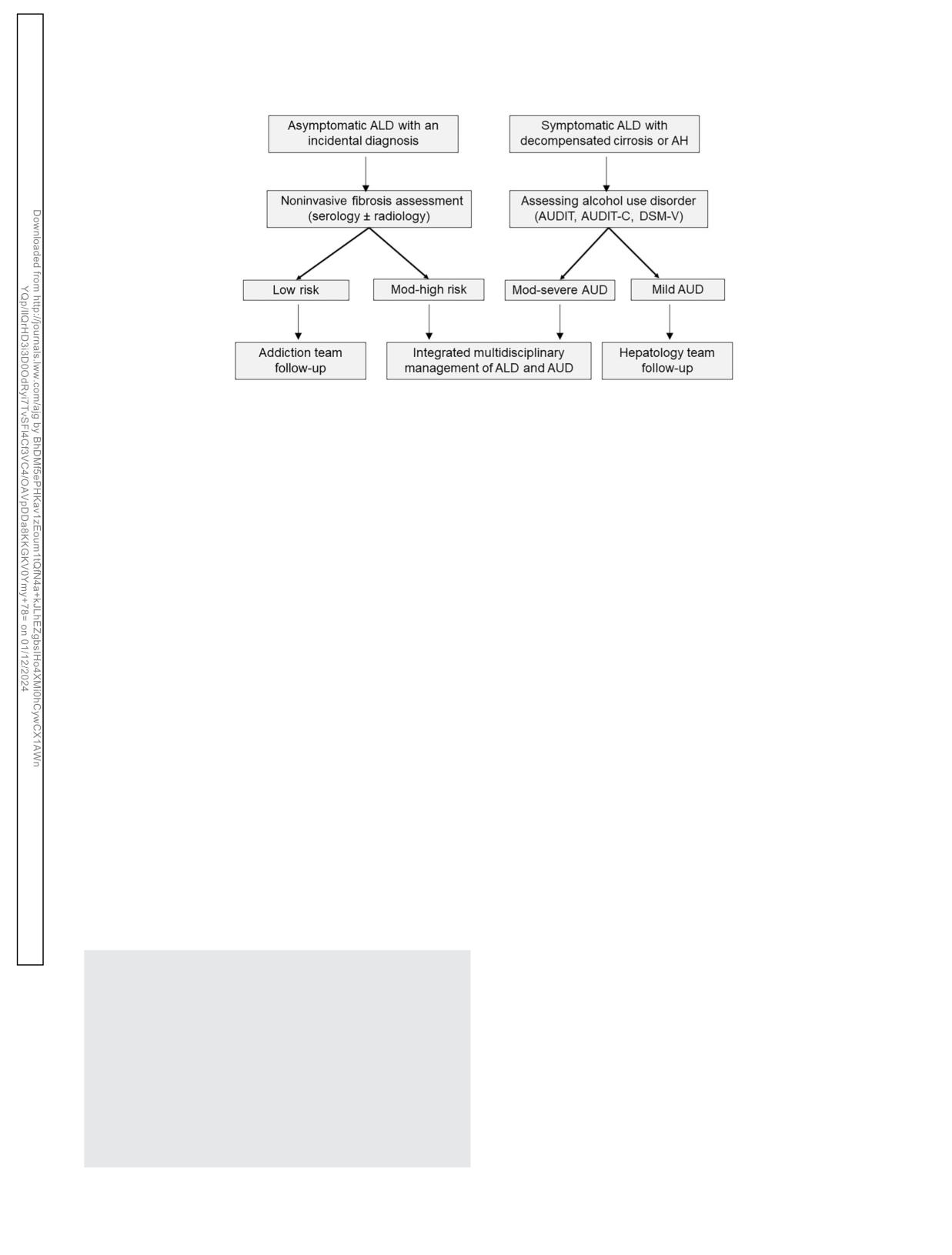
40
Jophlin, Singal, et al
Figure 2. Integrated multidisciplinary care model for management of the dual pathology of alcohol use disorder and of alcohol-associated liver disease at
any spectrum of liver disease. AH, alcohol-associated hepatitis; ALD, alcohol-associated liver disease; AUD, alcohol use disorder; AUDIT, AUD Identifi-
cation Test; AUDIT-C, Alcohol Use Disorders Identification Test-Consumption; DSM-V, diagnostic and statistical manual.
required (144). It is also important to rule out Wernicke en-
Among patients with suspected heavy alcohol use and new
cephalopathy as a cause for altered mental status because it has its
onset or worsening jaundice, clinicians should have a high sus-
own prognostic and management implications (145,146), espe-
picion for AH given its high short-term mortality. The NIAAA
cially when considering LT for patients with ALD.
has proposed clinical criteria (Table 5) for the diagnosis of
probable AH, which can spare severely ill patients the risk of liver
Nutrition
biopsy. However, when the diagnosis is uncertain and 1 or more
Every patient with ALD requires assessment of nutritional status
of the criteria are not met, a liver biopsy should be considered
because malnutrition is frequently present in these patients (147).
(Figure 3).
Detailed clinical evaluation using the subjective global assessment
Clinical features of AH include nonspecific constitutional
tool is commonly used to assess the nutritional status (147). Nu-
symptoms and symptoms attributable to advanced ALD. Al-
tritional goals for patients with cirrhosis from ALD are similar to
though evidence of hepatic decompensation is not required to
those for all patients with cirrhosis with repletion of vitamin and
make the diagnosis of AH, physical examination signs may
mineral deficiencies (thiamine, vitamin B12, and zinc) common in
overlap with ALD cirrhosis reflecting the presence of portal
AUD if alcohol use is recent or ongoing (148). This is covered in
hypertension and its complications. Furthermore, the in-
detail in a subsequent section under the management of AH.
flammation and steatosis of AH may promote de novo onset of
portal hypertension in patients with minimal pre-existing liver
Vaccinations
disease and those with previously compensated cirrhosis. Signs
Individuals with chronic liver disease should have vaccination
of AWS may be present if cessation of drinking is recent (151). A
against hepatitis A virus, HBV, influenza, pneumococcus, herpes
careful search should be made for a source of potential infection
zoster, tetanus, diphtheria, pertussis, and SARS-CoV-2 (149).
or sepsis, including skin examination for signs of cellulitis and
infection around venous lines. The systemic inflammatory re-
LT
sponse syndrome (SIRS 1”) (presence of 2 or more of temper-
ature .38 or ,36 degree Celsius, heart rate .90 bpm,
Individuals with decompensated alcohol-associated cirrhosis or
respiratory rate .20 or PCO2 ,32 mm Hg, and white cell count
severe AH should be considered for referral for LT (1,150).
.12 3 109/L) may be present even in the absence of infection
AH
(152) and is associated with a nearly 3-fold risk of mortality
Key concepts/statements
(153). In addition, the presence of SIRS predicted the de-
velopment of renal failure and 90-day mortality in 2 cohort
19. The NIAAA diagnostic criteria are a useful guide for making a
studies (152,154).
probable diagnosis of AH, and those meeting criteria can be
Once a diagnosis of AH is made, disease severity is stratified.
treated with corticosteroids, if eligible, or recruited into clinical
Although several scoring systems are available (155), the model
trials. A liver biopsy is not required to make a diagnosis of AH in
for end stage disease (MELD) score is most frequently used to
the absence of confounding factors.
estimate disease severity and determine eligibility for cortico-
20. Individuals with severe AH, defined by MELD .20, have a high short-
steroid treatment, with scores .20 indicating severe AH and
term mortalityand should preferably behospitalized formanagement.
#20 indicating moderate AH (156). These studies and recom-
21. Individuals with moderate AH, defined by MELD #20, have
mendations are based on the original MELD and not MELD-
significant morbidity and mortality. Further work is needed to
sodium (MELD-Na) calculation (157). In one study, the MELD-
study this phenotype and develop effective therapies.
Na score is as accurate in the assessment of disease severity and
22. Sustained abstinence is associated with long-term survival after
identifyingpatientseligibleforcorticosteroidtreatment(158).It
severe and moderate AH.
will be interesting to examine performance of MELD 3.0 in the
The American Journal of GASTROENTEROLOGY
VOLUME 119 | JANUARY 2024 www.amjgastro.com
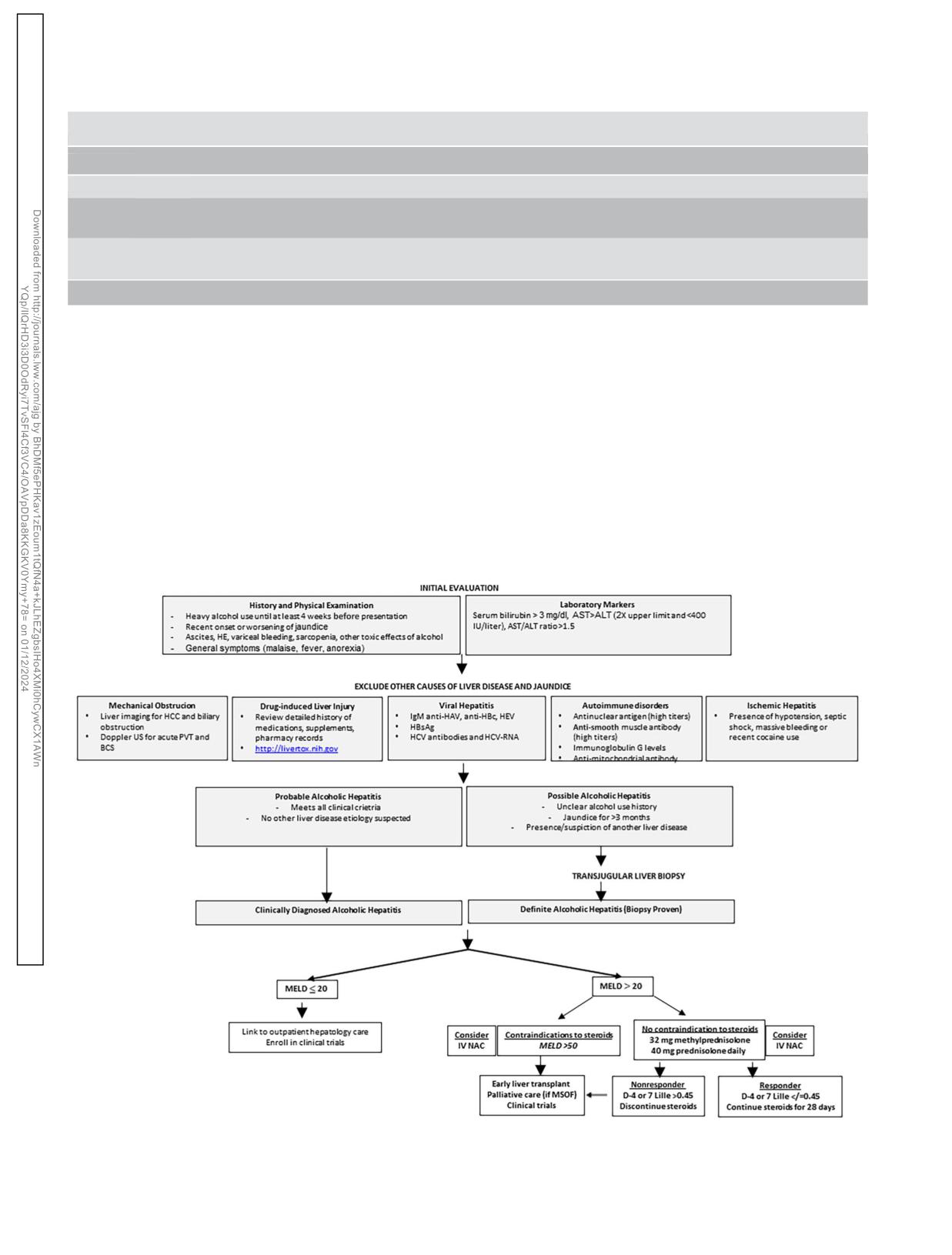
ACG Guideline: ALD
41
Table 5. NIAAA and grading criteria of AH
Definition
Criteria
Definite AH
Histological confirmation of features of alcohol-associated hepatitis
Probable AJ
Onset of jaundice within 60 d of heavy alcohol use (more than 50 g/d) for a minimum of 6 mo, serum bilirubin.3
mg/dL, elevated ASTranging from 50 to 400 U/L, an AST:ALT ratio. 1.5, and no other cause of acute hepatitis
Possible AH
Clinical diagnosis uncertain due to another confounding etiology of liver disease or unclear history on alcohol
consumption
AH, alcohol-associated hepatitis; ALT, alanine aminotransferase; AST, aspartate aminotransferase; NIAAA, National Institute of Alcoholism and Alcohol Abuse.
assessment of patients with AH. Although the 90-day survival
encephalopathy) by the end of follow-up (161). For patients
of patients presenting with severe AH has improved over time,
presenting with severe AH, hospitalization to determine clinical
current cohorts report a survival ranging from 35% (159) to 70%
trajectory is preferable.
(160), with variability related to severity of AH and response to
For patients with moderate AH, less is known about the natural
corticosteroids. The natural history beyond 90 days was high-
history; however, the 1-year mortality ranges from 10% to 20%
lighted in a single-center US study of 95 patients with severe
(162-164). In a study of all patients with AH, survival at 12 months
AH with a median follow-up period of 795 days who were
among patients with moderate AH was 3-fold higher compared
evaluated for, but ultimately did not undergo, LT. Spontaneous
with those with severe AH (163). In another study of 142 patients
recovery (defined as having a MELD score of ,21 at 90 days
with biopsy-proven AH followed for 55 months, lack of relapse to
after the index hospitalization) occurred in 35% of individuals,
alcohol was associated with improved long-term survival (HR 0.53;
but about half continued to have ascites and hepatic encepha-
P50.03)independentofMELDscore(P,0.05).Individualswho
lopathy at the last follow-up. Only 7% of the cohort recovered to
relapsed were of younger age (,48 years) and/or had a history of
a compensated state (MELD ,15 without ascites or hepatic
prior alcohol rehabilitation attempt (165).
Figure 3. Algorithmic approach toward diagnosis and management of alcohol-associated hepatitis. ALT, alanine aminotransferase; AST, aspartate ami-
notransferase; BCS, budd chiari syndrome; HE, hepatic encephalopathy; HEV, hepatitis E virus; HCC, hepatocellular carcinoma; PVT, portal vein
thrombosis.
© 2024 by The American College of Gastroenterology
The American Journal of GASTROENTEROLOGY
42
Jophlin, Singal, et al
Key concepts/statements
Infections are a common occurrence at presentation and during
hospitalization in patients with AH. For example, in a prospective
23. For patients with AH, the MELD score .20 can be used to stratify
study of 1,092 patients with AH, 135 (12.4%) had an infection at
disease severity, predict the risk of short-term mortality, and
baseline; of the remaining 957 patients, 251 (26.2%) developed in-
guide the use of corticosteroid therapy.
fections during corticosteroid or pentoxifylline (PTX) treatment and
89 (9.3%) developed an infection after the treatment (181). In this
The Maddrey discriminant function index (mDF) is the historical
study, prednisolone was associated with higher likelihood of infec-
index used to assess disease severity, corticosteroid eligibility, and short-
tions after treatment but not during treatment and development of
term mortality risk in AH (166). Retrospective and prospective analysis
infection in those on steroids was associated with 2.46-fold higher 90-
of this score indicates that mDF $ 32 predicts a mortality rate of
day mortality (181). However, in a meta-analysis of 12 other studies
approximately 20%-50% over 30 days (167). Advantages of using the
of 1,068 individuals with AH, the overall infection rate was 20% with
MELD score in the assessment of AH severity are its better accuracy,
no differences seen in those who received corticosteroids or not,
worldwide use in organ allocation, use of International Normalized
although a higher risk specifically for fungal infections was found in
Ratio over prothrombin time, and incorporation of serum creatinine, a
steroid-treated patients (182). Another multicenter retrospective
major determinant of outcomes in patients with AH (156,168). A
cohort study of patients with AH found that 49% had evidence of
MELD score .20 has been proposed as defining severe AH with an
infection and the diagnosis of infection was an independent risk
approximately 20% 90-day mortality (156). Beyond MELD, other
factor for 90-day mortality (HR 2.33, 95% CI 1.63-3.35, P , 0.001).
scoring systems that have been assessed for AH include Child-
In this study, however, initiation of empiric antibiotics on admission
Turcott-Pugh, Glasgow Alcoholic Hepatitis Score (GAHS), and Age
in the absence of infection did not reduce mortality or alter the
Bilirubin International Normalized Ratio and Creatinine (ABIC). In
incidence of subsequent infections. Corticosteroid use increased the
a post hoc analysis of 1,068 patients with AH in the steroids or
incidence of infection, but this did not affect survival (183).
pentoxifylline (PTX) for alcoholic hepatitis (STOPAH) study, mDF
Studies on the use of prophylactic antibiotics in patients with
was inferior (receiver operating characteristic [ROC] 0.67) to MELD,
AH have not shown promise for mortality benefit. In a placebo-
GAHS, and ABIC scores (ROC 0.704-0.726) in determining short-
controlled trial, rifaximin use for 90 days in patients with AH
term mortality at 28 and 90 days (169). In a prospective study on 71
safely reduced infections (0.29 vs 0.62 infections/patient) and
biopsy-proven cases of AH, available scores (including MELD,
liver-related complications (0.43 vs 1.26 complications/patient)
GAHD, ABIC, mDF, and MELD-Na) were similar in accuracy, with
and showed a trend for lower 90-day mortality compared with the
86%-100% ability to rule out severe disease, but had low positive
control arm (184,185). However, a 7-day course of oral vanco-
predictive values ranging from 17% to 50% (158). Additional smaller
mycin, gentamycin, and meropenem in 14 patients with AH
studies have suggested that the performance of many scoring sys-
showed no 90-day survival benefit compared with a reference
tems is similar in predicting 30-day mortality (170,171). Further
group of patients with AH receiving standard of care (186). In the
analysis comparing several scores showed the MELD score to be the
Antibiocor trial, 284 individuals with biopsy-proven AH were ran-
best score in assessing short-term mortality risk with ROC . 0.77
domly assigned to receive prednisolone plus amoxicillin/clavulanate
(157). Although MELD-Na and MELD are similar in predicting
or prednisolone plus placebo for 30 days. Those in the antibiotic
short-term mortality in AH (172), MELD 3.0 has been recently
group had a lower cumulative incidence of infection (42 vs 59 events;
shown to have equivalent performance to MELD and may have
HR 0.616, P 5 0.015), but there was no difference in 60-day mortality
utility to predict need for renal replacement therapy though further
(24 vs 31 in deaths; HR 0.769; 95% CI 0.451-1.31).
validation is needed (173).
There is a minimal role for liver biopsy for prognostication of AH.
Recommendation
Although the Alcoholic Hepatitis Histologic Score, determined by
presence and degree of bilirubinostasis, absence of megamitochondria,
16. In patients with AH who are malnourished or unable to meet their
and degree of polymorphonuclear infiltration on biopsy (Figure 4), did
caloric requirements through oral nutrition alone, we
reveal higher scores associated with higher 90-day mortality (174), the
recommend the addition of oral nutritional supplements. In
Alcoholic Hepatitis Histologic Score performed no better than GAHS
patients who remain unable to meet their caloric requirements
and MELD scores in predicting 28-day mortality in the STOPAH
despite oral nutritional supplements, we recommend enteral
cohort (175). Previous studies showed that the combination use of
nutrition support (strong recommendation, moderate level of
MELD at baseline and the Lille score at day 7 have best discrimination
evidence).
and calibration for 2-month and 6-month mortality (176).
Patients with AH may present with ACLF as defined by var-
ious diagnostic criteria for ACLF, however, given the multitude of
proposed scoring systems (177-180), lack of uniform definition
Key concepts/statements
across continents, and few studies limited to patients with AH,
further work is needed to determine the optimal score for pre-
24. A caloric intake goal of 35 kcal/kg/d with 1.2-1.5 g/kg/d of
protein is recommended for patients with AH. Those patients
dicting mortality in AH patients with ACLF.
consuming ,21 kcal/kg/d should receive nutritional support
preferably through oral/enteral routes.
Recommendation
25. Thiamine, vitamin B12, and zinc deficiencies are common in
individuals with AH and should be supplemented.
15. In hospitalized patients with severe AH, we recommend against
universal administration of prophylactic antibiotics (strong
Severe malnutrition is common in individuals with severe
recommendations, moderate level of evidence).
AH and portends a worse short-term survival
(187-191).
The American Journal of GASTROENTEROLOGY
VOLUME 119 | JANUARY 2024 www.amjgastro.com
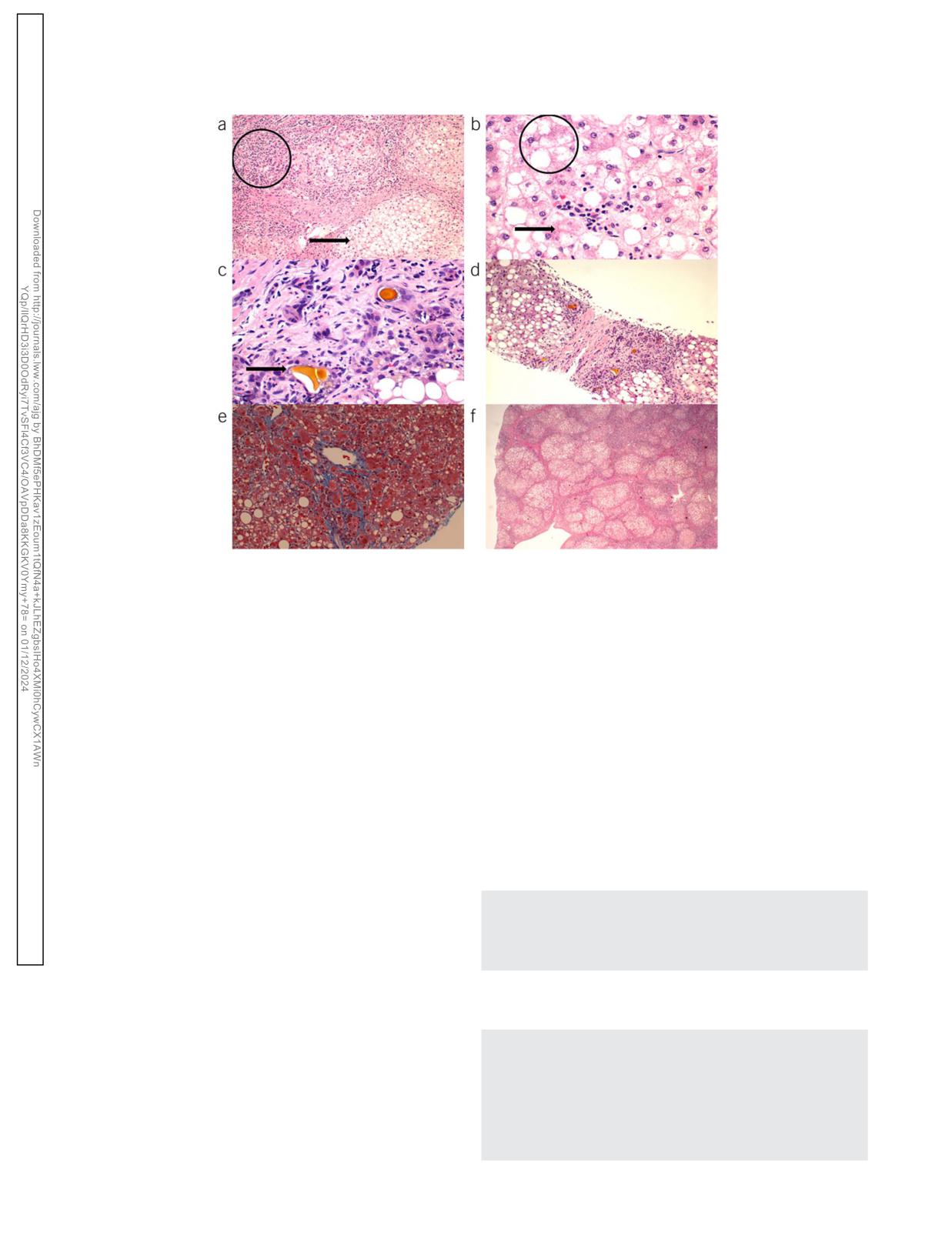
ACG Guideline: ALD
43
Figure 4. Histologic features of alcoholic hepatitis: (a) circle represents lobular inflammation and arrow represents steatosis, (b) hepatocyte ballooning,
(c) cholestasis with bile canalicular and hepatocyte plugging, (d) steatosis and fibrosis, (e) chicken wire and pericellular fibrosis, and (f) cirrhosis.
Although low caloric intake (,21.5 kcal/kg/d) is associated with
and mineral deficiencies are also common in patients with AH. As
increased risk of 28-day mortality (192), the caloric intake goal of
patients with AH have recent harmful alcohol use, supplementing
35 kcal/kg/d with 1.2-1.5 g/kg of protein for people with AH is
with thiamine may help prevent Wernicke encephalopathy (148).
based on work in populations with critical illness and not nec-
However, a meta-analysis of various mixed nutritional supplements
essarily AH (148). The most beneficial route of feeding remains
(amino acids, vitamins, minerals, and lipid) found no mortality
unclear and is generally tailored to a patient’s ability to safety eat
benefit in AH (201). Supplementing select trace elements may be
by mouth. A randomized study of enteral feeding compared with
considered. A recent study found that 85% of patients with AH are
oral feeding in 136 biopsy-proven patients with severe AH
zinc deficient, and zinc deficiency was an independent predictor of
showed no difference in survival; however, a caloric intake of
28-day mortality with an odds ratio of 10.6 per 1 mmol/L decrease in
,21.5 kcal/kg/d irrespective of the trial arm was associated with
serum zinc level (202). Although zinc supplementation has been
higher mortality at 6 months (62.9 vs 34.2%, P , 0.001) (192).
included as an intervention for AH in clinical trials (203), studies of
Similarly, the efficacy of enteral feeding as an intervention com-
the therapeutic effect of zinc alone are limited.
pared with steroids in 71 patients showed noninferiority for
short-term (28-day) survival, but deaths occurred earlier in the
Recommendation
enteral feeding arm (193). In a small trial comparing nasogastric
with nasojejunal tube feeding, there was no difference in the
amount of successfully delivered daily calories (194). It should be
17. In patients with severe AH (MELD .20), we recommend
treatment with corticosteroid therapy if there are no
noted that feeding tubes can be safely placed in patients with
contraindications (strong recommendation, moderate level of
esophageal varices without active bleeding or who have not un-
evidence).
dergone recent endoscopic variceal banding (195). In those who
cannot eat by mouth or have a contraindication to enteral feeding,
total parenteral nutrition may be used. Total parenteral nutrition
has no short-term survival advantage when compared with oral
Key concept/statement
and enteral feeding in moderate or severe AH (196).
Amino acid supplementation has been studied in patients with
26. Patients with severe AH and MELD scores ranging from 25 to 39
derive maximum benefit from the use of corticosteroids; careful
AH with mixed results. In a small, 28-day study of patients with AH
consideration of risks and benefits is warranted if considering
provided a 3,000 kcal diet with 100 g protein, those who received
corticosteroids for those with MELD .50.
70-85 g of IV amino acids daily had a 100% 28-day survival, whereas
27. Response to corticosteroid treatment can be assessed based on
those who did not had a survival rate of 78% (197). Several sub-
the Lille score at day 7 or day 4. Among nonresponders (Lille
sequent studies of daily amino acid supplements (mixed and
score .0.45), corticosteroids should be discontinued.
branch chain) found no survival benefit in AH (198-200). Vitamin
© 2024 by The American College of Gastroenterology
The American Journal of GASTROENTEROLOGY
44
Jophlin, Singal, et al
Corticosteroids
randomized clinical trial as an adjuvant to prednisolone-reduced
The first randomized controlled study to assess efficacy of corti-
infection however did not improve patient survival (218).
costeroids in the treatment of AH was published in 1971 (204). A
Cochrane review of 16 randomized controlled studies showed no
Recommendations
difference between corticosteroids and placebo (or no in-
tervention) on all-cause mortality, health-related quality of life,
18. We recommend against the use of PTX for individuals with
and serious adverse events, although the quality of evidence was
severe AH (strong recommendation, moderate level of
classified as very low or low (205). In a pooled analysis, using
evidence).
individual level data from the 5 largest randomized controlled
19. There are insufficient data to determine the role of granulocyte
studies (193,206-209), corticosteroids provided a survival benefit
colony-stimulating factor (G-CSF) and microbiome-based
at 28 days (80% vs 66%, P , 0.0001) (210). The largest single
therapies in the treatment of severe AH (conditional
recommendation, moderate level of evidence).
randomized, placebo-controlled multicenter study from the
United Kingdom (the STOPAH study) of 1,103 patients with
20. We recommend use of IV N-acetylcysteine as an adjuvant to
severe AH randomized to 28 days of prednisolone or placebo
corticosteroids in patients with severe AH (strong
recommendation, moderate level of evidence).
showed only a trend for mortality benefit (13.8% vs 18%, P 5
0.056) and an overall lower frequency of mortality in this cohort
than previous studies (160), likely reflecting improved manage-
ment of advanced liver disease. Finally, an updated meta-analysis
Pentoxifylline
of more contemporary randomized studies (including the STO-
PTX is a phosphodiesterase inhibitor and inhibitor of tumor
PAH study) showed that corticosteroids were effective in re-
necrosis factor-a (TNF-a), one of the major cytokines specu-
ducing short-term mortality by 36% (211).
lated in the pathogenesis of AH (219,220). Despite the first
Given the variable severity of individuals presenting with AH,
seminal study showing benefit of PTX 400 mg 3 times a day for
corticosteroids may be more effectively used if targeted to those
28 days (221), there was no survival benefit in the STOPAH
most likely to respond, with early cessation of steroid therapy in
study (160). The most promising data for PTX were not effective
those unlikely to response. A recent worldwide retrospective
in reducing the short-term mortality at 28 days (222). In addi-
multicenter cohort of individuals with severe AH demonstrated
tion, PTX was not effective as a salvage option for steroid
that the 28-day corticosteroid survival benefit is seen in those with
nonresponders (223). In a meta-analysis of 10 randomized
MELD scores ranging from 21 to 39, with limited benefit in the
studies, PTX failed to show survival benefit at 1 month but was
40-50 range and no benefit with MELD scores above 50 (74). The
effective in reducing the occurrence of hepatorenal syndrome by
Lille score at day 4 of corticosteroid therapy has been shown to be
53% (224). In a network meta-analysis of 22 studies including
as accurate as day 7 Lille score in predicting the outcome and
the STOPAH study, there was low-quality evidence for benefit
response to treatment (212) and has since been validated (213).
of PTX in reducing the short-term mortality at 28 days by 30%
Predicting which individuals will have a spontaneous recovery
(222). In addition, PTX was not effective as an adjuvant therapy
without steroid use is of great interest given the side effect profile.
to corticosteroids (225,226). The exact mechanism of renal
In a recent study of 426 patients with AH, the trajectory of serum
protection with PTX remains unclear.
bilirubin over the course of admission was categorized into “fast
fallers,” “static,” and “rapid risers.” Fast fallers (those with a bil-
G-CSF
irubin ,0.8 3 admission value at day 7) had superior 90-day
G-CSF is proposed to have regenerative liver effects and has been
survival. In these individuals, use of corticosteroids showed no
studied in patients with severe AH deemed steroid ineligible or
benefit (214).
nonresponsive. Subsequently, meta-analyses have examined the
Prednisolone has been more extensively studied and is gen-
efficacy of G-CSF in AH with 5 studies in Asia showing a 90-day
erally used over prednisone. Prednisolone and prednisone are
survival benefit and 2 studies in Europe showing no survival
dosed 40 mg per day for a total duration of 4 weeks (Figure 3). IV
benefit but rather a trend to increased mortality. It has been
methylprednisolone (32 mg per day) is an alternative for those
proposed that study design variability accounted for mixed re-
unable to take medications orally. There is no evidence sup-
sults (227,228). The combination of G-CSF and prednisolone has
porting the benefits of rapid vs slow tapering after the 4-week
also yielded mixed results with a recent US trial showing equiv-
therapy.
alent 90-day survival to prednisolone (0.73 [95% CI 0.44-0.89] vs
Active infection including untreated HBV infection, un-
0.83 [95% CI 0.57-0.94]; P . 0.05) (229), while a study from Asia
controlled diabetes mellitus, gastrointestinal bleeding, and severe
(NCT04066179) comparing G-CSF alone (N 5 42), prednisolone
renal failure is considered contraindications to the use of corti-
alone (N 5 42), and the combination of G-CSF 1 prednisolone
costeroids (215). However, corticosteroids can be started after
(N 5 42) showed 64.3%, 78.6%, and 88.1% 90-day survival, re-
adequate control or reversal of infection, renal failure, and gas-
spectively (P 5 0.03) (230). Further studies are needed to determine
trointestinal bleeding. For example, use of corticosteroids after
whether G-CSF, alone or in combination with corticosteroids, has
adequate control of infection has been reported to provide benefit
efficacy in decreasing mortality in AH.
(216). Development of infections remains a concern among those
treated with corticosteroids (217), particularly the risk of fungal
N-acetyl cysteine
infections (182). In the STOPAH study, use of prophylactic an-
N-acetyl cysteine (NAC) has proven benefit in acetaminophen
tibiotics as an adjunct to corticosteroids improved patient sur-
toxicity and was initially studied in AH in combination with other
vival in those with adequate treatment of baseline infection and in
antioxidants without observed benefit (231). Furthermore,
those with a baseline bacterial DNA level of .18.5 pg/mL (181).
monotherapy NAC infusion (vs placebo) over 14 days did not
Prophylactic amoxicillin/clavulanate in a recently concluded
show any survival benefit at 1 and 6 months (232). Two studies
The American Journal of GASTROENTEROLOGY
VOLUME 119 | JANUARY 2024 www.amjgastro.com
ACG Guideline: ALD
45
evaluating NAC as an adjuvant to prednisolone showed divergent
system safely improves cholestatic pruritus and renal function
results, with one showing improved survival at 1 month (but not
without any significant improvement in survival (252). Fur-
at 3 and 6 months) (233) and another without 30-day survival
thermore, a preliminary report of plasma exchange in a ran-
benefit (234). Both studies were of modest sample size and had
domized trial of 50 patients with ACLF showed improved 1-year
differences in MELD scores between treatment groups (29.2 6
survival; however, it was unclear how many of these patients had
6.3 vs 25.5 6 6.4, P 5 0.03) (234) limiting interpretation. A
AH (253).
network meta-analysis comparing various pharmacological
agents showed moderate quality evidence that a combination of
Clinical trials
prednisolone and 5 days of NAC infusion provides the best
Active studies for AH including therapeutics targeting hyaluronic
survival benefit at 28 days with 85% risk reduction of death from
acid (NCT0501848) and epigenetic pathways using an endoge-
AH (222). Based on this evidence and considering its excellent
nous sulfated oxysterol, larsucosterol (NCT04563026), and IL-1
safety profile, ACG has recommended that IV NAC may be used
inhibition (NCT03775109) are in progress.
as an adjuvant to steroids; however, other society guidelines
have not included such a recommendation. Additional clinical
LT
trials are ongoing.
Recommendation
Anti-inflammatory drugs
21. In patients with severe AH who are unresponsive to medical
Based on preclinical efficacy and beneficial effects in open label
management with high risk of death, early LT for highly selected
trials, TNF inhibitors were initially promising; however, ran-
patients should be considered, according to regional and
domized trials in severe AH were terminated early because of a
institutional protocols (conditional recommendation, low level of
higher number of deaths in treatment arms, with most deaths
evidence).
due to infections (235,236). The mechanisms of these findings
are believed to be due to blockade of the beneficial effects of TNF
on hepatic regeneration (237). Results of a trial comparing
Key concept/statement
methylprednisolone (28 days) with a combination of the IL-1
receptor antagonist anakinra (14 days) plus PTX (28 days) plus
28. For patients with severe AH who are nonresponsive to
zinc (180 days) for the treatment of severe AH showed no sur-
corticosteroids and ineligible for early LT having 4 or more organ
vival difference at 28, 90, or 180 days (203).
failures, palliative therapy would be appropriate.
Microbiome modulation
Retrospective and prospective studies have established a sur-
Despite enthusiasm for probiotic use, data are lacking regarding
vival benefit in offering LT to appropriately selected patients with
benefits in AH, with studies limited by small sample size and
severe AH unresponsive to or with contraindications to cortico-
lack of inclusion of patients with severe AH (238-240). The first
steroids. The initial landmark study on 26 patients with severe AH
fecal microbiota transplantation (FMT) trial in 8 subjects with
unresponsive to corticosteroids who were selected to receive LT
AH having contraindications to steroid therapy showed en-
without a mandated period of sobriety had a 2-year survival of 72%
couraging results (241) and has since been followed by a ran-
compared with 24% survival in patients with severe AH not eligible
domized controlled trial comparing FMT (N 5 55) with
for LT (254). A larger prospective multicenter Franco-Belgium
prednisolone (N 5 57) with improved 90-day survival in the
study (QUICK-TRANS) evaluated survival and alcohol relapse
FMT arm compared with the prednisolone arm (75% vs 57%
among those with severe AH who did not respond to medical
P 5 0.044) (242). Although fewer infections were seen in the
management and who were evaluated for LT using an objective
FMT arm of the aforementioned study, given the relative im-
score based on standardized selection criteria (159). Patients with a
munocompromised status of patients with severe AH, the risks
score of .220 of a maximum score of 250 selected for LT (early LT
andbenefitsofFMTmustbeconsidered becauseinfections from
group, N 5 102) were compared with patients not eligible for LT
donor stool have been reported (243) leading to several US FDA
(non-LT group, N 5 47) and with patients with ALD cirrhosis
alerts in the past few years. Clinical trials of FMT for the treat-
listed for LT after at least 6 months of abstinence (standard LT
ment of AH are ongoing.
group, N 5 127) (159). After 2 years of follow-up, posttransplant
survival was similar between the early LT group and the standard
Miscellaneous therapies
LT group (HR 0.87, 95% CI 0.33-2.26) but was significantly higher
Antioxidant cocktails and vitamin E have not shown benefit in
compared with the non-LT group (HR 0.27, 95% CI 0.16-0.47). In
severe AH (209,231,244). The antioxidant S-adenosylmethionine,
a large multicenter retrospective US study (American Consortium
when added to prednisolone, showed no 28-day survival benefit
for Early Liver Transplantation [ACCELERATE]-AH) of 147 pa-
over prednisolone alone; however, there were fewer cases of
tients with severe AH unresponsive to medical management, 3-
hepatorenal syndrome observed with the antioxidant arm (245).
year patient survival was 84%, similar to historical controls with
Hepatic regenerative capacity supported by bone marrow-
ALD cirrhosis with mandated sobriety periods (83%) (11,255).
derived stem cells and hepatic progenitor cells seems clinically
Several subsequent retrospective and small prospective studies
important (246,247). However, drugs targeting this capacity
have confirmed that outcomes of early LT in patients with severe
including insulin and glucagon (248,249), the anabolic steroid
AH are similar to LT for ALD cirrhosis with mandated periods of
oxandrolone (250), and propylthiouracil (251) have not dem-
abstinence (256,257). In a meta-analysis of 11 studies on LT for
onstrated mortality benefit. The molecular adsorbent recycling
ALD, the pooled patient survival rate at 6 months was 0.85 (95% CI
© 2024 by The American College of Gastroenterology
The American Journal of GASTROENTEROLOGY
46
Jophlin, Singal, et al
0.77-0.91) and 0.80 (95% CI 0.69-0.88) among patients receiving
alcohol use at 2-year follow-up of 22% in the early LT group
early LT for severe AH (257).
compared with 5.4% in the standard LT group, despite an ob-
jective score used for listing with 200 of 250 points in the score
ascribed to detailed psychosocial evaluation (159). Alcohol bio-
Key concepts/statements
markers can be used to supplement self-reported information for
accurate detection of alcohol use among patients waitlisted for
29. Selection for LT in patients with ALD should not be based solely
better selection of those who ultimately end up receiving LT.
on an arbitrary duration of sobriety. A comprehensive
Biomarker use should be ethical and transparent because positive
psychosocial evaluation by a social worker and an addiction
biomarkers may have a long-lasting stigmatizing effect on pa-
specialist should be used to inform transplant team decision-
making.
tients with ALD and may also lead to decreased access to LT
(267,268). Clearly, there remains an unmet need in the field for
30. Tools such as Stanford Integrated Psychosocial Assessment
Tool, High Risk for Alcohol Relapse Score, Michigan Alcoholism
accurate, objective tools for patient selection for early LT in pa-
Prognostics Score, Hopkins Psychosocial Score, and Sustained
tients with ALD.
Alcohol Use Posttransplant (SALT) Score may be used in
addition to the addiction team’s evaluation in assessing LT
Key concepts/statements
candidacy.
31. LT recipients should be monitored for alcohol use using self-
In a meta-analysis of 11 studies on LT for ALD, including
report tools or alcohol biomarkers with the goal of early detection
those with AH, the pooled alcohol use recurrence rate was 0.22
to provide interventions to support return to abstinence.
(95% CI 0.12-0.36) and 0.20 (95% CI 0.07-0.43) in a subgroup of
32. Multidisciplinary integrated care model is recommended for LT
patients with severe AH receiving early LT, OR 5 1.68 (95% CI
recipients to reduce recurrent alcohol use and improve long-
0.79-3.58, P 5 0.2) (257). The rates of alcohol relapse among
term outcomes.
recipients of LT for AH were evaluated prospectively in the
QUICK-Trans study using the timeline follow-back survey (159).
Patients waiting on the transplant list should be monitored for
The rate of relapse was not significantly different between the
alcohol consumption because approximately 17%-30% of these
early vs standard LT ($6 months sobriety) groups (34% vs 25%;
patients may relapse to alcohol use (269,270). When integrated
P 5 0.45) at 2-year follow-up, although the rates of high alcohol
into transplant center protocols, biomarkers can detect harmful
intake were greater in the early LT group (absolute difference
drinking where relapse to alcohol can significantly harm the al-
16.7%, 95% CI 5.8-27.6). In the ACCELERATE-AH cohort,
lograft and lead to decreased posttransplant survival (258,259).
where biomarker testing was used to supplement assessment of
Postliver transplant, approximately 30%, will experience a slip or
alcohol relapse, the cumulative incidence of any relapse was 25%
sustained alcohol use within a follow-up period of 2 years
(95% CI 18%-34%) at 1-year and 34% (95% CI 25%-44%) at 3-
(159,258,259). As AUD is a chronic disorder, strategies to reduce
year post-LT, with the cumulative incidence of sustained alcohol
risk of relapse are highly recommended. An integrated multi-
use being 10% at 1-year (95% CI 6%-18%) and 17% at 3-year
disciplinary care model for LT candidates and recipients should
(95% CI 10%-27%) post-LT (258). Early onset (,1-year post-LT)
be the goal, with hepatologists providing liver-focused care and
and heavy patterns of alcohol use are associated with reduced
addiction specialists providing AUD-focused care, longitudi-
post-LT survival (258-260) among patients transplanted for AH.
nally. In a prospective, noncontrolled pilot program assessing a
Although length of abstinence predicts alcohol use after LT,
multidisciplinary care model for AUD in the pretransplant and
other factors such as untreated psychiatric disease, history of pol-
posttransplant care of patients with ,6 months of sobriety before
ysubstance abuse, history of legal consequences related to alcohol
LT, only 3 of 44 patients relapsed to alcohol use (mean follow-up
use, lack of insight, lack of willingness to engage in AUD treatment,
period 5 339 days) (271). In a meta-analysis of 6 studies on 649
multiple prior failed rehabilitation attempts, and lack of social
patients transplanted for ALD, a multidisciplinary integrated care
support are stronger variables associated with recurrent alcohol use
model compared with follow-up by hepatology alone in a trans-
after LT (261). Furthermore, a recent study showed 3-year patient
plant clinic was associated with lower rates of relapse to alcohol
survival rates after LT to be lower in those with a history of de-
use and long-term patient mortality, with the respective odds
compensation vs first episode (72% vs 83%, P 5 0.01) (262).
ratio of 0.56 (95% CI 0.36-0.87) and 0.29 (95% CI 0.08-0.99)
Selection of patients with severe AH for LT requires a rigorous
(137). Use of medications to reduce cravings may be considered,
psychosocial evaluation by a multidisciplinary team including
although there are no studies of the efficacy of medication-
social workers and addiction counselors and psychiatrists. Tools
associated therapy in liver transplant recipients.
such as Stanford Integrated Psychosocial Assessment Tool
(261,263), High Risk for Alcohol Relapse Score, Michigan Alco-
Key concept/statement
holism Prognostics Score, Hopkins Psychosocial Score, and SALT
score may be used to determine risk of recurrent alcohol use after
33. Early and/or heavy alcohol use is a risk for graft loss and long-
LT (100,264,265). However, most of these scores are not accurate
term patient mortality and requires an aggressive intervention to
in identifying patients who are at high risk for recurrent alcohol
achieve abstinence.
use but rather are accurate in predicting a low likelihood of re-
lapse. For example, the SALT score has a negative predictive value
Alcohol use affects long-term survival of LT patients because
of 90%-95% (not likely to have recurrent alcohol use after LT) but
those with early, sustained nonheavy use and early, heavy use
a positive predictive value of only 25%-50% (likely to have re-
(binge drinking or frequent drinking defined as drinking 4 or
current drinking) (266). This was also exemplified in the recently
more days in the week) have a significantly lower 3-year survival
reported data from the QUICK-TRANS study, with harmful
compared with those who remained abstinent or have late,
The American Journal of GASTROENTEROLOGY
VOLUME 119 | JANUARY 2024 www.amjgastro.com

ACG Guideline: ALD
47
recurrent alcohol use compared with abstainers (OR 3.67, 95% CI
Table 6. Prospective areas of clinical-translational research
1.42-9.50) (259). Recurrent alcohol-associated cirrhosis occur-
ring in 9% of biopsied patients and 2% of all transplants was
A. Epidemiology and prevention
responsible for approximately 20% of posttransplant deaths.
1. Factors in addition to alcohol contributing to the high prevalence of ALD
Early onset (,1-year post-LT) and heavy patterns of alcohol use
globally
are associated with reduced post-LT survival (258-260) among
2. Factors, including social determinants of health, contributing to the higher
patients transplanted for AH.
prevalence of ALD among young women
3. Population-based studies on prevalence of early spectrum of alcohol-
PUBLIC POLICY AND PREVENTION
associated liver disease and steatohepatitis
Key concept/statement
4. Cost-effective measures to reduce alcohol consumption
5. Reliable and accurate models to predict alcohol relapse
34. Public policy interventions can reduce the burden of AUD and
alcohol-associated liver complications and should be more
6. Studies on efficacy and safety of US FDA and non-US FDA-approved
widely used to reduce alcohol-related morbidity and mortality.
therapies comparing patients with and without ALD
7. Clinical utility determination and validation of biomarkers for predicting
Policy measures aimed at reducing alcohol use include taxa-
alcohol consumption
tion, reduced availability, and restricted promotion of alcohol-
8. Identification of genetic factors predicting response to abstinence
containing beverages. Effective alcohol policy measures have been
9. Studies regarding alcohol additives and adulterants on the trajectory of
shown to reduce alcohol-related mortality, including ALD-
ALD, particularly with increasing observational data of the protective effects
related mortality (272,273). Cost-effective measures include in-
of coffee drinking on liver health
crease in taxes on sales of alcohol, alcohol marketing restrictions
including ban on advertising alcohol on public platforms, raising
10. Studies examining drinking thresholds and comorbidities warranting
the legal age for alcohol purchases, psychosocial interventions
screening for ALD
from clinicians, limitations on public drinking, and stricter legal
11. Studies examining NIT-based detection of early ALD in individuals with
consequences for driving while intoxicated (274). In the United
harmful drinking and associated with liver-related outcomes
States (275) and Latin America (276), strict alcohol policy envi-
B. Pharmacological therapies
ronments, especially alcohol taxes, were associated with lower
1. Developing animal models simulating human AH phenotype
ALD cirrhosis mortality rates. Benefits to society, however, can
take years to realize after policy change. A recent US study
2. Noninvasive accurate biomarkers for predicting response to
revealed that states enacting stricter alcohol policies experienced
corticosteroids
declines in ALD mortality, with the mortality effect lagging 5
3. Safer and effective targets and for treatment of alcohol-associated hepatitis
years after policy change (277). Associations between tariffs on
alcohol and rates of hospitalizations for AH and LT for ALD
4. Drugs for improving the long-term outcome with improvement in fibrosis
suggest that public health benefits can be achieved by excise
C. Liver transplantation
taxing of alcohol (278). The effect of cold climate and limited
1. Multicenter prospective data on liver transplantation in alcohol-associated
daylight hours on escalated alcohol drinking have been reported
hepatitis
(279) and may help to inform geotemporal alcohol policy ef-
2. Criteria for patient selection for liver transplantation in alcohol-associated
forts. Education is an important supplement to public policies
hepatitis
noted above but may be less effective in the absence of policy
3. Immunosuppression and antibiotic prophylaxis in peritransplantation
interventions. Examples of education include youth-focused
period
education in school, after-school programs, and parental edu-
cation. Population-based screening tools and algorithms may
4. Biomarkers for early diagnosis of infections in patients with AH
also be effective to identify AUD and diagnose ALD at a pop-
5. Protocol for malignancy surveillance before and after transplantation
ulation level.
6. Genetic factors to predict recurrent disease in the graft among patients who
relapse
CONCLUSIONS AND PROSPECTS
AH, alcohol-associated hepatitis; ALD, alcohol-associated liver disease; FDA,
Healthcare burdens from AUD and ALD are significant in the
Food Drug Administration; NIT, noninvasive blood and/or radiological tests.
United States and worldwide and are increasing in recent years.
Providers in all clinical areas must be prepared to care for this
growing populationofpatients. Patients with ALDoftenpresent
nonheavy use: 81% vs 53% vs 99%-100% (P , 0.001) (258). In a
at an advanced stage are rarely offered AUD treatment and have
meta-analysis of 7 studies for alcohol-associated cirrhosis, the
few effective therapies aimed at their liver disease. With con-
pooled annual alcohol recurrence rates were 4.7% (3.0%-6.4%)
tinued and increasing interest of researchers and funding or-
for any alcohol use and 2.9% (0.5%-5.3%) for harmful alcohol
ganizationsespeciallytheNIAAA,thereseemslightat theendof
use. Among recipients needing a liver biopsy for their clinical
the tunnel with a promising future to fill the knowledge gap in
care, those with recurrence of alcohol use compared with ab-
several unmet clinical needs in the field of ALD (Table 6). Policy
stainers had increased odds for steatohepatitis (OR 4.5, 95% CI
aimed at alcohol use reduction, multidisciplinary care of the
1.4-14.2), AH (OR 9.3, 95% CI 1.01-85), and advanced fibrosis or
dual diagnoses of AUD and ALD, and refinement of LT algo-
cirrhosis (OR 8.4, 95% CI 3.5-20). Furthermore, mortality at 10
rithms for patients with severe AH are areas where research
years after LT was over 3-fold higher among recipients with
should be focused.
© 2024 by The American College of Gastroenterology
The American Journal of GASTROENTEROLOGY
48
Jophlin, Singal, et al
ACKNOWLEDGMENTS
17.
Julien J, Ayer T, Tapper EB, et al. Effect of increased alcohol
This guideline document was developed in collaboration with the
consumption during COVID-19 pandemic on alcohol-associated liver
disease: A modeling study. Hepatology 2022;75(6):1480-90.
practice guideline committee of the American College of
18.
Ndugga N, Lightbourne TG, Javaherian K, et al. Disparities between
Gastroenterology. We acknowledge and thank the services of Leslie
research attention and burden in liver diseases: Implications on uneven
Hassett, MLS, for the systematic literature search and Theresa
advances in pharmacological therapies in Europe and the USA. BMJ
Johnson (both of Mayo Clinic) for administrative assistant support.
Open 2017;7(3):e013620.
19.
National Institute of Alcoholism and Alcohol Abuse. Alcohol Facts and
Statistics. NIAAA, 2023 (https://www.niaaa.nih.gov/about-niaaa).
CONFLICTS OF INTEREST
20.
Biddinger KJ, Emdin CA, Haas ME, et al. Association of habitual alcohol
Guarantor of the article: Vijay H. Shah, MD.
intake with risk of cardiovascular disease. JAMA Netw Open 2022;5(3):
Specific author contributions: All the authors wrote different key
e223849.
21.
Corrao G, Aricò S, Lepore R, et al. Amount and duration of alcohol
portions of these guidelines, were involved in regular teleconferences
intake as risk factors of symptomatic liver cirrhosis: A case-control
with the guideline committee members for making appropriate
study. J Clin Epidemiol 1993;46:601-7.
revisions, and all approved the final document.
22.
Roerecke M, Vafaei A, Hasan OSM, et al. Alcohol consumption and risk
Financial Support: NIH U01 AA021788 (V.H.S.), NIH
of liver cirrhosis: A systematic review and meta-analysis. Am J
K08DK123381 (L.L.J.). American College of Gastroenterology
Gastroenterol 2019;114(10):1574-86.
23.
Simpson RF, Hermon C, Liu B, et al. Alcohol drinking patterns and liver
Faculty Development grant, NIH R21 AA023273 (A.S.) and NIAAA
cirrhosis risk: Analysis of the prospective UK million women study.
1U01AA021908-01 (R.B.).
Lancet Public Health 2019;4(1):e41-8.
Potential competing interests: Echosens (R.B.); Novartis, Merck,
24.
Ventura-Cots M, Argemi J, Jones PD, et al. Clinical, histological and
Durect (V.H.S., N.A.T.); Abbvie, Galectin, Bausch/Salix, Aldeyra
molecular profiling of different stages of alcohol-related liver disease.
(L.L.J.); Pleiogenix Pharmaceuticals and Durect Pharmaceuti-
Gut 2022;71(9):1856-66.
cals (A.S.).
25.
Frezza M, di Padova C, Pozzato G, et al. High blood alcohol levels in
women. The role of decreased gastric alcohol dehydrogenase activity and
first-pass metabolism. N Engl J Med 1990;322(2):95-9.
REFERENCES
26.
Bala S, Marcos M, Gattu A, et al. Acute binge drinking increases serum
1.
Singal A, Mathurin P. Diagnosis and treatment of alcohol-associated
endotoxin and bacterial DNA levels in healthy individuals. PLoS One
liver disease: A review. JAMA 2021;326(2):165-76.
2014;9(5):e96864.
2.
Bataller R, Arab JP, Shah VH. Alcohol-associated hepatitis. N Engl J Med
27.
Torp N, Israelsen M, Nielsen MJ, et al. Binge drinking induces an acute
2022;387(26):2436-48.
burst of markers of hepatic fibrogenesis (PRO-C3). Liver Int 2022;42(1):
3.
Yoon Y-H, Chen CM, Yi H-y. Liver Cirrhosis Mortality in the United States:
92-101.
National, State, and RegionalTrends, 2000-2011. National Institutesof Health:
28.
Israelsen M, Alvarez-Silva C, Madsen BS, et al. Impact of acute alcohol
Arlington, VA, 2014. Report no.: surveillance report #100, December.
consumption on circulating microbiome in asymptomatic alcohol-
4.
Organization WWH. Alcohol 2022. (https://www.who.int/news-room/
related liver disease. Gut 2023. [Online ahead of print.]
fact-sheets/detail/alcohol)
29.
Askgaard G, Grønbæk M, Kjær MS, et al. Alcohol drinking pattern and
5.
Chen CM, Yoon Y-H. Liver cirrhosis mortality in the united states:
risk of alcoholic liver cirrhosis: A prospective cohort study. J Hepatol
national, state, and regional trends, 2000-2019. National Institutes of
2015;62(5):1061-7.
Health: Sterling, VA, 2022. February.
30.
Ventura-Cots M, Watts AE, Bataller R. Binge drinking as a risk factor for
6.
Hirode G, Saab S, Wong RJ. Trends in the burden of chronic liver disease
advanced alcoholic liver disease. Liver Int 2017;37(9):1281-3.
among hospitalized US adults. JAMA Netw Open 2020;3(4):e201997.
31.
Becker U, Grønbaek M, Johansen D, et al. Lower risk for alcohol-induced
7.
Philip G, Hookey L, Richardson H, et al. Alcohol-associated liver disease
cirrhosis in wine drinkers. Hepatology 2002;35(4):868-75.
is now the most common indication for liver transplant waitlisting
32.
Kerr WC, Fillmore KM, Marvy P. Beverage-specific alcohol
among young American adults. Transplantation 2022;106(10):2000-5.
consumption and cirrhosis mortality in a group of English-speaking
8.
Cholankeril G, Goli K, Rana A, et al. Impact of COVID-19 pandemic on
beer-drinking countries. Addiction 2000;95(3):339-46.
liver transplantation and alcohol-associated liver disease in the USA.
33.
Hagström H, Hemmingsson T, Discacciati A, et al. Risk behaviors
Hepatology 2021;74(6):3316-29.
associated with alcohol consumption predict future severe liver disease.
9.
Singal AK, Arsalan A, Dunn W, et al. Alcohol-associated liver disease in
Dig Dis Sci 2019;64(7):2014-23.
the United States is associated with severe forms of disease among young,
34.
Hrubec Z, Omenn GS. Evidence of genetic predisposition to alcoholic
females and Hispanics. Aliment Pharmacol Ther 2021;54(4):451-61.
cirrhosis and psychosis: Twin concordances for alcoholism and its
10.
Singal AK, Arora S, Wong RJ, et al. Increasing burden of acute-on-
biological end points by zygosity among male veterans. Alcohol Clin Exp
chronic liver failure among alcohol-associated liver disease in the young
Res 1981;5(2):207-15.
population in the United States. Am J Gastroenterol 2020;115(1):88-95.
35.
Buch S, Stickel F, Trépo E, et al. A genome-wide association study
11.
Lee BP, Vittinghoff E, Dodge JL, et al. National trends and long-term
confirms PNPLA3 and identifies TM6SF2 and MBOAT7 as risk loci for
outcomes of liver transplant for alcohol-associated liver disease in the
alcohol-related cirrhosis. Nat Genet 2015;47(12):1443-8.
United States. JAMA Intern Med 2019;179(3):340-8.
36.
Salameh H, Raff E, Erwin A, et al. PNPLA3 gene polymorphism is
12.
Pollard MS, Tucker JS, Green HD Jr. Changes in adult alcohol use and
associated with predisposition to and severity of alcoholic liver disease.
consequences during the COVID-19 pandemic in the US. JAMA Netw
Am J Gastroenterol 2015;110(6):846-56.
Open 2020;3(9):e2022942.
37.
Whitfield JB, Schwantes-An TH, Darlay R, et al. A genetic risk score and
13.
Kuo YF, Kwo P, Wong RJ, et al. Impact of COVID-19 on liver transplant
diabetes predict development of alcohol-related cirrhosis in drinkers.
activity in the USA: Variation by etiology and cirrhosis complications.
J Hepatol 2022;76(2):275-82.
J Clin Transl Hepatol 2023;11(1):130-5.
38.
Stickel F, Buch S, Nischalke HD, et al. Genetic variants in PNPLA3 and
14.
Yeo YH, He X, Ting PS, et al. Evaluation of trends in alcohol use
TM6SF2 predispose to the development of hepatocellular carcinoma in
disorder-related mortality in the US before and during the COVID-19
individuals with alcohol-related cirrhosis. Am J Gastroenterol 2018;
pandemic. JAMA Netw Open 2022;5:e2210259.
113(10):1475-83.
15.
Bertha M, Shedden K, Mellinger J. Trends in the inpatient burden of
39.
Strnad P, Buch S, Hamesch K, et al. Heterozygous carriage of the alpha1-
alcohol-related liver disease among women hospitalized in the United
antitrypsin Pi*Z variant increases the risk to develop liver cirrhosis. Gut
States. Liver Int 2022;42(7):1557-61.
2019;68(6):1099-107.
16.
Mellinger JL, Fernandez A, Shedden K, et al. Gender disparities in
40.
Beaudoin JJ, Long N, Liangpunsakul S, et al. An exploratory genome-
alcohol use disorder treatment among privately insured patients with
wide analysis of genetic risk for alcoholic hepatitis. Scand J Gastroenterol
alcohol-associated cirrhosis. Alcohol Clin Exp Res 2019;43(2):334-41.
2017;52(11):1263-9.
The American Journal of GASTROENTEROLOGY
VOLUME 119 | JANUARY 2024 www.amjgastro.com
ACG Guideline: ALD
49
41.
Atkinson SR, Way MJ, McQuillin A, et al. Homozygosity for rs738409:G
66.
Lin CW, Lin CC, Mo LR, et al. Heavy alcohol consumption increases the
in PNPLA3 is associated with increased mortality following an episode
incidence of hepatocellular carcinoma in hepatitis B virus-related
of severe alcoholic hepatitis. J Hepatol 2017;67(1):120-7.
cirrhosis. J Hepatol 2013;58(4):730-5.
42.
Klatsky AL, Armstrong MA. Alcohol, smoking, coffee, and cirrhosis. Am
67.
Tsai MC, Yang SS, Lin CC, et al. Association of heavy alcohol intake and
J Epidemiol 1992;136(10):1248-57.
ALDH2 rs671 polymorphism with hepatocellular carcinoma and
43.
Dam MK, Flensborg-Madsen T, Eliasen M, et al. Smoking and risk of
mortality in patients with hepatitis B virus-related cirrhosis. JAMA Netw
liver cirrhosis: A population-based cohort study. Scand J Gastroenterol
Open 2022;5(7):e2223511.
2013;48(5):585-91.
68.
Morgan TR, Mandayam S, Jamal MM. Alcohol and hepatocellular
44.
Liu B, Balkwill A, Roddam A, et al. Separate and joint effects of alcohol
carcinoma. Gastroenterology 2004;127(5 Suppl 1):S87-96.
and smoking on the risks of cirrhosis and gallbladder disease in middle-
69.
Shoreibah M, Anand BS, Singal AK. Alcoholic hepatitis and
aged women. Am J Epidemiol 2009;169(2):153-60.
concomitant hepatitis C virus infection. World J Gastroenterol 2014;20:
45.
Premkumar M, Anand AC. Tobacco, cigarettes, and the liver: The
11929-34.
smoking gun. J Clin Exp Hepatol 2021;11(6):700-12.
70.
Shah ND, Ventura-Cots M, Abraldes JG, et al. Alcohol-related liver
46.
Castellsagué X, Quintana MJ, Martínez MC, et al. The role of type of
disease is rarely detected at early stages compared with liver diseases of
tobacco and type of alcoholic beverage in oral carcinogenesis. Int J
other etiologies worldwide. Clin Gastroenterol Hepatol 2019;17(11):
Cancer 2004;108(5):741-9.
2320-9 e12.
47.
Petrick JL, Campbell PT, Koshiol J, et al. Tobacco, alcohol use and risk of
71.
Orntoft NW, Sandahl TD, Jepsen P, et al. Short-term and long-term
hepatocellular carcinoma and intrahepatic cholangiocarcinoma: The
causes of death in patients with alcoholic hepatitis in Denmark. Clin
Liver Cancer Pooling Project. Br J Cancer 2018;118(7):1005-12.
Gastroenterol Hepatol 2014;12(10):1739-44.e1.
48.
Soeda J, Morgan M, McKee C, et al. Nicotine induces fibrogenic changes
72.
Kuitunen-Paul S, Roerecke M. Alcohol use disorders identification test
in human liver via nicotinic acetylcholine receptors expressed on hepatic
(AUDIT) and mortality risk: A systematic review and meta-analysis.
stellate cells. Biochem Biophys Res Commun 2012;417(1):17-22.
J Epidemiol Community Health 2018;72(9):856-63.
49.
Jensen K, Afroze S, Ueno Y, et al. Chronic nicotine exposure stimulates
73.
Stein E, Cruz-Lemini M, Altamirano J, et al. Heavy daily alcohol intake at
biliary growth and fibrosis in normal rats. Dig Liver Dis 2013;45(9):
the population level predicts the weight of alcohol in cirrhosis burden
754-61.
worldwide. J Hepatol 2016;65(5):998-1005.
50.
Hart CL, Morrison DS, Batty GD, et al. Effect of body mass index and
74.
Arab JP, Díaz LA, Baeza N, et al. Identification of optimal therapeutic
alcohol consumption on liver disease: Analysis of data from two
window for steroid use in severe alcohol-associated hepatitis: A
prospective cohort studies. BMJ 2010;340:c1240.
worldwide study. J Hepatol 2021;75(5):1026-33.
51.
Loomba R, Yang HI, Su J, et al. Obesity and alcohol synergize to increase
75.
Asrani SK, Mellinger J, Arab JP, et al. Reducing the global burden of
the risk of incident hepatocellular carcinoma in men. Clin Gastroenterol
alcohol-associated liver disease: A blueprint for action. Hepatology 2021;
Hepatol 2010;8(10):891-8, 898.e1-2.
73(5):2039-50.
52.
Inan-Eroglu E, Huang BH, Ahmadi MN, et al. Joint associations of
76.
Bradley KA, DeBenedetti AF, Volk RJ, et al. AUDIT-C as a brief screen
adiposity and alcohol consumption with liver disease-related morbidity
for alcohol misuse in primary care. Alcohol Clin Exp Res 2007;31(7):
and mortality risk: Findings from the UK biobank. Eur J Clin Nutr 2022;
1208-17.
76(1):74-83.
77.
O’Connor EA, Perdue LA, Senger CA, et al. Screening and behavioral
53.
Moriya A, Iwasaki Y, Ohguchi S, et al. Alcohol consumption appears to
counseling interventions to reduce unhealthy alcohol use in adolescents
protect against non-alcoholic fatty liver disease. Aliment Pharmacol
and adults: Updated evidence report and systematic review for the US
Ther 2011;33(3):378-88.
preventive services task force. JAMA 2018;320(18):1910-28.
54.
Moriya A, Iwasaki Y, Ohguchi S, et al. Roles of alcohol consumption in
78.
Inoue S, Chitambi C, Vinikoor MJ, et al. Testing the validity of the
fatty liver: A longitudinal study. J Hepatol 2015;62(4):921-7.
AUDIT-C and AUDIT-3 to detect unhealthy alcohol use among high-
55.
Chang Y, Ryu S, Kim Y, et al. Low levels of alcohol consumption, obesity,
risk populations in Zambia: A secondary analysis from two randomized
and development of fatty liver with and without evidence of advanced
trials. Drug Alcohol Depend 2021;229(Pt A):109156.
fibrosis. Hepatology 2020;71(3):861-73.
79.
Reed MB, Woodruff SI, DeMers GC, et al. Results of a randomized trial
56.
Peeraphatdit TB, Ahn JC, Choi DH, et al. A cohort study examining the
of screening, brief intervention, and referral to treatment (SBIRT) to
interaction of alcohol consumption and obesity in hepatic steatosis and
reduce alcohol misuse among active-duty military personnel. J Stud
mortality. Mayo Clin Proc 2020;95(12):2612-20.
Alcohol Drugs 2021;82(2):269-78.
57.
Aberg F, Helenius-Hietala J, Puukka P, et al. Interaction between alcohol
80.
Nadkarni A, Weobong B, Weiss HA, et al. Counselling for alcohol
consumption and metabolic syndrome in predicting severe liver disease
problems (CAP), a lay counsellor-delivered brief psychological
in the general population. Hepatology 2018;67(6):2141-9.
treatment for harmful drinking in men, in primary care in India: A
58.
Mellinger JL, Shedden K, Winder GS, et al. Bariatric surgery and the risk
randomised controlled trial. Lancet 2017;389(10065):186-95.
of alcohol-related cirrhosis and alcohol misuse. Liver Int 2021;41(5):
81.
Fulbrook P, Lawrence P, Watt K. Validity of the Paddington alcohol test
1012-9.
in an Australian emergency department†. Alcohol Alcohol 2015;50(4):
59.
Alvarado-Tapias E, Marti-Aguado D, Kennedy K, et al. Bariatric surgery
407-12.
is associated with alcohol-related liver disease and psychiatric disorders
82.
Coulton S, Dale V, Deluca P, et al. Corrigendum: Screening for at-risk
associated with AUD. Obes Surg 2023;33(5):1494-505.
alcohol consumption in primary care: A randomized evaluation of
60.
Kim HP, Jiang Y, Farrell TM, et al. Roux-en-Y gastric bypass is
screening approaches. Alcohol Alcohol 2018;53(4):499.
associated with increased hazard for de novo alcohol-related
83.
Cabezas J, Lucey MR, Bataller R. Biomarkers for monitoring alcohol use.
complications and liver disease. J Clin Gastroenterol 2022;56(2):181-5.
Clin Liver Dis (Hoboken) 2016;8(3):59-63.
61.
Yarra P, Dunn W, Younossi Z, et al. Association of previous gastric
84.
Andresen-Streichert H, Müller A, Glahn A, et al. Alcohol biomarkers in
bypass surgery and patient outcomes in alcohol-associated cirrhosis
clinical and forensic contexts. Dtsch Arztebl Int 2018;115(18):309-15.
hospitalizations. Dig Dis Sci 2023;68(3):1026-34.
85.
Stewart SH, Koch DG, Willner IR, et al. Hair ethyl glucuronide is highly
62.
Poynard T, Bedossa P, Opolon P. Natural history of liver fibrosis
sensitive and specific for detecting moderate-to-heavy drinking in
progression in patients with chronic hepatitis C. The OBSVIRC,
patients with liver disease. Alcohol Alcohol 2013;48(1):83-7.
METAVIR, CLINIVIR, and DOSVIRC groups. Lancet 1997;349(9055):
86.
Staufer K, Andresen H, Vettorazzi E, et al. Urinary ethyl glucuronide as a
825-32.
novel screening tool in patients pre- and post-liver transplantation improves
63.
Llamosas-Falcón L, Shield KD, Gelovany M, et al. Impact of alcohol on
detection of alcohol consumption. Hepatology 2011;54(5):1640-9.
the progression of HCV-related liver disease: A systematic review and
87.
Armer JM, Gunawardana L, Allcock RL. The performance of alcohol
meta-analysis. J Hepatol 2021;75(3):536-46.
markers including ethyl glucuronide and ethyl sulphate to detect
64.
Hassan MM, Hwang LY, Hatten CJ, et al. Risk factors for hepatocellular
alcohol use in clients in a community alcohol treatment programme.
carcinoma: Synergism of alcohol with viral hepatitis and diabetes
Alcohol Alcohol 2017;52(1):29-34.
mellitus. Hepatology 2002;36(5):1206-13.
88.
Helander A, Böttcher M, Fehr C, et al. Detection times for urinary ethyl
65.
Stroffolini T, Cotticelli G, Medda E, et al. Interaction of alcohol intake
glucuronide and ethyl sulfate in heavy drinkers during alcohol
and cofactors on the risk of cirrhosis. Liver Int 2010;30(6):867-70.
detoxification. Alcohol Alcohol 2009;44(1):55-61.
© 2024 by The American College of Gastroenterology
The American Journal of GASTROENTEROLOGY
50
Jophlin, Singal, et al
89.
Shukla L, Sharma P, Ganesha S, et al. Value of ethyl glucuronide and
111.
Vanjak D, Samuel D, Gosset F, et al. Fulminant hepatitis induced by
ethyl sulfate in serum as biomarkers of alcohol consumption. Indian J
disulfiram in a patient with alcoholic cirrhosis. Survival after liver
Psychol Med 2017;39(4):481-7.
transplantation [in French]. Gastroenterol Clin Biol 1989;13(12):1075-8.
90.
Sterneck M, Yegles M, Rothkirch von G, et al. Determination of ethyl
112.
Marti-Aguado D, Gougol A, Gomez-Medina C, et al. Prevalence and
glucuronide in hair improves evaluation of long-term alcohol abstention
clinical impact of alcohol withdrawal syndrome in alcohol-associated
in liver transplant candidates. Liver Int 2014;34(3):469-76.
hepatitis and the potential role of prophylaxis: A multinational,
91.
Wurst FM, Metzger J, WHO/ISBRA Study on State and Trait Markers of
retrospective cohort study. EClinicalMedicine 2023;61:102046.
Alcohol Use and Dependence Investigators. The ethanol conjugate ethyl
113.
Sullivan JT, Sykora K, Schneiderman J, et al. Assessment of alcohol
glucuronide is a useful marker of recent alcohol consumption. Alcohol
withdrawal: The revised clinical institute withdrawal assessment for
Clin Exp Res 2002;26(7):1114-9.
alcohol scale (CIWA-Ar). Br J Addict 1989;84(11):1353-7.
92.
Viel G, Boscolo-Berto R, Cecchetto G, et al. Phosphatidylethanol in
114.
Mayo-Smith MF, Beecher LH, Fischer TL, et al. Management of alcohol
blood as a marker of chronic alcohol use: A systematic review and meta-
withdrawal delirium. An evidence-based practice guideline. Arch Intern
analysis. Int J Mol Sci 2012;13(11):14788-812.
Med 2004;164(13):1405-12.
93.
Arnts J, Vanlerberghe BTK, Roozen S, et al. Diagnostic accuracy of
115.
Mayo-Smith MF. Pharmacological management of alcohol withdrawal.
biomarkers of alcohol use in patients with liver disease: A systematic
A meta-analysis and evidence-based practice guideline. American
review. Alcohol Clin Exp Res 2021;45(1):25-37.
society of addiction medicine working group on pharmacological
94.
Foxcroft DR, Smith LA, Thomas H, et al. Accuracy of alcohol use
management of alcohol withdrawal. JAMA 1997;278(2):144-51.
disorders identification test for detecting problem drinking in 18-35
116.
Amato L, Minozzi S, Vecchi S, et al. Benzodiazepines for alcohol
year-olds in England: Method comparison study. Alcohol Alcohol 2015;
withdrawal. Cochrane Database Syst Rev 2010(3):CD005063.
50(2):244-50.
117.
Amato L, Minozzi S, Davoli M. Efficacy and safety of pharmacological
95.
Weinrieb RM, Van Horn DH, Lynch KG, et al. A randomized, controlled
interventions for the treatment of the Alcohol Withdrawal Syndrome.
study of treatment for alcohol dependence in patients awaiting liver
Cochrane Database Syst Rev 2011;2011(6):CD008537.
transplantation. Liver Transpl 2011;17(5):539-47.
118.
Bahji A, Bach P, Danilewitz M, et al. Comparative efficacy and safety of
96.
Bruguera P, Barrio P, Oliveras C, et al. Effectiveness of a specialized brief
pharmacotherapies for alcohol withdrawal: A systematic review and
intervention for at-risk drinkers in an emergency department: Short-
network meta-analysis. Addiction 2022;117(10):2591-601.
term results of a randomized controlled trial. Acad Emerg Med 2018;
119.
Gershkovich P, Wasan KM, Ribeyre C, et al. Effect of variations in
25(5):517-25.
treatment regimen and liver cirrhosis on exposure to benzodiazepines
97.
Chi FW, Parthasarathy S, Palzes VA, et al. Alcohol brief intervention,
during treatment of alcohol withdrawal syndrome. Drugs Context 2015;
specialty treatment and drinking outcomes at 12 months: Results from a
4:212287.
systematic alcohol screening and brief intervention initiative in adult
120.
Thiele M, Madsen BS, Hansen JF, et al. Accuracy of the enhanced liver
primary care. Drug Alcohol Depend 2022;235:109458.
fibrosis test vs FibroTest, elastography, and indirect markers in detection
98.
Kaner EF, Beyer FR, Muirhead C, et al. Effectiveness of brief alcohol
of advanced fibrosis in patients with alcoholic liver disease.
interventions in primary care populations. Cochrane Database Syst Rev
Gastroenterology 2018;154(5):1369-79.
2018;2:CD004148.
121.
Rasmussen DN, Thiele M, Johansen S, et al. Prognostic performance of 7
99.
Kelly JF, Humphreys K, Ferri M. Alcoholics anonymous and other 12-
biomarkers compared to liver biopsy in early alcohol-related liver
step programs for alcohol use disorder. Cochrane Database Syst Rev
disease. J Hepatol 2021;75(5):1017-25.
2020;3:CD012880.
122.
Nguyen-Khac E, Thiele M, Voican C, et al. Non-invasive diagnosis of
100.
Arab JP, Izzy M, Leggio L, et al. Management of alcohol use disorder in
liver fibrosis in patients with alcohol-related liver disease by transient
patients with cirrhosis in the setting of liver transplantation. Nat Rev
elastography: An individual patient data meta-analysis. Lancet
Gastroenterol Hepatol 2022;19(1):45-59.
Gastroenterol Hepatol 2018;3(9):614-25.
101.
Rogal S, Youk A, Zhang H, et al. Impact of alcohol use disorder treatment
123.
Moreno C, Mueller S, Szabo G. Non-invasive diagnosis and biomarkers
on clinical outcomes among patients with cirrhosis. Hepatology 2020;
in alcohol-related liver disease. J Hepatol 2019;70(2):273-83.
71(6):2080-92.
124.
Hinkson A, Lally H, Gibson H, et al. Meta-analysis: Enhanced liver
102.
Vannier AGL, Shay JES, Fomin V, et al. Incidence and progression of
fibrosis test to identify hepatic fibrosis in chronic liver diseases. Aliment
alcohol-associated liver disease after medical therapy for alcohol use
Pharmacol Ther 2023;57(7):750-62.
disorder. JAMA Netw Open 2022;5:e2213014.
125.
Cai C, Song X, Chen X, et al. Transient elastography in alcoholic liver
103.
Avanceña ALV, Miller N, Uttal SE, et al. Cost-effectiveness of alcohol use
disease and nonalcoholic fatty liver disease: A systemic review and meta-
treatments in patients with alcohol-related cirrhosis. J Hepatol 2021;
analysis. Can J Gastroenterol Hepatol 2021;2021:8859338.
74(6):1286-94.
126.
Pavlov CS, Casazza G, Semenistaia M, et al. Ultrasonography for
104.
Yamini D, Lee SH, Avanesyan A, et al. Utilization of baclofen in
diagnosis of alcoholic cirrhosis in people with alcoholic liver disease.
maintenance of alcohol abstinence in patients with alcohol dependence
Cochrane Database Syst Rev 2016;3:CD011602.
and alcoholic hepatitis with or without cirrhosis. Alcohol Alcohol 2014;
127.
Ekstedt M, Hagström H, Nasr P, et al. Fibrosis stage is the strongest
49(4):453-6.
predictor for disease-specific mortality in NAFLD after up to 33 years of
105.
Pierce M, Sutterland A, Beraha EM, et al. Efficacy, tolerability, and safety
follow-up. Hepatology 2015;61(5):1547-54.
of low-dose and high-dose baclofen in the treatment of alcohol
128.
Soto M, Sampietro-Colom L, Lasalvia L, et al. Cost-effectiveness of
dependence: A systematic review and meta-analysis. Eur
enhanced liver fibrosis test to assess liver fibrosis in chronic hepatitis C
Neuropsychopharmacol 2018;28(7):795-806.
virus and alcoholic liver disease patients. World J Gastroenterol 2017;
106.
Addolorato G, Leggio L, Ferrulli A, et al. Effectiveness and safety of
23(17):3163-73.
baclofen for maintenance of alcohol abstinence in alcohol-dependent
129.
Asphaug L, Thiele M, Krag A, et al. Cost-effectiveness of noninvasive
patients with liver cirrhosis: Randomised, double-blind controlled study.
screening for alcohol-related liver fibrosis. Hepatology 2020;71(6):
Lancet 2007;370(9603):1915-22.
2093-104.
107.
Tyson LD, Cheng A, Kelleher C, et al. Acamprosate may be safer than
130.
Serra-Burriel M, Graupera I, Torán P, et al. Transient elastography for
baclofen for the treatment of alcohol use disorder in patients with
screening of liver fibrosis: Cost-effectiveness analysis from six
cirrhosis: A first description of use in real-world clinical practice. Eur J
prospective cohorts in Europe and Asia. J Hepatol 2019;71(6):1141-51.
Gastroenterol Hepatol 2022;34(5):567-75.
131.
Aberg F, Helenius-Hietala J, Puukka P, et al. Binge drinking and the risk of
108.
Ayyala D, Bottyan T, Tien C, et al. Naltrexone for alcohol use disorder:
liver events: A population-based cohort study. Liver Int 2017;37(9):1373-81.
Hepatic safety in patients with and without liver disease. Hepatol
132.
Louvet A, Labreuche J, Artru F, et al. Main drivers of outcome differ
Commun 2022;6(12):3433-42.
between short term and long term in severe alcoholic hepatitis: A
109.
Jonas DE, Amick HR, Feltner C, et al. Pharmacotherapy for adults with
prospective study. Hepatology 2017;66(5):1464-73.
alcohol use disorders in outpatient settings: A systematic review and
133.
Lackner C, Spindelboeck W, Haybaeck J, et al. Histological parameters
meta-analysis. JAMA 2014;311(18):1889-900.
and alcohol abstinence determine long-term prognosis in patients with
110.
Chuong V, Farokhnia M, Khom S, et al. The glucagon-like peptide-1
alcoholic liver disease. J Hepatol 2017;66(3):610-8.
(GLP-1) analogue semaglutide reduces alcohol drinking and modulates
134.
Peeraphatdit TB, Kamath PS, Karpyak VM, et al. Alcohol rehabilitation
central GABA neurotransmission. JCI Insight 2023;8(12):8.
within 30 Days of hospital discharge is associated with reduced
The American Journal of GASTROENTEROLOGY
VOLUME 119 | JANUARY 2024 www.amjgastro.com
ACG Guideline: ALD
51
readmission, relapse, and death in patients with alcoholic hepatitis. Clin
prospective controlled study. Lancet Gastroenterol Hepatol 2022;7(5):
Gastroenterol Hepatol 2020;18(2):477-85.e5.
416-25.
135.
Singal AK, DiMartini A, Leggio L, et al. Identifying alcohol use disorder
160.
Thursz MR, Richardson P, Allison M, et al. Prednisolone or
in patients with cirrhosis reduces 30-days readmission rate. Alcohol
pentoxifylline for alcoholic hepatitis. N Engl J Med 2015;372(17):
Alcohol 2022;57(5):576-80.
1619-28.
136.
Rabiee A, Mahmud N, Falker C, et al. Medications for alcohol use
161.
Musto J, Stanfield D, Ley D, et al. Recovery and outcomes of patients
disorder improve survival in patients with hazardous drinking and
denied early liver transplantation for severe alcohol-associated hepatitis.
alcohol-associated cirrhosis. Hepatol Commun 2023;7(4):e0093.
Hepatology 2022;75(1):104-14.
137.
Elfeki MA, Abdallah MA, Leggio L, et al. Simultaneous management of
162.
Bennett K, Enki DG, Thursz M, et al. Systematic review with meta-
alcohol use disorder and liver disease: A systematic review and meta-
analysis: High mortality in patients with non-severe alcoholic hepatitis.
analysis. J Addict Med 2023;17(2):e119-28.
Aliment Pharmacol Ther 2019;50(3):249-57.
138.
Khan A, Tansel A, White DL, et al. Efficacy of psychosocial interventions
163.
Samala N, Gawrieh S, Tang Q, et al. Clinical characteristics and
in inducing and maintaining alcohol abstinence in patients with chronic
outcomes of mild to moderate alcoholic hepatitis. GastroHep 2019;1(4):
liver disease: A systematic review. Clin Gastroenterol Hepatol 2016;
161-5.
14(2):191-202.e1-4; quiz e20.
164.
Clemente-Sánchez A, Oliveira-Mello A, Bataller R. Moderate alcoholic
139.
Addolorato G, Mirijello A, Leggio L, et al. Liver transplantation in
hepatitis. Clin Liver Dis 2021;25(3):537-55.
alcoholic patients: Impact of an alcohol addiction unit within a liver
165.
Altamirano J, López-Pelayo H, Michelena J, et al. Alcohol abstinence in
transplant center. Alcohol Clin Exp Res 2013;37(9):1601-8.
patients surviving an episode of alcoholic hepatitis: Prediction and
140.
Ganne-Carrié N, Nahon P. Hepatocellular carcinoma in the setting of
impact on long-term survival. Hepatology 2017;66(6):1842-53.
alcohol-related liver disease. J Hepatol 2019;70(2):284-93.
166.
Maddrey WC, Boitnott JK, Bedine MS, et al. Corticosteroid therapy of
141.
Mancebo A, González-Diéguez ML, Cadahía V, et al. Annual incidence
alcoholic hepatitis. Gastroenterology 1978;75(2):193-9.
of hepatocellular carcinoma among patients with alcoholic cirrhosis and
167.
Gholam PM. Prognosis and prognostic scoring models for alcoholic liver
identification of risk groups. Clin Gastroenterol Hepatol 2013;11(1):
disease and acute alcoholic hepatitis. Clin Liver Dis 2016;20(3):491-7.
95-101.
168.
Sheth M, Riggs M, Patel T. Utility of the Mayo End-Stage Liver Disease
142.
Huang DQ, Tan DJH, Ng CH, et al. Hepatocellular carcinoma incidence
(MELD) score in assessing prognosis of patients with alcoholic hepatitis.
in alcohol-associated cirrhosis: Systematic review and meta-analysis.
BMC Gastroenterol 2002;2:2.
Clin Gastroenterol Hepatol 2023;21(5):1169-77.
169.
Forrest EH, Atkinson SR, Richardson P, et al. Application of prognostic
143.
Heimbach JK, Kulik LM, Finn RS, et al. AASLD guidelines for the
scores in the STOPAH trial: Discriminant function is no longer the
treatment of hepatocellular carcinoma. Hepatology 2018;67(1):358-80.
optimal scoring system in alcoholic hepatitis. J Hepatol 2018;68(3):
144.
Drenth JP, Montagnese S. First evidence-based guidelines for the
511-8.
diagnosis and management of hepatic encephalopathy: A welcome
170.
Geetha S, Kollipara R, Rao K. Comparative assessment of validated
development. J Hepatol 2015;62(6):1457.
prognostic models in estimation of 30 day mortality in alcoholic
145.
Galvin R, Brathen G, Ivashynka A, et al. EFNS guidelines for diagnosis,
hepatitis. J Clin Diagn Res 2018;12:OC09-OC13.
therapy and prevention of Wernicke encephalopathy. Eur J Neurol 2010;
171.
Bozin T, Rob Z, Lucijanic M, et al. Comparison of prognostic scores for
17(12):1408-18.
alcoholic hepatitis: A retrospective study. Croat Med J 2021;62(1):17-24.
146.
Dingwall KM, Delima JF, Binks P, et al. What is the optimum thiamine
172.
Kim HY, Kim CW, Kim TY, et al. Assessment of scoring systems for
dose to treat or prevent Wernicke’s encephalopathy or Wernicke-
acute-on-chronic liver failure at predicting short-term mortality in
Korsakoff syndrome? Results of a randomized controlled trial. Alcohol
patients with alcoholic hepatitis. World J Gastroenterol 2016;22(41):
Clin Exp Res 2022;46(6):1133-47.
9205-13.
147.
Singal AK, Charlton MR. Nutrition in alcoholic liver disease. Clin Liver
173.
Díaz LA, Fuentes-López E, Ayares G, et al. MELD 3.0 adequately predicts
Dis 2012;16(4):805-26.
mortality and renal replacement therapy requirements in patients with
148.
Bischoff SC, Bernal W, Dasarathy S, et al. ESPEN practical guideline:
alcohol-associated hepatitis. JHEP Rep 2023;5(8):100727.
Clinical nutrition in liver disease. Clin Nutr 2020;39(12):3533-62.
174.
Andrade P, Silva M, Rodrigues S, et al. Alcoholic hepatitis histological
149.
Alukal JJ, Naqvi HA, Thuluvath PJ. Vaccination in chronic liver disease:
score has high accuracy to predict 90-day mortality and response to
An update. J Clin Exp Hepatol 2022;12(3):937-47.
steroids. Dig Liver Dis 2016;48(6):656-60.
150.
Crabb DW, Im GY, Szabo G, et al. Diagnosis and treatment of alcohol-
175.
Forrest E, Petts G, Austin A, et al. The diagnostic and prognostic
associated liver diseases: 2019 practice guidance from the American
significance of liver histology in alcoholic hepatitis. Aliment Pharmacol
association for the study of liver diseases. Hepatology 2020;71(1):
Ther 2021;53(3):426-31.
306-33.
176.
Louvet A, Labreuche J, Artru F, et al. Combining data from liver disease
151.
Basra G, Basra S, Parupudi S. Symptoms and signs of acute alcoholic
scoring systems better predicts outcomes of patients with alcoholic
hepatitis. World J Hepatol 2011;3(5):118-20.
hepatitis. Gastroenterology 2015;149(2):398-406.e8; quiz e16-7.
152.
Michelena J, Altamirano J, Abraldes JG, et al. Systemic inflammatory
177.
Piano S, Tonon M, Vettore E, et al. Incidence, predictors and outcomes
response and serum lipopolysaccharide levels predict multiple organ
of acute-on-chronic liver failure in outpatients with cirrhosis. J Hepatol
failure and death in alcoholic hepatitis. Hepatology 2015;62(3):762-72.
2017;67(6):1177-84.
153.
Jaruvongvanich V, Sanguankeo A, Upala S. Effect of SIRS and sepsis on
178.
Moreau R, Jalan R, Gines P, et al. Acute-on-chronic liver failure is a
mortality in alcoholic hepatitis: A systematic review and meta-analysis.
distinct syndrome that develops in patients with acute decompensation
Turk J Gastroenterol 2016;27(5):458-63.
of cirrhosis. Gastroenterology 2013;144(7):1426-37, 1437.e1-9.
154.
Maiwall R, Chandel SS, Wani Z, et al. SIRS at admission is a predictor of
179.
Maiwall R, Pasupuleti SSR, Choudhury A, et al. AARC score determines
AKI development and mortality in hospitalized patients with severe
outcomes in patients with alcohol-associated hepatitis: A multinational
alcoholic hepatitis. Dig Dis Sci 2016;61(3):920-9.
study. Hepatol Int 2023;17(3):662-75.
155.
Singal AK, Shah VH. Alcoholic hepatitis: Prognostic models and
180.
Bajaj JS, O’Leary JG, Reddy KR, et al. Survival in infection-related acute-
treatment. Gastroenterol Clin North Am 2011;40(3):611-39.
on-chronic liver failure is defined by extrahepatic organ failures.
156.
Dunn W, Jamil LH, Brown LS, et al. MELD accurately predicts mortality
Hepatology 2014;60(1):250-6.
in patients with alcoholic hepatitis. Hepatology 2005;41(2):353-8.
181.
Vergis N, Atkinson SR, Knapp S, et al. In patients with severe alcoholic
157.
Morales-Arráez D, Ventura-Cots M, Altamirano J, et al. The MELD
hepatitis, prednisolone increases susceptibility to infection and
score is superior to the Maddrey discriminant function score to predict
infection-related mortality, and is associated with high circulating levels
short-term mortality in alcohol-associated hepatitis: A global study. Am
of bacterial DNA. Gastroenterology 2017;152(5):1068-77.e4.
J Gastroenterol 2022;117(2):301-10.
182.
Hmoud BS, Patel K, Bataller R, et al. Corticosteroids and occurrence of
158.
Papastergiou V, Tsochatzis EA, Pieri G, et al. Nine scoring models for
and mortality from infections in severe alcoholic hepatitis: A meta-
short-term mortality in alcoholic hepatitis: Cross-validation in a biopsy-
analysis of randomized trials. Liver Int 2016;36(5):721-8.
proven cohort. Aliment Pharmacol Ther 2014;39(7):721-32.
183.
Parker R, Im G, Jones F, et al. Clinical and microbiological features of
159.
Louvet A, Labreuche J, Moreno C, et al. Early liver transplantation for
infection in alcoholic hepatitis: An international cohort study.
severe alcohol-related hepatitis not responding to medical treatment: A
J Gastroenterol 2017;52(11):1192-200.
© 2024 by The American College of Gastroenterology
The American Journal of GASTROENTEROLOGY