Kia Soul (2024 year). Manual in english - page 2
 

  Index      Kia     Kia Soul (2024 year). Manual in english


Search            copyright infringement  


Content      ..      1      2      3      ..


Kia Soul (2024 year). Manual in english - page 2


Safety features of your vehicle

20

3

Seat belts

W ARNING

Seat belt buckle
Do not allow foreign material (gum, 
crumbs, coins, liquids, etc.) to obstruct 
the seat belt buckle. This may prevent 
the seat belt from fastening securely.

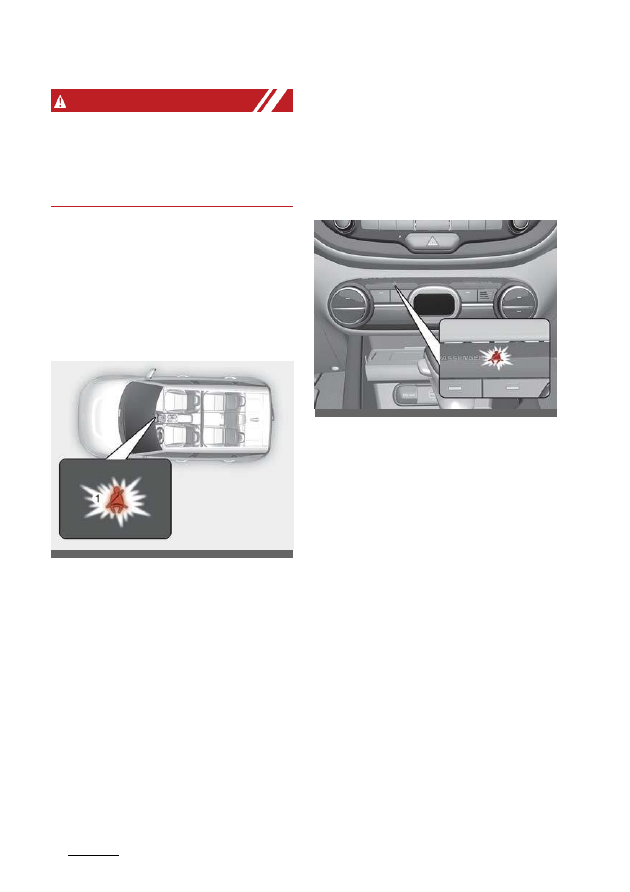
Driver's seat belt warning

As a reminder to the driver, the driver's 
seat belt warning lights will appear for 
approximately 6 seconds each time you 
turn the ignition switch ON regardless of 
belt fastening. If the seatbelt is not fas

-

tened, the warning chime will sound for 
about 6 seconds.

If you start to drive without the seat belt 
fastened or you unfasten the seat belt 
when you drive over 5 mph (9 km/h) and 
less than 12 mph (20 km/h), the corre

-

sponding warning light will appear. The 
warning light will turn off when the vehi

-

cle speed drops below 5 mph (9 km/h).

If you start to drive without the seat belt 
fastened or you unfasten the seat belt 
when you drive 12 mph (20 km/h) and 
faster, the warning light will blink and 
warning chime will sound for approxi

-

mately 100 seconds. When the seat belt 
is unfastened during driving, the warn

-

ing light will appear when the speed is

under 12 mph (20 km/h). When the 
speed is 12 mph (20 km/h) and faster, 
the warning light will blink and warning 
chime will sound for approximately 100 
seconds.

Front passenger's seat belt warn

-

ing

As a reminder to the front passenger, the
front passenger's seat belt warning lights
will appear for approximately 6 seconds
each time you turn the ignition switch ON
regardless of belt fastening. If you start to
drive without the passenger seat belt
fastened or the passenger unfastens the
seat belt when you drive over 5 mph (9
km/h) and less than 12 mph (20 km/h),
the corresponding warning light will
appear. The warning light will turn off
when the vehicle speed drops below 5
mph (9 km/h).

If you start to drive without the passen

-

ger seat belt fastened or you unfasten 
the seat belt when you drive 12 mph (20 
km/h) and faster, the warning light will 
blink and warning chime will sound for 
approximately 100 seconds. When the 
passenger seat belt is unfastened during 
driving, the warning light will appear when
the speed is under 12 mph (20 km/ h).
When the speed is 12 mph (20 km/h) and
faster, the warning light will blink

OSK3032065L

OSK3038024NR
21

3

3

Safety features of your vehicle

Seat belts

and warning chime will sound for 
approximately 100 seconds.

NOTICE

• Even if the front passenger seat is not 

occupied, the seat belt warning light 
will appear for 6 seconds.

• The front passenger's seat belt warn

-

ing may operate when luggage is 
placed on the front passenger seat.

Seat belt - Driver's 3-point system 
with emergency locking retractor

The following explains how to fasten and 
adjust the driver's seat belt.

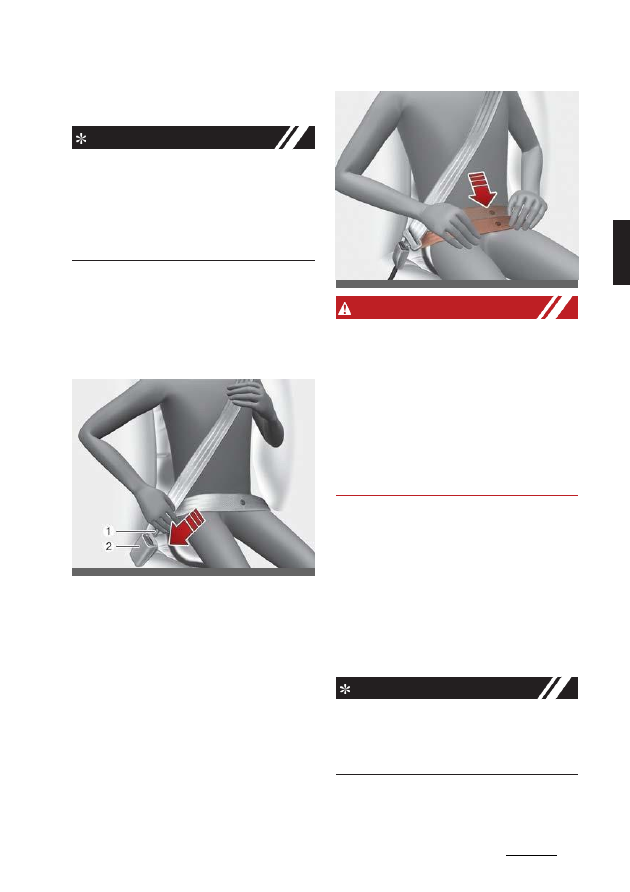
To fasten your seat belt:

• Pull it out of the retractor and insert 

the metal tab (1) into the buckle (2).

There will be an audible "click" when 
the tab locks into the buckle.

W ARNING

You should place the lap belt portion as 
low as possible and snugly across your 
hips. If the lap belt is located too high on 
your waist, it may increase the chance of 
injury in the event of a collision.

The arm closest to the seat belt buckle 
should be over the belt while the other 
arm should be under the belt as shown 
in the illustration. Never wear the seat 
belt under the arm closest to the door.

The seat belt automatically adjusts to the
proper length only after the lap belt 
portion is adjusted manually so that it fits
snugly around your hips. If you lean 
forward in a slow, easy motion, the belt 
will extend and let you move around. If 
there is a sudden stop or impact, how

-

ever, the belt will lock into position. It will 
also lock if you try to lean forward too 
quickly.

NOTICE

If you are not able to pull out the seat 
belt from the retractor, firmly pull the belt
out and release it. Then you will be able
to pull the belt out smoothly.

ODEEV058025NR

ODEEV058026NR

Safety features of your vehicle

22

3

Seat belts

Height adjustment

You can adjust the height of the shoul

-

der belt anchor to one of the 4 positions 
for maximum comfort and safety.

The height of the adjusting seat belt 
should not be too close to your neck. The
shoulder portion should be adjusted so
that it lies across your chest and mid

-

way over your shoulder near the door 
and not your neck.

To adjust the height of the seat belt 
anchor, lower or raise the height 
adjuster into an appropriate position.
• To raise the height adjuster, pull it up 

(1).

• To lower it, push it down (3) while 

pressing the height adjuster button 
(2).

Release the button to lock the anchor 
into position. Try sliding the height 
adjuster to make sure that it has locked 
into position.

Improperly positioned seat belts can 
cause serious injuries in an accident.

W ARNING

Shoulder belt positioning
Verify the shoulder belt anchor is locked 
into position at the appropriate height. 
Never position the shoulder belt across 
your neck or face. Improperly positioned

seat belts can cause serious injuries in 
an accident.

W ARNING

Seat belt replacement
After a collision, the seat belt system 
should be inspected to ensure it is oper

-

ating normally. Replace any belts that 
are not functioning appropriately.

Seat belts - Front passenger and
rear seat 3-point system with 
combination locking retractor

The following explains how to fasten the 
passenger's and rear seat belt.

To fasten your seat belt:

Combination retractor type seat belts are
installed in the rear seat positions to help
accommodate the installation of child 
restraint systems. Although a com

-

bination retractor is also installed in the 
front passenger seat position, it is 
strongly recommended that children 
always be seated in the rear seat. NEVER 
place any infant restraint system in the 
front seat of the vehicle.

This type of seat belt combines the fea

-

tures of both an emergency locking 
retractor seat belt and an automatic 
locking retractor seat belt.
• Pull it out of the retractor and insert the

metal tab into the buckle. There will be
an audible "click" when the tab locks
into the buckle. When not secur

-

ing a

child restraint, the seat belt operates in
the same way as the driver's seat belt
(emergency locking retractor type).

It automatically adjusts to the proper 
length only after the lap belt portion of the
seat belt is adjusted manually so that it
fits snugly around your hips.

ODEEV058027NR

23

3

3

Safety features of your vehicle

Seat belts

When the seat belt is fully extended 
from the retractor to allow the installa

-

tion of a child restraint system, the seat 
belt operation changes to allow the belt 
to retract, but not to extend (automatic 
locking retractor type). Refer to "Secur

-

ing a child restraint with a lap/shoulder 
belt" on page 3-34.

NOTICE

Although the combination retractor pro

-

vides the same level of protection for 
seated passengers in either emergency 
or automatic locking modes, have the 
seated passengers use the emergency 
locking feature for improved conve

-

nience. The automatic locking function is 
intended to facilitate child restraint 
installation. To convert from the auto

-

matic locking feature to the emergency 
locking operation mode, allow the 
unbuckled seat belt to fully retract.

CAUTION

Do NOT fold down the left portion of the 
rear seatback when the rear center seat 
belt is buckled. ALWAYS UNBUCKLE
the rear center seat belt before folding 
down the left portion of the rear seatback.
If the rear center seat belt is buckled
when the left portion of the rear seatback
is folded down, distortion and damage to 
the top portion of the seatback and seat 
belt garnish may result, causing the 
seatback to lock into the folded down 
position.

The seat belt should be locked into the 
buckle on each seat cushion to be prop

-

erly fastened.

1. Rear right seat belt fastening buckle

2. Rear center seat belt fastening buckle

3. Rear left seat belt fastening buckle

W ARNING

Prior to fastening the rear seat belts, 
ensure the latch matches the seat belt 
buckle. Forcefully fastening the left or 
right seat belt to the center buckle can 
result in an improper fastening scenario 
that will not protect you in an accident.

When using the rear center seat belt, the
buckle with the "CENTER" mark must be
used.

OSK3038022NR

OSK3038023NR

Safety features of your vehicle

24

3

Seat belts

To release the seat belt:

• The seat belt is released by pressing

the release button (1) on the locking
buckle.

When it is released, the belt should 
automatically draw back into the 
retractor.

If this does not happen, check the belt
to make sure it is not twisted, then try
again.

Stowing the rear seat belt

If the center seat belt is not in use,
always lock the latch plate into the
buckle as above illustration.

The rear seat belt buckles can be stowed
in the pocket between the rear seatback
and cushion when not in use.

W ARNING

Rear center seat belt
Do not separate the mini tongue (1) and 
mini buckle (2) even if there is not an 
occupant.

If it is separated, It may hit the rear seat 
occupants in a collision or sudden stops.

Pre-tensioner seat belt

Your vehicle is equipped with driver's 
and front passenger's pre-tensioner seat 
belts (retractor pre-tensioner and EFD 
(Emergency Fastening Device)).

The pre-tensioner seat belts may be
activated, when a frontal collision is
severe enough, together with the air
bags.

When the vehicle stops suddenly, or if 
the occupant tries to lean forward too 
quickly, the seat belt retractor may lock 
into position. In certain frontal collisions, 
the pre-tensioner will activate and pull 
the seat belt into tighter contact against 
the occupant's body.

1. Retractor Pre-tensioner

The purpose of the retractor pre-ten

-

sioner is to make sure that the shoul

-

der belts fit in tightly against the 
occupant's upper body in certain fron

-

tal collisions.

ODEEV058078NR

OSK3038053NR

OSK3051259N

25

3

3

Safety features of your vehicle

Seat belts

2. EFD (Emergency Fastening Device)

The purpose of the EFD is to make
sure that the pelvis belts fit in tightly
against the occupant's lower body in
certain frontal collisions.

If the system senses excessive tension 
on the driver or passenger's seat belt 
when the pre-tensioner system acti

-

vates, the load limiter inside the retractor
pre-tensioner will release some of the 
pressure on the affected seat belt.

NOTICE

When the pre-tensioner seat belts are 
activated, a loud noise may be heard 
and fine dust, which may appear to be 
smoke, may be visible in the passenger 
compartment. These are normal operat

-

ing conditions and are not hazardous.

The seat belt pre-tensioner system con

-

sists mainly of the following compo

-

nents. Their locations are shown in the 
illustration:

*The actual position of seat belt pre-ten

-

sioner system components may differ 
from the illustration.

1. SRS air bag warning light

2. Retractor pre-tensioner assembly

3. SRS control module

4. Emergency fastening device (EFD)

W ARNING

Skin Irritation
Wash all exposed skin areas thoroughly 
after an accident in which the pre-ten

-

sioner seat belts were activated. The fine 
dust from the pre-tensioner activation 
may cause skin irritation and should not
be inhaled for prolonged periods.

NOTICE

• Both the driver's and front passen

-

ger's seat belt pre-tensioner systems 
may be activated, not only in certain 
frontal collisions, but also in certain 
side collisions or rollovers, if the vehi

-

cle is equipped with a side or curtain 
air bag.

• Because the sensor that activates the 

SRS air bag is connected with the pre-
tensioner seat belt, the SRS air bag

warning light

on the instrument

panel will appear for approximately 6
seconds after the ignition switch has 
been turned to the ON position, and 
then it should turn off.

• If the pre-tensioner seat belt system is 

not working properly, this warning light
will appear even if there is not a
malfunction with the SRS air bag. If 
the SRS air bag warning light does not 
appear when the ignition switch has 
been turned to the ON position, or if it 
remains appeared after illuminating for 
approximately 6 seconds, or if it 
appears while the vehicle is being 
driven, have an authorized Kia dealer 
inspect the pre-tensioner seat belt and
SRS air bag system as soon as 
possible.

ODEEV058034NR

Safety features of your vehicle

26

3

Seat belts

NOTICE

Do not attempt to service or repair the 
pre-tensioner seat belt system in any 
manner. Do not attempt to inspect or 
replace the pre-tensioner seat belts 
yourself. This must be done by an
authorized Kia dealer.

W ARNING

Hot pre-tensioner
Do not touch the pre-tensioner seat belt 
assemblies for several minutes after
they have been activated. When the pre-
tensioner seat belt mechanism fires 
during a collision, the pre-tensioner 
becomes hot and can burn you.

Pre-tensioners are designed to operate 
only one time. After activation, pre-ten

-

sioner seat belts must be replaced. If the 
pre-tensioner must be replaced, contact 
an authorized Kia dealer.

Seat belt precautions

Take the following precautions when 
using seat belts.

Infant or small child

All 50 states have child restraint laws. 
You should be aware of the specific 
requirements in your state. Child and/or 
infant seats must be properly placed and
installed in the rear seat. For more 
information about the use of these 
restraints, refer to "Child Restraint Sys

-

tem (CRS)" on page 3-28.

NOTICE

Small children are best protected from 
injury in an accident when properly 
restrained in the rear seat by a child 
restraint system that meets the require

-

ments of the Federal Motor Vehicle

Safety Standards. Before buying any 
child restraint system, make sure that it 
has a label certifying that it meets Fed

-

eral Motor Vehicle Safety Standard 213. 
The restraint must be appropriate for 
your child's height and weight. Check 
the label on the child restraint for this
information. Refer to "Child Restraint
System (CRS)" on page 3-28.

Larger children

Children who are too large for child 
restraint systems should always occupy 
the rear seat and use the available lap/ 
shoulder belts. The lap portion should be 
fastened and snug on the hips as low as 
possible. Check periodically to insure 
that the belt fits. A child's squirming could
put the belt out of position. Chil

-

dren are

given the most safety in the event of an
accident when they are restrained by a
proper restraint system in the rear seat. If
a larger child (over age 13) must be
seated in the front seat, the child should
be securely restrained by the available
lap/shoulder belt and the seat should be
placed in the rearmost position. Children
age 13 and under should be restrained
securely in the rear seat. NEVER place
a child age 13 and under in the front
seat. NEVER place a rear facing child
seat in the front seat of a vehicle.

If the shoulder belt portion slightly touches
the child's neck or face, try plac

-

ing the

child closer to the center of the vehicle. If
the shoulder belt still touches their face or
neck they need to be returned to a child
restraint system.

27

3

3

Safety features of your vehicle

Seat belts

W ARNING

Small children
Do not allow small children to ride in the 
vehicle without an appropriate child 
restraint system. If the shoulder belt 
comes in contact with your child's neck or
face, your child is too small to ride in the
vehicle. In a crash the seat belt will inflict
injury to your child's neck, throat and
face.

Restraint of pregnant women

Pregnant women should wear lap/shoul

-

der belt assemblies whenever possible 
according to specific recommendations 
by their doctors. The lap portion of the 
belt should be worn AS SECURELY
AND LOW AS POSSIBLE.

W ARNING

Pregnant women
Pregnant women must never place the 
lap portion of the seat belt above or on 
the abdomen where the fetus is located. 
The force of the seat belt during a colli

-

sion will crush the fetus.

Injured person

A seat belt should be used when an 
injured person is being transported. 
When this is necessary, you should con

-

sult a physician for recommendations.

One person per belt

Two people (including children) should
never attempt to use a single seat belt.
This could increase the severity of inju

-

ries in case of an accident.

Do not lie down

To reduce the chance of injuries in the 
event of an accident and to achieve 
maximum effectiveness of the restraint 
system, all passengers should be sitting 
up and the front and rear seats should 
be in an upright position when the vehi

-

cle is moving. A seat belt cannot provide 
proper protection if the person is lying 
down in the rear seat or if the front and
rear seats are in a reclined position.

Care of seat belts

Seat belt systems should never be disas

-

sembled or modified. In addition, care 
should be taken to assure that seat belts 
and belt hardware are not damaged by 
seat hinges, doors or other abuse.

W ARNING

Pinched seat belt
Make sure that the webbing and/or 
buckle does not get caught or pinched in 
the rear seat when returning the rear 
seatback to its upright position. A caught 
or pinched webbing/buckle may
become damaged and could fail during a
collision or sudden stop.

W ARNING

Seatbelts can become hot in a vehicle 
that has been closed up in sunny 
weather. They could burn infants and 
children.

Periodic inspection

All seat belts should be inspected peri

-

odically for wear or damage of any kind. 
Any damaged parts should be replaced 
as soon as possible.

Safety features of your vehicle

28

3

Child Restraint System (CRS)

Keep belts clean and dry

Seat belts should be kept clean and dry. 
If belts become dirty, they can be 
cleaned by using a mild soap solution 
and warm water. Bleach, dye, strong 
detergents or abrasives should not be 
used because they may damage and 
weaken the fabric.

When to replace seat belts

The entire in-use seat belt assembly or 
assemblies should be replaced if the 
vehicle has been involved in an accident. 
This should be done even if no damage 
is visible. Additional questions concern

-

ing seat belt operation should be directed
to an authorized Kia dealer.

Child Restraint System (CRS)

Children always in the rear

Children under age 13 must always ride 
in the rear seats and must always be 
properly restrained to minimize the risk of
injury in an accident, sudden stop or 
sudden maneuver.

W ARNING

Restraint Location
Never install a child or infant seat in the 
front passenger's seat. A child riding in 
the front passenger seat can be force

-

fully struck by an inflating airbag and get
seriously injured.

W ARNING

Hot Child Restraint
A child restraint system can become 
very hot if it is left in a closed vehicle on 
a sunny day. Be sure to check the seat 
cover, buckles and latches before plac

-

ing a child in the restraint system.

According to accident statistics, children 
are safer when properly restrained in the 
rear seats than in the front seat. Even 
with air bags, children can be seriously 
injured or killed. Children too large for a
child restraint must use the seat belts 
provided.

All 50 states have child restraint laws 
which require children to travel in 
approved child restraint devices. The 
laws governing the age or height/weight 
restrictions at which seat belts can be 
used instead of child restraints differs 
among states, so you should be aware of 
the specific requirements in your state, 
and where you are travelling.

Child restraint systems must be properly 
placed and installed in the rear seat. You

Unattended children, the elderly or
pets

An enclosed vehicle can become 
extremely hot, causing death or severe 
injury such as heatstroke to unattended

3

29

3

Safety features of your vehicle

Child Restraint System (CRS)

must use a commercially available child 
restraint system that meets the require

-

ments of the Federal Motor Vehicle 
Safety Standards (FMVSS).

Child restraint systems are generally 
designed to be secured in a vehicle seat 
by lap belt portion of a lap/shoulder belt, 
or by a LATCH system in the rear seats 
of the vehicle.

Child restraint system (CRS)

Infants and younger children must be 
restrained in an appropriate rear-facing 
or forward-facing CRS that has first 
been properly secured to the rear seat of 
the vehicle. Read and comply with the 
instructions for installation and use pro

-

vided by the manufacturer of the CRS.

W ARNING

Child Restraint Installation
An improperly secured child restraint 
system can increase the risk of serious 
injury or death in an accident. Always 
take the following precautions when 
using a child restraint system:
• Always follow the child restraint sys

-

tem manufacturer's instructions for 
installation and use.

• Always properly restrain your child in 

the child restraint system.

• If the vehicle head restraint prevents 

proper installation of a child seat (as 
described in the child restraint system 
manual), the head restraint of the 
respective seating position should be 
readjusted or entirely removed.

• Do not use an infant carrier or a child 

safety seat that "hooks" over a seat

-

back, as it may not provide adequate 
protection in an accident.

NOTICE

After an accident, have a Kia dealer 
check the child restraint system, seat
belts, tether anchors and lower anchors.

Selecting a Child Restraint Sys

-

tem (CRS)

When selecting a CRS for your 
child, always:
• Make sure the CRS has a label

certify

-

ing that it meets applicable

Federal Motor Vehicle Safety
Standards (FMVSS 213).

• Select a child restraint based on your 

child's height and weight. The required
label or the instructions for use
typically provide this information.

• Select a child restraint that fits the 

vehicle seating position where it will 
be used.

• Read and comply with the warnings

and instructions for installation and
use provided with the child restraint
system.

W ARNING

Holding Children
Never hold a child in your arms or lap 
when riding in a vehicle. The violent 
forces created during a crash will tear 
the child from your arms and throw the 
child against the car's interior. Always 
use a child restraint system, which is 
appropriate for your child's height and 
weight.

W ARNING

Safety features of your vehicle

30

3

Child Restraint System (CRS)

children, the elderly or pets who cannot 
escape the vehicle. When left or trapped 
in a hot vehicle, make sure to stay 
hydrated and avoid sun exposure 
through the

vehicle’s windshield. Fur

-

thermore, children might operate fea

-

tures of the vehicle that could injure 
them, or they could encounter other 
harm, possibly from someone gaining 
entry to the vehicle. Never leave children 
or animals unattended in your vehicle.

W ARNING

Seat Belt Use
Do not use one seat belt for two occu

-

pants at the same time. This will elimi

-

nate any safety benefit provided by the 
seat belt to the occupants.

Child restraint system types

There are three main types of child 
restraint systems: rear-facing seats, for

-

ward-facing seats, and booster seats.
They are classified according to the 
child's age, height and weight.

Rear-facing child seats

A rear-facing child seat provides restraint
with the seating surface against

the back of the child. The harness sys

-

tem holds the child in place, and in an 
accident, acts to keep the child posi

-

tioned in the seat and reduces the stress 
to the neck and spinal cord.

All children under age one must always 
ride in a rear-facing infant child restraint.

Convertible and 3-in-1 child seats typi

-

cally have higher height and weight lim

-

its for the rear-facing position, allowing 
you to keep your child rear-facing for a
longer period of time.

Continue to use a rear-facing child seat 
for as long as your child will fit within the 
height and weight limits allowed by the 
child seat manufacturer. It's the best way 
to keep them safe. Once your child has 
outgrown the rear-facing child restraint, 
your child is ready for a forward-facing 
child restraint with a harness.

Forward-facing child restraints

A forward-facing child seat provides 
restraint for the child's body with a har

-

ness. Keep children in a forward-facing 
child seat with a harness until they reach 
the top height or weight limit allowed by 
your child restraint's manufacturer.

Once your child outgrows the forward-
facing child restraint, your child is ready 
for a booster seat.

ODEEV058035NR

ODEEV058036NR

31

3

3

Safety features of your vehicle

Child Restraint System (CRS)

Booster seats

A booster seat is a restraint designed to
improve the fit of the vehicle's seat belt
system. A booster seat positions the seat
belt so that it fits properly over the lap of
your child.

Keep your child in a booster seat until 
they are big enough to sit in the seat 
without a booster and still have the seat 
belt fit properly. For a seat belt to fit 
properly, the lap belt must lie snugly 
across the upper thighs, not the stom

-

ach. The shoulder belt should lie snug 
across the shoulder and chest and not 
across the neck or face. Children under 
age 13 must always ride in the rear seats 
and must always be properly restrained 
to minimize the risk of injury.

Installing a Child Restraint Sys

-

tem (CRS)

After selecting a proper child seat for 
your child, check to make sure it fits 
properly in your vehicle.

Follow the instructions provided by the 
manufacturer when installing the child 
seat. Note these general steps when 
installing the seat to your vehicle:
• Properly secure the child restraint

to the vehicle. All child restraints 
must be secured to the vehicle with 
the lap part of a lap/shoulder belt or 
with the LATCH system.

• Make sure the child restraint is

firmly secured. After installing a child 
restraint to the vehicle, push and pull 
the seat forward and from side-to- side
to verify that it is securely attached to
the seat. A child restraint secured with
a seat belt should be installed as firmly
as possible. How

-

ever, some side-to-

side movement can be expected.

• Secure the child in the child restraint.

Make sure the child is prop

-

erly

strapped in the child restraint 
according to the manufacturer 
instructions.

Lower Anchors and Tether for
Children (LATCH) System

The LATCH system holds a child 
restraint during driving and in an acci

-

dent. This system is designed to make 
installation of the child restraint easier 
and reduce the possibility of improperly 
installing your child restraint. The LATCH 
system uses anchors in the vehicle and 
attachments on the child restraint. The 
LATCH system eliminates the need to 
use seat belts to secure the child 
restraint to the rear seats.

Lower anchors are metal bars built into 
the vehicle. There are two lower anchors 
for each LATCH seating position that will 
accommodate a child restraint with lower
attachments.

To use the LATCH system in your vehi

-

cle, you must have a child restraint with 
LATCH attachments.

The child seat manufacturer will provide 
you with instructions on how to use the 
child seat with its attachments for the 
LATCH lower anchors.

OSK3032066L

Safety features of your vehicle

32

3

Child Restraint System (CRS)

LATCH anchors have been provided in 
the left and right outboard rear seating 
positions. Their locations are shown in 
the illustration. There are no LATCH 
anchors provided for the center rear 
seating position.

W ARNING

LATCH Lower Anchors
Never attempt to attach a LATCH 
equipped seat in the center seating posi

-

tion. LATCH lower anchors are only to be 
used in the left and right rear outboard 
seating positions. You may damage the 
anchors or the anchors may fail and 
break in a collision if the seat is in the 
center seating position.

The lower anchor position indicator sym

-

bols are located on the left and right rear 
seatbacks to identify the position of the 
lower anchors in your vehicle (see
arrows in illustration).

1. Lower Anchor position indicator

2. Lower Anchor
The LATCH anchors are located 
between the seatback and the seat 
cushion of the rear seat left and right 
outboard seating positions.

To use the lower anchor, push the upper 
portion of the lower anchor cover.

Securing a child restraint with the
LATCH anchors system

To install a LATCH-compatible child 
restraint in either of the rear outboard 
seating positions:

1. Move the seat belt buckle away from 

the lower anchors.

2. Move any other objects away from 

the anchors that could prevent a
secure connection between the child 
restraint and the lower anchors.

3. Place the child restraint on the vehicle

seat, then attach the seat to the lower
anchors according to the instructions
provided by the child restraint manu

-

facturer.

4. Follow the child restraint instructions 

for properly adjusting and tightening 
the lower attachments on the child 
restraint to the lower anchors.

W ARNING

Take the following precautions when 
using the LATCH system:
• Read and follow all installation 

instructions provided with your child 
restraint system.

• To prevent the child from reaching and

taking hold of the unused seat belts, 
buckle all unused rear seat belts before
the child is placed into the vehicle.
Lock each unused seatbelt following
the instructions in the "auto

-

matic

locking mode" subsection, and place
the webbing behind the child seat or
against an unused seatback. Children 
can be strangled if a shoul

-

der belt

becomes wrapped around their neck
and the seat belt tightens.

• NEVER attach more than one child 

restraint to a single anchor. This could 
cause the anchor or attachment to 
come loose or break.

OSKEV039027NR

33

3

3

Safety features of your vehicle

Child Restraint System (CRS)

• Always have the LATCH system 

inspected by your authorized Kia 
dealer after an accident. An accident 
can damage the LATCH system and 
may not properly secure the child 
restraint.

NOTICE

The recommended maximum weight for 
the LATCH system is 65 lbs. (30 kg).
When selecting a proper child restraint 
system, consider that the maximum total 
weight of the child plus the child restraint
should be less than 65 lbs. (30 kg).

As a guide, the MAX child restraint 
weight should be determined by the fol

-

lowing calculation:

Child Restraint System Weight = 65 -
(child's total weight in lbs.)

Securing a child restraint seat 
with "Tether Anchor" system

First secure the child restraint with the 
LATCH lower anchors or the seat belt. If 
the child restraint manufacturer recom

-

mends that the top tether strap be 
attached, attach and tighten the top 
tether strap to the top tether strap 
anchor.

Child restraint hook holders are located 
on the shelf behind the rear seats.

W ARNING

Take the following precautions when 
installing the tether strap:
• Read and follow all installation 

instructions provided with your child 
restraint system.

• NEVER attach more than one child 

restraint to a single tether anchor.
This could cause the anchor or attach

-

ment to come loose or break.

• Do not attach the tether strap to any

-

thing other than the correct tether 
anchor. It may not work properly if 
attached to something else.

• Do not use the tether anchors for adult

seat belts or harnesses, or for 
attaching other items or equipment to 
the vehicle.

• Always fasten the seat belts behind 

the child restraint seat when they are 
not used to secure the child seat. Fail

-

ure to do so may result in child stran

-

gulation.

To install the tether anchor:

1. Route the child restraint tether strap 

over the child restraint seatback. 
Route the tether strap under the head

ODEEV058039NR

OSK3039059NR

Safety features of your vehicle

34

3

Child Restraint System (CRS)

restraint and between the head 
restraint posts, or route the tether 
strap over the top of the vehicle seat

-

back. Make sure the strap is not 
twisted.

2. Connect the tether strap hook to the 

tether anchor, then tighten the tether 
strap according to the child seat man

-

ufacturer's instructions to firmly secure
the child restraint to the seat.

3. Check that the child restraint is 

securely attached to the seat by push

-

ing and pulling the seat forward and 
from side-to-side.

Securing a child restraint with a
lap/shoulder belt

When not using the LATCH system,
all child restraints must be secured to a
vehicle rear seat with the lap part of a
lap/shoulder belt.

Automatic locking mode

Since all passenger seat belts move 
freely under normal conditions and only 
lock under extreme or emergency condi

-

tions (emergency locking mode), you 
must manually pull the seat belt all the 
way out to shift the retractor to the 
"automatic locking" mode to secure a
child restraint.

The "automatic locking" mode will help 
prevent the normal movement of the child 
in the vehicle from causing the seat belt
to loosen and compromise the child 
restraint system.

To install a child restraint system on the 
rear seats, do the following:

1. Place the child restraint system on a

rear seat and route the lap/shoulder 
belt around or through the child 
restraint, following the restraint man

-

ufacturer's instructions.

Be sure the seat belt webbing is not 
twisted.

2. Fasten the lap/shoulder belt latch into 

the buckle. Listen for the distinct "click"
sound.

Position the release button so that it is 
easy to access in case of an emer

-

gency.

3. Pull the shoulder portion of the seat 

belt all the way out. When the shoul

-

der portion of the seat belt is fully 
extended, it will shift the retractor to 
the "automatic locking" (child 
restraint) mode.

OSK3039060NR

ODEEV058042NR

35

3

3

Safety features of your vehicle

Child Restraint System (CRS)

4. Slowly allow the shoulder portion of 

the seat belt to retract and listen for an
audible "clicking" or "ratcheting" sound.
This indicates that the retrac

-

tor is in

the "automatic locking" mode. If no
distinct sound is heard, repeat steps 3
and 4.

5. Remove as much slack from the belt 

as possible by pushing down on the 
child restraint system while feeding the
shoulder belt back into the retrac

-

tor.

6. Push and pull on the child restraint 

system to confirm that the seat belt is 
holding it firmly in place. If it is not, 
release the seat belt and repeat steps 
2 through step 6.

7. Double check that the retractor is in 

the "automatic locking" mode by

attempting to pull more of the seat belt
out of the retractor. If you cannot, the
retractor is in the "automatic lock

-

ing"

mode.

If your CRS manufacturer instructs or 
recommends you to use a tether anchor 
with the lap/shoulder belt, refer to 
"Securing a child restraint with the 
LATCH anchors system" on page 3-32 
for more information.

NOTICE

When the seat belt is allowed to retract 
to its fully stowed position, the retractor 
will automatically switch from the "auto

-

matic locking" mode to the emergency 
lock mode for normal adult usage.

W ARNING

Auto lock mode
Set the retractor to Automatic Lock
mode when installing any child restraint 
system. If the retractor is not in the auto

-

matic locking mode, the child restraint 
can move when your vehicle turns or 
stops suddenly. A child can be seriously 
injured or killed if the child restraint is not
properly anchored in the car.

To remove the child restraint, press the 
release button on the buckle and then 
pull the lap/shoulder belt out of the 
restraint and allow the seat belt to retract
fully.

ODEEV058043NR

ODEEV058044NR

Safety features of your vehicle

36

3

Air bag - advanced supplemental restraint system

Air bag - advanced supplemental restraint system

*The actual air bags in the vehicle may differ from the illustration.

1. Driver's front air bag

2. Passenger's front air bag

3. Side air bag

4. Curtain air bag
Even in vehicles with air bags, you and your passengers must always wear the safety
belts provided in order to minimize the risk and severity of injury in the event of a col

-

lision or rollover.

OSKEV039029NR

37

3

3

Safety features of your vehicle

Air bag - advanced supplemental restraint system

How does the air bag system 
operate?

• Air bags are activated (able to inflate 

if necessary) only when the ignition 
switch has been turned to the ON 
position.

• The appropriate air bags inflate 

instantly in the event of a serious 
frontal collision or side collision in 
order to help protect the occupants 
from serious physical injury.

• Generally, air bags are designed to 

inflate based upon the severity of a
collision and its direction, etc. These 
two factors determine whether the 
sensors produce an electronic deploy

-

ment / inflation signal.

• Air bags will inflate based upon the 

severity of a collision and its direction, 
etc. But Air bags will not inflate in 
every crash or collision situation.

• The front air bags will completely 

inflate and deflate in an instant. It is 
virtually impossible for you to see the 
air bags inflate during an accident. It 
is much more likely that you will sim

-

ply see the deflated air bags hanging 
out of their storage compartments 
after the collision.

• In addition to inflating in serious side 

collisions, side and/or curtain air bags 
will inflate if the sensing system 
detects a rollover.

• When a rollover is detected, side and/

or curtain air bags will remain inflated
longer to help provide protection from
ejection, especially when used in con

-

junction with the seat belts.

• In order to help provide protection, the

air bags must inflate rapidly. The 
speed of the air bag inflation is a con

-

sequence of extremely short time in 
which to inflate the air bag between

the occupant and the vehicle struc

-

tures before the occupant impacts 
those structures. This speed of infla

-

tion reduces the risk of serious or life-
threatening injuries and is thus a nec

-

essary part of the air bag design.
However, air bag inflation can also
cause injuries which can include fas

-

cial abrasions, bruises and broken 
bones because the inflation speed 
also causes the air bags to expand 
with a great deal of force.

• There are even circumstances under

which contact with the steer

-

ing

wheel or passenger air bag can
cause fatal injuries, especially if the
occupant is positioned excessively
close to the steering wheel or pas

-

senger air bag.

W ARNING

Airbag inflation
Sit as far back as possible from the 
steering wheel while still maintaining 
comfortable control of the vehicle. A dis

-

tance of at least 10 inches (25 cm) from 
your chest to the steering wheel is rec

-

ommended. Failure to do so can result in 
airbag inflation injuries to the driver.

Noise and smoke

When inflated, the air bags make a loud 
noise and leave smoke and powder in 
the air inside the vehicle. This is normal 
and is a result of the ignition of the air 
bag inflator. After the air bag inflates, 
you may feel substantial discomfort in 
breathing due to the contact of your 
chest with both the seat belt and the air 
bag, as well as from breathing the 
smoke and powder. Open your doors
and/or windows as soon as possible
after impact in order to reduce dis

-

Safety features of your vehicle

38

3

Air bag - advanced supplemental restraint system

comfort and prevent prolonged expo

-

sure to the smoke and powder.

Though smoke and powder are non

-

toxic, it may cause irritation to the skin 
(eyes, nose and throat, etc). If this is the 
case, wash and rinse with cold water 
immediately and consult a doctor if the 
symptom persists.

W ARNING

Hot components
Do not touch the air bag storage area's 
internal components immediately after 
airbag inflation. The air bag related parts 
in the steering wheel, instrument panel 
and the roof rails above the front and rear 
doors are very hot. Hot components can
result in burn injuries.

W ARNING

Do not install or place any accessories 
near air bag deployment areas, such as 
the instrument panel, windows, pillars, 
and roof rails.

Do not install a child restraint on
the front passenger's seat

Never place a rear-facing child restraint 
in the front passenger's seat.

If the air bag deploys, it would impact
the rear-facing child restraint, causing
serious or fatal injury.

In addition, do not place front-facing 
child restraints in the front passenger's 
seat. If the front passenger air bag 
inflates, it could cause serious or fatal 
injuries to the child.

W ARNING

Air bag deployment
When children are seated in the rear 
outboard seats of a vehicle equipped 
with side and/or curtain air bags, install 
the child restraint system as far away 
from the door side as possible. Inflation 
of the side and/or curtain air bags could 
impact the child.

Air bag warning light

The purpose of air bag warning light in 
your instrument panel is to alert you of a
potential problem with your air bag sys

-

tem, which could include your side and/ 
or curtain air bags used for rollover pro

-

tection.

If the air bag warning light is appeared 
for more than 6 seconds after the igni

-

tion switch has been turned to the ON 
position, or if it appears during vehicle 
operation, an SRS component may not 
be functioning properly and you should 
have your vehicle checked by an autho

-

rized Kia dealer.

If any of the following conditions occur, 
this indicates a malfunction in the air 
bag system. Have an authorized Kia

ODEEV058046NR

ODEEV068100NR

39

3

3

Safety features of your vehicle

Air bag - advanced supplemental restraint system

dealer inspect the air bag system as 
soon as possible.
• The light does not turn on briefly 

when you turn the ignition switch to 
the ON position.

• The light stays on after illuminating 

for approximately 6 seconds.

• The light comes on while the vehicle is 

in motion.

• The light blinks when the ignition 

switch to the ON position.

Supplemental Restraint System 
(SRS) components and functions

*The actual position of SRS components 

may differ from the illustration.

The SRS consists of the following com

-

ponents:

1.

Driver's front air bag module

2.

Passenger's front air bag module

3.

Side air bag modules

4.

Curtain air bag modules

5.

Retractor pre-tensioner assemblies*

6.

Air bag warning light

7.

SRS control module
(SRSCM)/rollover sensor

8.

Front impact sensors

9.

Side impact sensors

10.

Side pressure sensors

11.

Occupant detection system (Front 
passenger's seat only)

12.

Front passenger's seat belt buckle 
sensor

*: if equipped

Driver's front air bag (1)

The front air bag modules are located 
both in the center of the steering wheel 
and in the front passenger's panel above 
the glove box. When the SRSCM
detects a sufficiently severe impact to
the front of the vehicle, it will automatically
deploy the front air bags.

Driver's front air bag (2)

Upon deployment, tear seams molded 
directly into the pad covers will separate 
under pressure from the expansion of the
air bags. Further opening of the cov

-

OSK3032055N

ODEEV058048NR

ODEEV058049NR

Safety features of your vehicle

40

3

Air bag - advanced supplemental restraint system

ers then allows full inflation of the air 
bags.

Driver's front air bag (3)

A fully inflated air bag, in combination 
with a properly worn seat belt, slows the 
driver's or the passenger's forward 
motion, reducing the risk of head and 
chest injury.

After complete inflation, the air bag 
immediately starts deflating, enabling 
the driver to maintain forward visibility 
and the ability to steer or operate other 
controls.

Passenger's front air bag

W ARNING

Air bag obstructions
Do not install or place any accessories 
on the steering wheel, instrument panel, 
or on the front passenger's panel above 
the glove box in a vehicle. Such objects 
may become dangerous projectiles if the 
air bag deploys.

W ARNING

Flying objects
Do not place any objects (an umbrella, 
bag, etc.) between the front door and
the front seat. Such objects may become 
dangerous projectiles if the side airbag 
inflates.

• If an air bag deploys, there may be a

loud noise followed by a fine dust 
released in the vehicle. These condi

-

tions are normal and are not hazard

-

ous - the air bags are packed in this 
fine powder. The dust generated 
during air bag deployment may cause 
skin or eye irritation as well as aggra

-

vate asthma for some persons. 
Always wash all exposed skin areas 
thoroughly with cold water and a mild 
soap after an accident in which the air 
bags were deployed.

• The SRS can function only when the 

ignition switch is in the ON position. If 
the SRS air bag warning light does not 
appear, or continuously remains on 
after illuminating for about 6 seconds 
when the ignition switch is turned to 
the ON position, or after the vehicle is 
in the ready mode, comes on while 
driving, the SRS is not working prop

-

erly. If this occurs, have your vehicle 
immediately inspected by an autho

-

rized Kia dealer.

ODEEV058050NR

ODEEV058051NR

41

3

3

Safety features of your vehicle

Air bag - advanced supplemental restraint system

NOTICE

Before you replace a fuse or disconnect 
a battery terminal, change the ignition 
switch to the OFF position. Never 
remove or replace the air bag related 
fuse(s) when the ignition switch is the ON
position. Failure to heed this warning will
cause the SRS air bag warning light to
appear.

Occupant Detection System 
(ODS)

Your vehicle is equipped with an occu

-

pant detection system in the front pas

-

senger's seat.

The occupant detection system is 
designed to detect the presence of a
properly-seated front passenger and 
determine if the passenger's front air 
bag should be enabled (may inflate) or 
not. Only the front passenger front air 
bag is controlled by the Occupant 
Detection System.
Do not put anything in front of the pas

-

senger air bag "

" indicator.

Main components of the occu

-

pant detection system

• An detection device located within the 

front passenger seat cushion.

• An electronic system which deter

-

mines whether the passenger air bag 
systems should be activated or deac

-

tivated.

• An indicator light located on the 

instrument panel which appears the 
words PASSENGER AIR BAG
"

" indicates the front passen

-

ger air bag system is deactivated.

• The instrument panel air bag warning 

light is interconnected with the occu

-

pant detection system.

If the front passenger seat is occupied by
a person that the system determines to
be of appropriate size, and he/she sits 
properly (sitting upright with the seat

-

back in an upright position, centered on 
the seat cushion with their seat belt on, 
legs comfortably extended and their feet 
on the floor), the PASSENGER AIR
BAG

"

" indicator will turn off and the

front passenger's air bag will be able to
inflate, if necessary, in frontal crashes.

You will find the PASSENGER AIR
BAG

"

" indicator on the center fascia 

panel. This system detects the condi

-

tions 1~4 in the following table and acti

-

vates or deactivates the front passenger
air bag based on these conditions.

Always be sure that you and all vehicle
occupants are seated and restrained
properly (sitting upright with the seat in 
an upright position, centered on the seat 
cushion, with the person's legs comfort

-

ably extended, feet on the floor, and 
wearing the safety belt properly) for the 
most effective protection by the air bag 
and the safety belt.

OSK3038031NR

Safety features of your vehicle

42

3

Air bag - advanced supplemental restraint system

• The ODS (Occupant Detection Sys

-

tem) may not function properly if the 
passenger takes actions which can 
defeat the detection system. These 
include:

1. Failing to sit in an upright position.
2. Leaning against the door or center 

console.

3. Sitting towards the sides or the 

front of the seat.

4. Putting legs on the dashboard or 

resting them on other locations 
which reduce the passenger weight 
on the front seat.

5. Improperly wearing the safety belt.

6. Reclining the seatback.

43

3

Safety features of your vehicle

Air bag - advanced supplemental restraint system

Condition and operation in the front passenger occupant detection 
system

Condition detected by the 

occupant classification system

Indicator/Warning light

Devices

"PASSENGER 

AIR BAG OFF"

indicator light

SRS warning 

light

Front passenger 

air bag

1. Adult

*1

Off

Off

Activated

2. Child restraint system with 
child under 12 months old

*2*3*4

On

Off

Deactivated

3. Unoccupied

On

Off

Deactivated

4. Malfunction in the system

Off

On

Activated

3

*1. The system judges a person of adult size as an adult. When a smaller adult sits in

the front passenger seat, the system may recognize him/her as a child depending
on his/her physique and posture.

*2. Do not allow children to ride in the front passenger seat. When a larger child who

has outgrown a child restraint system sits in the front passenger seat, the system 
may recognize him/her as an adult depending upon his/her physique or sitting 
position.

*3. Never install a child restraint system on the front passenger seat.
*4. The PASSENGER AIR BAG "

" indicator may turn on or off when a child 

above 12 months to 12 years old (with or without child restraint system) sits in the 
front passenger seat. This is a normal condition.

Safety features of your vehicle

44

3

Air bag - advanced supplemental restraint system

W ARNING

• Do not install a child restraint system in

the passenger seat when the seat is 
heavily soaked with any type of liquid.

• Do not alter or remodel the ODS 

(Occupant Detection System). This 
may damage the system and prevent 
its proper function in a collision.

NOTICE

• Do not use car seat cushions that 

cover up the surface of the seat and 
aftermarket manufactured passenger 
seat heaters.

• After conducting car interior cleaning 

using steam or detergent, the seat 
should be dried properly. Afterward, 
check for normal operation of the 
PASSENGER AIR BAG "OFF" and
air
bag warning lights.

• Any service related to the passenger 

seat and the ODS must be done at an 
authorized Kia service center.

• After the passenger seat has been 

removed or installed for repair pur

-

poses, check for normal operation of

the PASSENGER AIR BAG "

"

and air bag warning lights with a per

-

son seated or not seated in the pas

-

senger seat.

W ARNING

When the PASSENGER AIR BAG

"

" symbol is appeared, the pas

-

senger air bag system will not operate. 
The passenger air bag system will oper

-

ate when necessary if the symbol is not 
appeared.

NOTICE

Do not modify or replace the front pas

-

senger seat. Do not place anything on or 
attach anything, such as a blanket, front 
seat cover or after market seat heater, to 
the front passenger seat. This can 
adversely affect the occupant detection 
system.

W ARNING

ODS System
Riding in an improper position adversely 
affects the Occupant Detection System 
and may result in the deactivation of the 
front passenger airbag. It is important for
the driver to instruct the passenger as to
the proper seating instructions as 
contained in this manual.
• Do not place a heavy load in the front

passenger seatback pocket or on the
front passenger seat.

• Do not place feet on the front passen

-

ger seatback.

ODEEV058055NR

45

3

3

Safety features of your vehicle

Air bag - advanced supplemental restraint system

• Never sit with hips shifted towards the 

front of the seat.

• Never excessively recline the front 

passenger seatback.

• Never place feet on the dashboard.

• Never lean on the door or center con

-

sole.

• Never sit on one side of the front pas

-

senger seat.

• Do not use car seat accessories, such 

as thick blankets and cushions, that 
cover up the car seat surface.

• Do not sit on the passenger seat 

wearing heavily padded clothes, such 
as ski wear and hip protector.

ODEEV058056NR

ODEEV058057NR

ODEEV058002NR

ODEEV058059NR

ODEEV058060NR

Safety features of your vehicle

46

3

Air bag - advanced supplemental restraint system

• Do not place electronic devices, such 

as laptops and DVD player, or con

-

ductive materials, such as water bot

-

tles, on the passenger seat.

• Do not use electronic devices, such as 

laptops and satellite radios, that use 
inverter chargers.

Proper position

• Wet Passenger Seat

Do not spill liquid in the passenger 
seat. Spilled liquid on the passenger 
seat may cause the air bag warning 
light to appear or malfunction. If any 
liquid is spilled, make sure the seat 
has been completely dried before 
driving the vehicle.

When an adult is seated in the front pas

-

senger seat, if the PASSENGER AIR
BAG
"

" indicator is on, change the 

ignition switch to the OFF position and
ask the passenger to sit properly (sitting 
upright with the seatback in an upright
position, centered on the seat cushion 
with their seat belt on, legs comfortably 
extended and their feet on the floor).
Restart the vehicle and have the person
remain in that position. This will allow 
the system to detect the person and to 
enable the passenger air bag.

If the PASSENGER AIR BAG "

"

indicator is still on, ask the passenger to 
move to the rear seat.

ODEEV058061NR

OSK3039061NR

OSK3039062NR

ODEEV058064NR

47

3

3

Safety features of your vehicle

Air bag - advanced supplemental restraint system

W ARNING

PASSENGER AIR BAG "

" light

Do not allow an adult passenger to ride 
in the front seat when the PASSENGER
AIR BAG "

" indicator is appeared, 

because the air bag will not deploy in the
event of a crash. The driver must
instruct the passenger to reposition him

-

self in the seat. Failure to properly posi

-

tion himself may lead to air bag 
deactivation, resulting in air bag non-
deployment in a collision. If the PASSEN

-

GER AIR BAG "

" indicator 

remains appeared after the passenger
repositions themselves properly and the 
car is restarted, it is recommended that
the passenger move to the rear seat 
because the passenger's front air bag 
will not deploy.

NOTICE

The PASSENGER AIR BAG "

"

indicator appears for about 4 seconds 
after the ignition switch is turned to the 
ON position after the vehicle is started. If 
the front passenger seat is occupied, the 
occupant detection sensor will then clas

-

sify the front passenger after several 
more seconds.

• Even though your vehicle is equipped 

with the occupant detection system, 
never install a child restraint system in 
the front passenger's seat. A deploy

-

ing air bag can forcefully strike a child 
resulting in serious injuries or death.

Any child age 12 and under should ride 
in the rear seat. Children too large for 
child restraints should use the available 
lap/shoulder belts. No matter what type

of crash, children of all ages are safer 
when restrained in the rear seat.

If the occupant detection system is not 
working properly, the SRS air bag warn

-

ing light on the instrument panel will 
appear because the passenger's front air 
bag is connected with the occupant 
detection system. If there is a malfunc

-

tion of the occupant detection system,

the PASSENGER AIR BAG "

" indi

-

cator will not appear and the passen

-

ger's front air bag will inflate in frontal 
impact crashes even if there is no occu

-

pant in the front passenger's seat.

Driver's and passenger's front air
bag

Your vehicle is equipped with an 
Advanced Supplemental Restraint (Air 
Bag) System and lap/shoulder belts at 
both the driver and passenger seating 
position.

Driver's front air bag

OSK3032032L

Safety features of your vehicle

48

3

Air bag - advanced supplemental restraint system

Passenger's front air bag

The indication of the system's presence
are the letters "AIR BAG" located on the
air bag pad cover on the steering wheel
and the passenger's side front panel pad
above the glove box.

The SRS consists of air bags installed 
under the pad covers in the center of the 
steering wheel and the passenger's side 
front panel above the glove box.

The purpose of the SRS is to provide the 
vehicle's driver and/or the front passen

-

ger with additional protection than that 
offered by the seat belt system alone in 
case of a frontal impact of sufficient
severity. The SRS uses sensors to gather
information about the driver's and front
passenger's seat belt usage and impact
severity.

The seat belt buckle sensor determines
if the front passenger's seat belt is fas

-

tened.

These sensors provide the ability to con

-

trol the SRS deployment based on 
whether or not the seat belts are fas

-

tened, and how severe the impact is.

The advanced SRS offers the ability to 
control the air bag inflation with two lev

-

els. A first stage level is provided for 
moderate-severity impacts. A second

stage level is provided for more severe 
impacts.

The passenger's front air bag is 
designed to help reduce the injury of 
children sitting close to the instrument 
panel in low speed collisions. However, 
children are safer if they are restrained 
in the rear seat.

According to the impact severity and 
seat belt usage, the SRSCM (SRS
Control Module) controls the air bag
inflation.
Failure to properly wear seat belts can
increase the risk or severity of injury in 
an accident.

Additionally, your vehicle is equipped 
with an occupant detection system in the
front passenger's seat. The occupant 
detection system detects the presence of
a passenger in the front passenger's 
seat and will turn off the front passen

-

ger's air bag under certain conditions. 
For more detail, see "Occupant Detec

-

tion System (ODS)" on page 3-41.

W ARNING

Modification to the seat structure can 
cause the air bag to deploy at a different
level than should be provided.

Manufacturers are required by govern

-

ment regulations to provide a contact 
point concerning modifications to the 
vehicle for persons with disabilities, which
modifications may affect the vehi

-

cle's

advanced air bag system. That con

-

tact

is Kia's toll-free Customer Assistance
center at 1-800-333- 4Kia(U.S. only).
However, Kia does not endorse nor will it
support any changes to any part or
structure of the vehicle that could affect
the advanced air bag system, including
the occupant detec

-

tion system.

OSK3038033NR

49

3

3

Safety features of your vehicle

Air bag - advanced supplemental restraint system

W ARNING

Replacement/modifications
The front passenger seat, dashboard or 
door should not be replaced except by an
authorized Kia dealer using original Kia
parts designed for this vehicle and model.
Any other such replacement or 
modification could adversely affect the 
operation of the occupant detection sys

-

tem and your advanced air bags.

Advanced air bags are combined with 
pre-tensioner seat belts to help provide 
enhanced occupant protection in frontal 
crashes. Front air bags are not intended 
to deploy in collisions in which sufficient 
protection can be provided by the seat 
belt.

NOTICE

Air bags can only be used once

– have 

an authorized Kia dealer replace the air 
bag immediately after deployment.

Front air bags are not intended to deploy
in side-impact, rear-impact or rollover
crashes. However, when frontal 
deployment threshold is satisfied at
side-impact, front air bags may deploy. In
addition, front air bags will not deploy in
frontal crashes below the deployment 
threshold.

W ARNING

SRS Wiring
Do not tamper with or disconnect SRS 
wiring or other components of the SRS 
system. Doing so could result in injury, 
due to accidental deployment of the air 
bags or by rendering the SRS inopera

-

tive.

W ARNING

No attaching objects
No objects (such as crash pad cover, cel

-

lular phone holder, cup holder, perfume or
stickers) should be placed over or near
the air bag modules on the steering 
wheel, instrument panel, windshield 
glass, and the front passenger's panel 
above the glove box. Such objects could 
cause harm if the vehicle is in a crash 
severe enough to cause the air bags to 
deploy.

Do not place any objects over the air bag 
or between the air bag and yourself.

Additionally, never place or insert any 
object into any small opening near side 
airbag labels attached to the vehicle 
seats.

When the air bag deploys, the object 
may affect the deployment and result in 
unexpected accident or bodily harm.

Side air bag

Your vehicle is equipped with a side air 
bag in each front seat.

OSK3038035NR

Safety features of your vehicle

50

3

Air bag - advanced supplemental restraint system

*The actual air bags in the vehicle may 

differ from the illustration.

The purpose of the air bag is to provide 
the vehicle's driver and/or the front pas

-

senger with additional protection than 
that offered by the seat belt alone.
• The side air bags are designed to 

deploy during certain side-impact col

-

lisions, depending on the crash sever

-

ity of impact.

• The side air bags may deploy on the 

side of the impact or on both sides.

• The side and/or curtain air bags on 

both sides of the vehicle will deploy if a
rollover or possible rollover is detected.

• The side air bags are not designed to 

deploy in all side impact or rollover 
situations.

W ARNING

Unexpected deployment
Avoid impact to the side impact airbag 
sensor when the ignition switch is ON to 
prevent unexpected deployment of the 
side air bag.

• The side air bag is supplemental to 

the driver's and the passenger's seat 
belt systems and is not a substitute 
for them. Therefore your seat belts

must be worn at all times while the 
vehicle is in operation.

• For best protection from the side air 

bag system and to avoid being injured 
by the deploying side air bag, both 
front seat occupants should sit in an 
upright position with the seat belt 
properly fastened. The driver's hands 
should be placed on the steering 
wheel at the 9:00 and 3:00 positions. 
The passenger's arms and hands 
should be placed on their laps.

W ARNING

Deployment
Do not install any accessories including
seat covers, on the side or near the side
air bag, as this may adversely affect the
deployment of the side air bags.

• If seat or seat cover is damaged, have 

the vehicle checked and repaired by 
an authorized Kia dealer. Inform the 
dealer that your vehicle is equipped 
with side air bags and an occupant 
detection system.

W ARNING

Flying objects
Do not place any objects (an umbrella, 
bag, etc.) between the front door and
the front seat. Such objects may become 
dangerous projectiles if the side airbag 
inflates.

W ARNING

No attaching objects
• Do not place any objects over the air 

bag or between the air bag and your

-

self. Also, do not attach any objects 
around the area in which the air bag 
inflates, such as the door, side door 
glass, front and rear pillar.

OSK3038036NR

51

3

3

Safety features of your vehicle

Air bag - advanced supplemental restraint system

• Do not put any objects between the 

side airbag label and seat cushion. It 
could cause harm if the vehicle is in a
crash severe enough to cause the air 
bags to deploy.

• Never place or insert any object into 

any small opening near the side air

-

bag labels attached to the vehicle 
seats. When the air bag deploys, the 
object may adversely affect the 
deployment and result in an unex

-

pected accident or bodily harm.

• Do not install any accessories on the 

side or near the side air bags.

Curtain air bag

Curtain air bags are located along both 
sides of the roof rails above the front 
and rear doors.

*The actual air bags in the vehicle may 

differ from the illustration.

They are designed to help protect occu

-

pants in certain side impacts and to help 
prevent them from ejecting out of the 
vehicle as a result of a rollover, espe

-

cially when the seatbelts are also in use.
• The curtain air bags are designed to 

deploy during certain side impact col

-

lisions, depending on the severity of 
impact. However, when side deploy

-

ment threshold is satisfied at front-
impact, side air bags may deploy.

• The curtain air bags may deploy on 

the side of the impact or on both 
sides.

• Also, the curtain air bags on both 

sides of the vehicle will deploy in cer

-

tain rollover situations.

• The curtain air bags are not designed

to deploy in all side impact or rollover
situations.

Do not allow the passengers to lean their 
heads or bodies against the doors, put 
their arms on the doors, stretch their 
arms out of the window or place objects 
between the doors and passengers
when they are seated on seats equipped 
with side impact and/or curtain air bags.

NOTICE

Never try to open or repair any compo

-

nents of the side and curtain air bag sys

-

tem. This should only be done by an 
authorized Kia dealer.

OSK3038037NR

OSK3038038NR


Content      ..      1      2      3      ..