Boeing 737 - 600/700/800/900. Operations Manual (1997 year) - page 1
737-600/-700/-800/-900
Operations Manual
The Boeing Company
Document Number D6-27370-TBC
November 20, 1997
Revision Number: 10
Revision Date:
Copyright Information
Boeing claims copyright in each page of this document only to the extent that the
page contains copyrightable subject matter. Boeing also claims copyright in this
document as a compilation and/or collective work.
The right to reproduce, distribute, display, and make derivative works from this
document, or any portion thereof, requires a license from Boeing. For more
information, contact The Boeing Company, P.O. Box 3707, Seattle, Washington
98124.
Boeing 707, 717, 727, 737, 747, 757, 767, 777, DC-8, DC-9, DC-10, MD-10,
MD-11, MD-80, MD-90, BBJ, Boeing Business Jet, the Boeing logo symbol, and
the red-white-and-blue Boeing livery are all trademarks owned by The Boeing
Company; and no trademark license (either expressed or implied) is granted in
connection with this document or otherwise.
Boeing 737 Operations Manual
Preface
Chapter 0
Table of Contents
Section 0
0.0 Preface-Table of Contents
Volume 1
Chapter
Table of Contents
0.0.1
Model Identification
0.1.1
Introduction
0.2.1
Abbreviations
0.3.1
Revision Record
0.4.1
List of Effective Pages
0.5.1
Bulletin Record
0.6.1
Service Bulletins
0.7.1
Limitations
L
Normal Procedures
NP
Supplementary Procedures
SP
Performance - Dispatch
PD
Volume 2
Airplane General, Emergency Equipment, Doors, Windows
1
Air Systems
2
Anti-Ice, Rain
3
Automatic Flight
4
Communications
5
Electrical
6
Engines, APU
7
Fire Protection
8
Flight Controls
9
Flight Instruments, Displays
10
Flight Management, Navigation
11
Fuel
12
Hydraulics
13
Landing Gear
14
Warning Systems
15
0.0.1
Preface -
Table of Contents
Boeing 737 Operations Manual
Quick Reference Handbook (QRH)
Normal Checklists
NC
Checklist Introduction
CI
Performance - Inflight
PI
Non-Normal Checklists
NNC
Non-Normal Maneuvers
NNM
Index
0.0.2
Boeing 737 Operations Manual
Preface
Chapter 0
Model Identification
Section 1
General
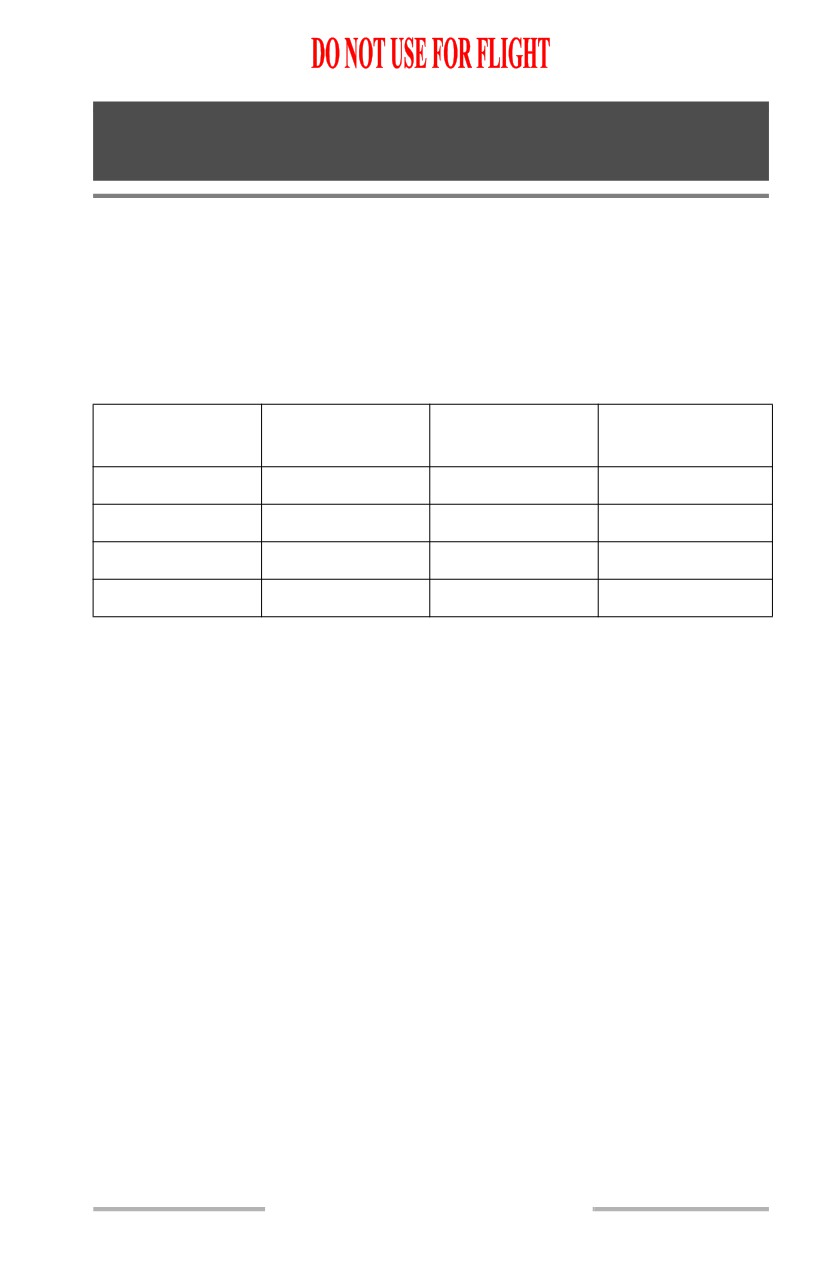
The airplanes listed in the table below are covered in the operations manual. The
table information is used to distinguish data peculiar to one or more, but not all of
the airplanes. Where data applies to all airplanes listed, no reference is made to
individual airplanes.
Airplane number is supplied by the operator. Registry number is supplied by the
national regulatory agency. Serial and tabulation number are supplied by Boeing.
Airplane Number
Registry Number
Serial Number
Tabulation
Number
YX600
YX700
YX800
YX900
0.1.1
Preface -
Model Identification
Boeing 737 Operations Manual
Intentionally
Blank
0.1.2
Boeing 737 Operations Manual
Preface
Chapter 0
Introduction
Section 2
General
This Operations Manual has been prepared by the Boeing Commercial Airplane
Group, Commercial Aviation Services organization. The purpose of this manual
is to:
• provide the necessary operating limitations, procedures, performance, and
systems information the flight crew needs to safely and efficiently operate
the 737 airplane during all anticipated airline operations
• serve as a comprehensive reference for use during transition training for
the 737 airplane
• serve as a review guide for use in recurrent training and proficiency
checks
• provide necessary operational data from the FAA approved airplane flight
manual (AFM) to ensure that legal requirements are satisfied
• establish standardized procedures and practices to enhance Boeing
operational philosophy and policy.
This manual is prepared for the owner/operator named on the title page
specifically for the airplanes listed in the "Model Identification" section. It
contains operational procedures and information, which apply only to these
airplanes. The manual covers the Boeing delivered configuration of these
airplanes. Changes to the delivered configuration are incorporated when covered
by contractual revision agreements between the owner/operator and The Boeing
Company
This manual is not suitable for use for any airplanes not listed in the "Model
Identification" section. Further, it may not be suitable for airplanes that have been
transferred to other owners/operators.
Owners/operators are solely responsible for ensuring the operational
documentation they are using is complete and matches the current configuration
of the listed airplanes. This includes the accuracy and validity of all information
furnished by the owner/operator or any other party. Owners/operators receiving
active revision service are responsible to ensure that any modifications to the
listed airplanes are properly reflected in the operational procedures and
information contained in this manual.
This manual is structured in a two-volume format with a quick reference
handbook
(QRH). Volume
1 includes operational limitations, normal and
supplementary procedures, and dispatch performance data. Volume 2 contains
systems information. The QRH contains all checklists necessary for normal and
non-normal procedures as well as in-flight performance data.
0.2.1
Preface -
Introduction
Boeing 737 Operations Manual
The manual is periodically revised to incorporate pertinent procedural and
systems information. Items of a more critical nature will be incorporated in
operational bulletins and distributed in a timely manner. In all cases, such
revisions and changes must remain compatible with the approved AFM with
which the operator must comply. In the event of conflict with the AFM, the AFM
shall supersede.
This manual is written under the assumption that the user has had previous
multi-engine jet aircraft experience and is familiar with basic jet airplane systems
and basic pilot techniques common to airplanes of this type. Therefore, the
operations manual does not contain basic flight information that is considered
prerequisite training.
Any questions about the content or use of this manual can be directed to:
Commercial Aviation Services
Boeing Commercial Airplane Group
P. O. Box 3707, M/S 20-89
Seattle, Washington 98124-2207 USA
Attention: Senior Manager, Flight Technical Publications
Organization
The operations manual is organized in the following manner.
Volume 1
• Preface - contains general information regarding the manual’s purpose,
structure, and content. It also contains lists of abbreviations, a record of
revisions, bulletins, and a list of effective pages.
• Limitations and Normal Procedures chapters cover operational limitations
and normal procedures. All operating procedures are based on a thorough
analysis of crew activity required to operate the airplane, and reflect the
latest knowledge and experience available.
• Supplementary Procedures chapter covers those procedures accomplished
as required rather than routinely on each flight.
• Performance Dispatch chapter contains performance information
necessary for self dispatch.
Volume 2 - Chapters 1 through 15 contain general airplane and systems
information. These chapters are generally subdivided into sections covering
controls and indicators and systems descriptions.
Quick Reference Handbook (QRH) - The QRH covers normal checklists,
in-flight performance, non-normal checklists, and non-normal maneuvers.
0.2.2
Preface -
Introduction
Boeing 737 Operations Manual
Page Numbering
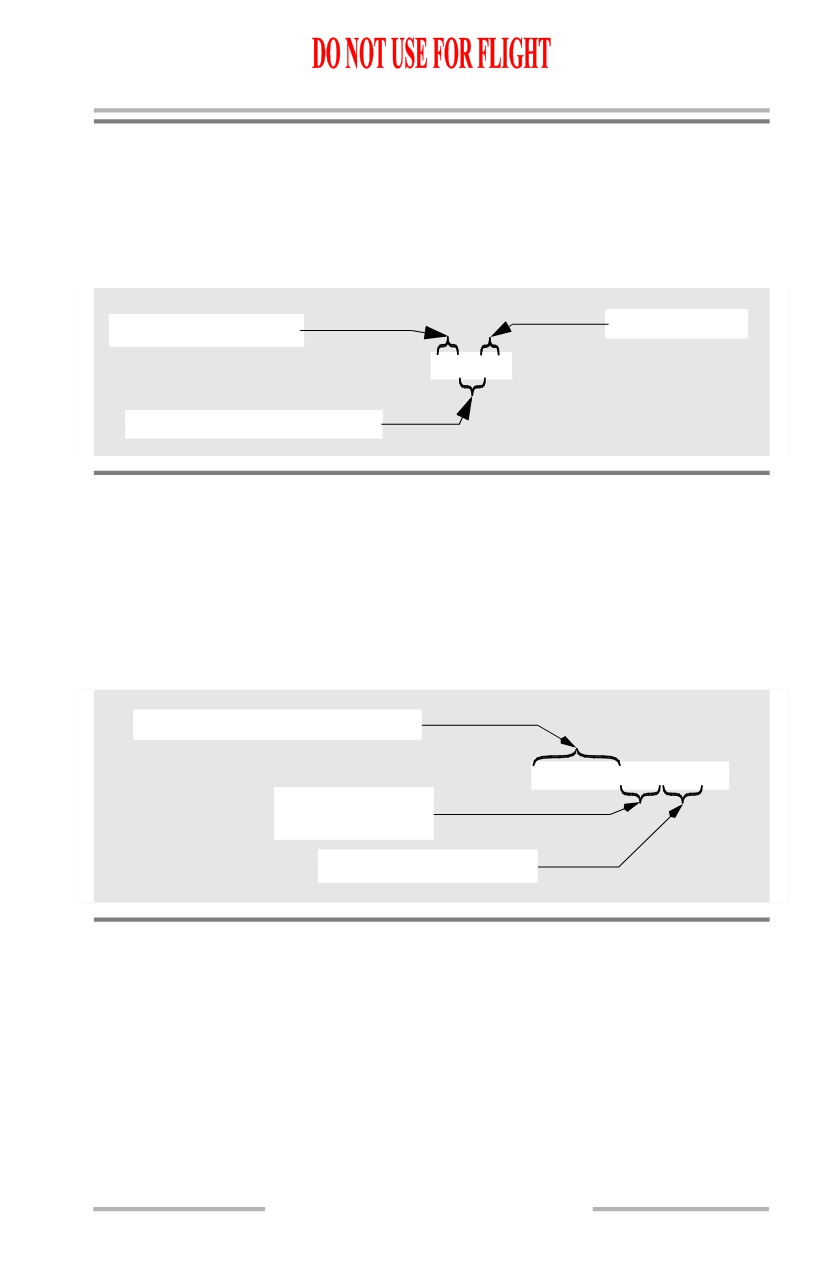
The operations manual uses a decimal page numbering system. The page number
is divided into three fields; chapter, section, and page. An example of a page
number for the hydraulics chapter follows: chapter 13, section 20, page 3.
Example Page Number
Chapter (Hydraulics)
Page Number
13.20.3
Section (Systems Description)
Page Identification
Each page is identified by a customer document number and a page date. The
customer document number is composed of the general 737 operations manual
number, D6-27370-, and is followed by the airplane model and customer
identification. The page date is the date of publication of the manual or the most
recent revision date.
Example Page Identification
737 Operations Manual Number
D6-27370-
-TBC
Airplane Model
(not applicable)
Customer Identification
Warnings, Cautions, and Notes
The following levels of written advisories are used throughout the manual.
WARNING: An operating procedure, technique, etc., that may result in
personal injury or loss of life if not carefully followed.
CAUTION: An operating procedure, technique, etc., that may result in
damage to equipment if not carefully followed.
Note: An operating procedure, technique, etc., considered essential to
emphasize. Information contained in notes may also be safety related.
0.2.3
Preface -
Introduction
Boeing 737 Operations Manual
Operations Manual Configuration
The material in this 737-600/700/800/900 Boeing Company operations manual is
not customized to a specific airplane configuration. The user must ascertain that
this material is applicable for the intended use.
Configuration [Option] Annotations
Throughout this document, technical data is provided for many of
the
configuration options available for 737-600/700/800/900 airplanes.
Options at Chapter / Section Level
Configuration specific information is shown (distinguished) by:
• options annotated by the chapter/section title; e.g.
EFIS/MAP - Controls and Indicators (Chapter 10.10)
PFD/ND - Displays (Chapter 10.11).
Options Within a Chapter / Section
Configuration specific information is shown (distinguished) by:
•
model sensitive options [737-xxx] using only the model designator; e.g.
[737-800]
Tail skid
Check
•
obvious single options [Option] where the configuration variable or
nomenclature stands out in surrounding text, graphic or title; e.g.
[Option]
VOICE RECORDER switch
As required
•
specific options [Option - xxx, xxxx] where the configuration variable(s)
are stated within the annotation (multiple variables, if applicable, are
separated by commas); e.g.
[Option - VHF-3, ACARS, audio entertainment system]
Do not use VHF-3 for ATC communications with ACARS operational, or
if audio entertainment system is in use.
•
generic options [Option - Typical, xxx, xxxx] where multiple
configuration options exist, but only a single option is shown (multiple
variables, if applicable, are separated by commas); e.g.
[Option - Typical]
‘one of numerous possible VHF control panel graphics might be shown
here’
•
part number options [Option - ‘Boeing or vendor part number’] where the
option is part number specific (multiple variables, if applicable, are
separated by commas); e.g.
[Option - Gables G7400-04, -06]
‘a part number specific graphic might be shown here’.
0.2.4
October 15, 2001
Preface -
Introduction
Boeing 737 Operations Manual
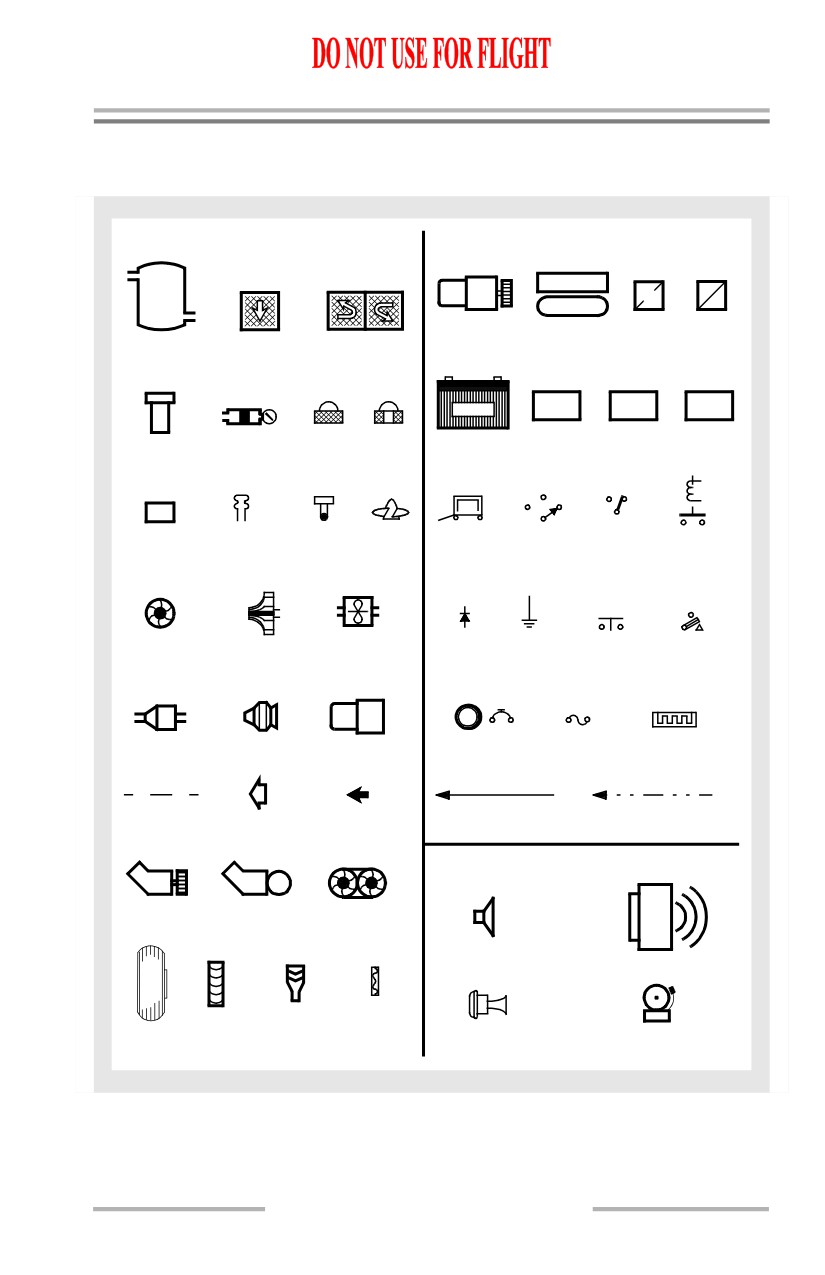
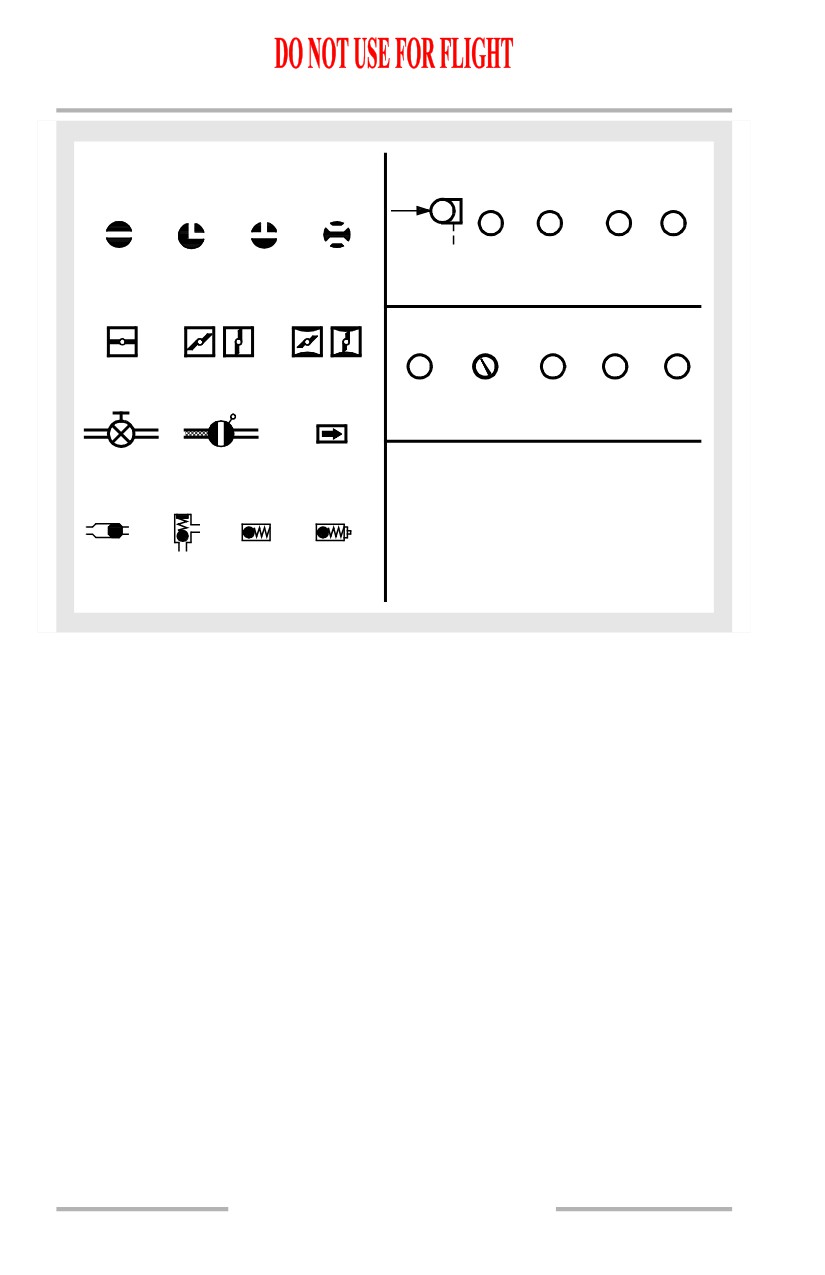
Schematic Symbols
Symbols shown are those which may not be identified on schematic illustrations.
GENERAL
ELECTRICAL
GEN
DC BUS
GEN
T
DRIVE
INV
R
AC BUS
GENERATOR &
BUSSES INVERTER TR UNIT
GENERATOR DRIVE
RESERVOIR
HEAT
DUAL HEAT
EXCHANGER
EXCHANGER
BATT
VOLT
TIMER
BATT
CHGR
REG
B
BATTERY
BATTERY
VOLTAGE
TIMER
HYDRAULIC
ACCUMULATOR FILTER BYPASS
CHARGER
REGULATOR
ACTUATOR
FILTER
C
COMPARATOR PRESSURE
TEMPERATURE
FAN
GROUND
THREE
TWO
SOLENOID
SENSOR
SENSOR
CART
POSITION
POSITION
ACTUATED
SWITCH
SWITCH
SWITCH
PUMP
COMPRESSOR
FLOW
ONE WAY GROUND
PUSH-TYPE
THERMAL
METER
DIODE
ELECTRICAL
SWITCH
CONTACT
GEN
APU
C
WATER
APU
APU
CIRCUIT
FUSE
HEATER
SEPARATOR
GENERATOR
BREAKERS
A
MECHANICAL
SYSTEMS
FLUID
DISTRIBUTION LINE SIGNAL, INACTIVE UNDER
LINKAGE
INDICATOR
FLOW
THE CONDITIONS SHOWN
AUDIO DEVICES
M
ENGINE DRIVEN MOTOR DRIVEN POWER TRANSFER
HYDRAULIC PUMP
HYDRAULIC PUMP
UNIT
SPEAKER
CLACKER
WHEEL TURBINE THERMOSTAT DIAPHRAGM
HORN
BELL
0.2.5
Preface -
Introduction
Boeing 737 Operations Manual
VALVES
MOTORS AND SOLENOIDS
M
M
AC
DC
S
ELECTRIC
MOTOR ALTERNATING
DIRECT
SOLENOID
LIQUID
LIQUID
LIQUID
LIQUID
MOTOR
CURRENT
CURRENT
SHUT-OFF
2-WAY
3-WAY
4-WAY
DRIVEN
MOTOR
MOTOR
ACTUATOR
INDICATORS
PNEUMATIC
PNEUMATIC
PNEUMATIC
KW
A
F
V
SHUT-OFF
MODULATING
FLOW LIMITING
KILOWATT INDICATOR AMMETER
FREQUENCY
VOLT
METER
(GENERAL)
METER
METER
(PNEUMATIC)
(FUEL)
CHECK
MANUALLY CONTROLLED VALVES
SHUTTLE REMOTELY
RELIEF
REGULATED
CONTROLLED
RELIEF &
RELIEF
BYPASS
0.2.6
Boeing 737 Operations Manual
Preface
Chapter 0
Abbreviations
Section 3
General
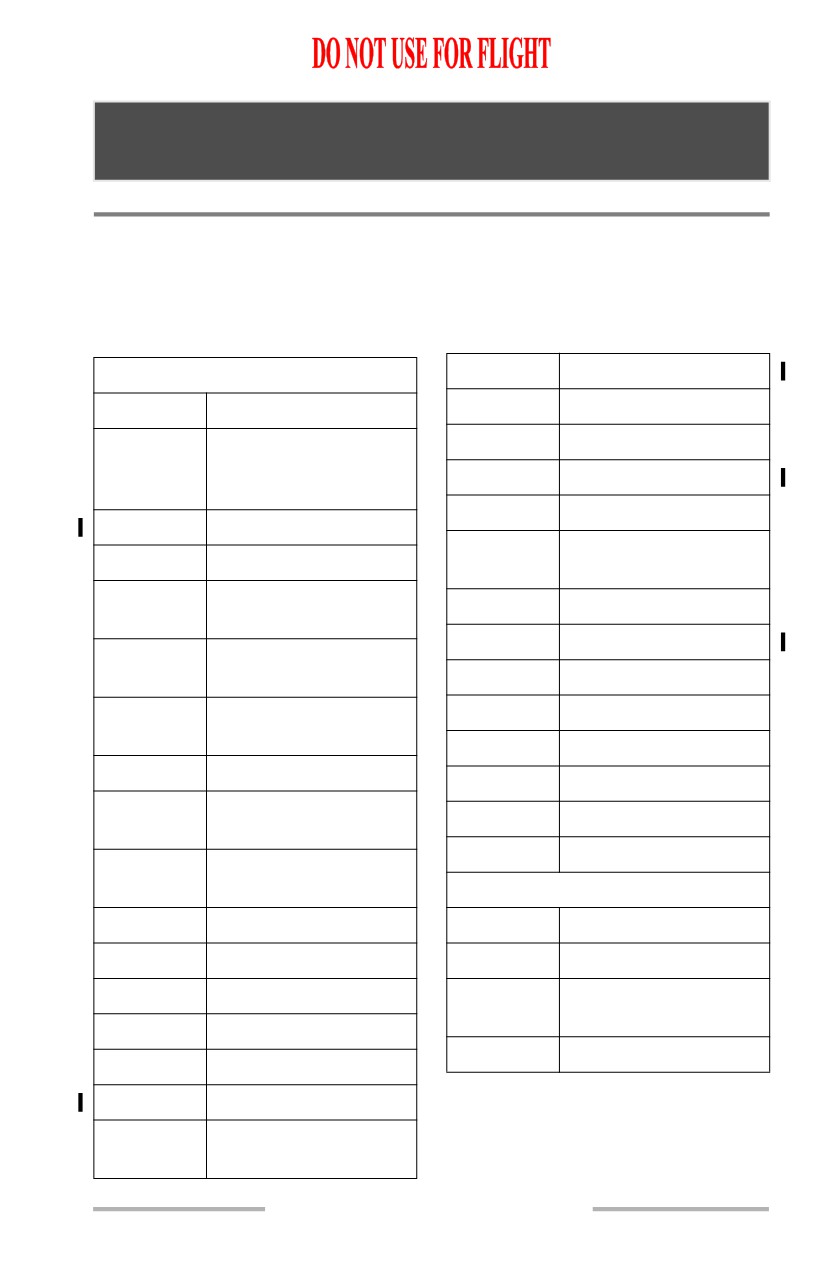
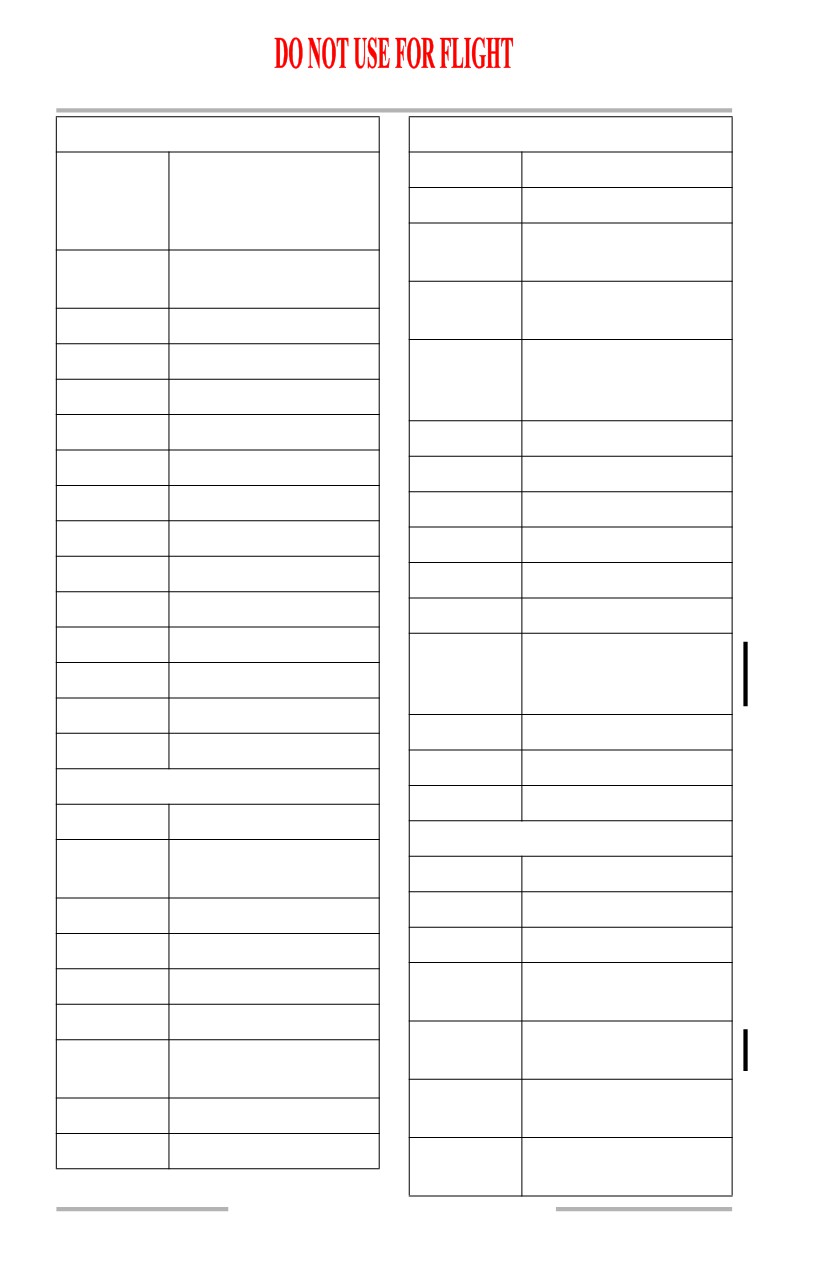
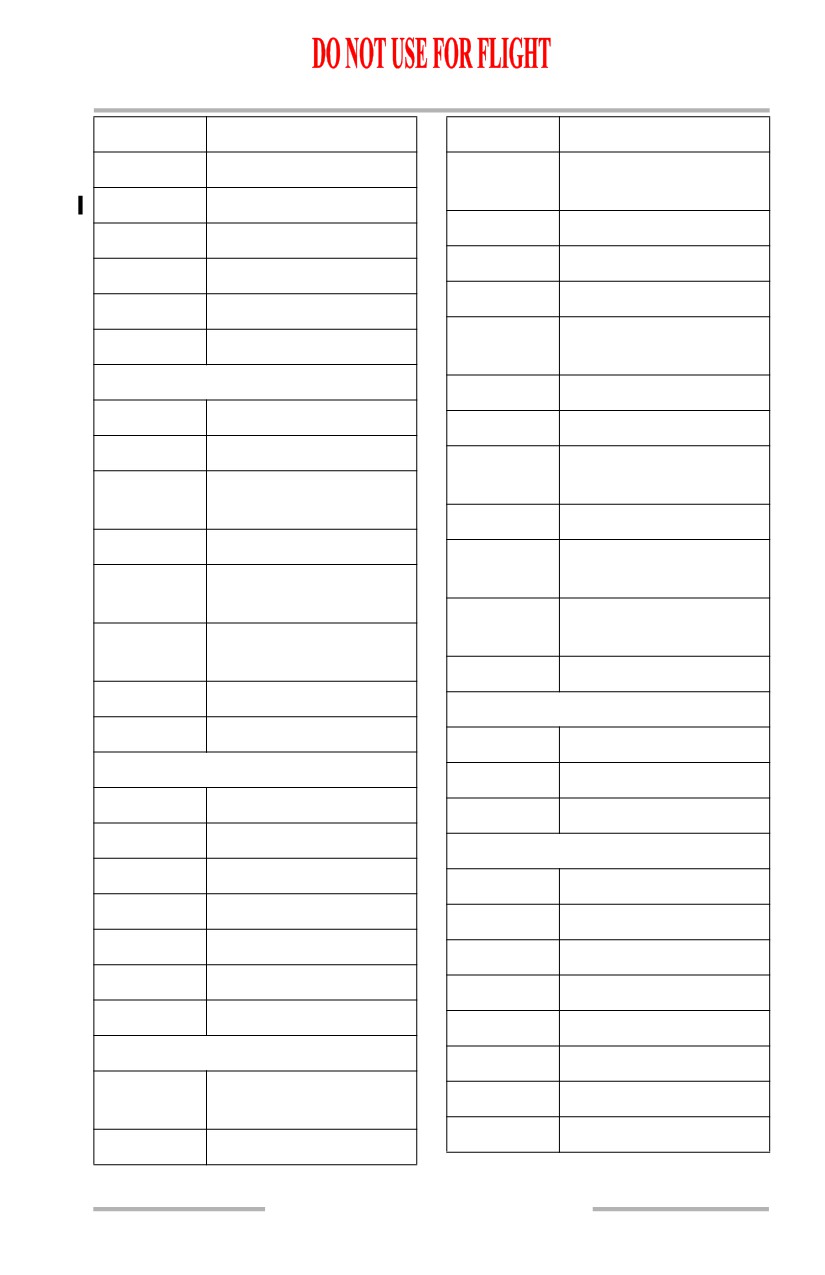
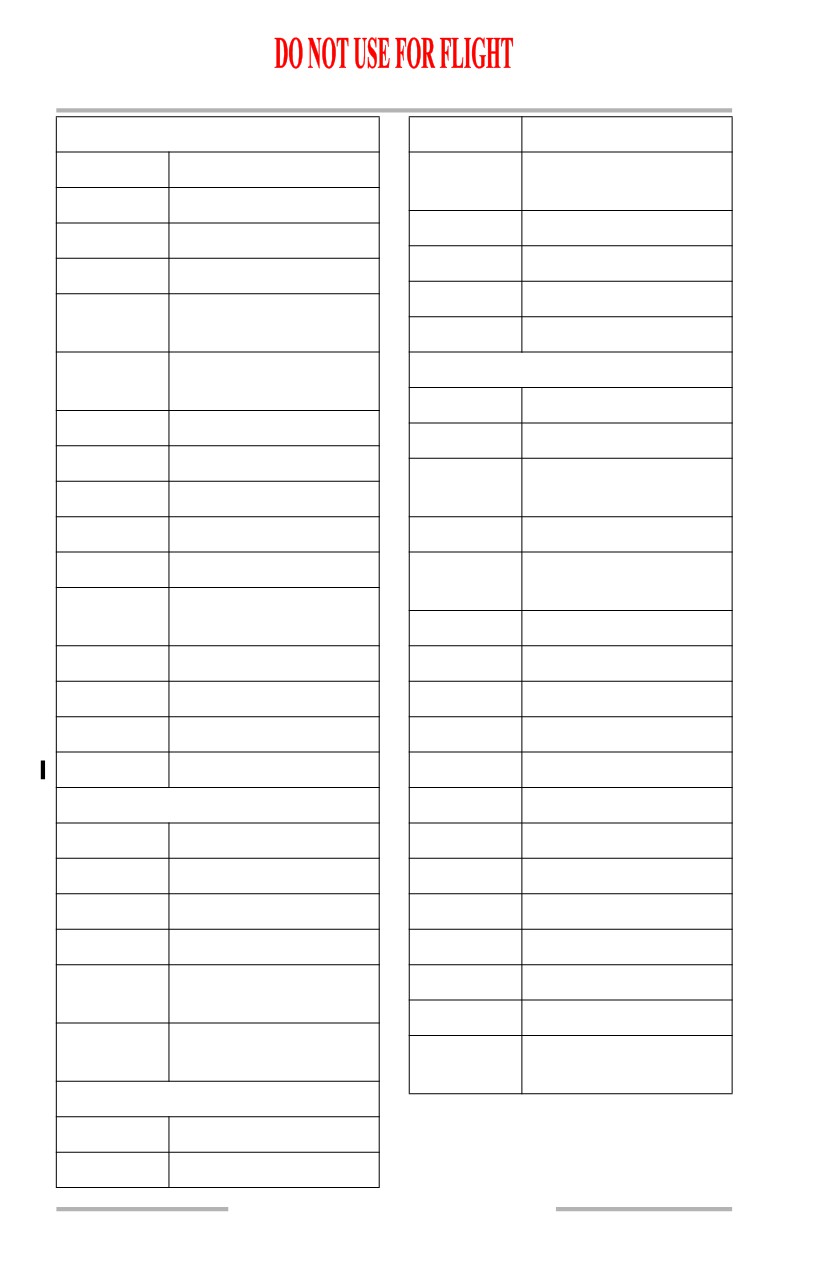
The following abbreviations may be found throughout the manual. Some
abbreviations may also appear in lowercase letters. Abbreviations having very
limited use are explained in the chapter where they are used.
A
ANT
Antenna
AC
Alternating Current
AOA
Angle of Attack
ACARS
Aircraft Communications
A/P
Autopilot
Addressing and
APP
Approach
Reporting System
APU
Auxiliary Power Unit
ACP
Audio Control Panel
ARINC
Aeronautical Radio,
ACT
Active
Incorporated
ADF
Automatic Direction
ARPT
Airport
Finder
A/T
Autothrottle
ADIRS
Air Data Inertial
Reference System
ATA
Actual Time of Arrival
ADIRU
Air Data Inertial
ATC
Air Traffic Control
Reference Unit
ATT
Attitude
ADM
Air Data Module
AUTO
Automatic
AFDS
Autopilot Flight Director
AUX
Auxiliary
System
AVAIL
Available
AFM
Airplane Flight Manual
(FAA approved)
B
AGL
Above Ground Level
BARO
Barometric
AI
Anti-Ice
BRT
Bright
AIL
Aileron
BTL DISCH
Bottle Discharge (fire
extinguishers)
ALT
Altitude
B/C
Back Course
ALTN
Alternate
AM
Amplitude Modulation
ANP
Actual Navigation
Performance
0.3.1
Preface -
Abbreviations
Boeing 737 Operations Manual
C
E
C
Captain
E/D
End of Descent
Celsius
E/E
Electrical and Electronic
Center
EEC
Electronic Engine
CANC/
Cancel/Recall
Control
RCL
EFIS
Electronic Flight
CAPT
Captain
Instrument System
CB
Circuit Breaker
EGPWS
Enhanced Ground
Proximity Warning
CDS
Common Display System
System
CDU
Control Display Unit
EGT
Exhaust Gas Temperature
CG
Center of Gravity
ELEC
Electrical
CHKL
Checklist
ELEV
Elevator
CLB
Climb
EMER
Emergency
COMM
Communication
ENG
Engine
CON
Continuous
EO
Engine Out
CONFIG
Configuration
ETOPS
Extended Range
Operation with Twin
CRS
Course
Engine Airplanes
CRZ
Cruise
EVAC
Evacuation
CTL
Control
EXEC
Execute
D
EXT
Extend
DC
Direct Current
F
DDG
Dispatch Deviations
F
Fahrenheit
Guide
FAC
Final Approach Course
DEP ARR
Departure Arrival
FCTL
Flight Control
DES
Descent
F/D or
Flight Director
DEU
Display Electronic Unit
FLT DIR
DISC
Disconnect
FMA
Flight Mode
DME
Distance Measuring
Annunciations
Equipment
FMC
Flight Management
DSP
Display Select Panel
Computer
DSPL
Display
FMS
Flight Management
System
0.3.2
Preface -
Abbreviations
Boeing 737 Operations Manual
F/O
First Officer
IDENT
Identification
FPA
Flight Path Angle
IFE
In-Flight Entertainment
System
FPM
Feet Per Minute
IGN
Ignition
FPV
Flight Path Vector
IN
Inches
FREQ
Frequency
IND LTS
Indicator Lights
FT
Feet
ILS
Instrument Landing
FWD
Forward
System
G
INBD
Inboard
GA
Go-Around
INOP
Inoperative
GEN
Generator
INT or
Interphone
GLS
GPS Landing System or
INTPH
GNSS Landing System
INTC CRS
Intercept Course
G/P
Glidepath
IRS
Inertial Reference
GPS
Global Positioning
System
System
ISFD
Integrated Standby Flight
GPWS
Ground Proximity
Display
Warning System
ISLN
Isolation
GS
Ground Speed
K
G/S
Glide Slope
K
Knots
H
KGS
Kilograms
HDG
Heading
KIAS
Knots Indicated Airspeed
HDG REF
Heading Reference
L
HDG SEL
Heading Select
L
Left
HF
High Frequency
LBS
Pounds
HPA
Hectopascals
LDG ALT
Landing Altitude
HUD
Head-Up Display
LIM
Limit
HYD
Hydraulic
LNAV
Lateral Navigation
I
LOC
Localizer
IAN
Integrated Approach
LWR CTR
Lower Center
Navigation
LWR DSPL
Lower Display
IAS
Indicated Airspeed
0.3.3
Preface -
Abbreviations
Boeing 737 Operations Manual
M
OHU
Overhead Unit
M
Mach
OUTBD
Outboard Display
DSPL
MAG
Magnetic
OVHD
Overhead
MAN
Manual
OVHT
Overheat
MCP
Mode Control Panel
OVRD
Override
MDA
Minimum Descent
Altitude
OXY or O2
Oxygen
MEL
Minimum Equipment
P
List
PA
Passenger Address
MFD
Multifunction Display
PASS
Passenger
MHZ
Megahertz
PERF INIT
Performance
MIC
Microphone
Initialization
MIN
Minimum
PF
Pilot Flying
MKR
Marker
PFC
Primary Flight
Computers
MMO
Maximum Mach
Operating Speed
PFD
Primary Flight Display
MOD
Modify
PNF
Pilot Not Flying
MSG
Message
PNL
Panel
MTRS
Meters
POS
Position
MUH
Minimum Use Height
PREV
Previous
N
PROX
Proximity
NAV RAD
Navigation Radio
POS INIT
Position Initialization
ND
Navigation Display
PRI
Primary
NM
Nautical Miles
PSI
Pounds Per Square Inch
NORM
Normal
PTH
Path
N1
Low Pressure Rotor
PTT
Push To Talk
Speed
PWR
Power
N2
High Pressure Rotor
PWS
Predictive Windshear
Speed
System
O
OAT
Outside Air Temperature
OFST
Offset
0.3.4
Preface -
Abbreviations
Boeing 737 Operations Manual
R
STD
Standard
R
Right
SYS
System
RA
Radio Altitude
T
Resolution Advisory
T or
True
TRU
RDMI
Radio Distance Magnetic
Indicator
T or
Track
TK or
REC
Recorder
TRK
RECIRC
Recirculation
TA
Traffic Advisory
REF
Reference
TAS
True Airspeed
RET
Retract
TAT
Total Air Temperature
RF
Refill
T/C
Top of Climb
RNP
Required Navigation
TCAS
Traffic Alert and
Performance
Collision Avoidance
RPM
Revolutions Per Minute
System
RST
Reset
TDZE
Touch Down Zone
Elevation
RTE
Route
T/D
Top of Descent
RTO
Rejected Takeoff
TEMP
Temperature
RTP
Radio Tuning Panel
TERR
Terrain
RUD
Rudder
TFC
Traffic
RVSM
Reduced Vertical
Separation Minimum
TFR
Transfer
S
THR HOLD
Throttle Hold
SAT
Static Air Temperature
TO
Takeoff
S/C
Step Climb
TO/GA
Takeoff/Go-Around
SELCAL
Selective Calling
TRU
Transformer Rectifier
Unit
SEL
Select
U
SPD
Speed
UNLKD
Unlocked
STA
Station
USB
Upper Side Band
STAB
Stabilizer
UPR DSPL
Upper Display
STAT
Status
UTC
Coordinated Universal
STBY
Standby
Time
0.3.5
Preface -
Abbreviations
Boeing 737 Operations Manual
UTIL
Utility
V
VANP
Vertical Actual
Navigation Performance
VERT
Vertical
VHF
Very High Frequency
VMO
Maximum Operating
Speed
VNAV
Vertical Navigation
VOR
VHF Omnidirectional
Range
VR
Rotation Speed
VREF
Reference Speed
VRNP
Vertical Required
Navigation Performance
VSI
Vertical Speed Indicator
V/S
Vertical Speed
VTK
Vertical Track
V1
Takeoff Decision Speed
V2
Scheduled Takeoff Target
Speed
W
WPT
Waypoint
WXR
Weather Radar
X
XPDR or
Transponder
XPNDR
XTK
Cross Track
0.3.6
Boeing 737 Operations Manual
Preface
Chapter 0
Revision Record
Section 4
Revision Transmittal Letter
To: All holders of The Boeing Company 737 Operations Manual, Boeing
Document Number D6-27370-TBC.
Subject: Operations Manual Revision.
This revision reflects the most current information available to The Boeing
Company 45 days before the subject revision date. The following revision
highlights explain changes in this revision. General information below explains
the use of revision bars to identify new or revised information.
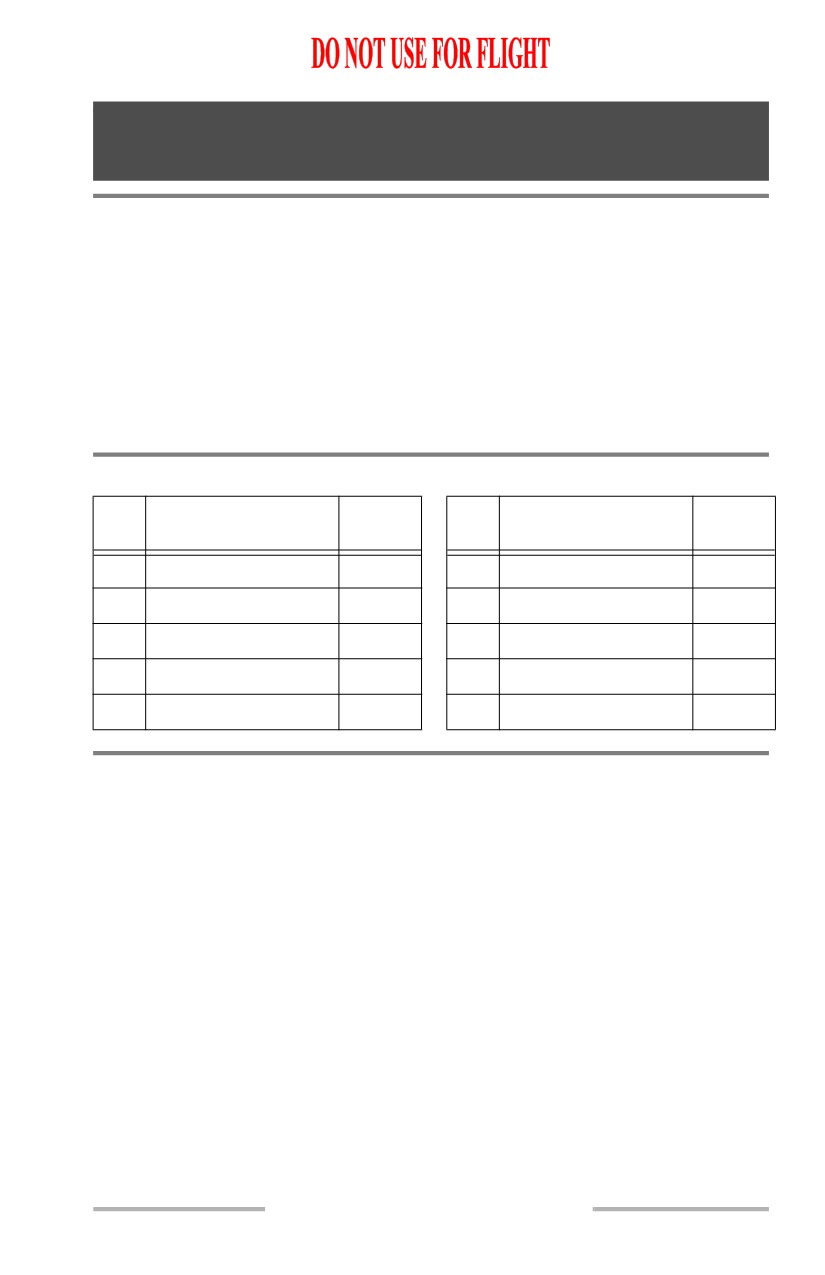
Revision Record
No.
Revision Date
Date
No.
Revision Date
Date
Filed
Filed
1
March 05, 1998
2
July 31, 1998
3
January 29, 1999
4
July 30, 1999
5
January 28, 2000
6
7
8
October 15, 2001
9
10
General
The Boeing Company issues operations manual revisions to provide new or
revised procedures and information. Formal revisions also incorporate appropriate
information from previously issued operations manual bulletins.
The revision date is the approximate date the manual is approved for printing. The
revision is mailed a few weeks after this date.
Formal revisions include a Transmittal Letter, a new Revision Record, Revision
Highlights, and a current List of Effective Pages. Use the information on the new
Revision Record and List of Effective Pages to verify the operations manual
content.
Pages containing revised technical material have revision bars associated with the
changed text or illustration. Editorial revisions (for example, spelling corrections)
may have revision bars with no associated highlight.
The Revision Record should be completed by the person incorporating the
revision into the manual.
0.4.1
///////////////////////////////////////